
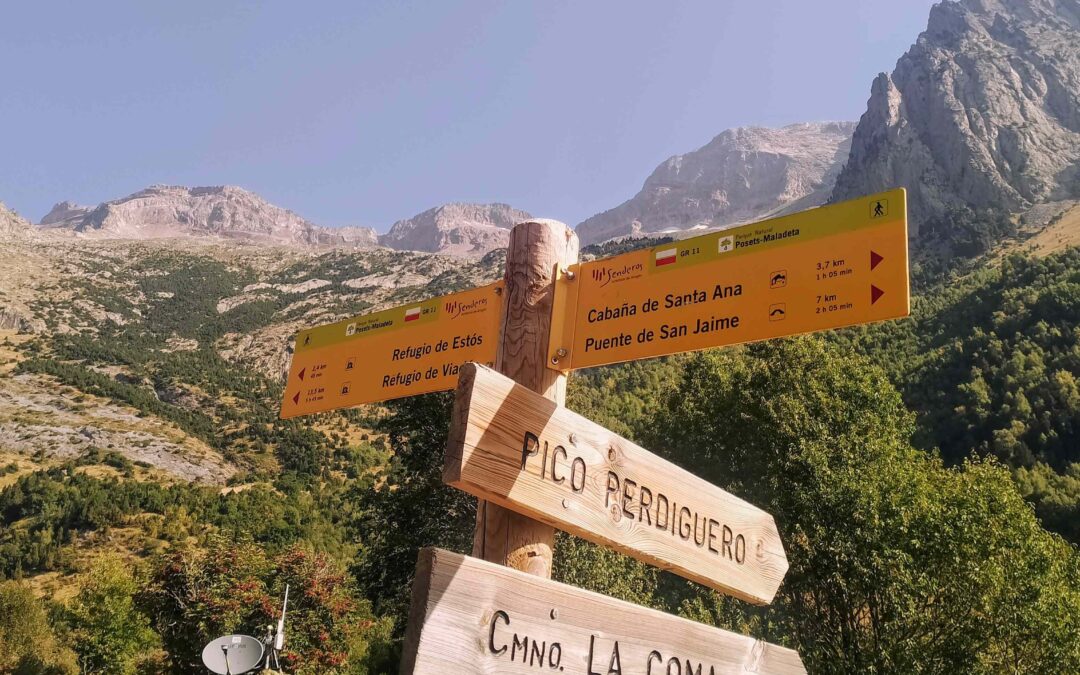
This route goes up the long Estós valley, following the river of the same name. It crosses over the Puerto de Chistau at 2,577 metres before descending to the Viadós mountain refuge.
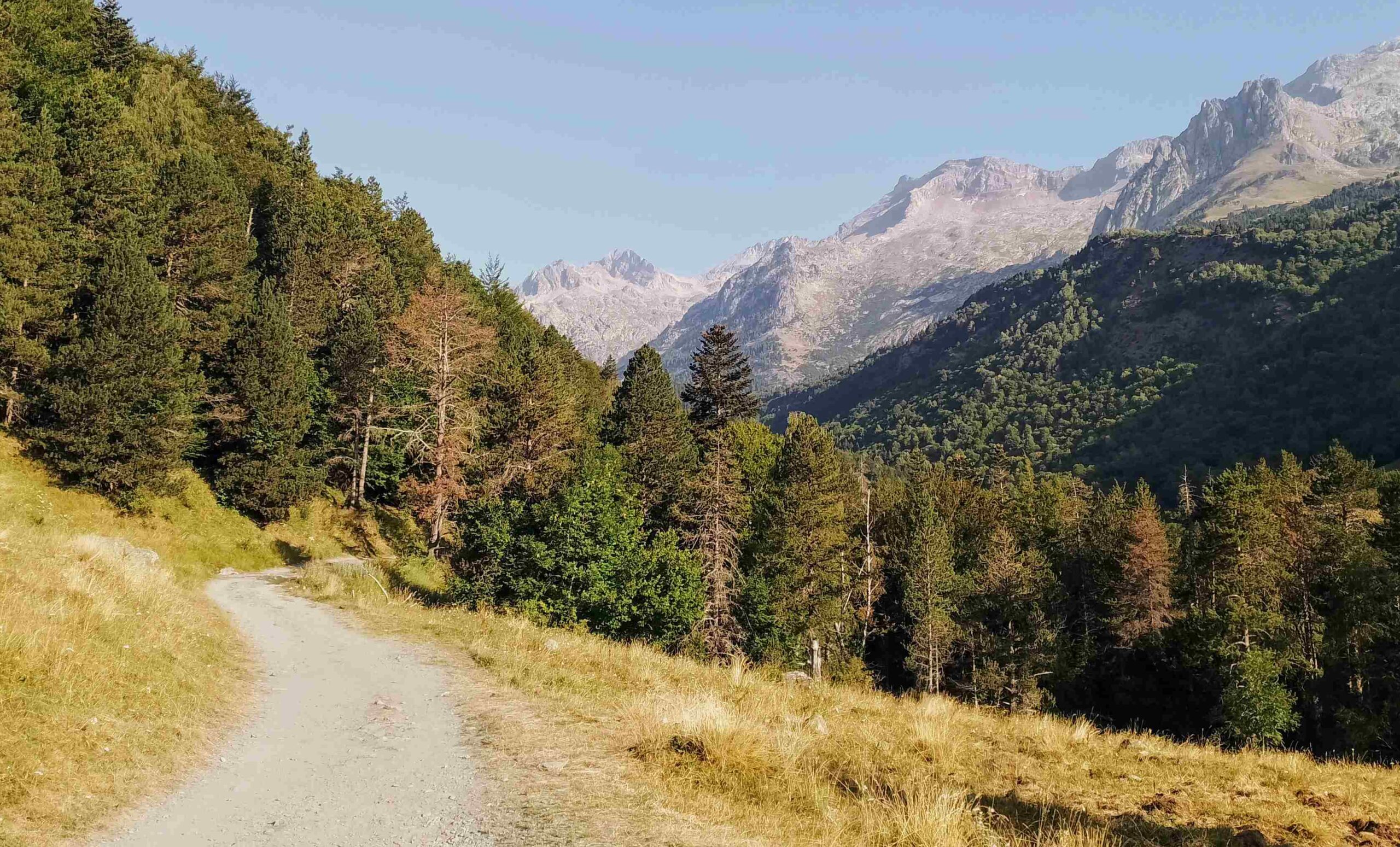
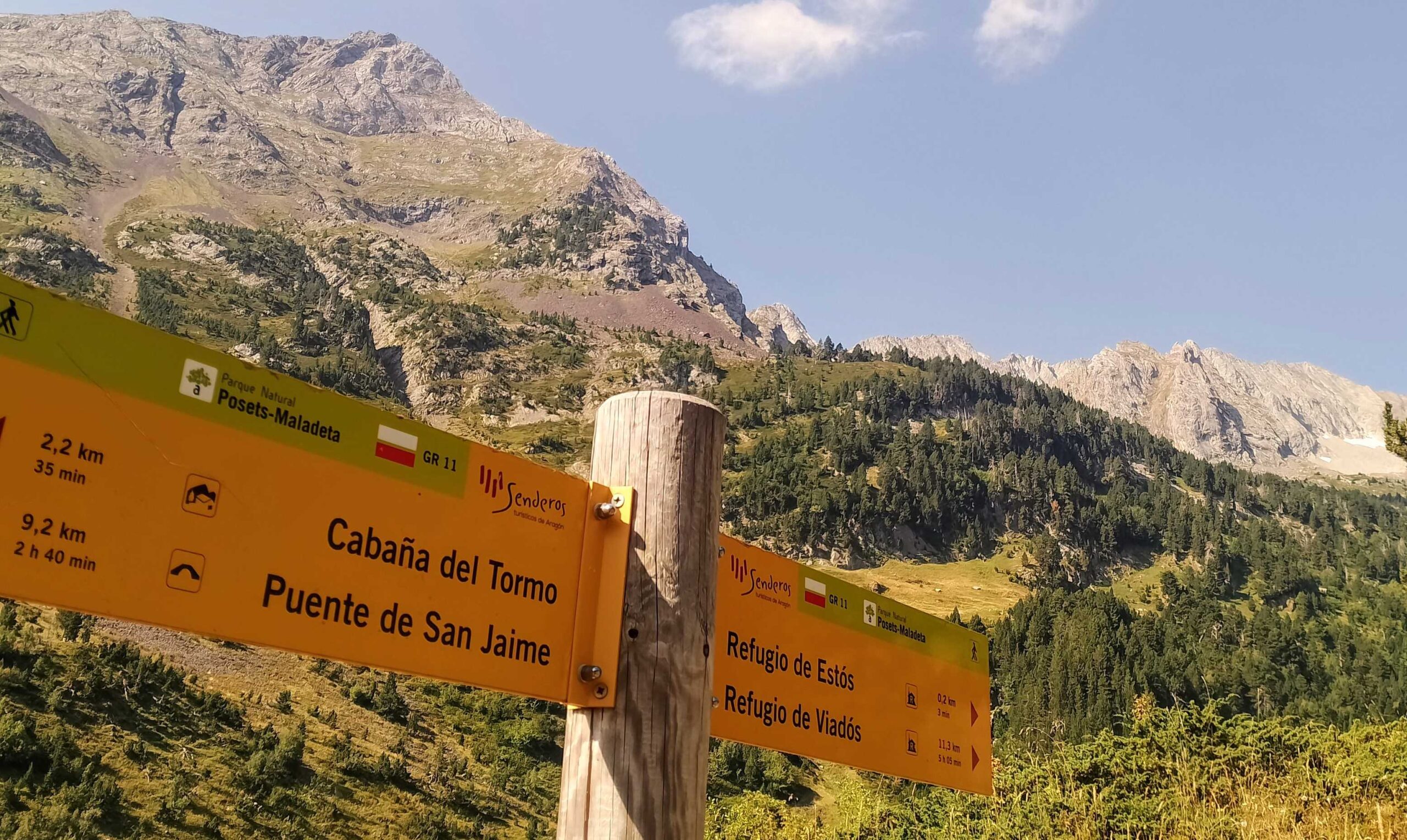
The Estós valley is flanked by two magnificent massifs; to the right (north) is Perdiguero with its line of jagged peaks over 3,000 metres, and top left of the valley is Posets where the high point is 3,375m.
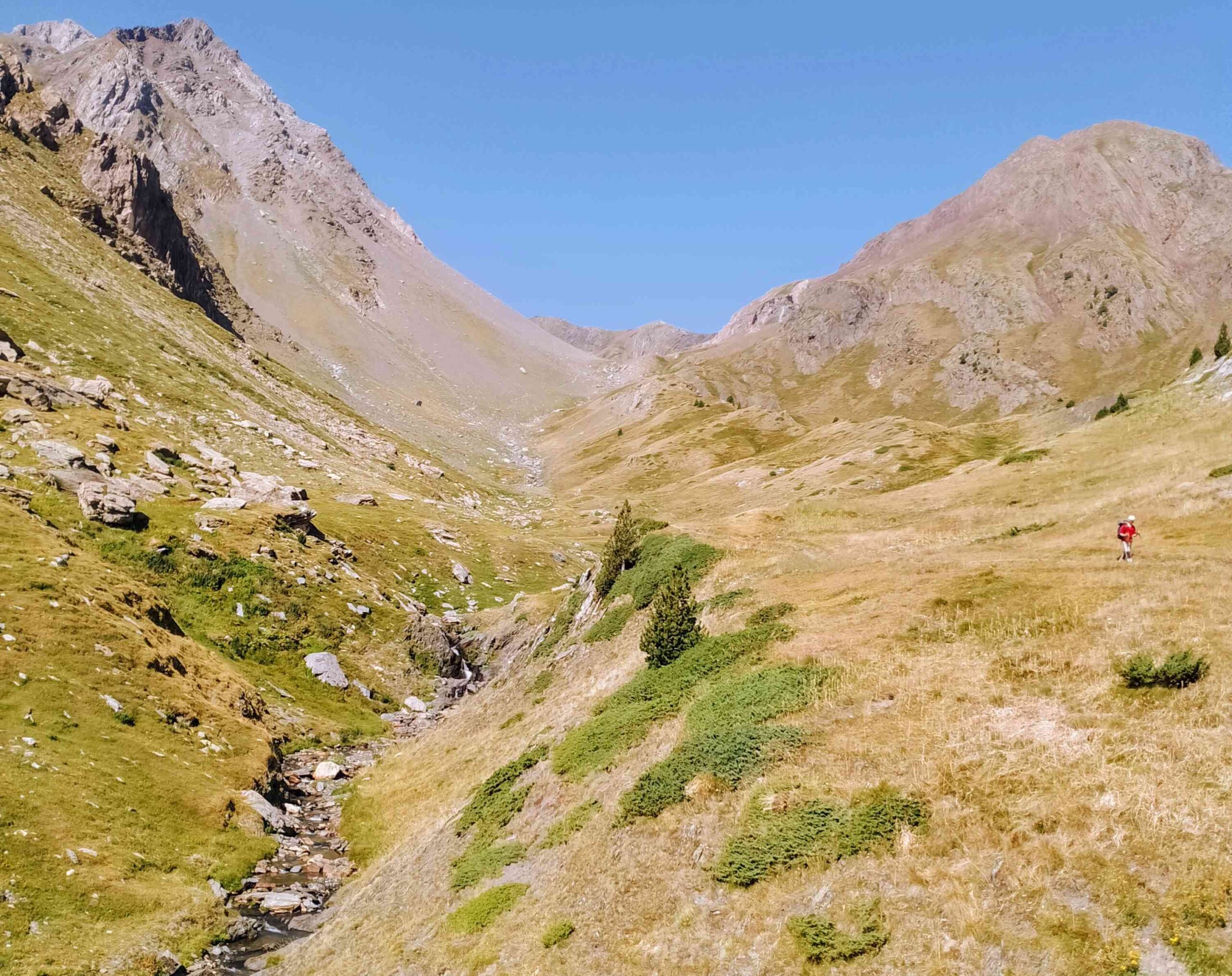
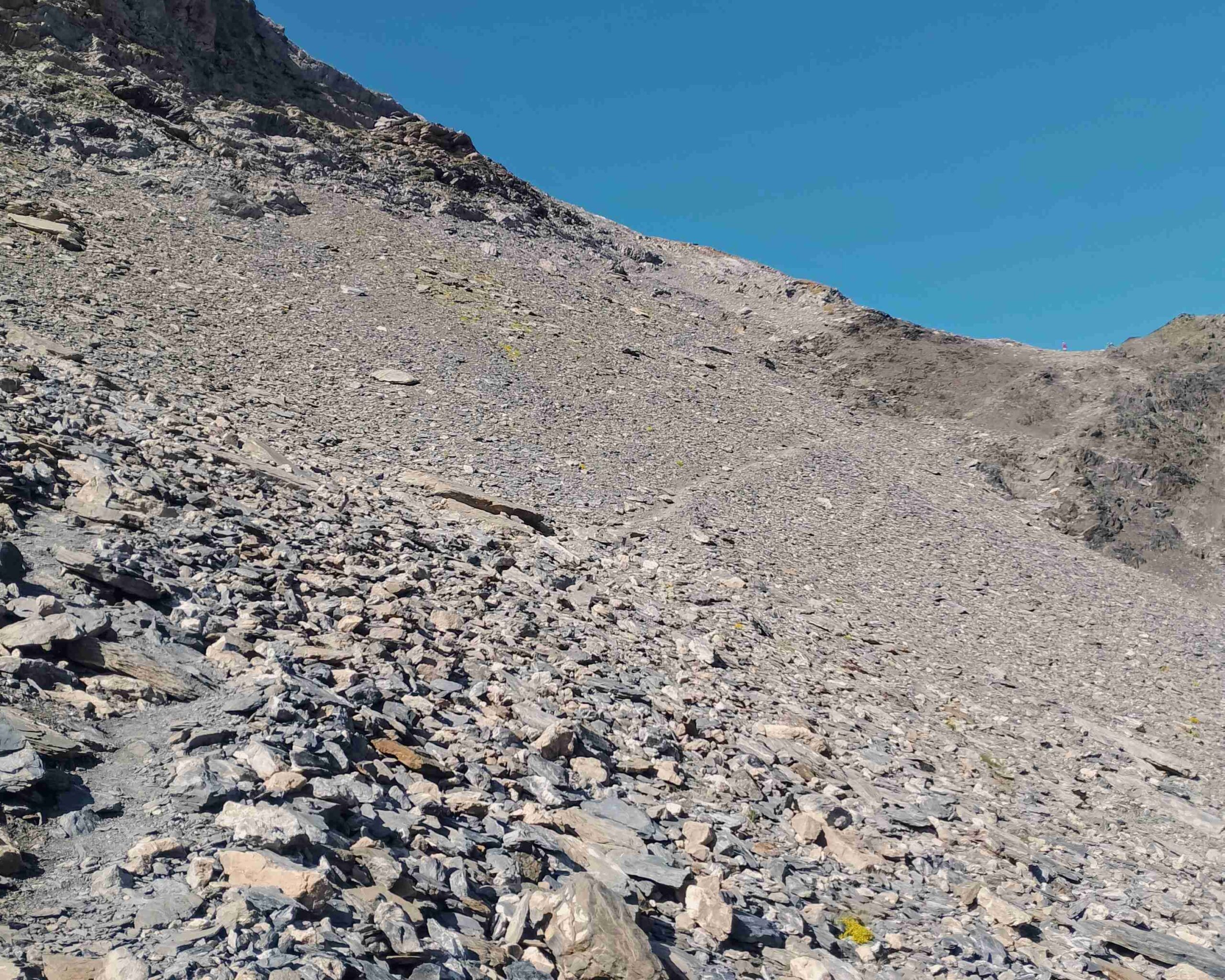
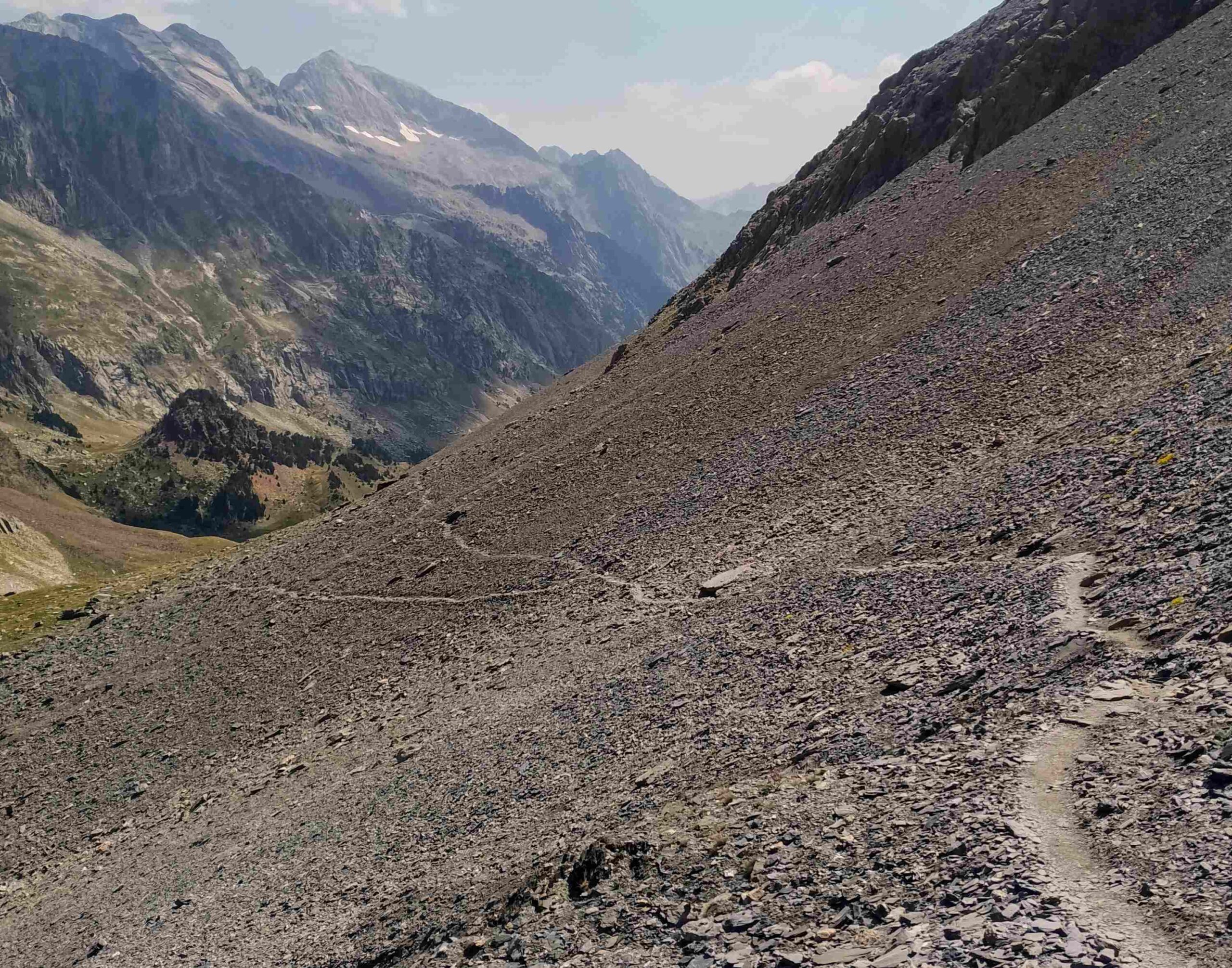
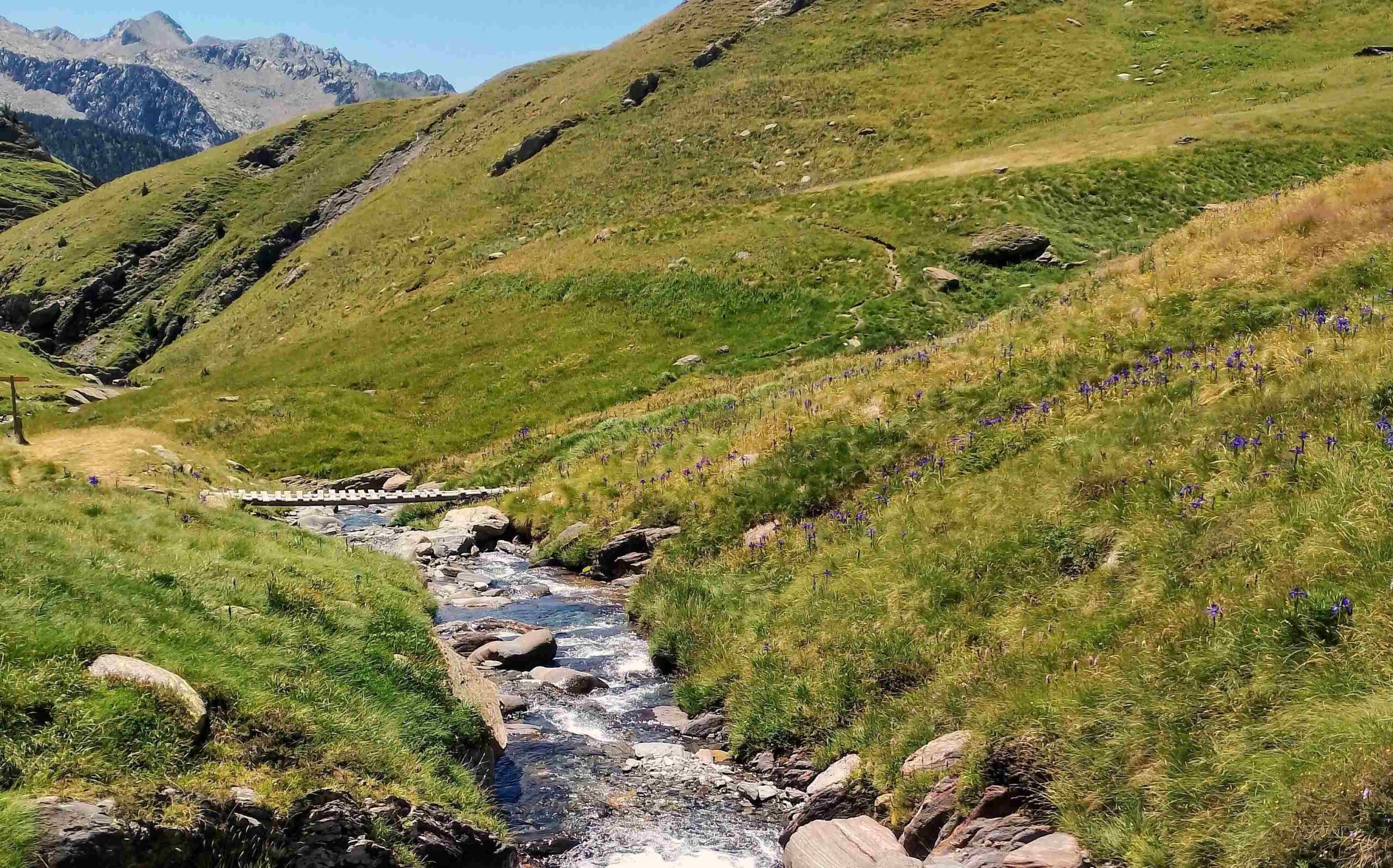
Gurgling water and summit views are the two main protagonists on the first part of the ascent. Then as the climb gets steeper, the grassy, undulating landscape changes to a lunar one as rock and scree take over on the last push up to the pass.
It’s a different picture on the other side; the descent from the Puerto de Chistau is grassy from the off, dropping down to a dogleg where three streams converge. The temptation of taking the plunge is impossible to resist at this wonderous spot.
At the end of the stage, walkers can stay in the Viadós refuge or continue on for just under 1km to the lovely Camping Forcallo to pitch their tent and enjoy some sumptuous fare.
A couple of days can easily be whiled away in the Chistau valley, doing routes or reading a book by the ubiquitous streams.
See details on accommodation and walks in the Chistau valley on previous posts
The route
If walkers have taken public transport to Benasque then they will have to walk from the town, up the A-139 road, passing Camping Aneto, before locating the GR-11 signs soon afterwards. This puts around 4km on the route.
The official GR-11 stage starts at the Puente San Jaime (puente = bridge) and measures 20.5 km, with around 1,400m of ascent.
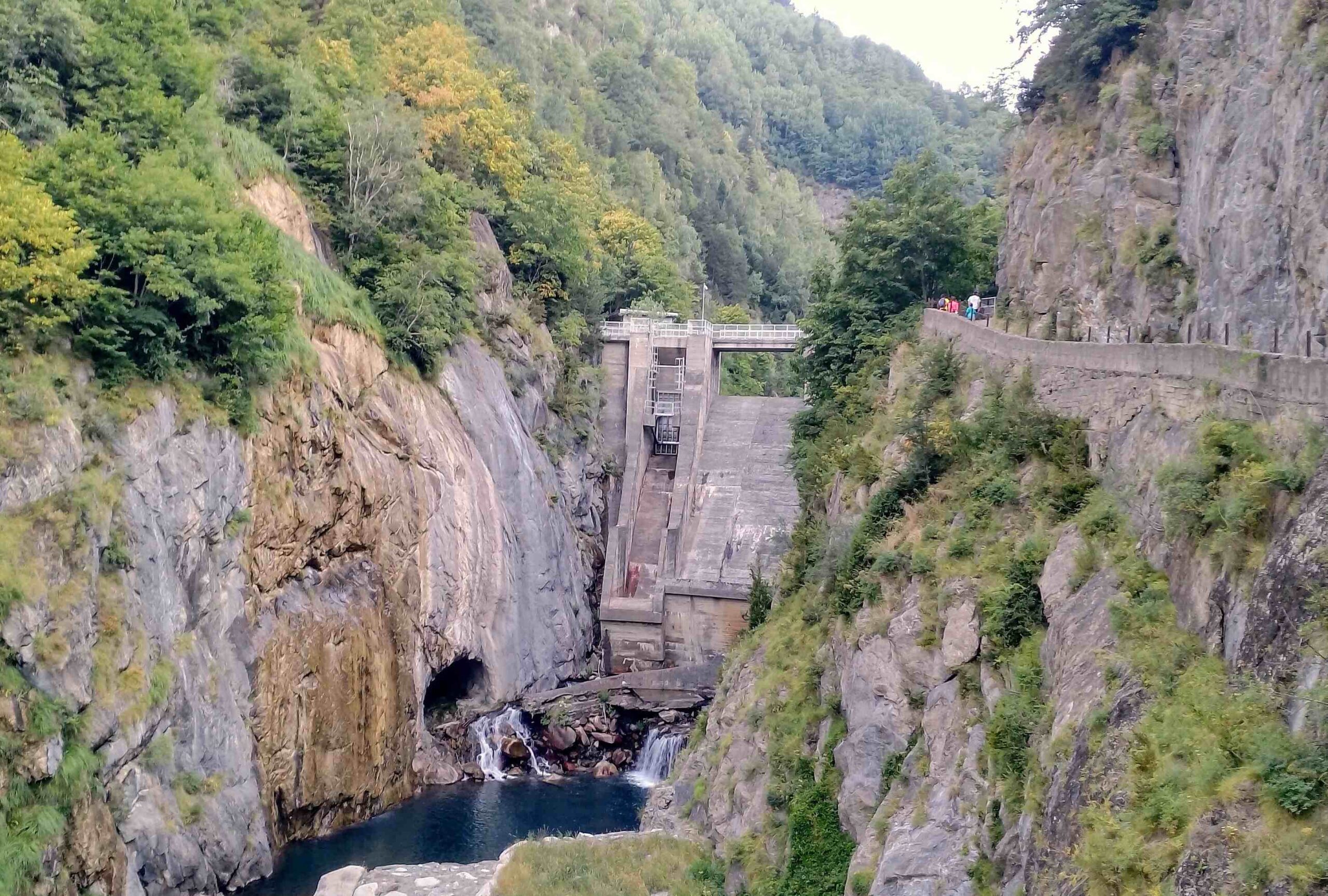
Just under 1km can be shaved off by leaving a vehicle at the car park below the Estós dam (to reach it drive out of Benasque on the A-139 road, past Camping Aneto and over the bridge, then turn left following the sign for the Estós valley).
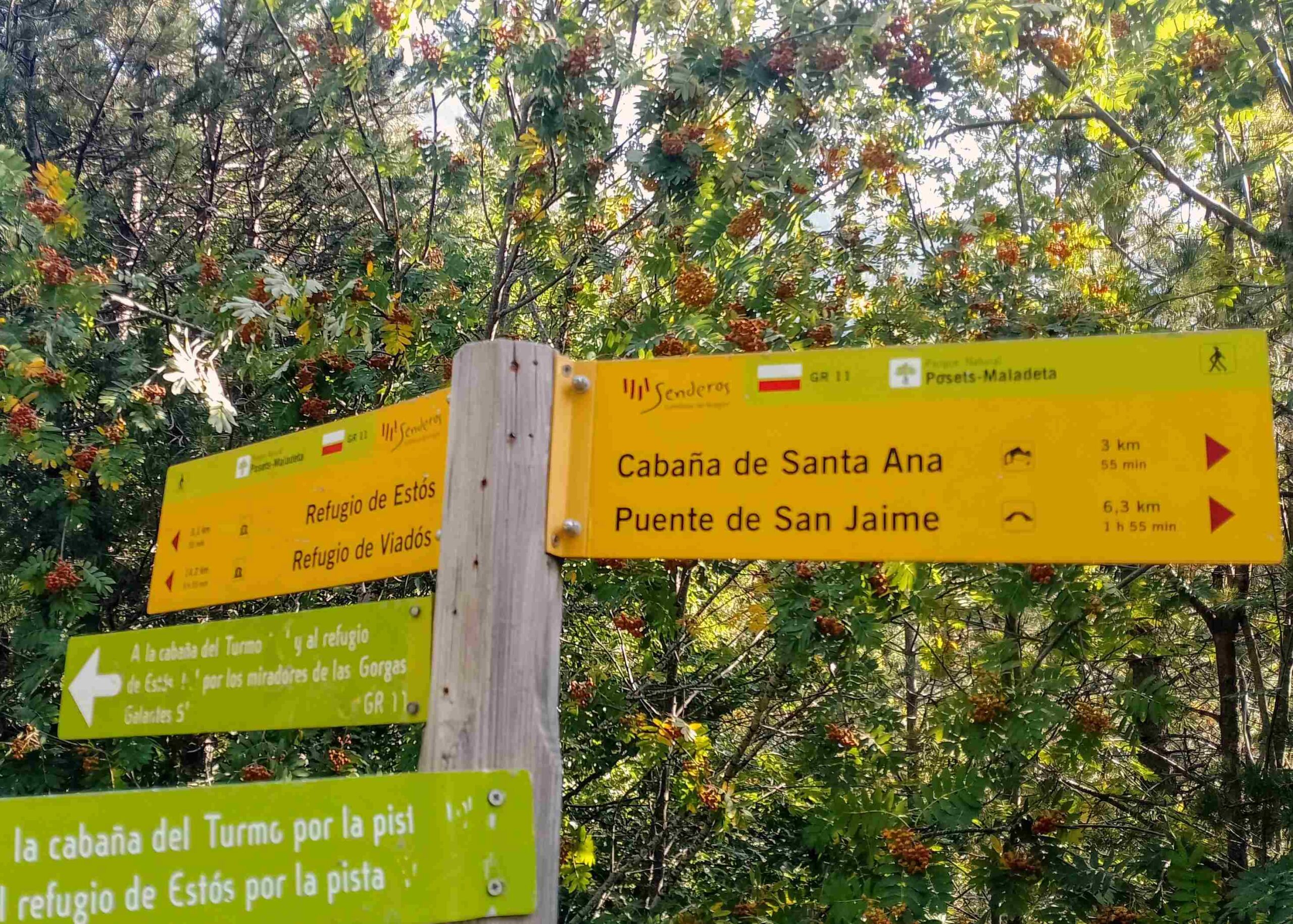
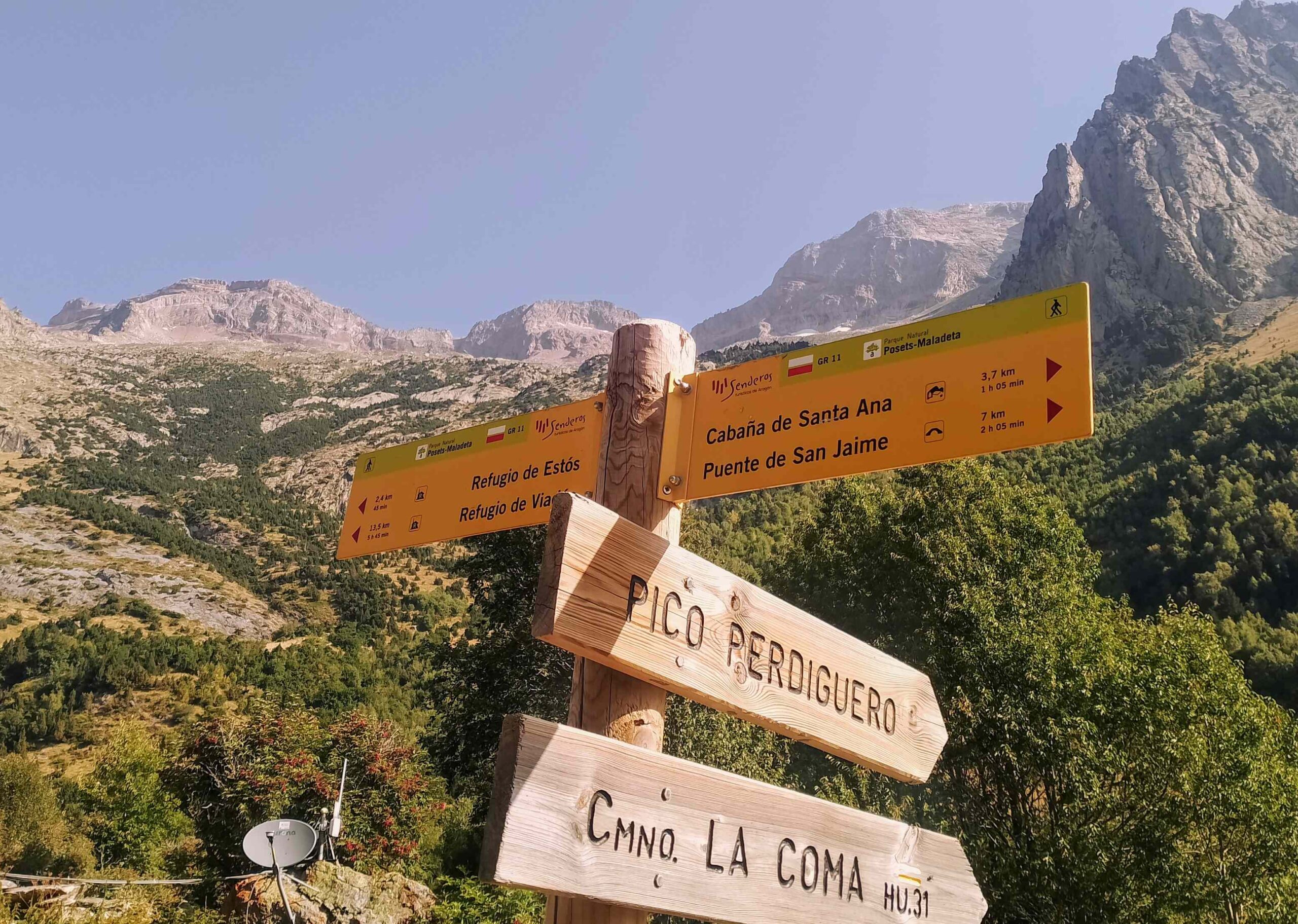
In the car park the GR sign points the way up towards the Refugio de Estós.
The track passes through a short, steep-sided ravine, heading up to the dam and small reservoir.
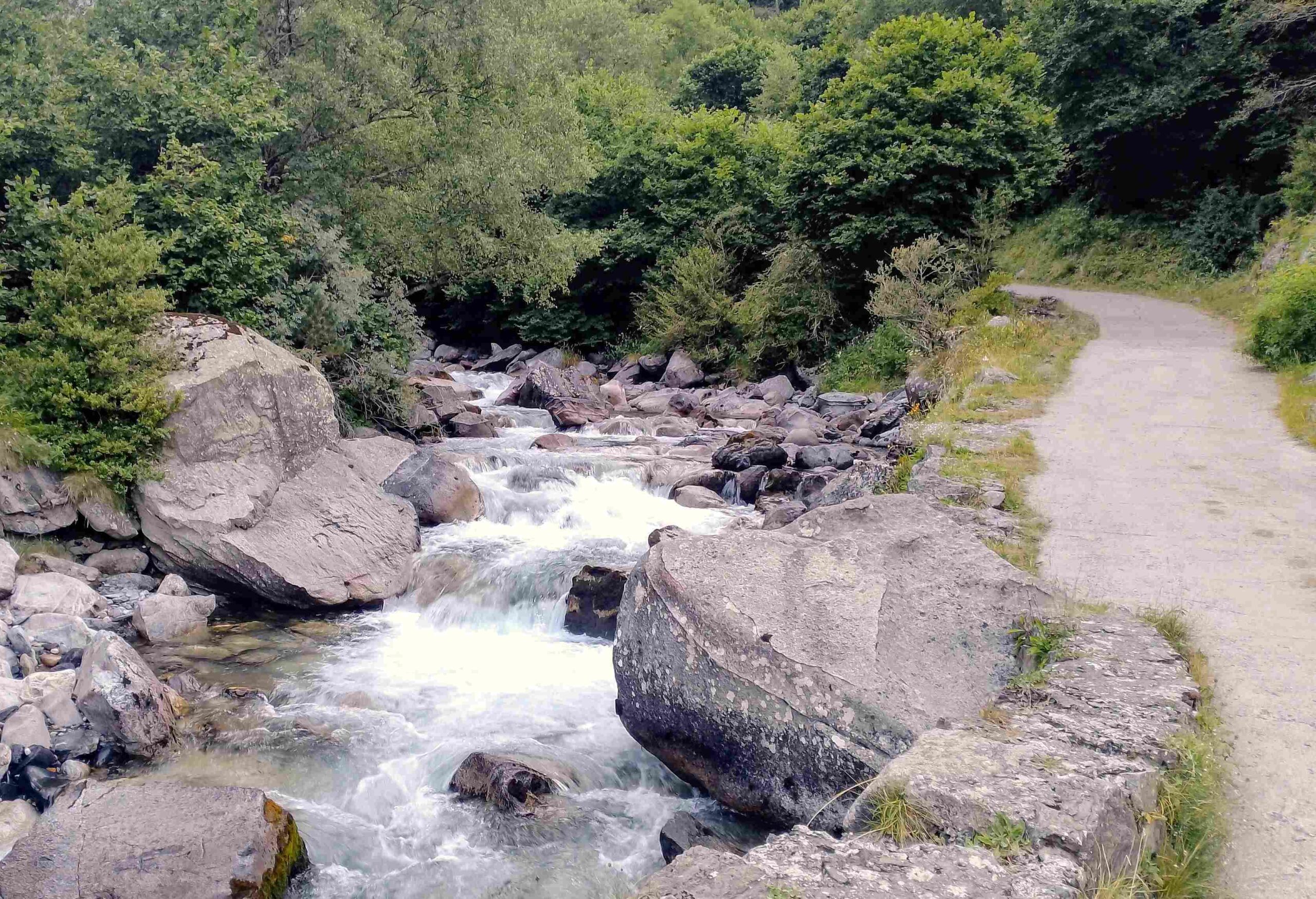
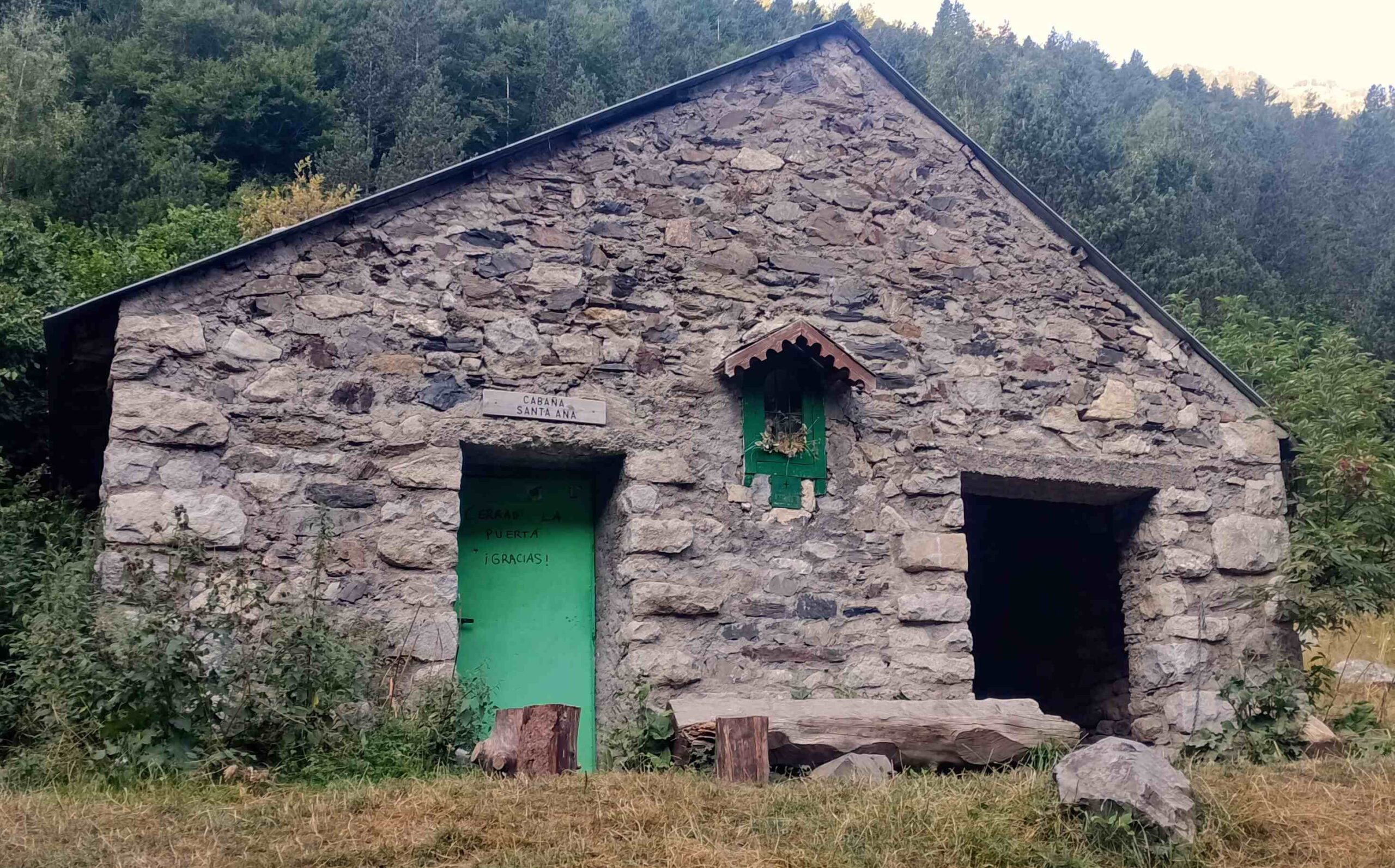
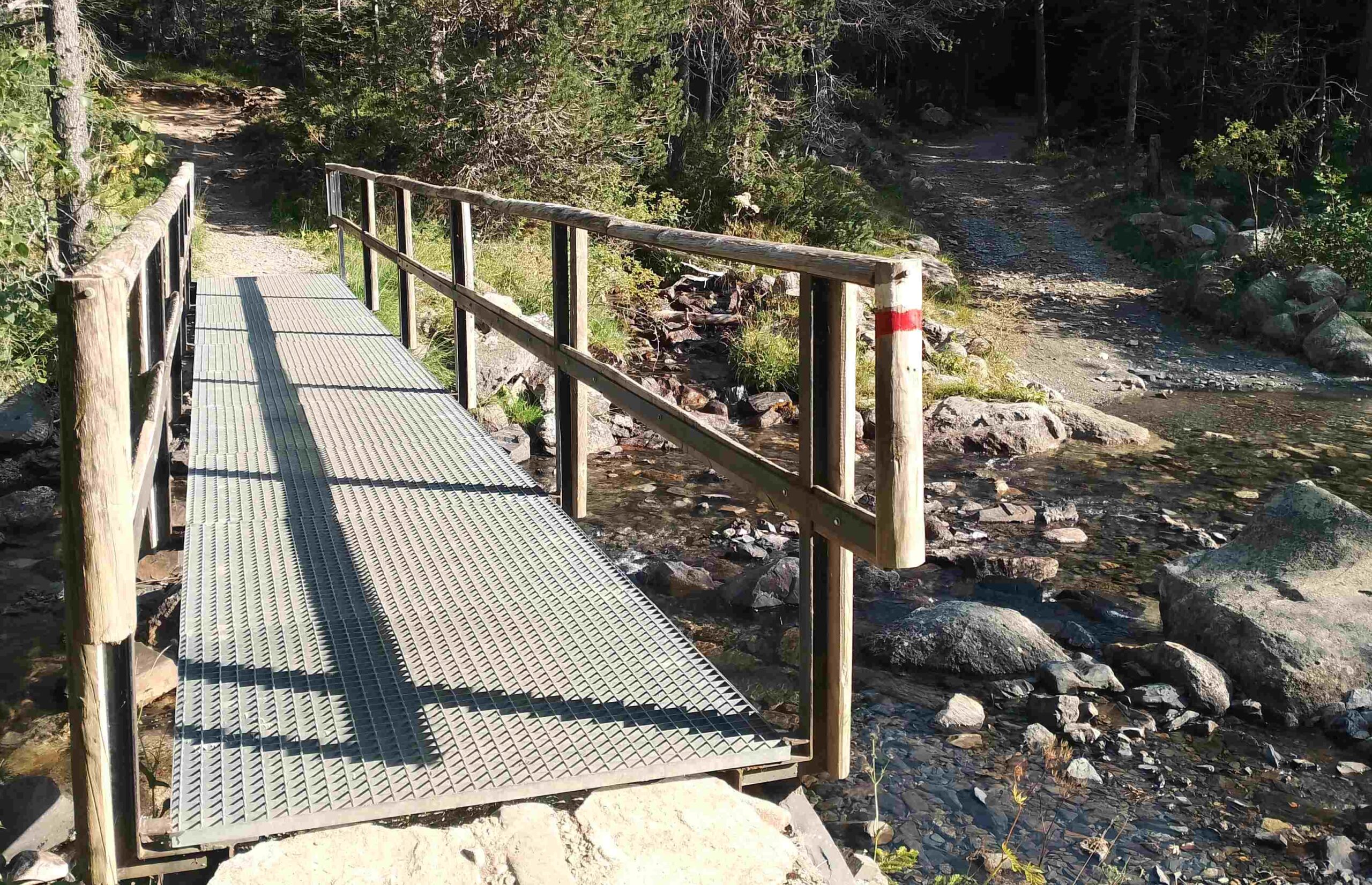
The route follows the lively Estós river, crossing over to the left bank on a footbridge before ascending on the wide track to the Cabaña de Santa Ana.
The track is now running high above the mountain river. After passing the Corones natural spring, the route crosses a footbridge over a tributary of the Estós.
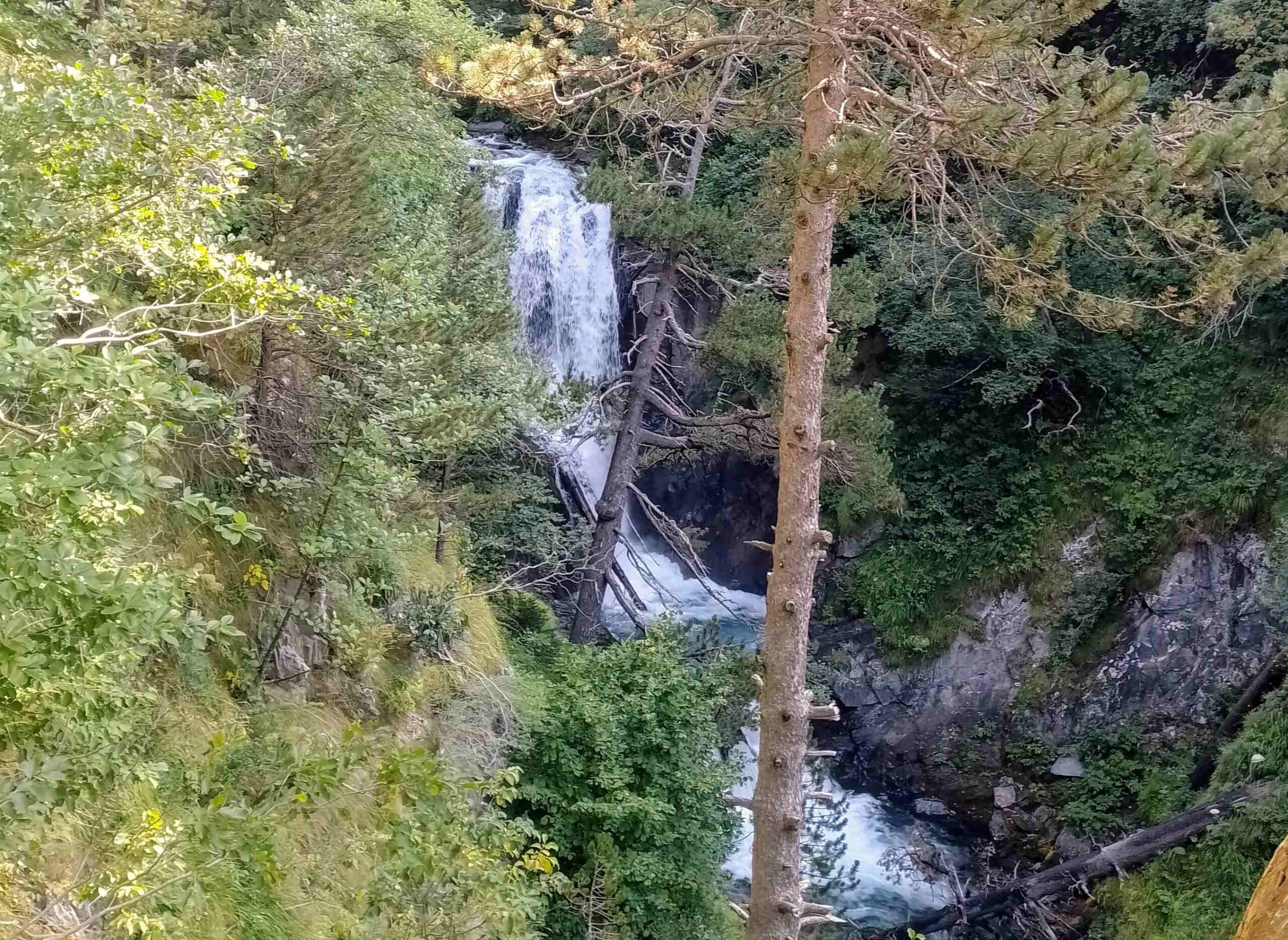
The GR-11 passes the Gorges Galantes; it’s a very short detour to have a look at the waterfalls.
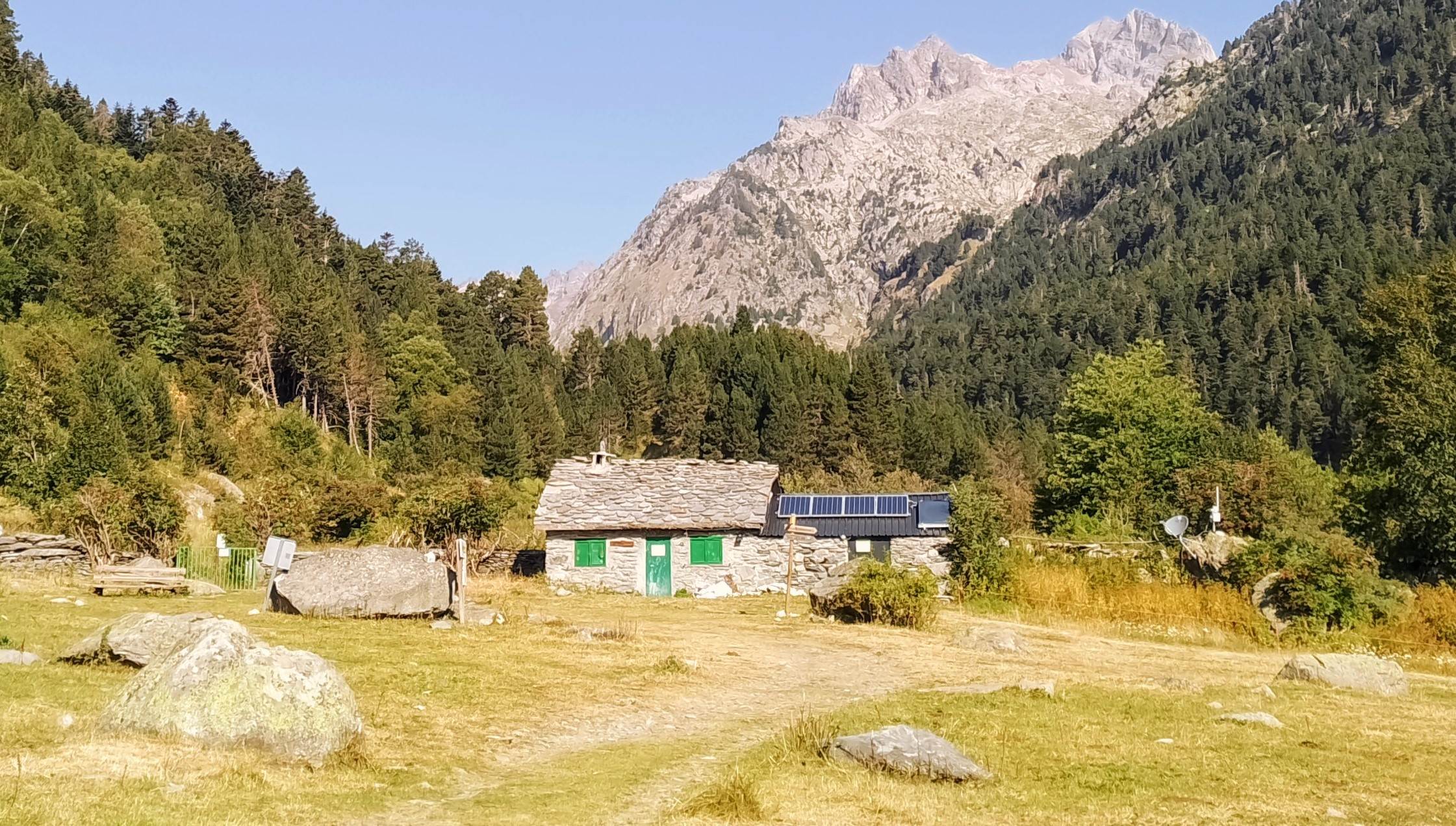
Signs say it’s six minutes to the Turmo cabin from the falls. Just before arriving, signs point for the ascent of Perdiguero mountain; at this point it’s 2.6km to get to the Estós refuge.
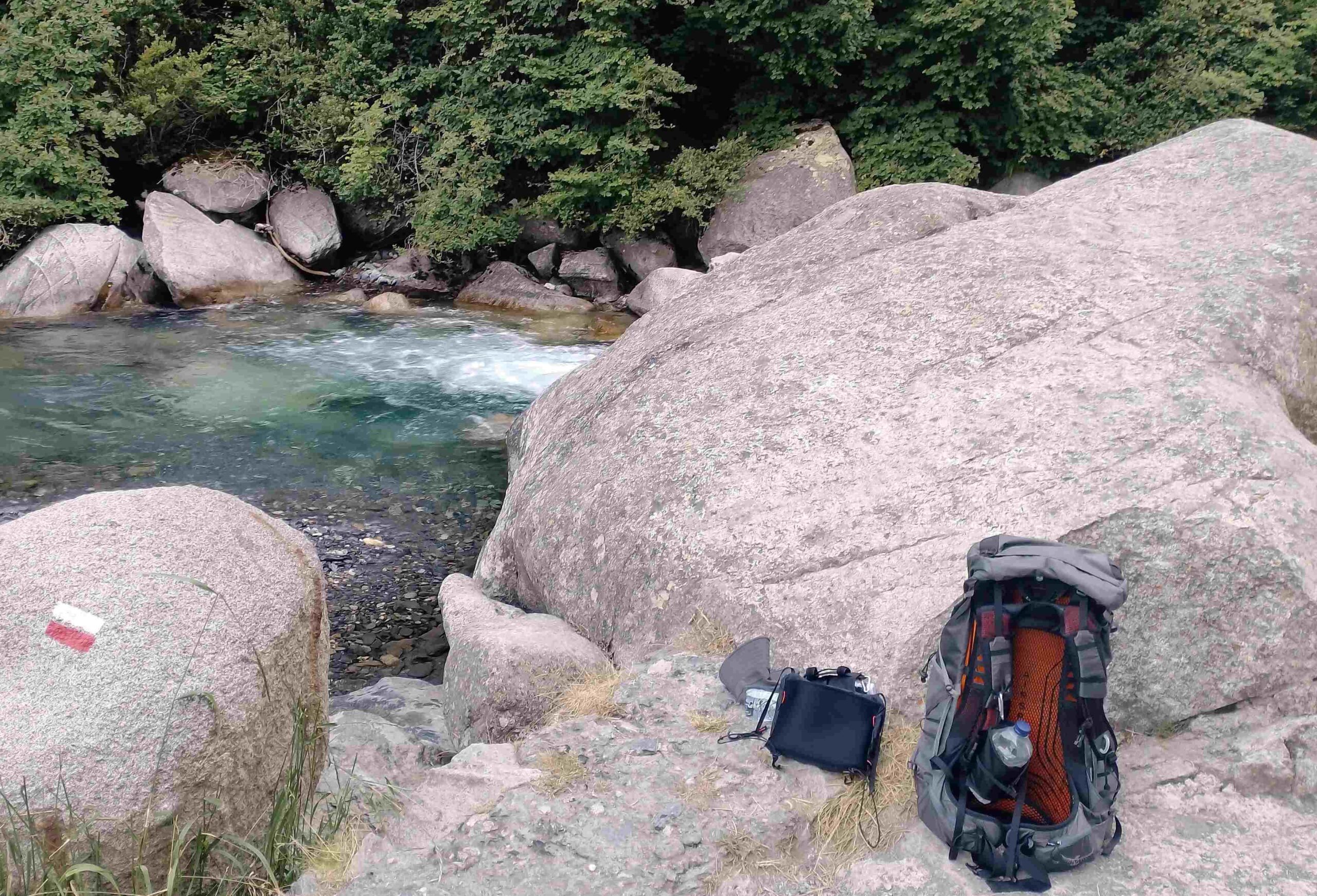
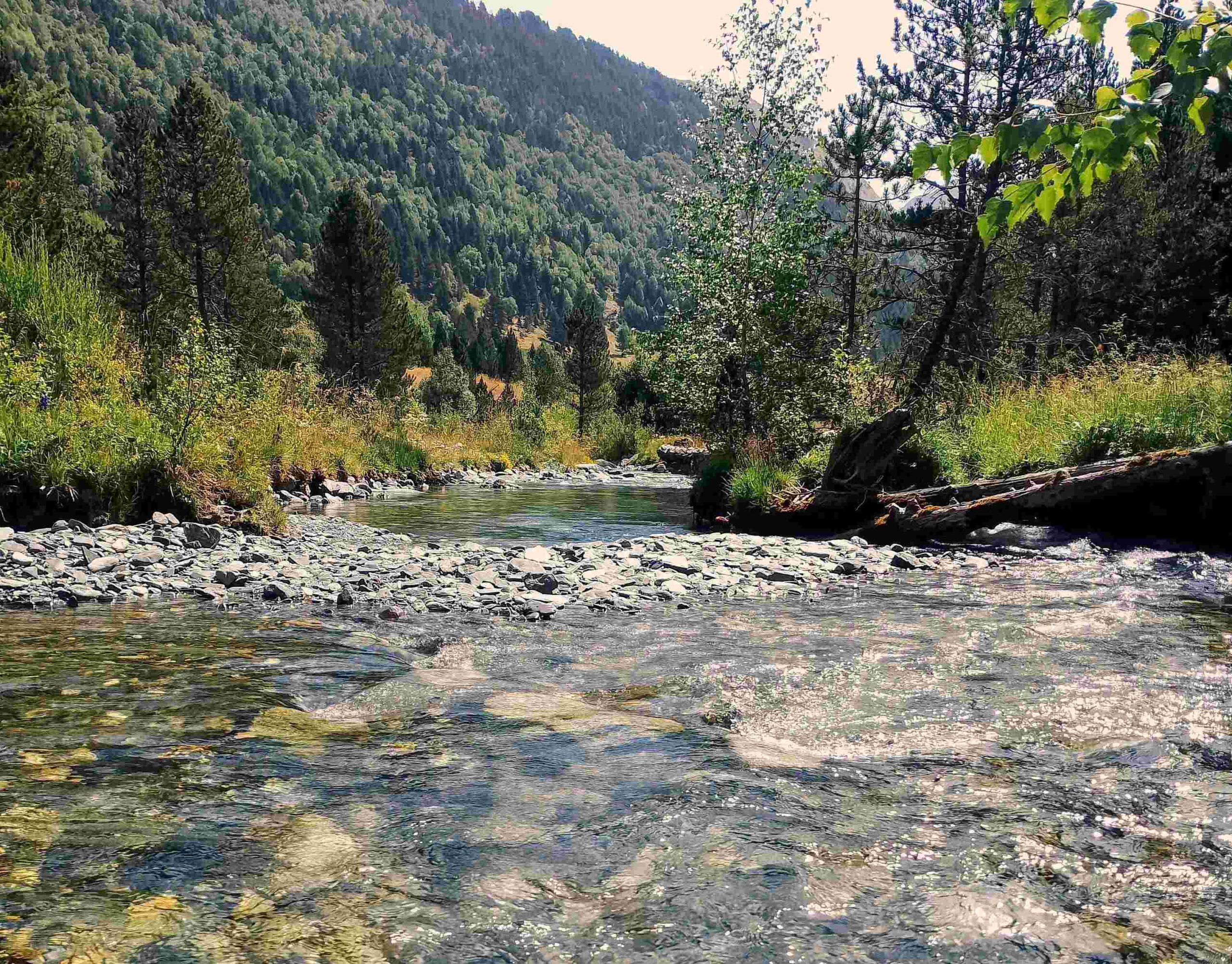
Pass the Turmo cabin and continue on to another bridge over the river; very nearby there’s a great spot for a dip. The water is icy cold and refreshing.
Before reaching the Estós refuge, views to the Posets massif open up on the left.
The path passes to the left of the Estós refuge, which offers drinks and meals.
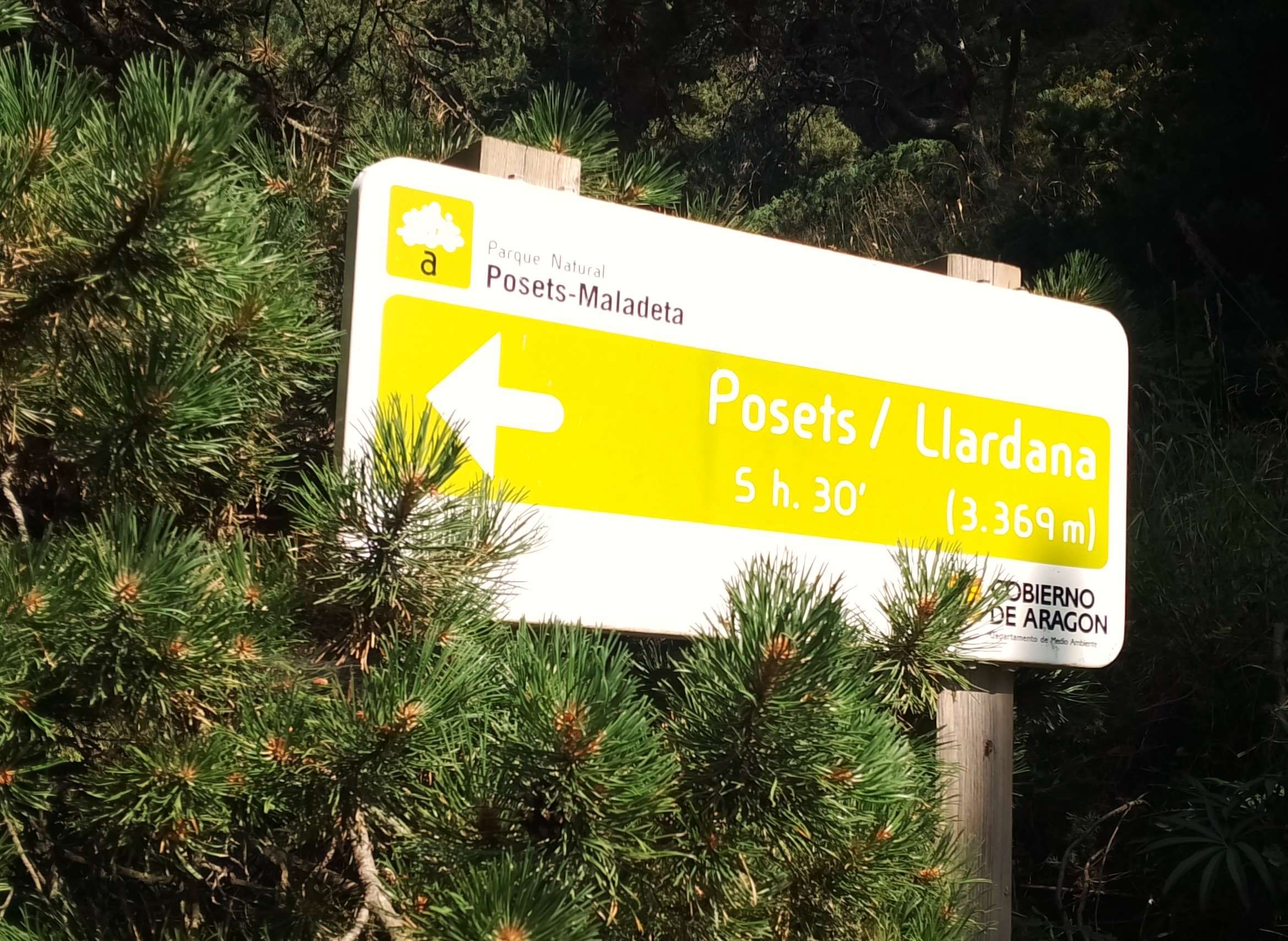
Shortly afterwards, a sign indicates the turn-off for the arduous route to the summit of Posets (the sign has the peak at 3,369m, while the Editorial Alpina map has 3,375m; such discrepancies are very common, almost obligatory, in this country).
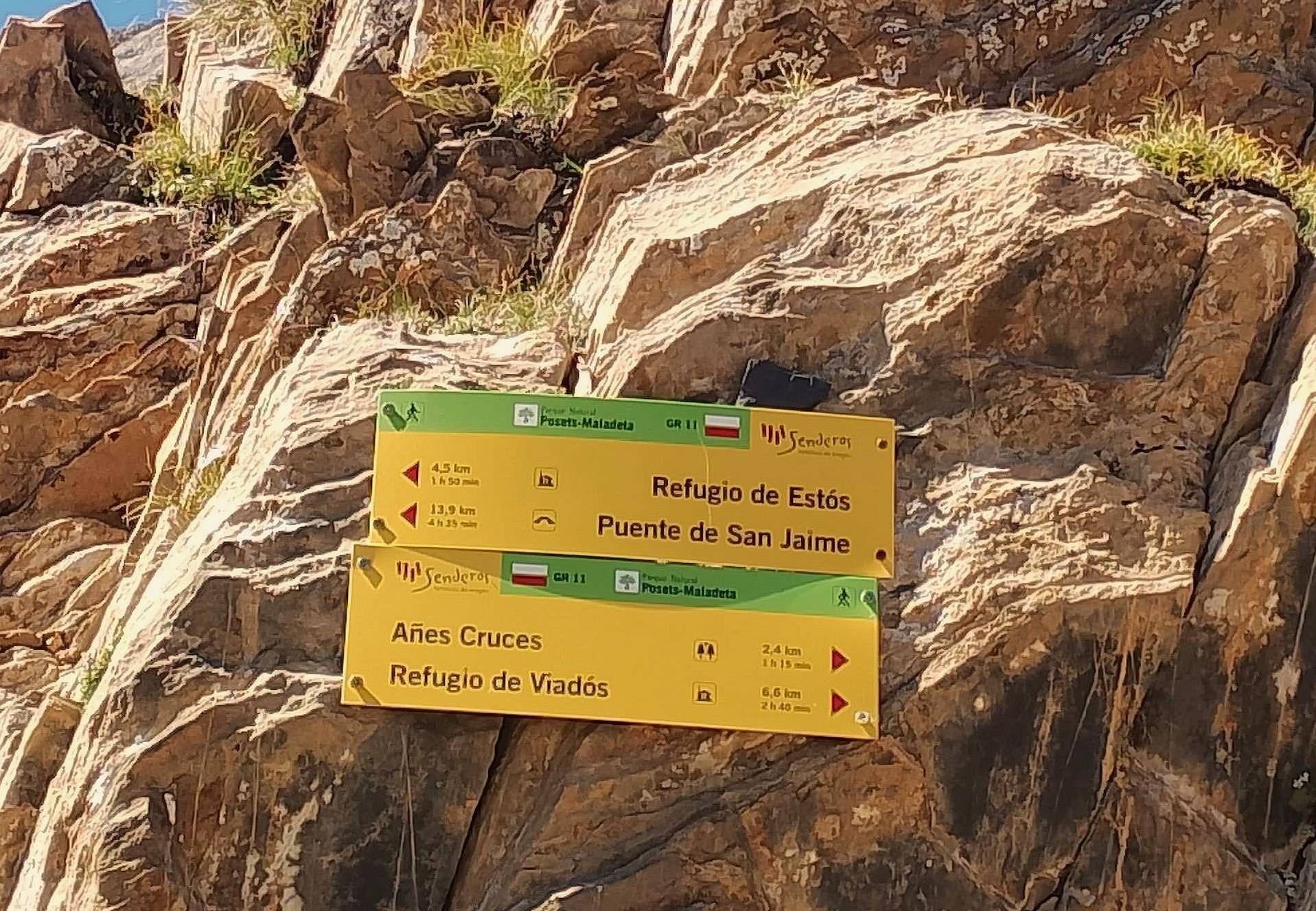
It’s 4.5km from the refuge to the pass. The ascent is fairly gradual for around 2km before the real climbing starts.
The refuge stands at 1,895m and the Puerto de Chistau at 2,577m. With nearly 700m of height to gain, the walker will expect some steep sections of ascent.
These come in shortish bursts before the final climb, which seems like a long haul through the lunar landscape to the pass.
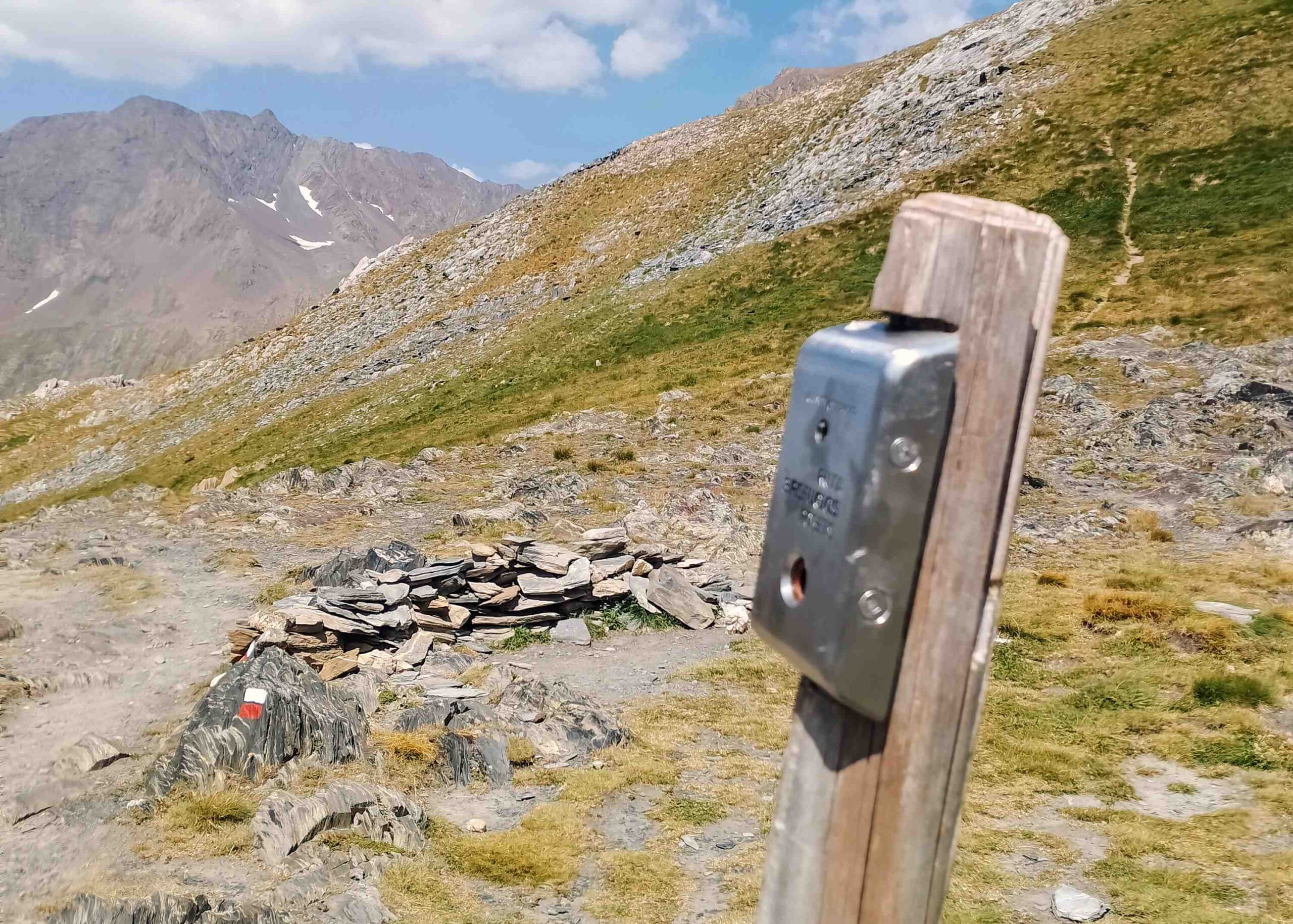
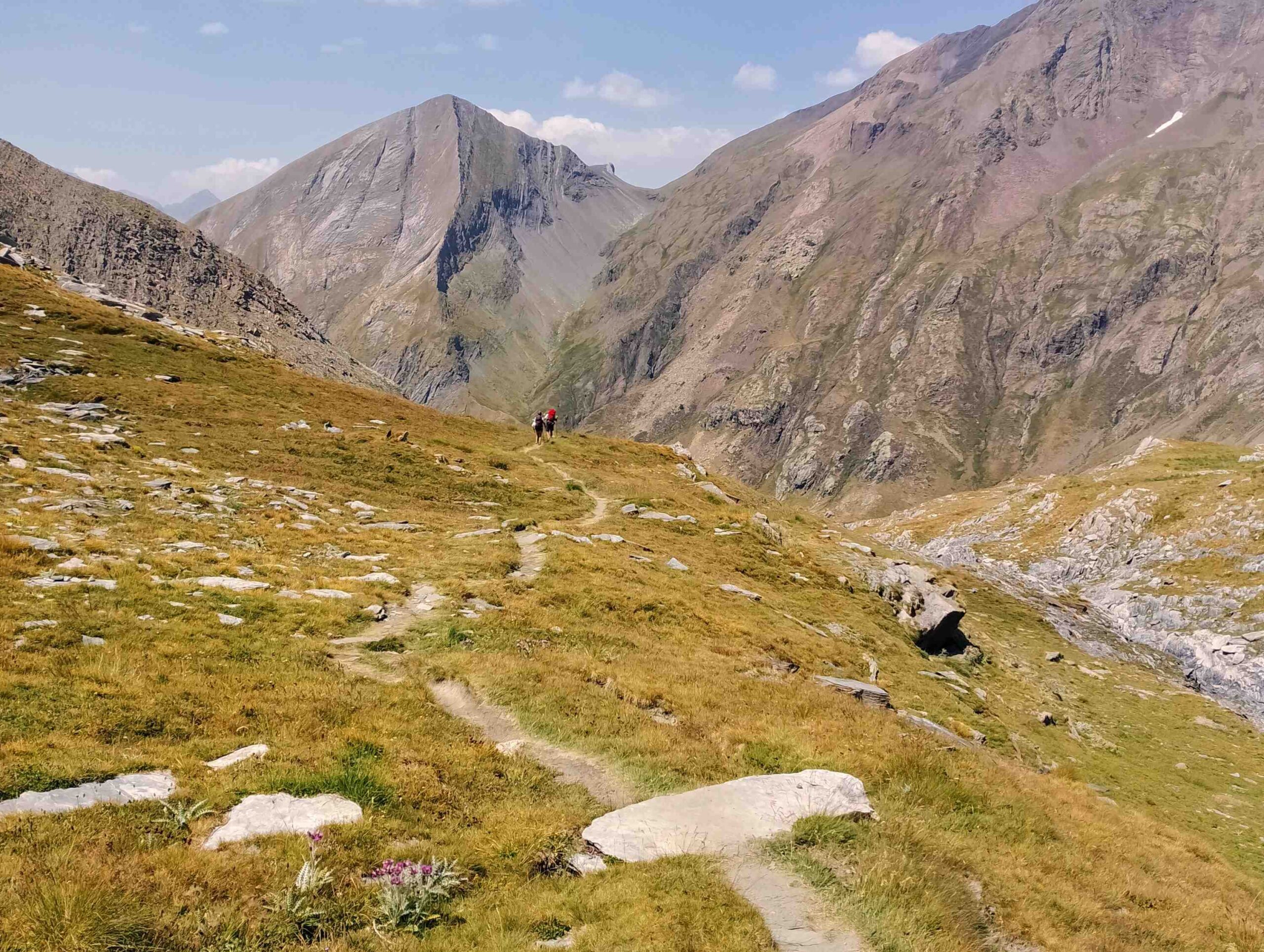
Up top it’s a different world, grassy and undulating. Time off will be taken to admire the views back along the Perdiguero massif and to the west over the route to come.
It’s 6.6km to get to the Viadós mountain refuge. It’s a lovely descent to the Pleta d’Añes Cruces, where streams from three valleys converge.
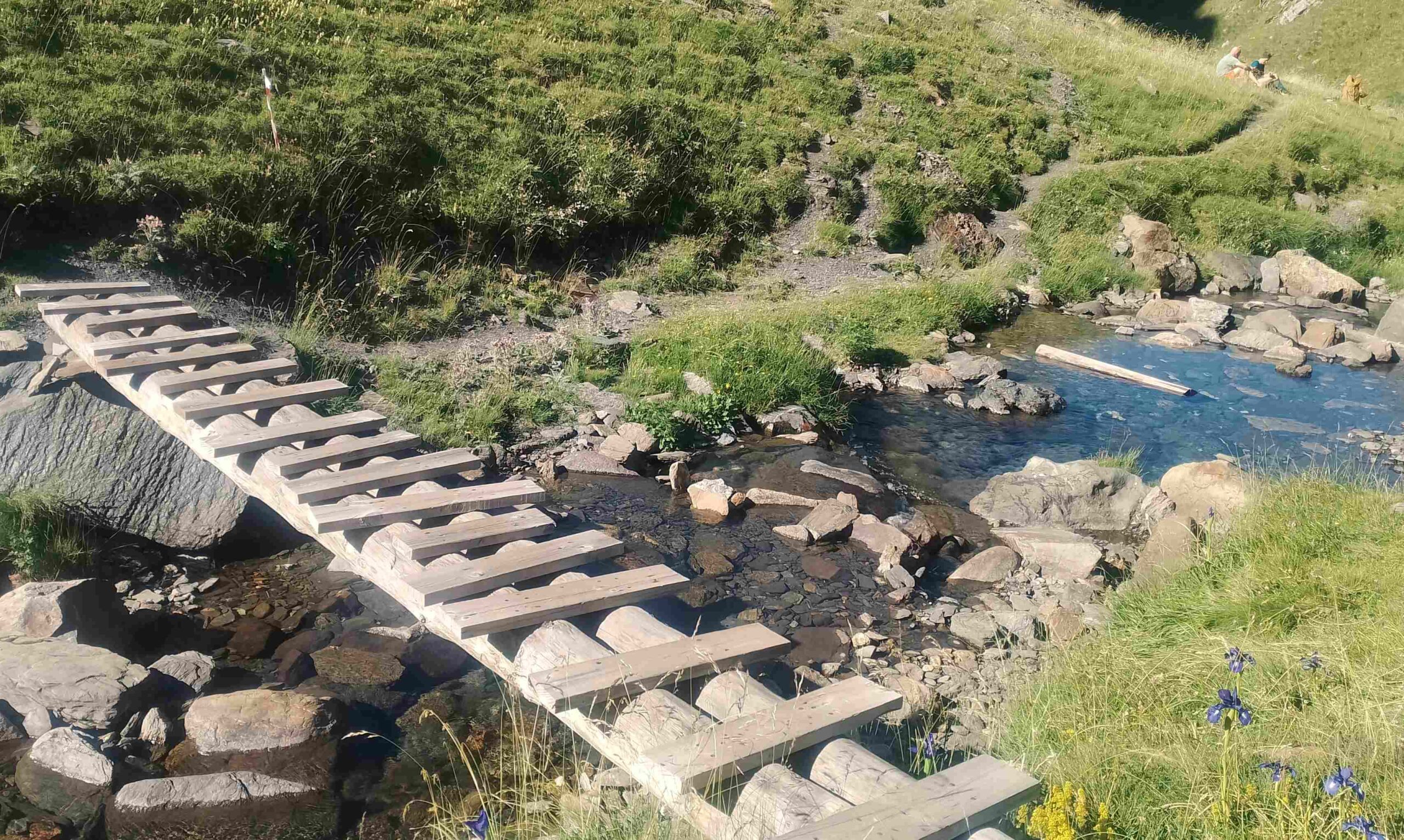
Most people will want to pause for a dip or a sit down in this lovely, grassy spot. Footbridges cross the first two streams; hop over the third one.
The GR-11 doglegs to the left to descend the Añes Cruces valley, with ever improving views of the Posets massif (on the left) and the fast shrinking glacier.
One of the best views of the massif comes from the front door of the Viadós mountain refuge. Continue on the GR-11 to get to the Forcallo campsite.
Those who used public transport to get to Benasque may want to continue to Bielsa on the GR-11 and return home from there (see previous posts).
If you have your car in Benasque, then you will have to think about returning from the Chistau valley on the GR-11 at some point.
Recent Comments