

This is a relatively short stage of the Camino da Geira e dos Arrieiros but there’s a fair bit of uphill walking, with a total of 1,000 metres of height gain over the 20km from Pazos de Arenteiro to Beariz.
For the most part, the climbing is steady going. There is only one short section that could really be described as very steep. And it’s through a village.
On the route, the walker has the sensation of being back in a remote and mountainous area, above all during the second part of the hike.
There are villages. And a bar in Feás at the halfway point; they don’t serve meals but you can get a coffee and cake.
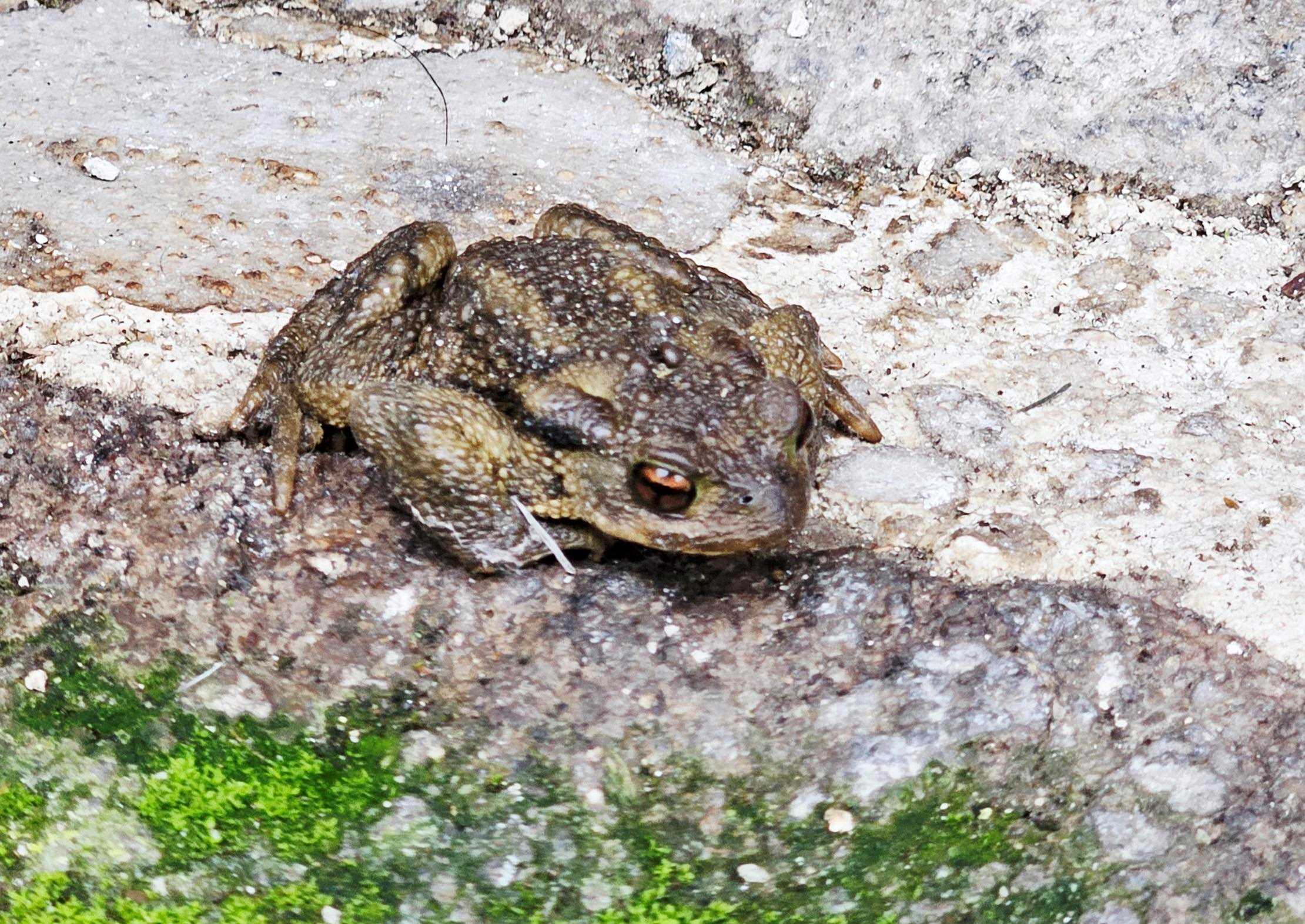
Opening the heavy, old wooden door at the Aldea Rural in Pazos to leave for the day’s walking, I found a toad sheltering underneath. It seemed very content, so I closed the door carefully and left him in peace.
From Pazos I followed the OU-0414 road, going slightly downhill and passing the San Roque chapel, with the River Avia below in the valley.
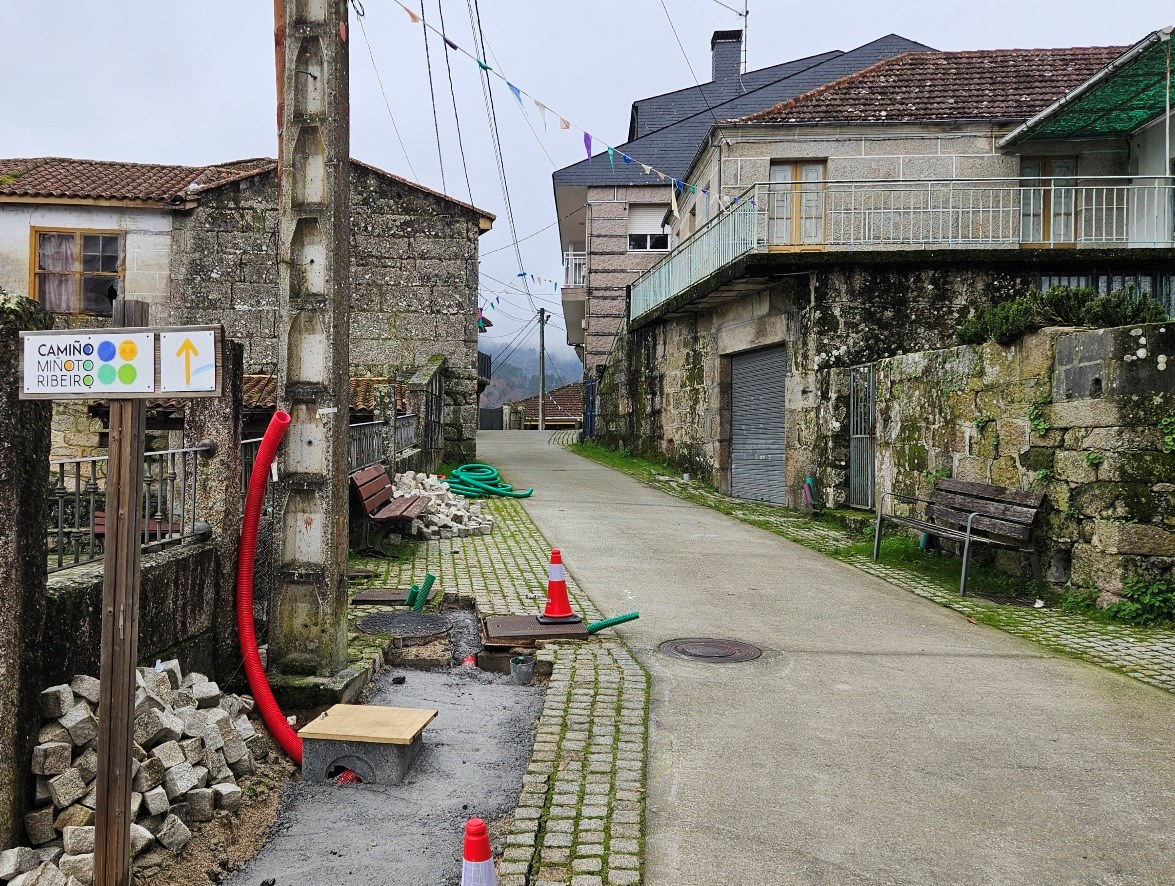
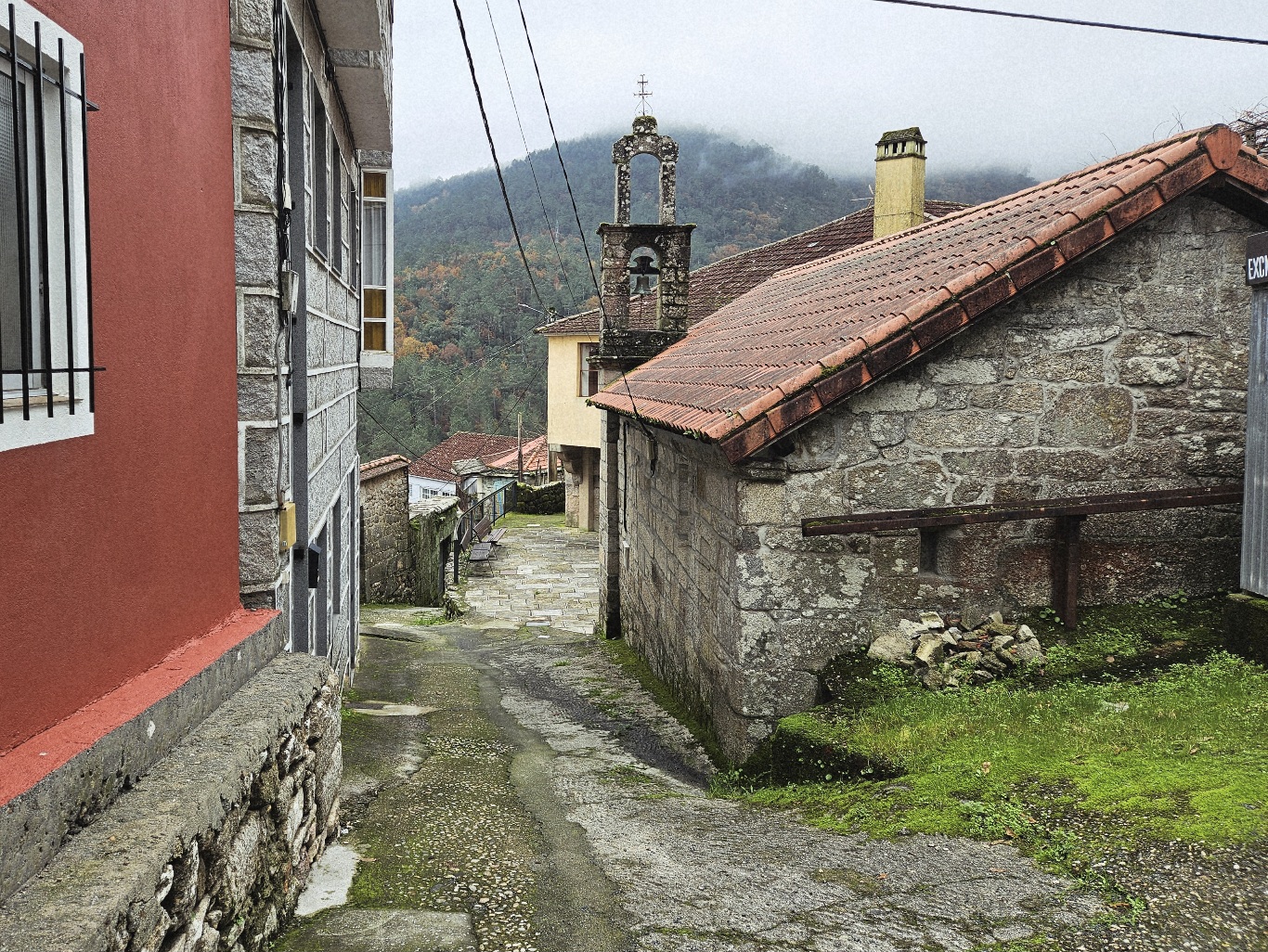
The ‘camino’ turns off along a lane, passing houses and then following the road towards the village of Salón.
The road crosses a stream below the village. There is a turning on the right, which is the start of the steep ascent into Salón.
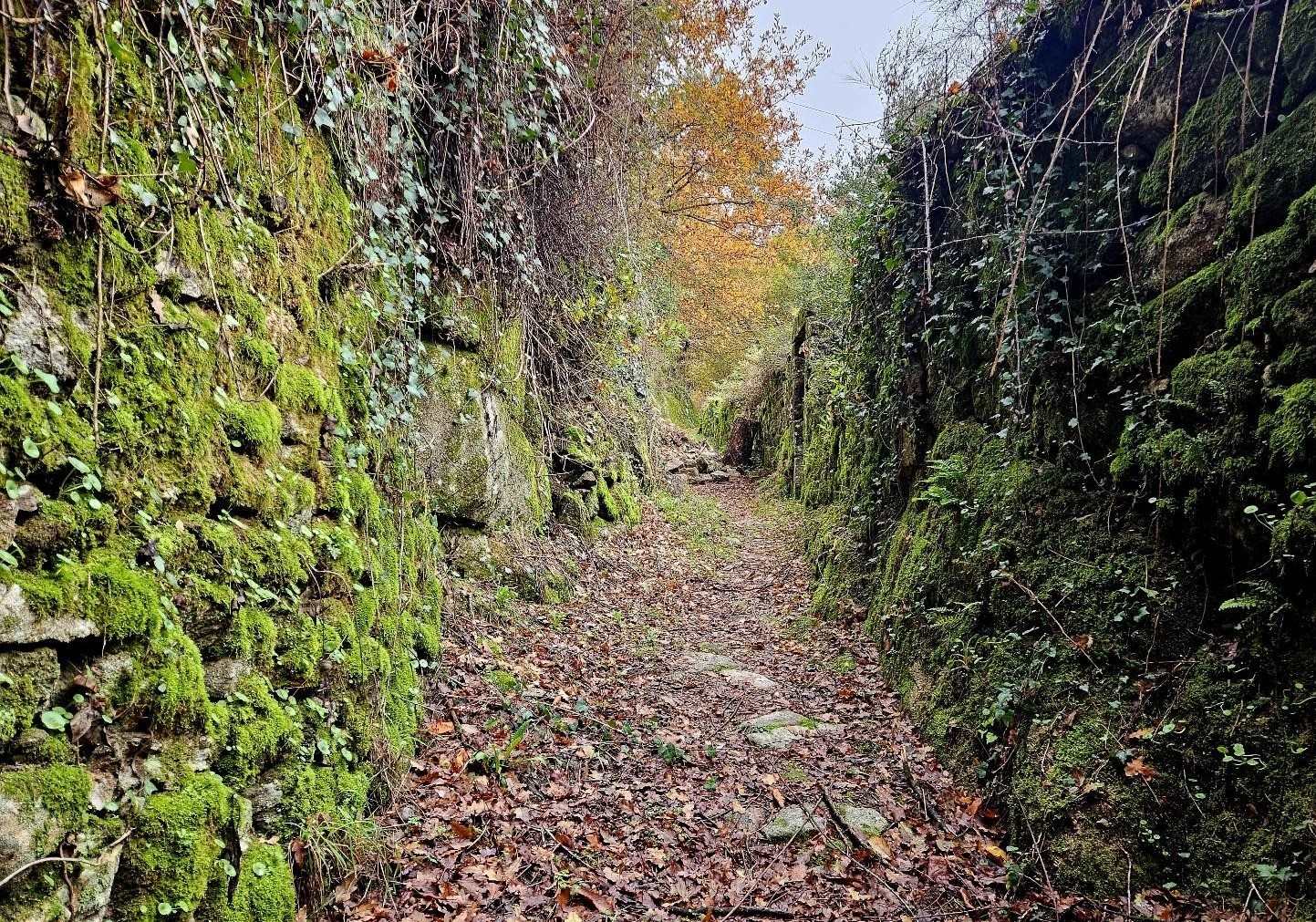
Leaving the road, the lane climbs up, eventually passing the church and crossing a minor road to continue ascending. The lane turns into a track which runs between high, mossy walls.
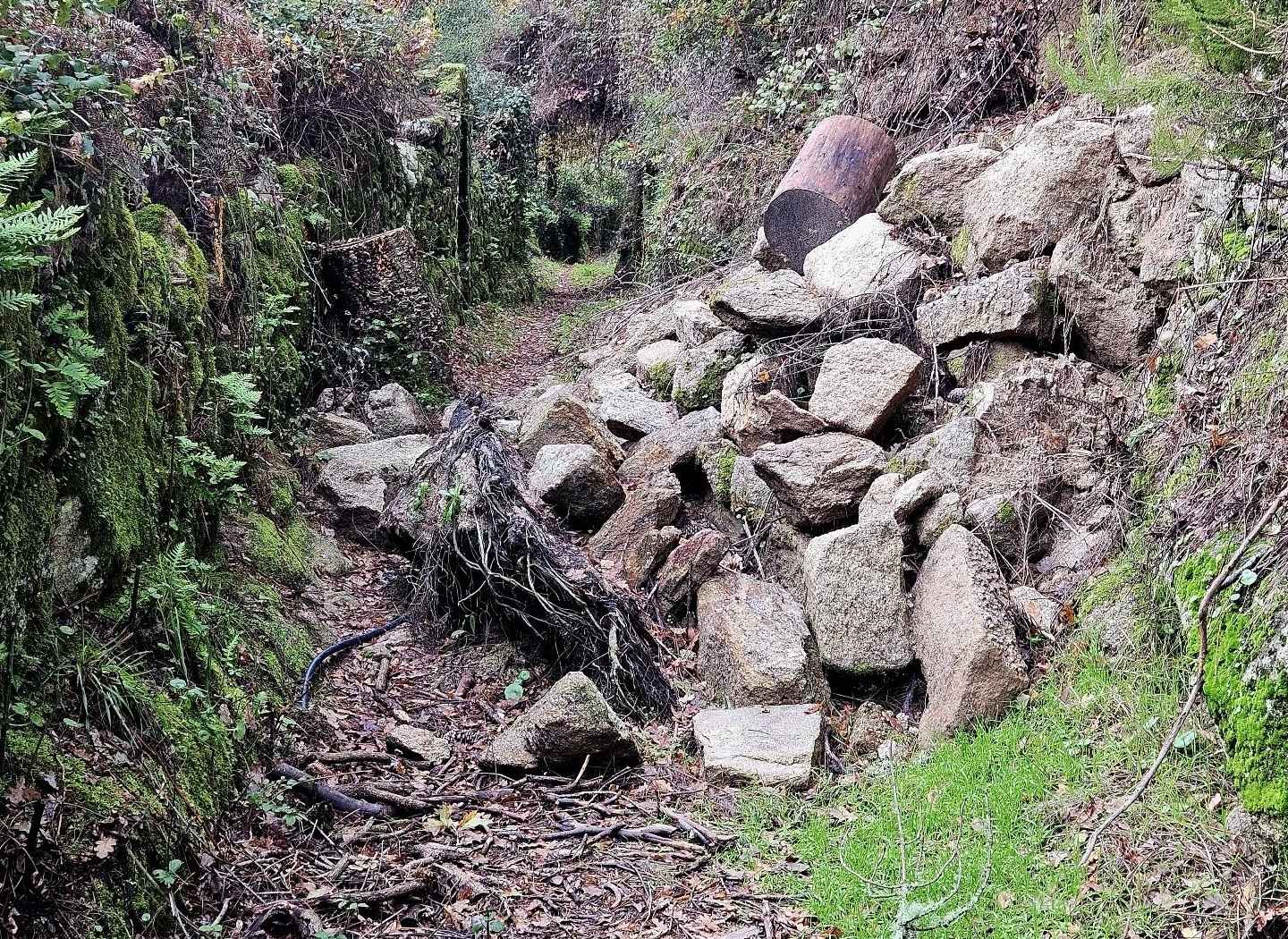
A section of wall had collapsed in a landslide during the persistent deluges last December; it was easy to cross it.
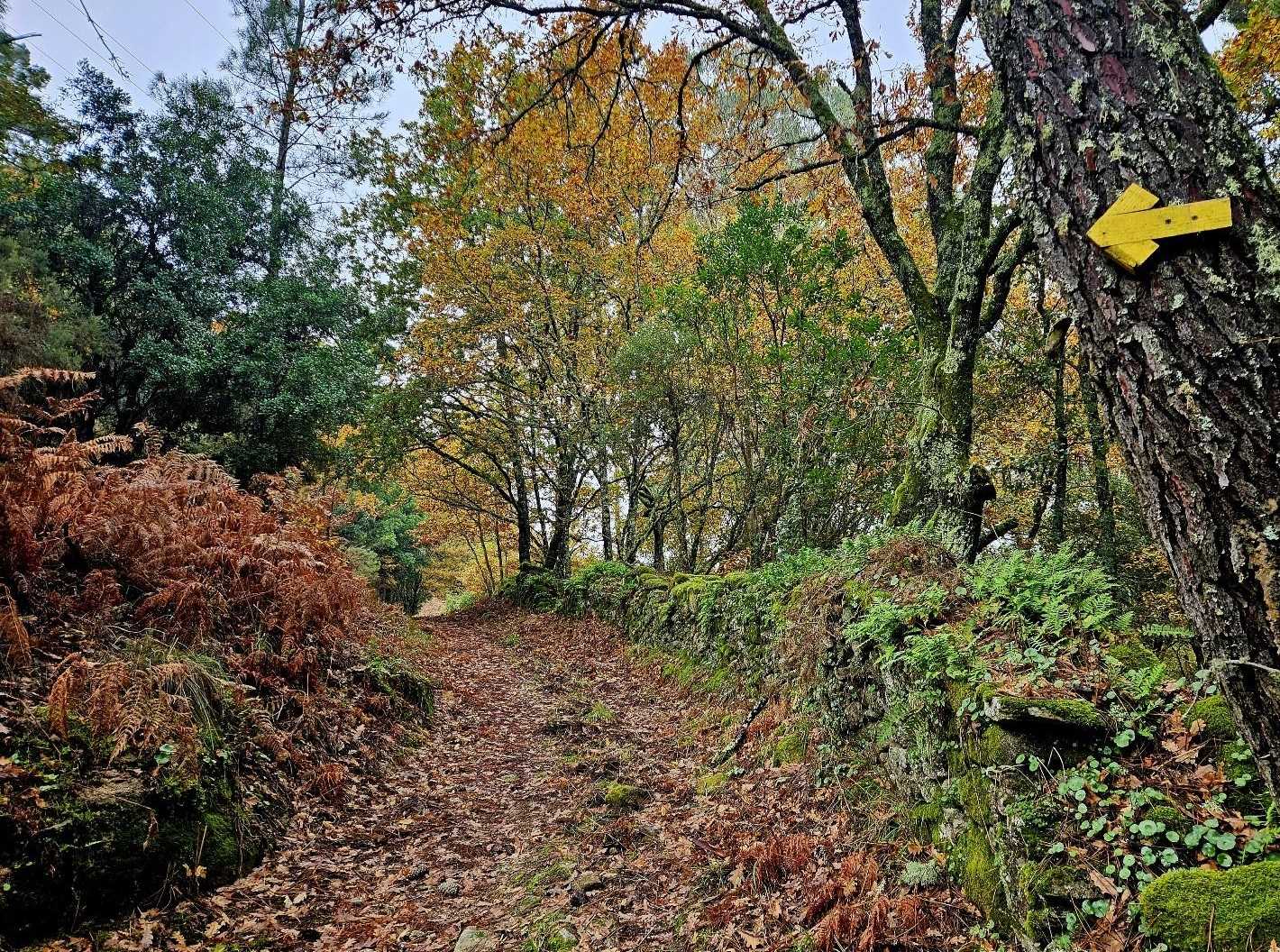
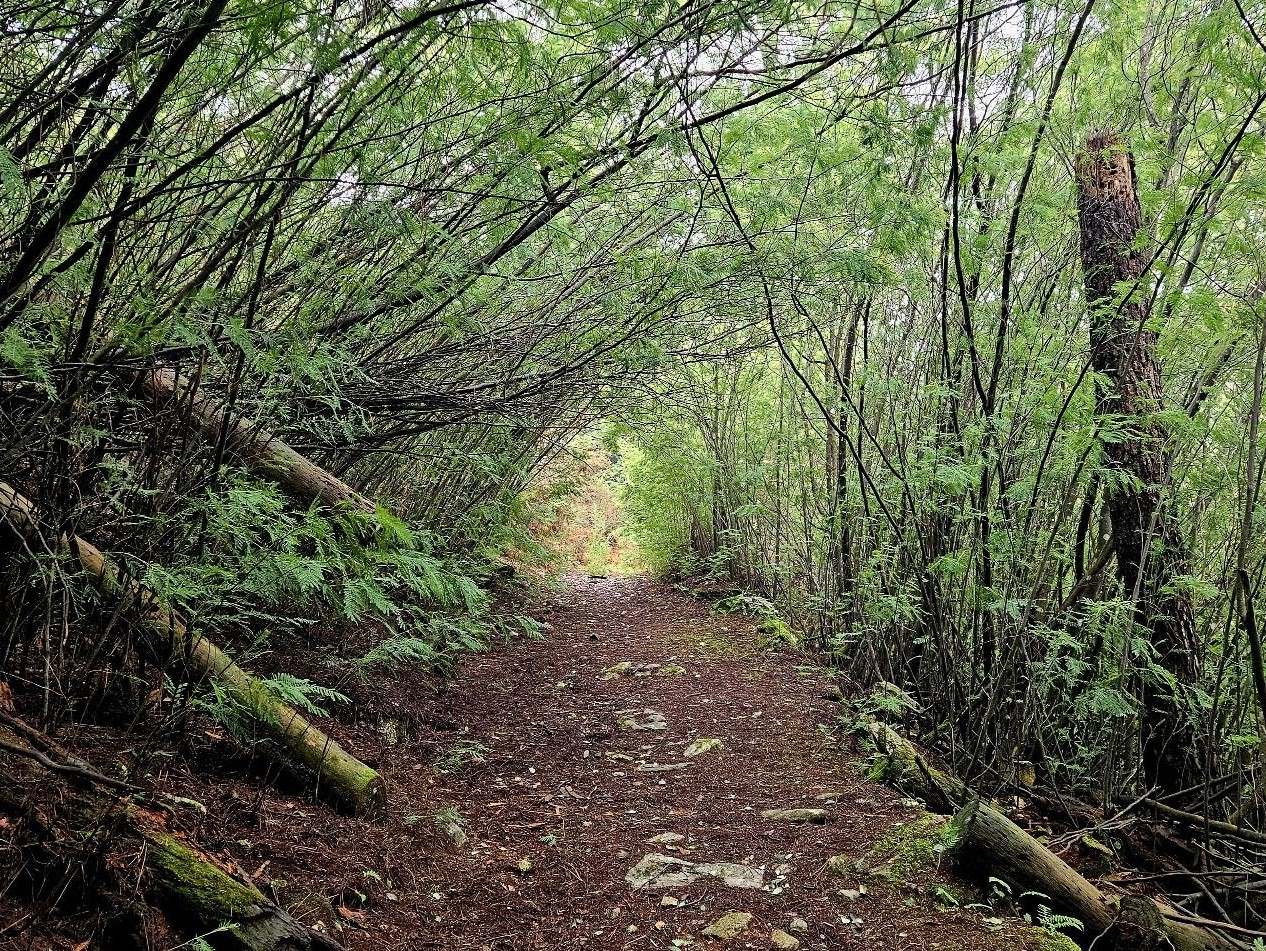
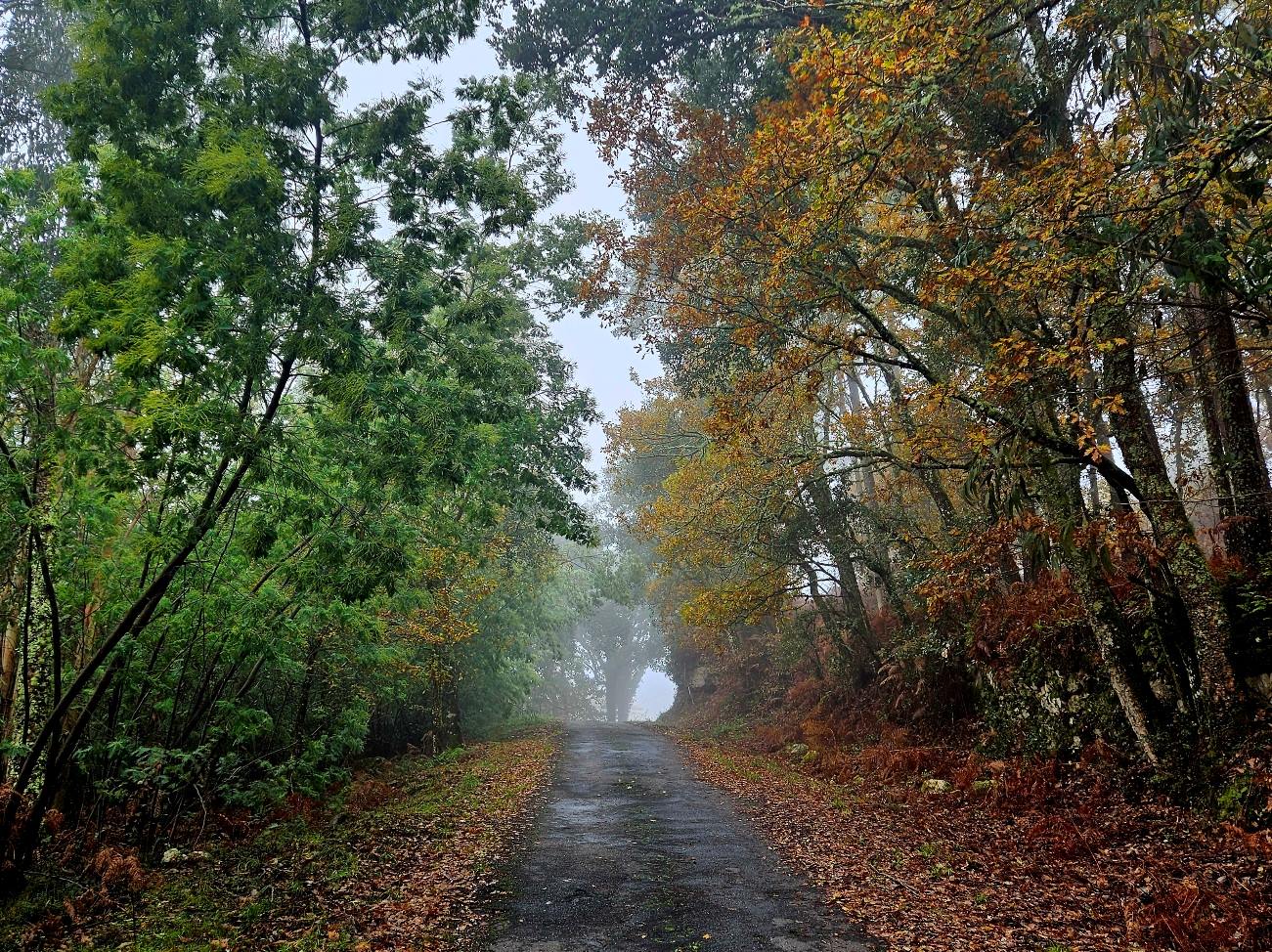
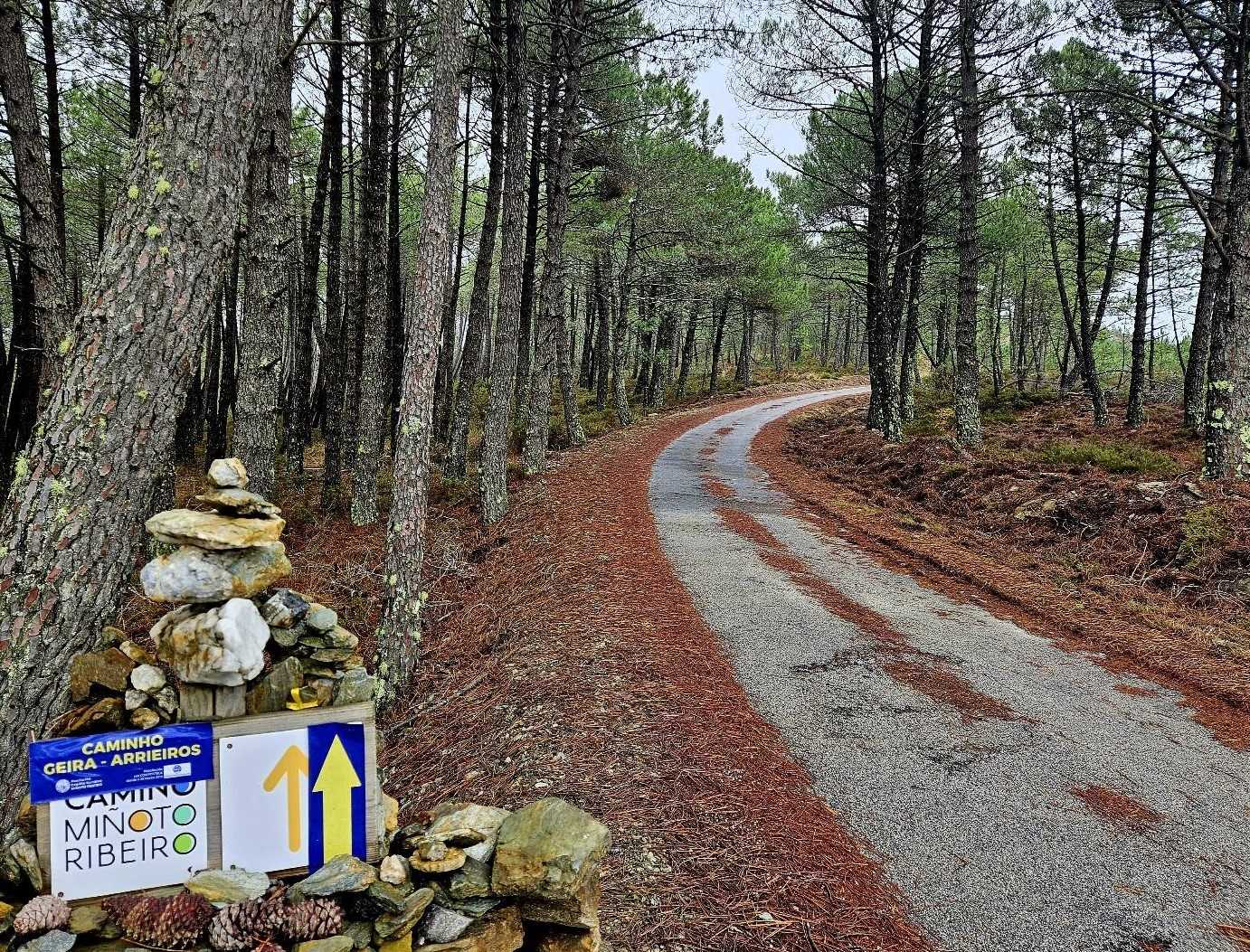
The route becomes greener as it gets higher, with yellow arrows pointing through the woodland. It’s a very pleasant ascent. Occasionally, trees have fallen and have to be skirted.
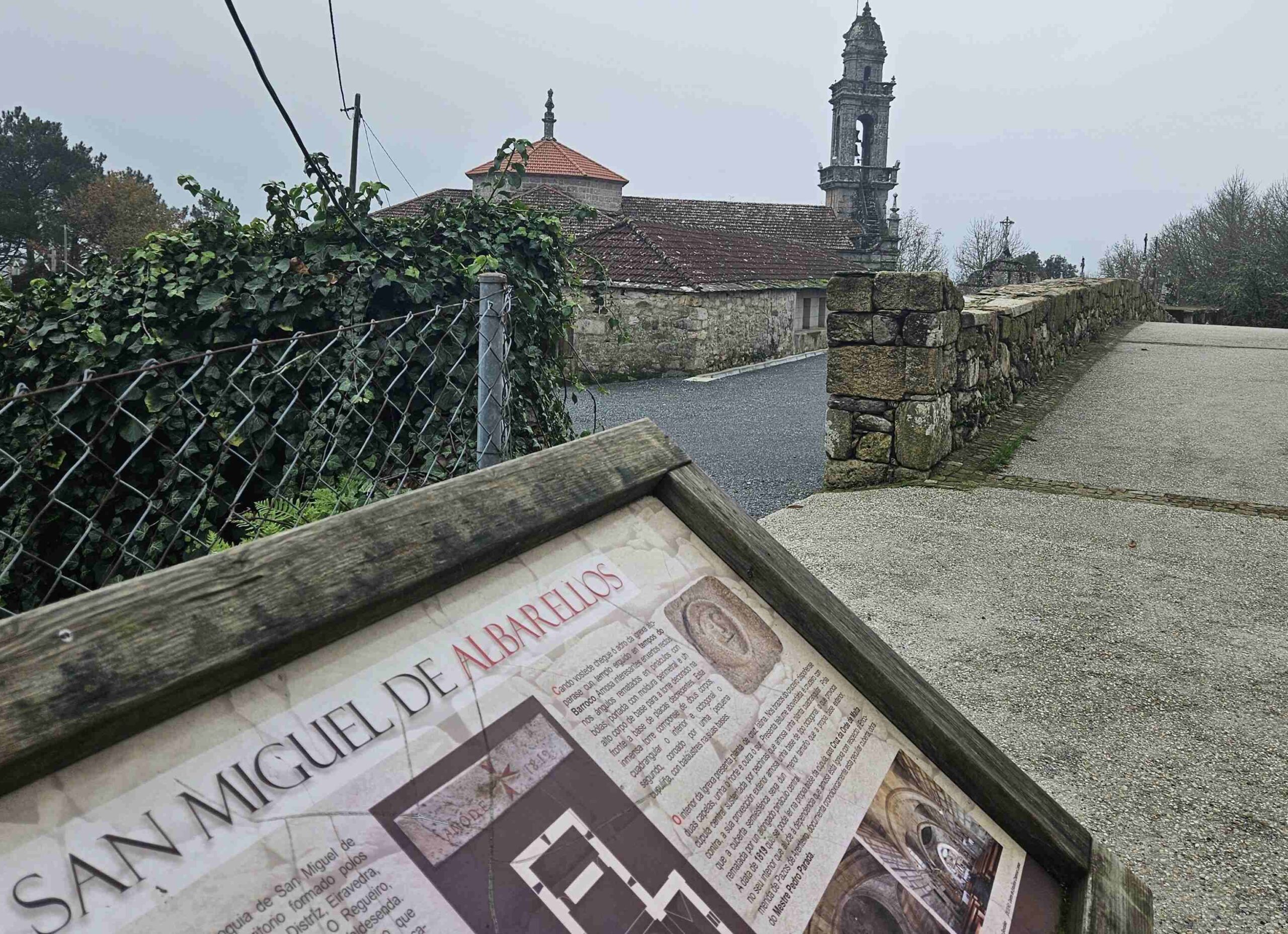
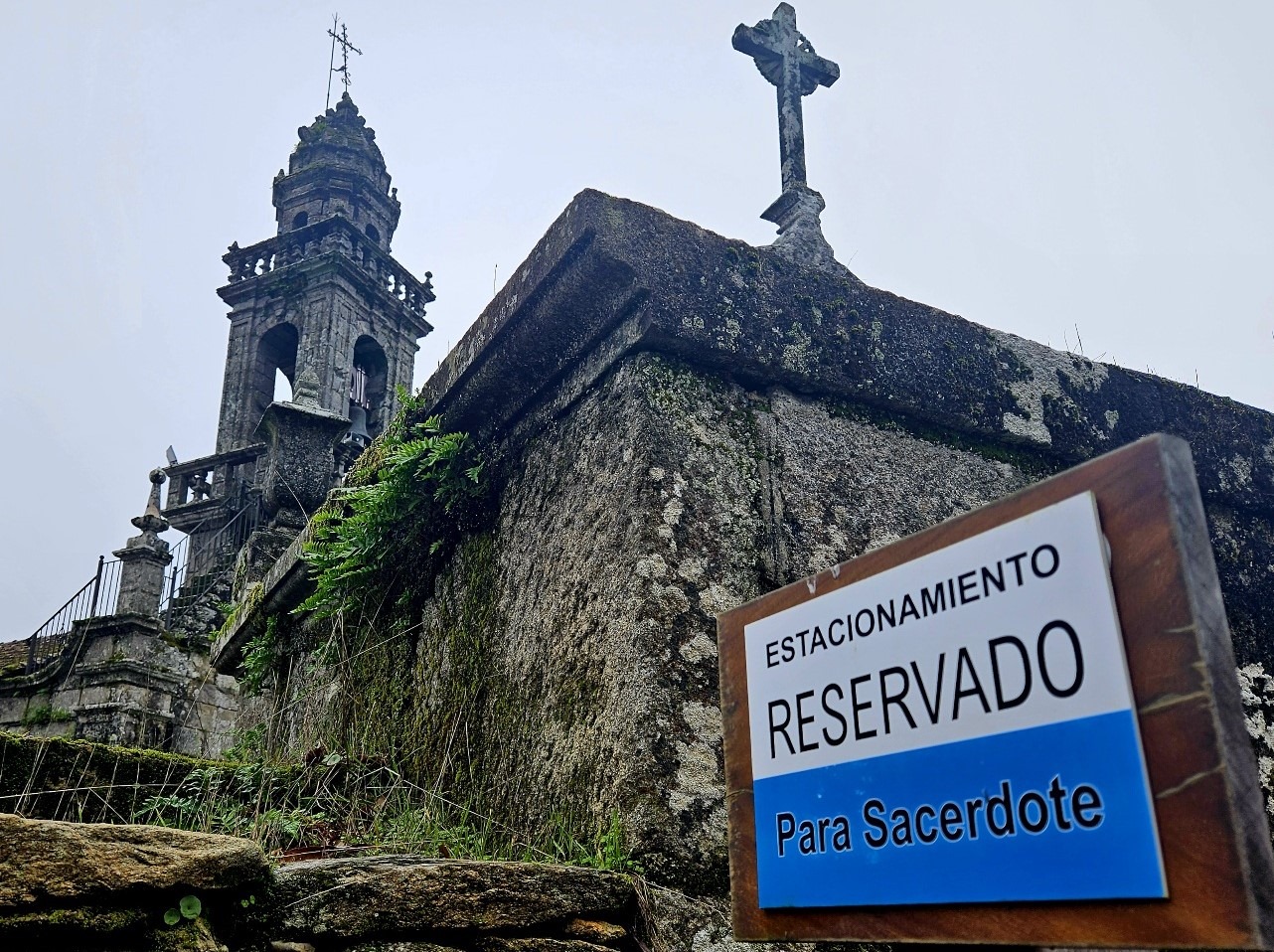
The ‘camino’ emerges in the village of Igresario, close to the church of San Miguel de Albarellos.
It worth having a quick look at this impressive place of worship before turning back to continue ascending on a lane. In less than 100m it runs into the OUR-CV 305 minor road; turn left and then immediately right to continue ascending on a lane which goes up to the village of Distríz.
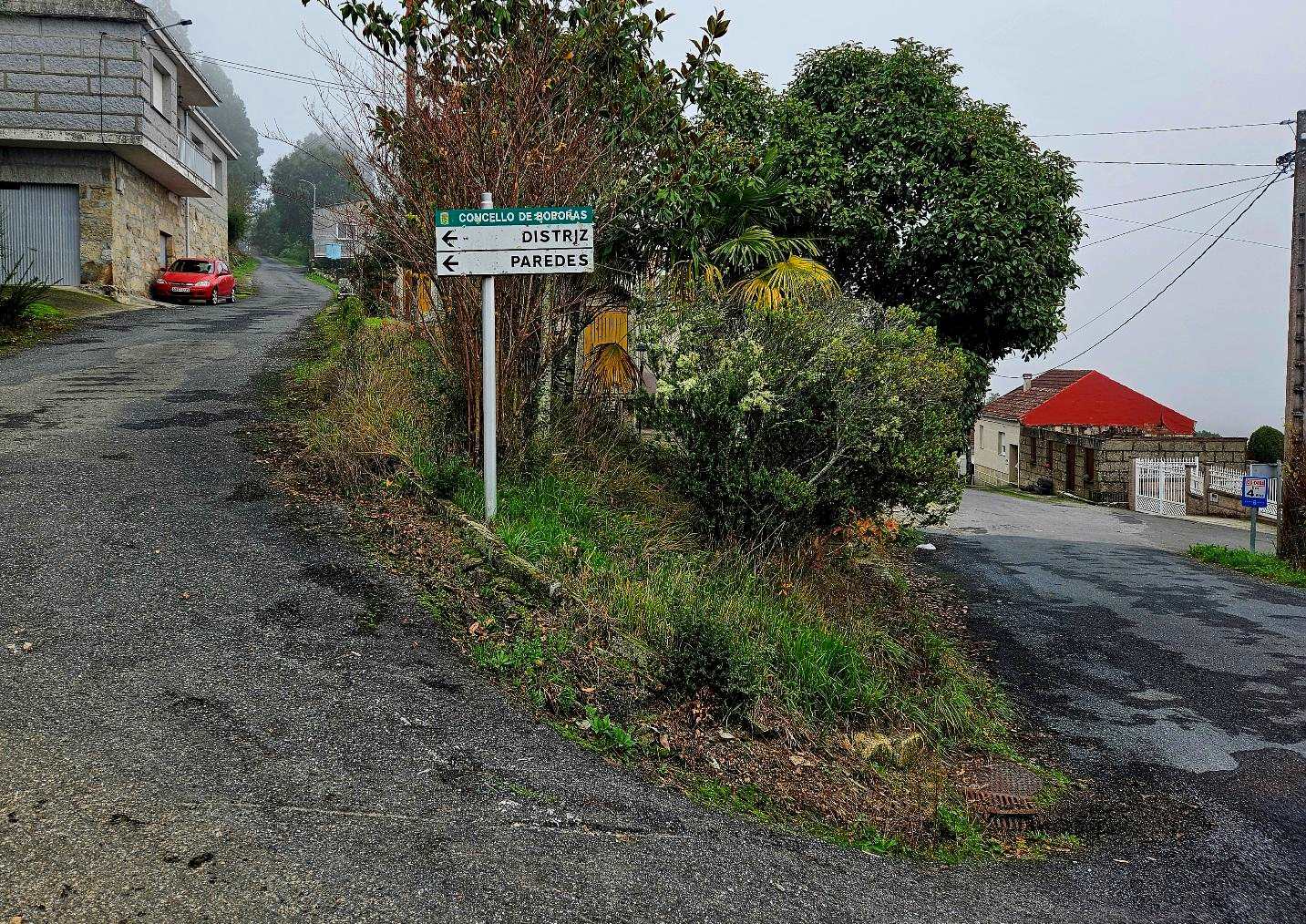
Keep on the same lane, which goes through some wonderful woodland. It passes the houses of Paredes.
The lane emerges at a minor road, the OUR-CV 305 again. It’s a right turn for Feás; follow the road to the village.
Arriving in Feás, cross the main road to get to a small ‘square’, where the bar is on the left.
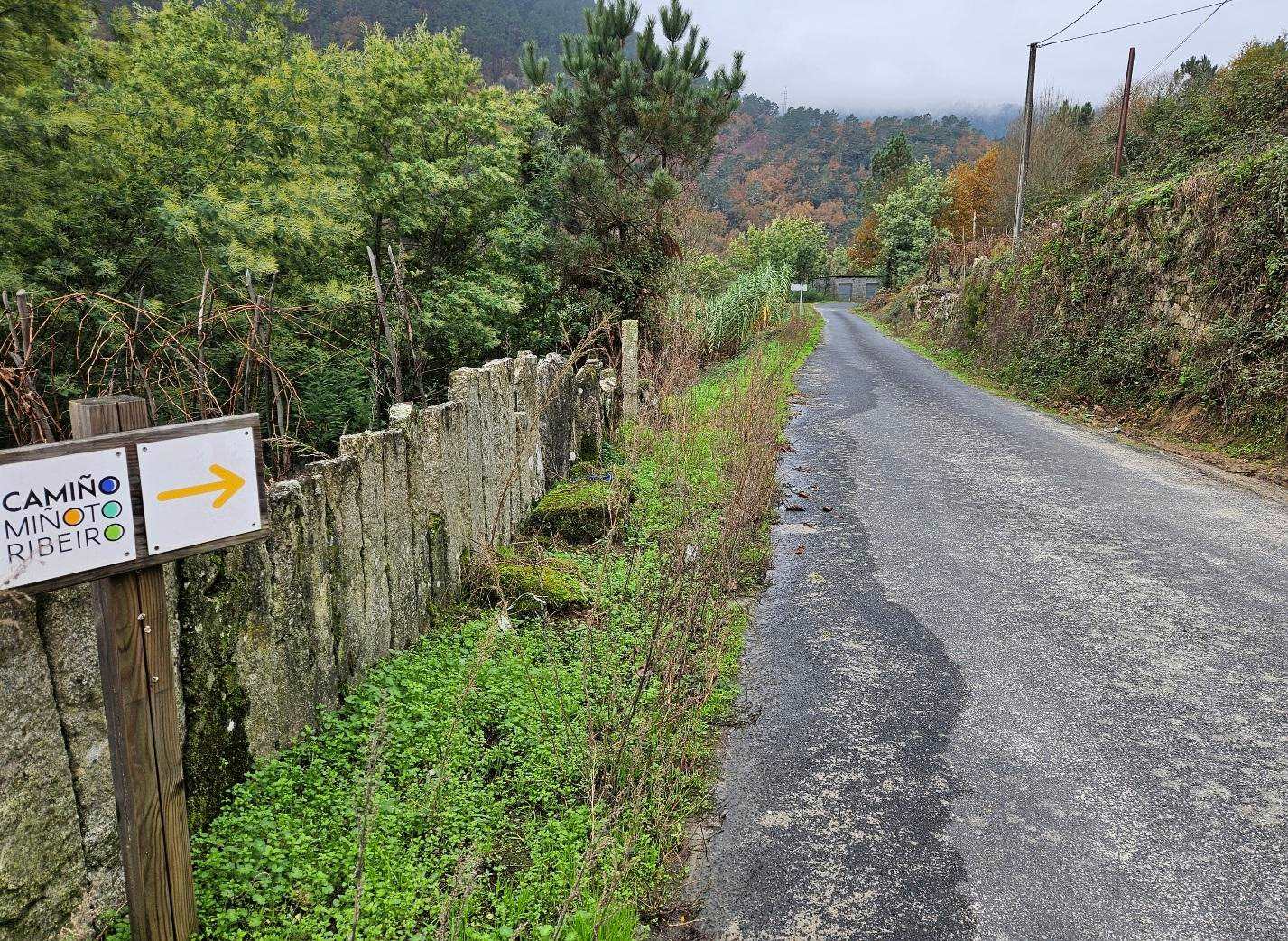
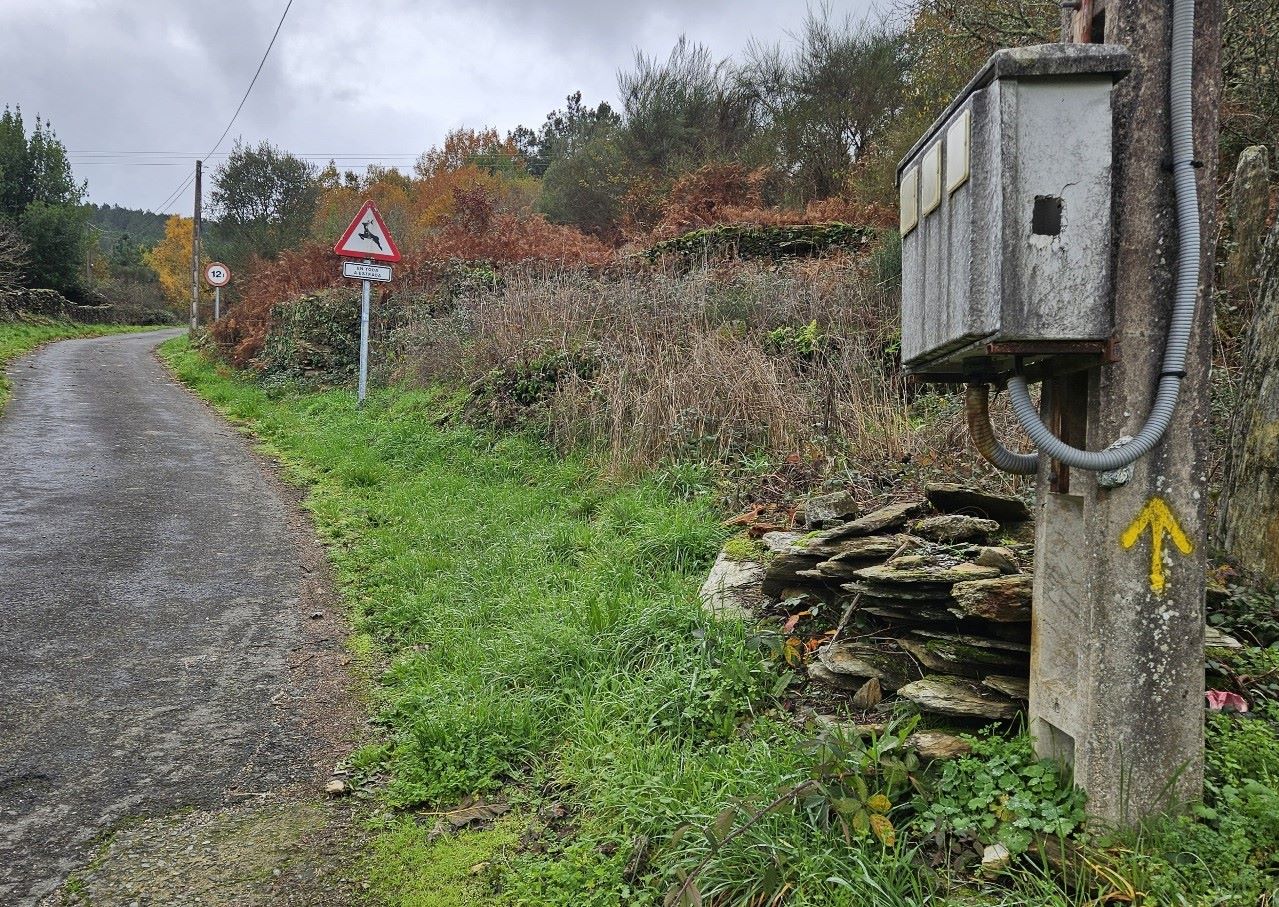
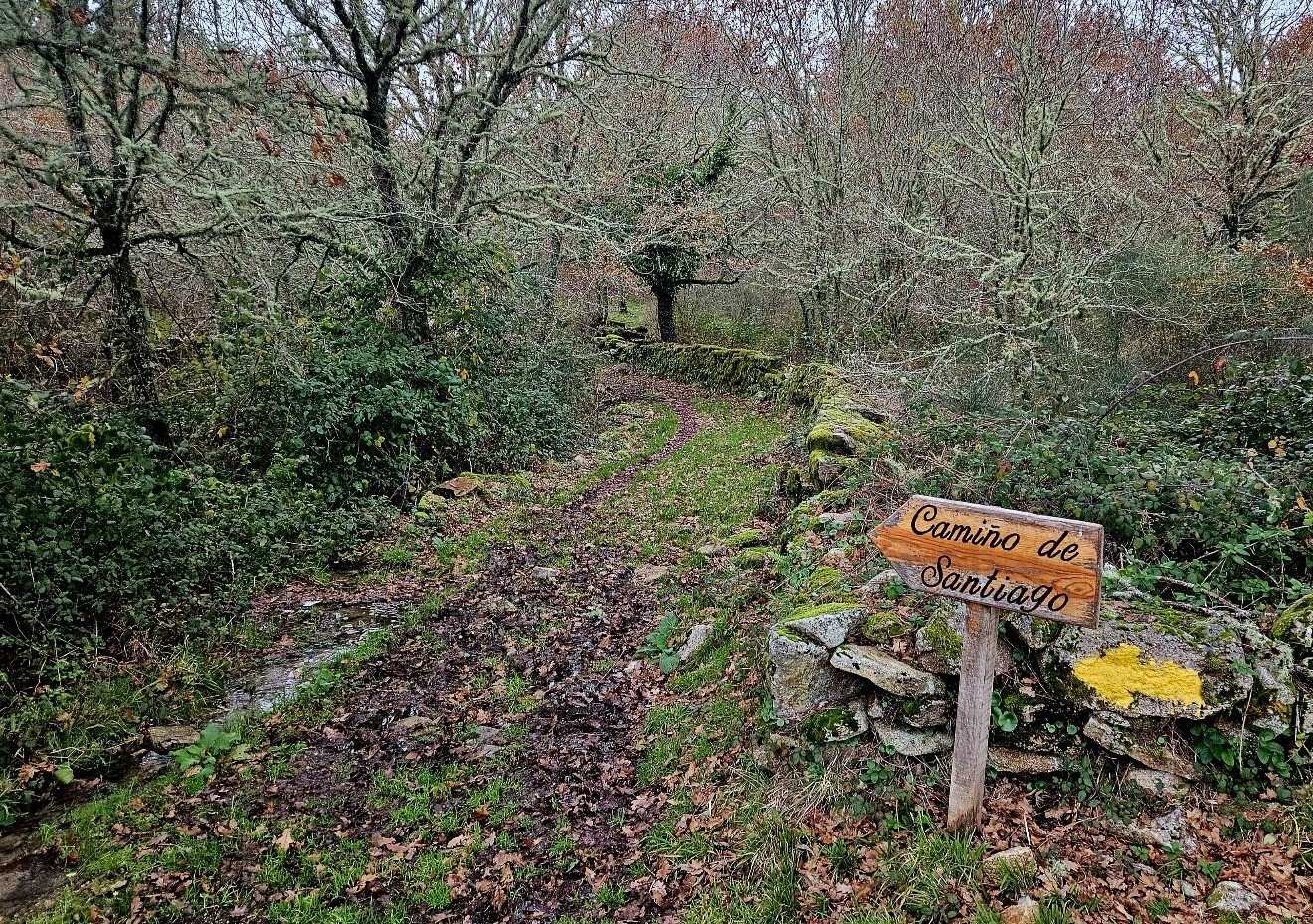
The ‘camino’ continues along the lane, here called the Camiño do Campo. Yellow arrows point the way as the village is left behind.
Over the next 3.5km the route climbs from a height of 480m to 800m; it’s not backbreaking stuff, just a steady ascent, heading into remote country.
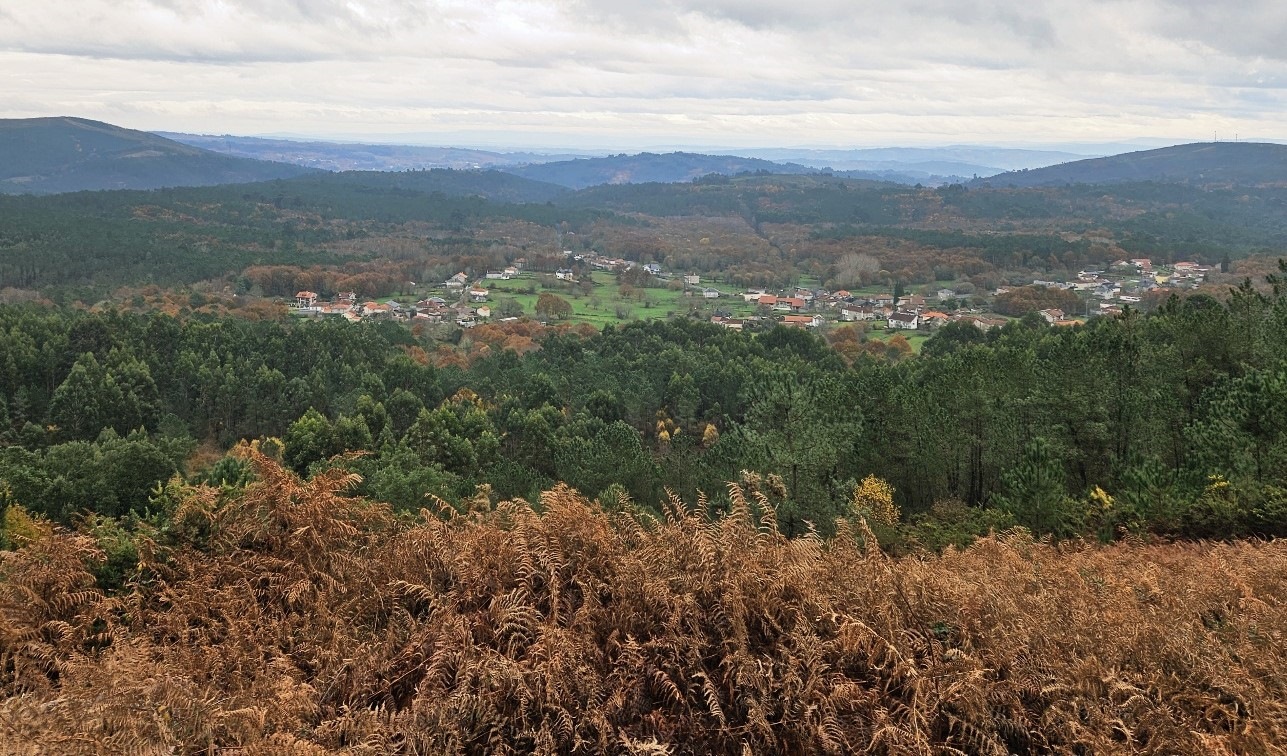
The views over the surrounding mountains improve on the ascent; enjoy a look-back over Feás far below with the hills in the distance.
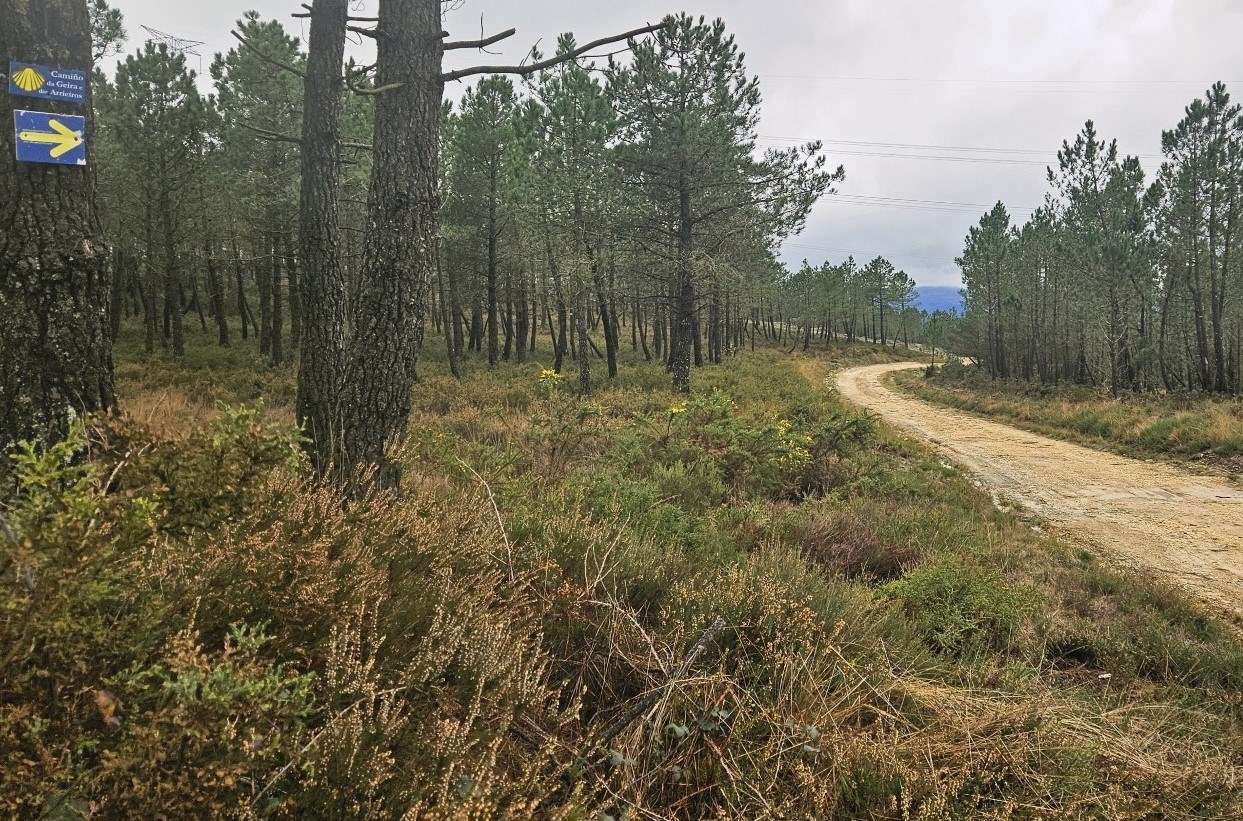
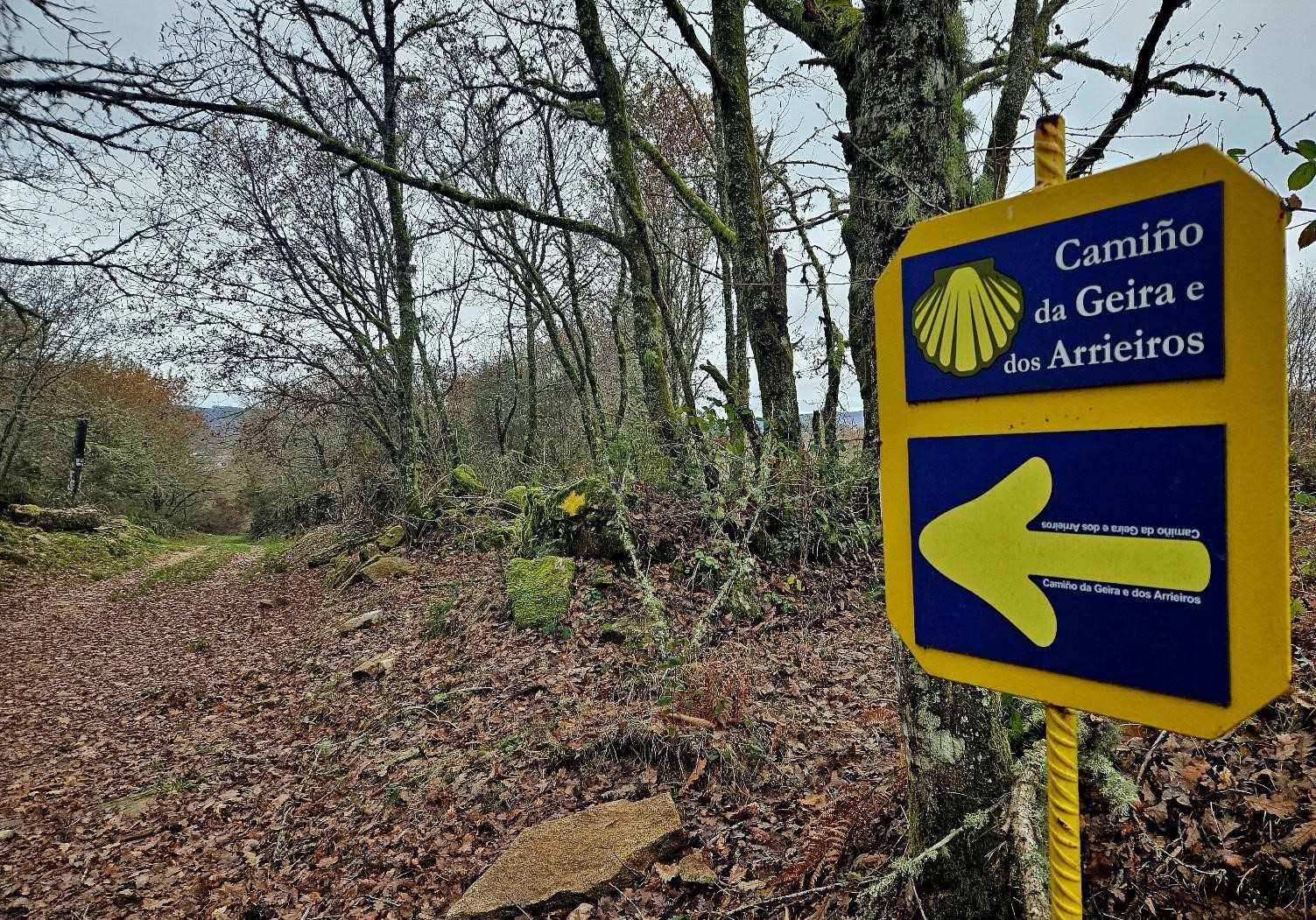
Yellow arrows point the way on the ascending lane, as it moves through the pine forest.
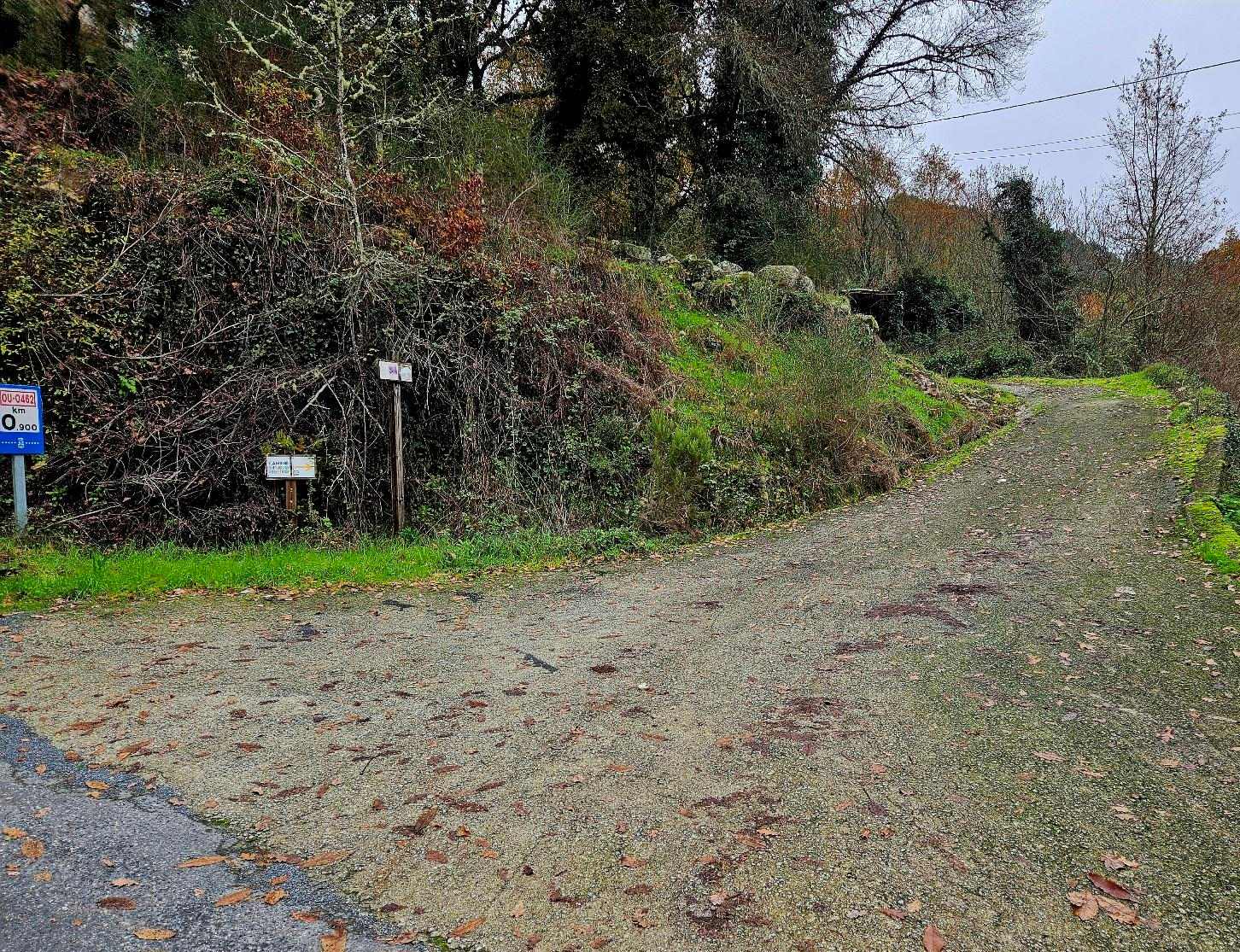
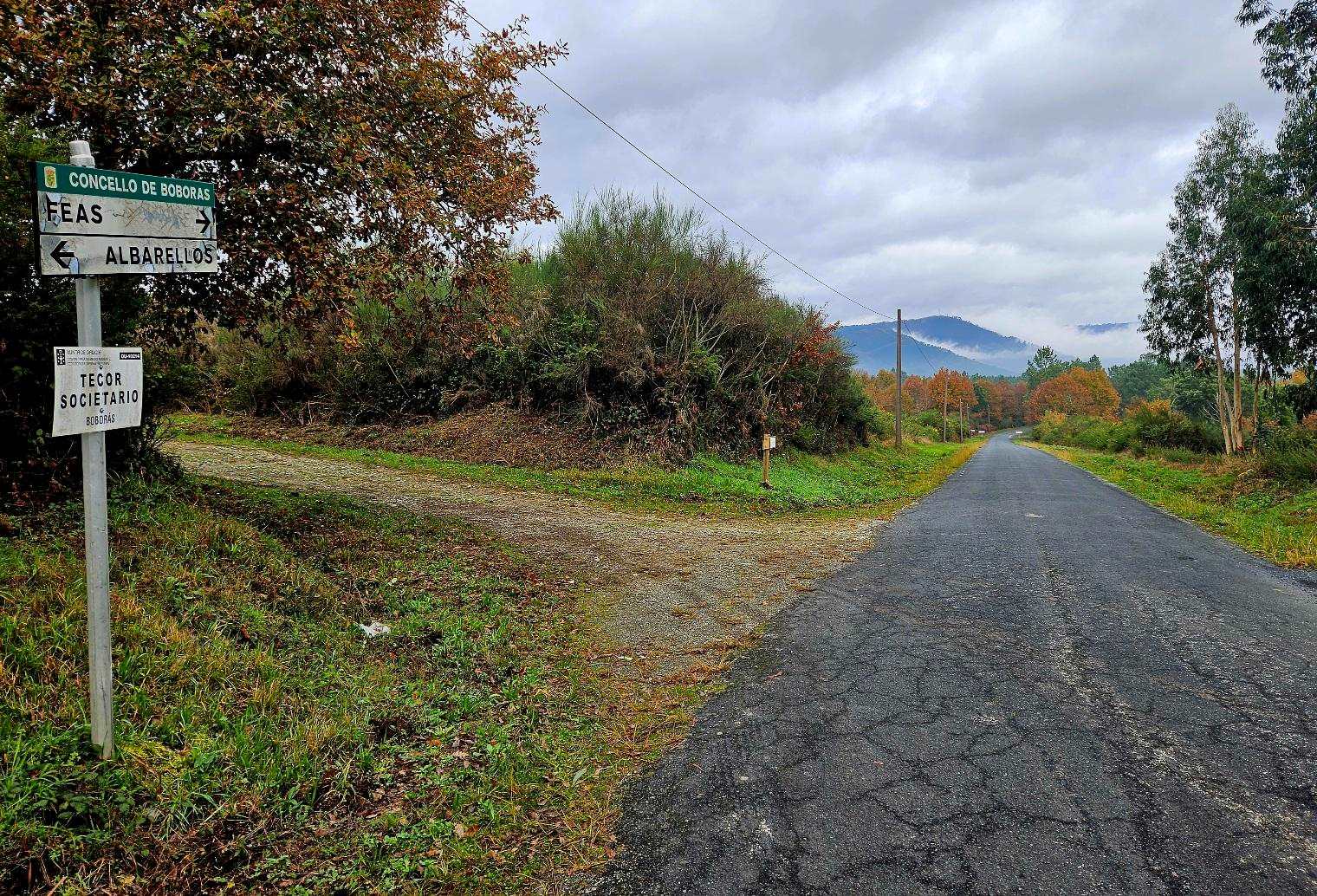
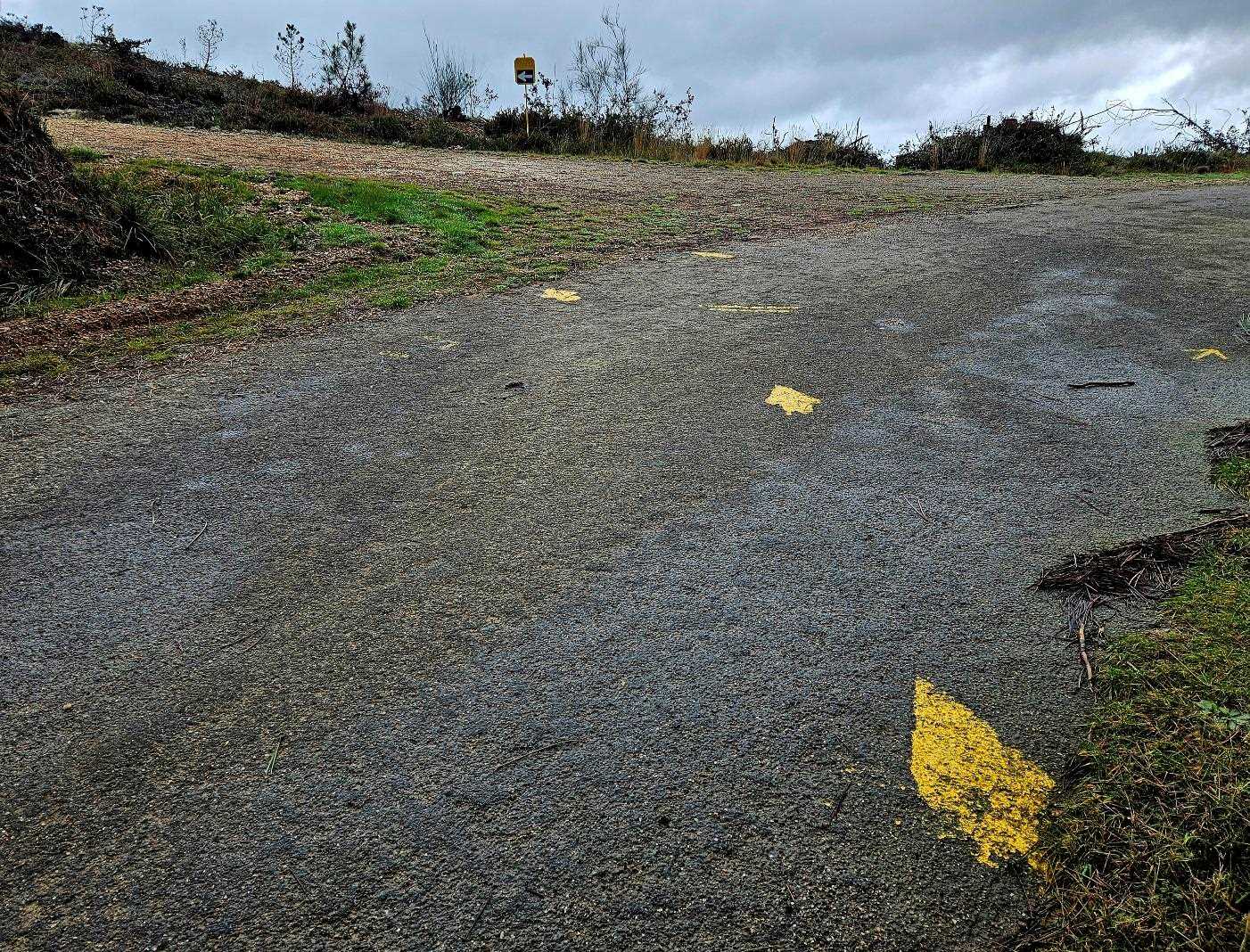
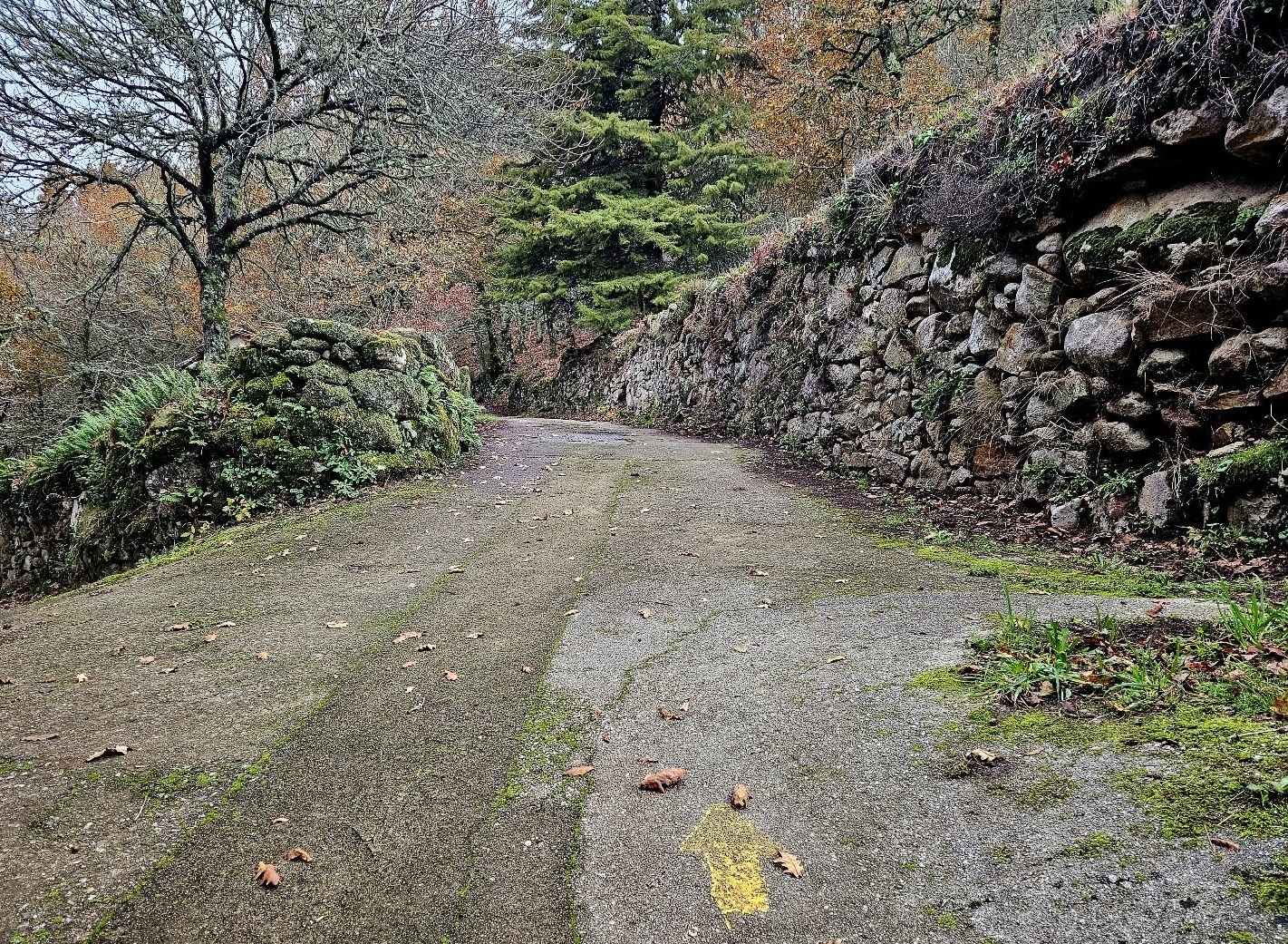
At the top of a rise, the ‘camino’ bears left onto a track; there are several arrows on the road indicating the turn-off (see photo below).
The wide track ascends, levels out and then starts to descend. At a junction bear right; there was a yellow arrow here, but there is logging in the area so the ‘landscape’ may be altered by this activity.
On the following descending section I took a wrong turn. I turned left, when the ‘camino’ goes straight on; be aware that there is no sign or arrow here to help out.
It didn’t make much difference as I was still descending. My track arrived at a mountain road, where I turned right to walk to Magros, meeting up with the ‘camino’ in the village.
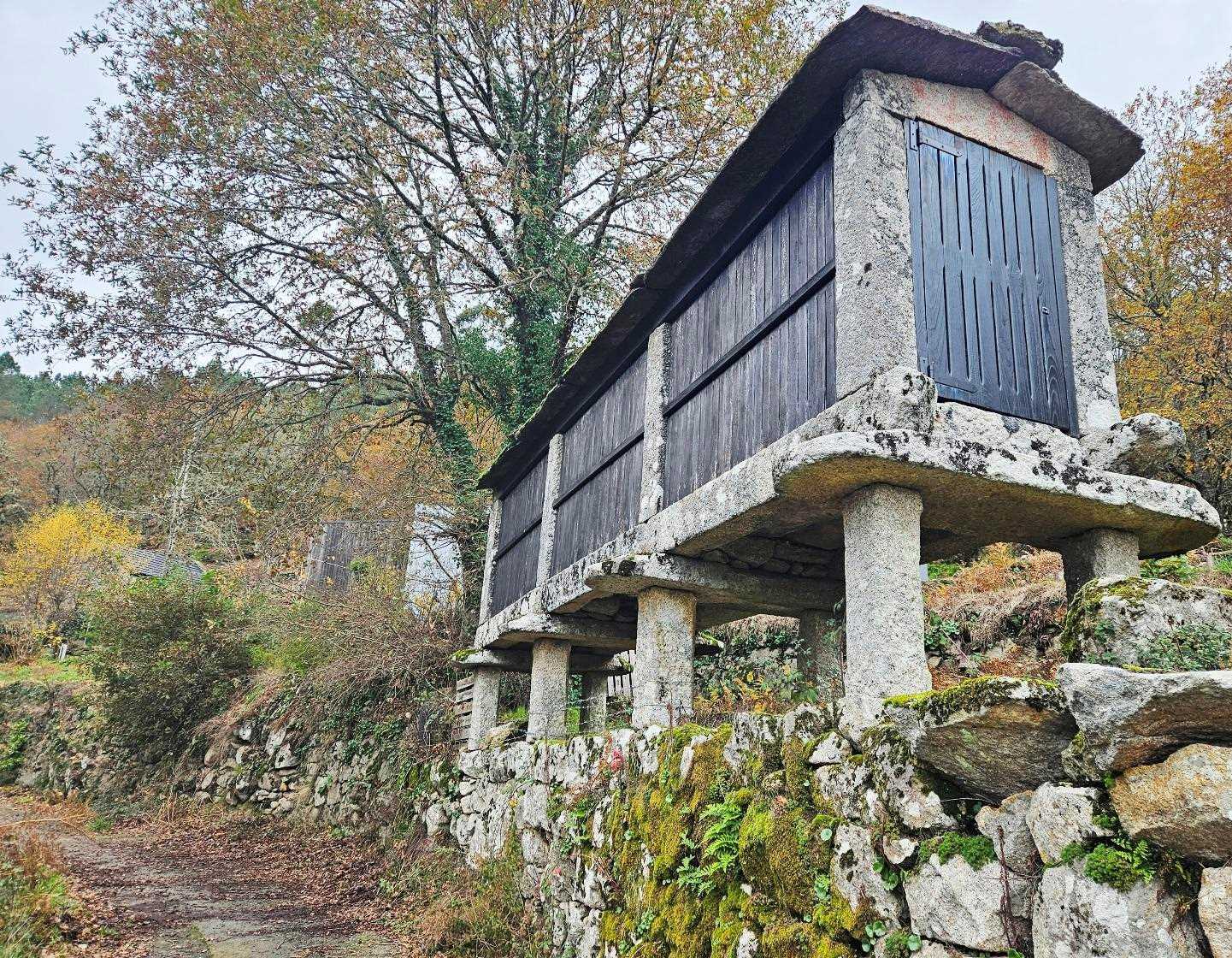
The ‘camino’ takes the ‘high road’ through the village; a lane which passes traditional granary stores (hórreos) and some empty, tumbledown properties.
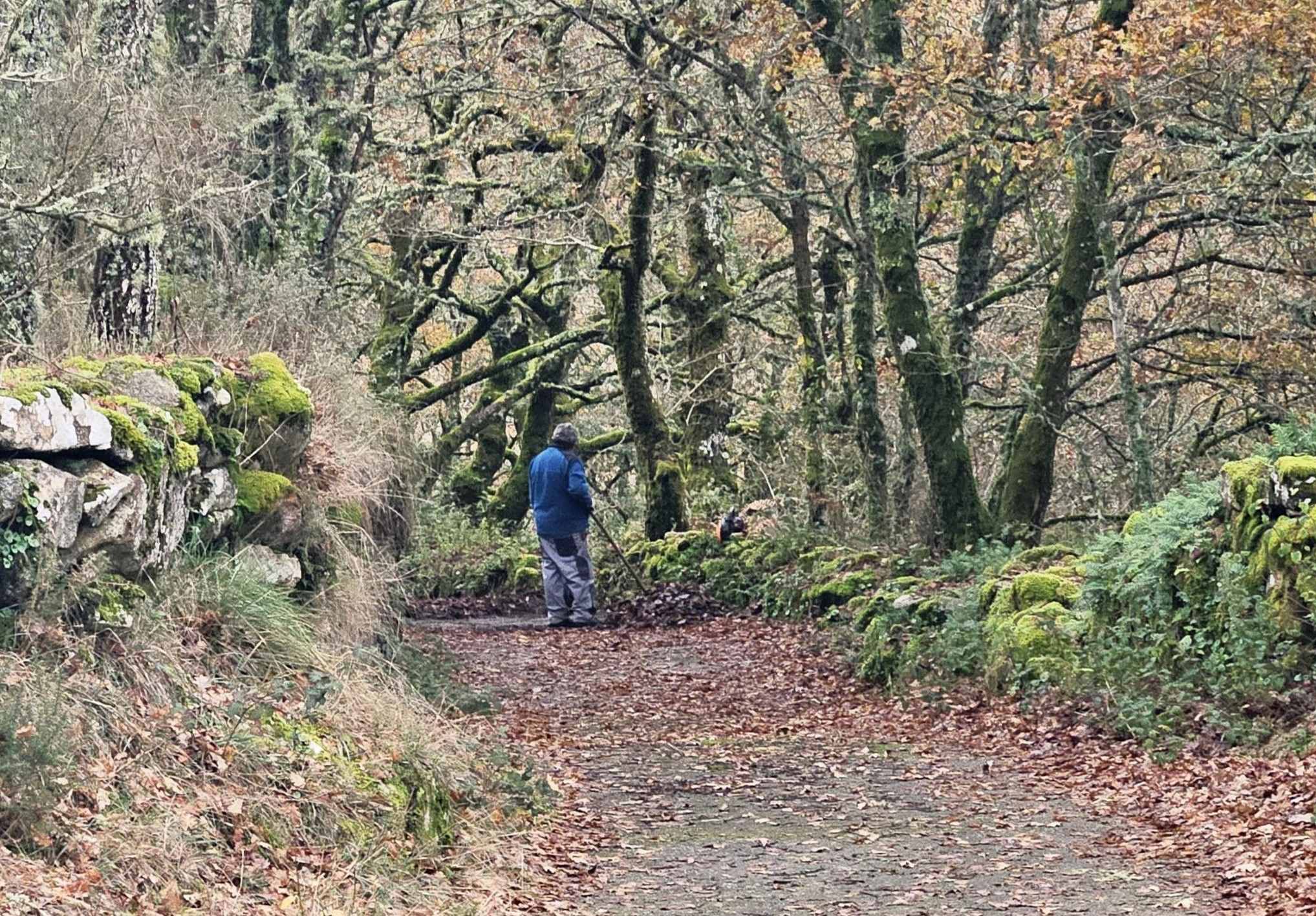
The lane heads out of the village, with the houses below. This is where I spoke to a resident who was clearing leaves.
The man said the lane could act as a firebreak in the event of a blaze, but the leaves would impede this function, so had to be cleared.
“It is our destiny to die here in the flames,” he told me.
His statement may sound melodramatic and pessimistic, perhaps even fatalistic, but he was voicing a real fear felt by villagers in rural areas.
Forest fires have become a huge problem in Spain, erasing vast areas of the country, and it is human activity which is behind most of them.
Arsonists have been very active in Galicia, Asturias and Cantabria in recent years.
“All it takes is for someone to start a fire down there in the valley and we have had it,” said the man.
Not all the fires are intentional; human error is also a cause. Farmers burning agricultural waste or barbecues lit by visitors. The situation has been made worse by climate change; long periods without rain and rising temperatures.
The resident told me that the mercury had touched 42c in Magros during the summer, drying out the forest and turning it into a tinderbox.
Many properties in Magros have been abandoned. It has been hit by depopulation and jobs such as the one being carried out by the resident fall on an ageing population.
I digress. The route from Magros to Beariz is very well signed. It’s couple of kilometres along a track, much of it through the woods.
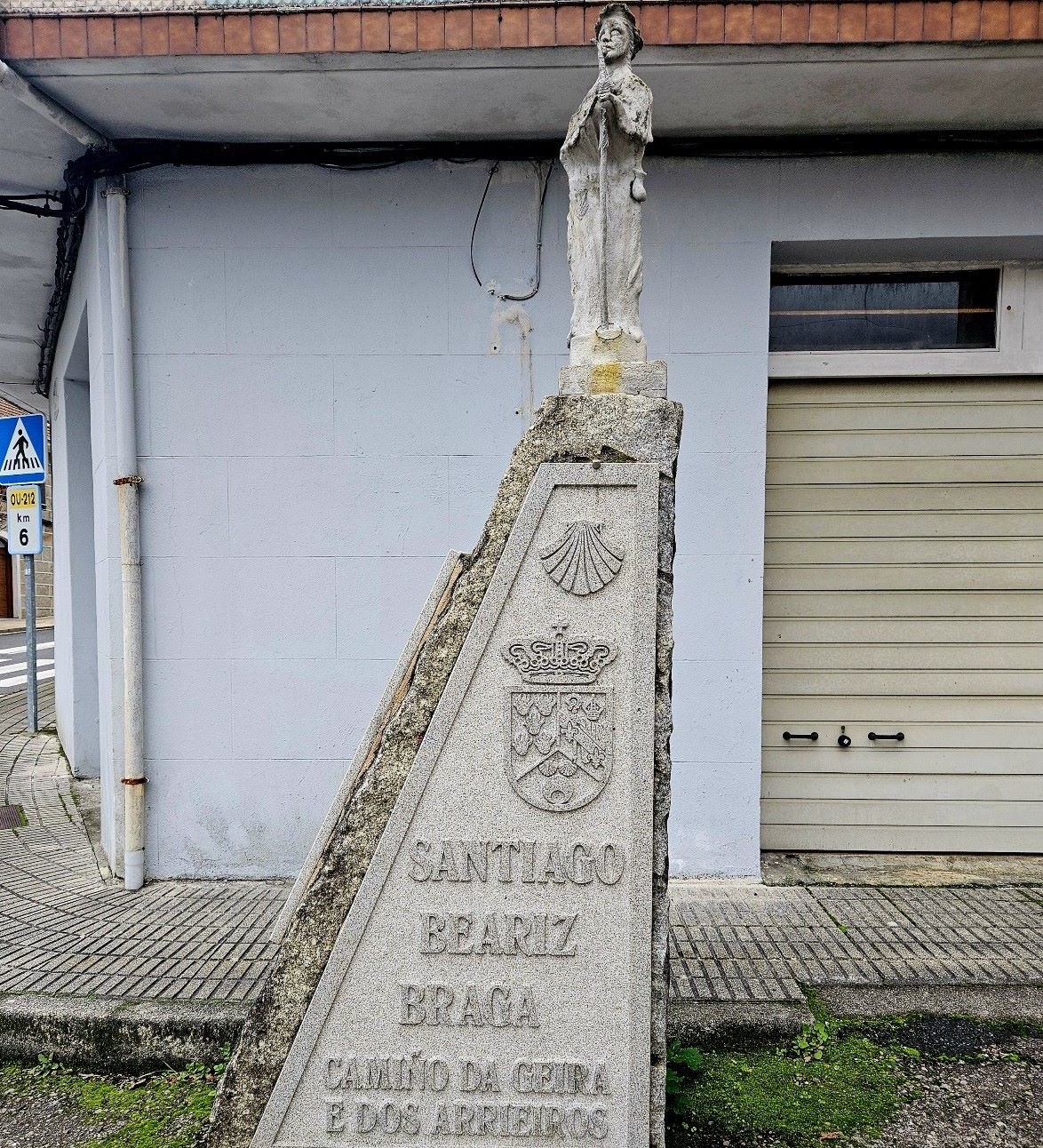
It is easy walking and a pleasant end to the day. Arriving in Beariz through the old houses, pass the plaque and small statue dedicated to the ‘camino’ and bear right to walk up the main street.
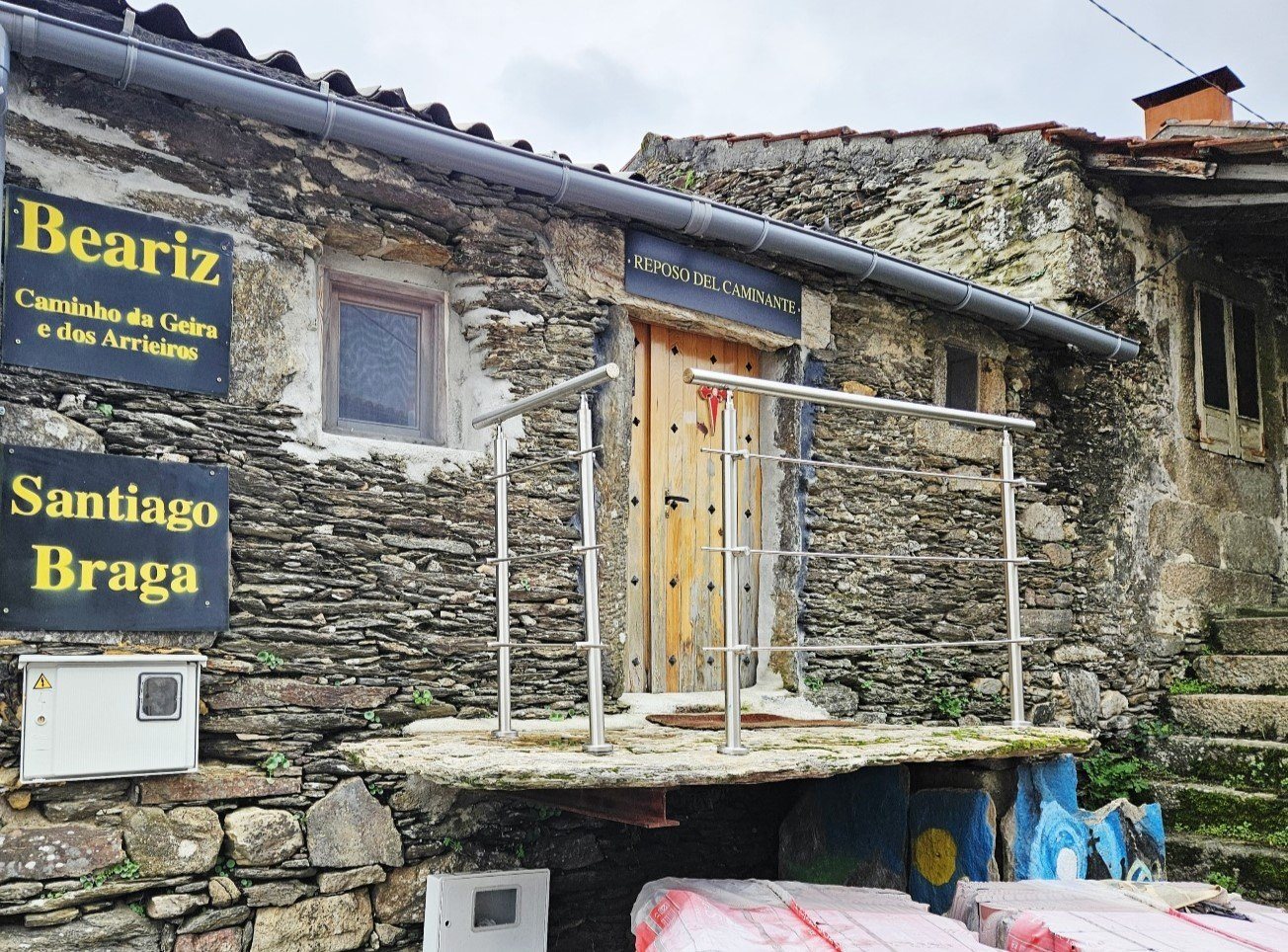
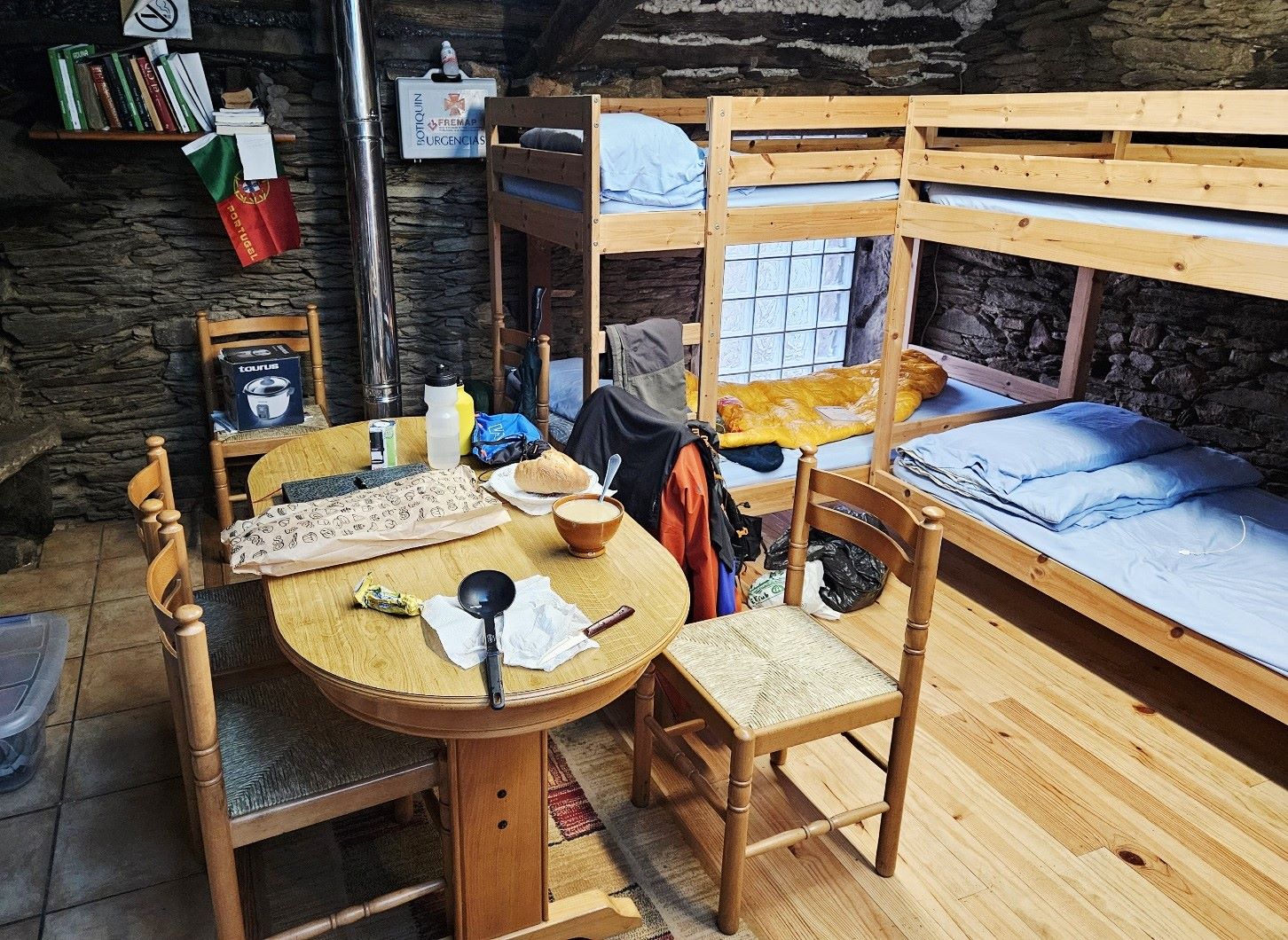
El Reposo del Caminante (the walker’s rest) is free accommodation for pilgrims/walkers who are on the Camino da Geira e dos Arrieiros.
The small hostel on Rúa San Pedro is run by Pepe Balboa, who is famous in the walking community in these parts.
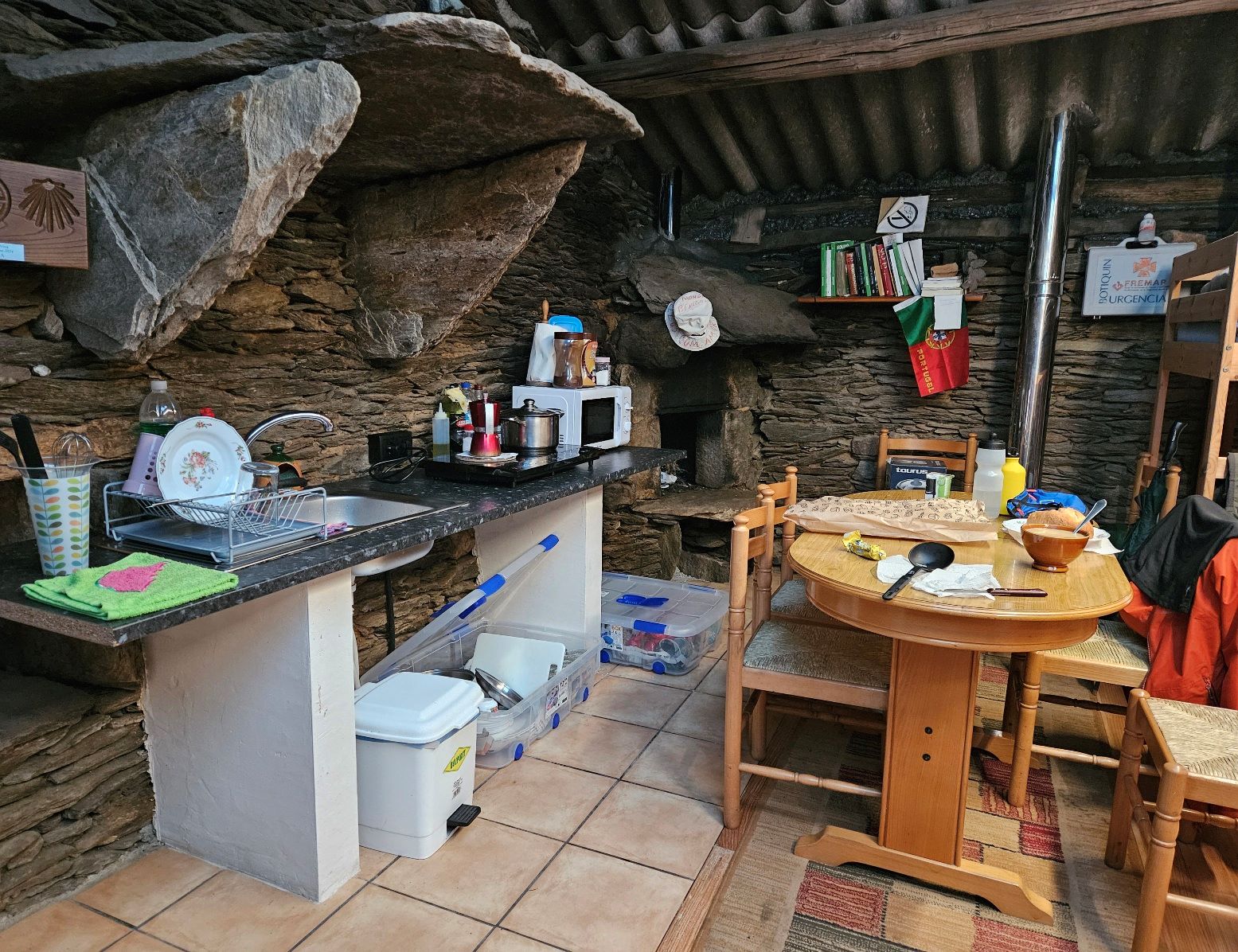
On arriving at the hostel I found that Pepe had left a large pot of warm soup and bread. There was hot water in the shower downstairs, clean towels and a large pellet heater on the go.
I had the good fortune to run into Pepe later in the local bar. As the only stranger in the place it was obvious who I was and he came over to my table.
We had a lovely chat. I found out that Pepe is 90 years old, which makes his actions all the more impressive.
I was able to thank him properly. We share a love of Celtic countries and he showed me a Celtic ring which he wears.
I left him with his family and hope he continues to inspire people for many years to come.
For hostel accommodation he can be reached via WhatsApp on 699 052 339.
The ‘camino’ website says there is also tourist accommodation in Beariz at Casa de Ana; call 639 675 146
Recent Comments