
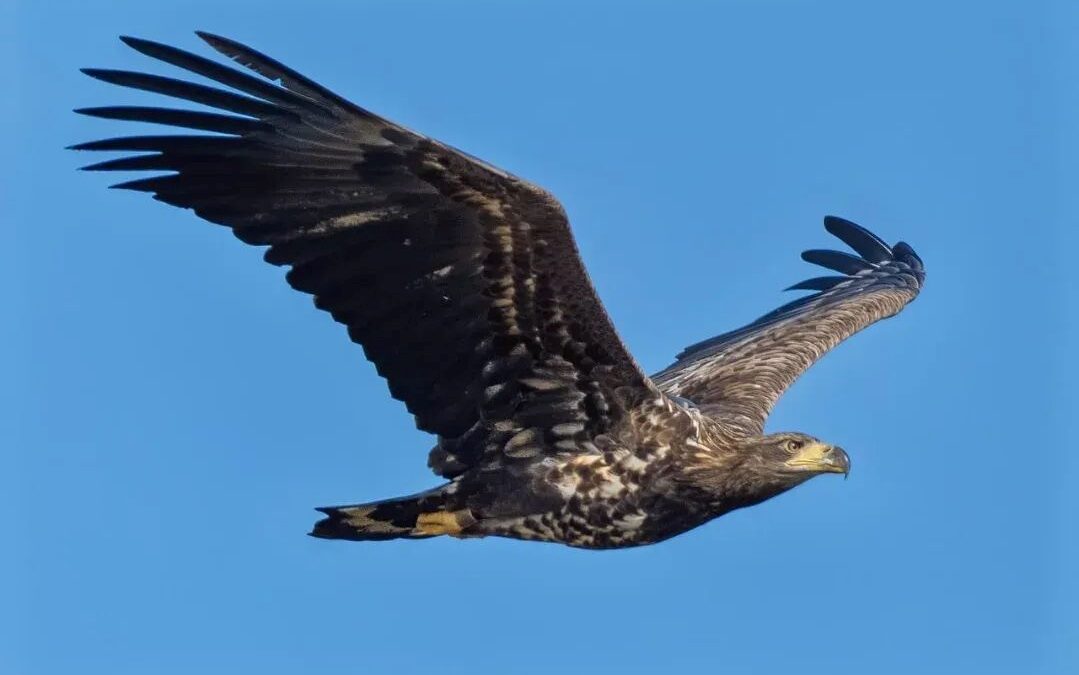
The white-tailed eagle was declared extinct in Spain by the government in 2018.
But less than a decade later the first chick to hatch in Iberia in a reintroduction project has flown the nest and is ‘becoming independent’.
While some naturalists argue that there is no hard evidence confirming that the white-tailed eagle is a native bird of Spain, others state that its presence has been well documented.
Despite the difference of opinion, the ministry for the ecological transition gave the go-ahead to a project to reintroduce Haliaeetus albicilla (‘pigargo europeo’ in Spanish) soon after the extinction declaration was signed.
It is led by conservation association GREFA, with the north coast of Spain identified as the ideal spot for ‘Proyecto Pigargo’.
The young white-tailed eagles are being donated by Norway and GREFA is working closely with the Scandinavian country’s environment agency and Institute for Nature Research (NINA).
The first of the birds of prey arrived in 2021 and were released in Asturias. The project’s goal is to receive around 100 of the eagles up to 2027 ‘in order to establish a breeding population’.
And the reproduction process got underway last year.
GREFA explained that white-tailed eagles Mansolea and Pimiango chose the mountainous north of Castilla y León region to make their nest.
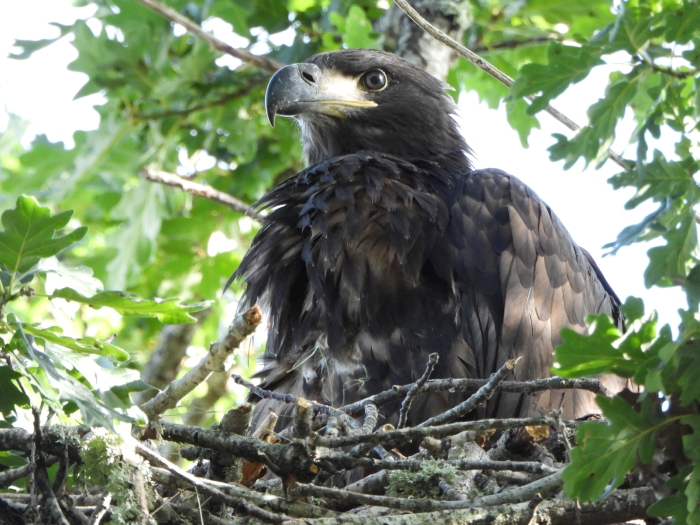
Two chicks hatched in May, 2025 but only one survived; it was named Aquila.
Aquila first left the nest on July 18.
“The parents immediately changed their feeding area, concentrating on the zone around the nest,” noted GREFA.
They started the process of teaching the young bird their fishing techniques.
“They were diving more often, not always with the intention of catching prey but to show Aquila how to do it,” they explained.
The parents also showed their offspring other areas with food sources.
It was on November 12 that the Proyecto Pigargo team confirmed that Aquila had managed to catch a fish.
A few days later the bird snatched a rabbit.
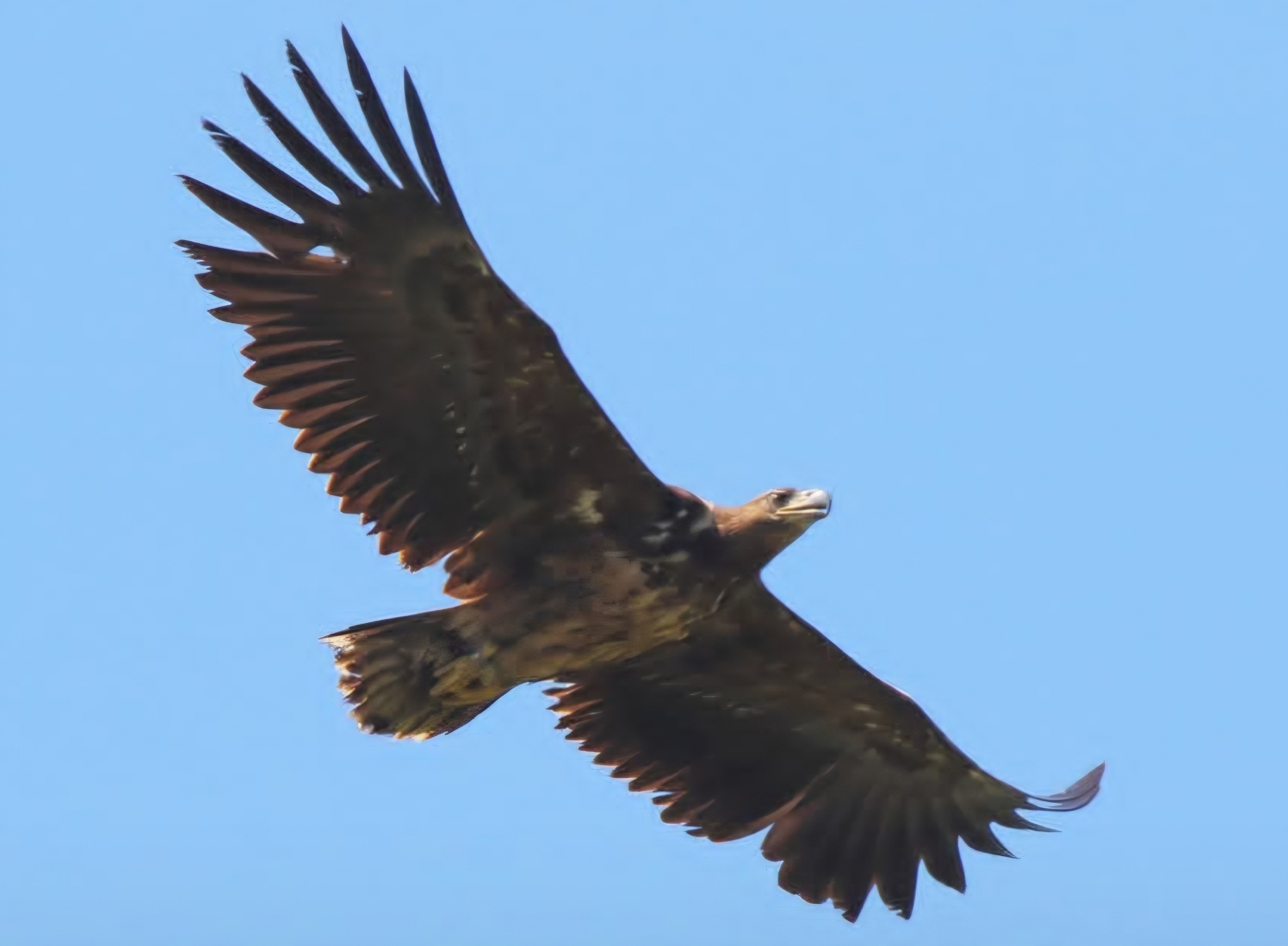
“Its exploration flights have now become longer and more wide-ranging and it has met other white-tailed eagles, with whom it interacted in a normal way,” said GREFA.
On one such outing the young bird came into contact with an older female white-tailed eagle called Andara, who apparently decided to feed Aquila.
She was observed catching a fish and leaving on the bank for the youngster to eat.
It is believed that Andara was showing a parenting instinct as she reaches sexual maturity.
Aquila still returns to the area where it hatched and is now self sufficient, principally eating carrion.
GREFA stated that the hatching of Aquila ‘gives us hope that with effort and willpower we can mend the damage done to the natural world and return a majestic part of Spain’s biodiversity to how it once was’.
People interested in observing the white-tailed eagle in the north of Spain can contact the experts from Proyecto Pigargo via email to ask for advice on where this can be done.
Their address is proyectopigargo@grefa.org
All about the eagle
The white-tailed eagle is also known as the sea eagle. The UK’s RSPB notes that it prefers coastal habitats.
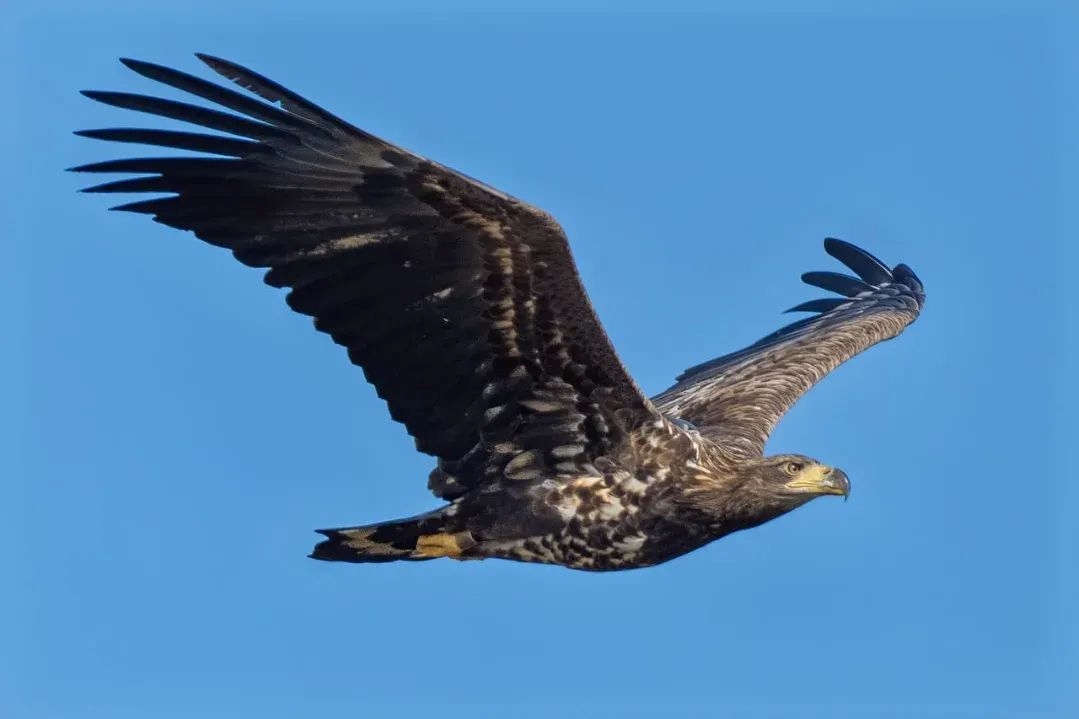
It has ‘enormous, broad wings with fingered ends’, and a wingspan of up to 2.4 metres.
It has brown body plumage with a conspicuously pale head and neck, which can be almost white in older birds, and the tail feathers of adults are white, says the RSPB.
Its head protrudes, with a huge, chunky yellow beak (dark in juveniles) and yellow feet; and it has a wedge-shaped tail.
“White-tailed eagles are versatile and opportunistic hunters and carrion feeders, sometimes pirating food from other birds and even otters,” explains the RSPB.
Photos: Proyecto Pigargo
Recent Comments