
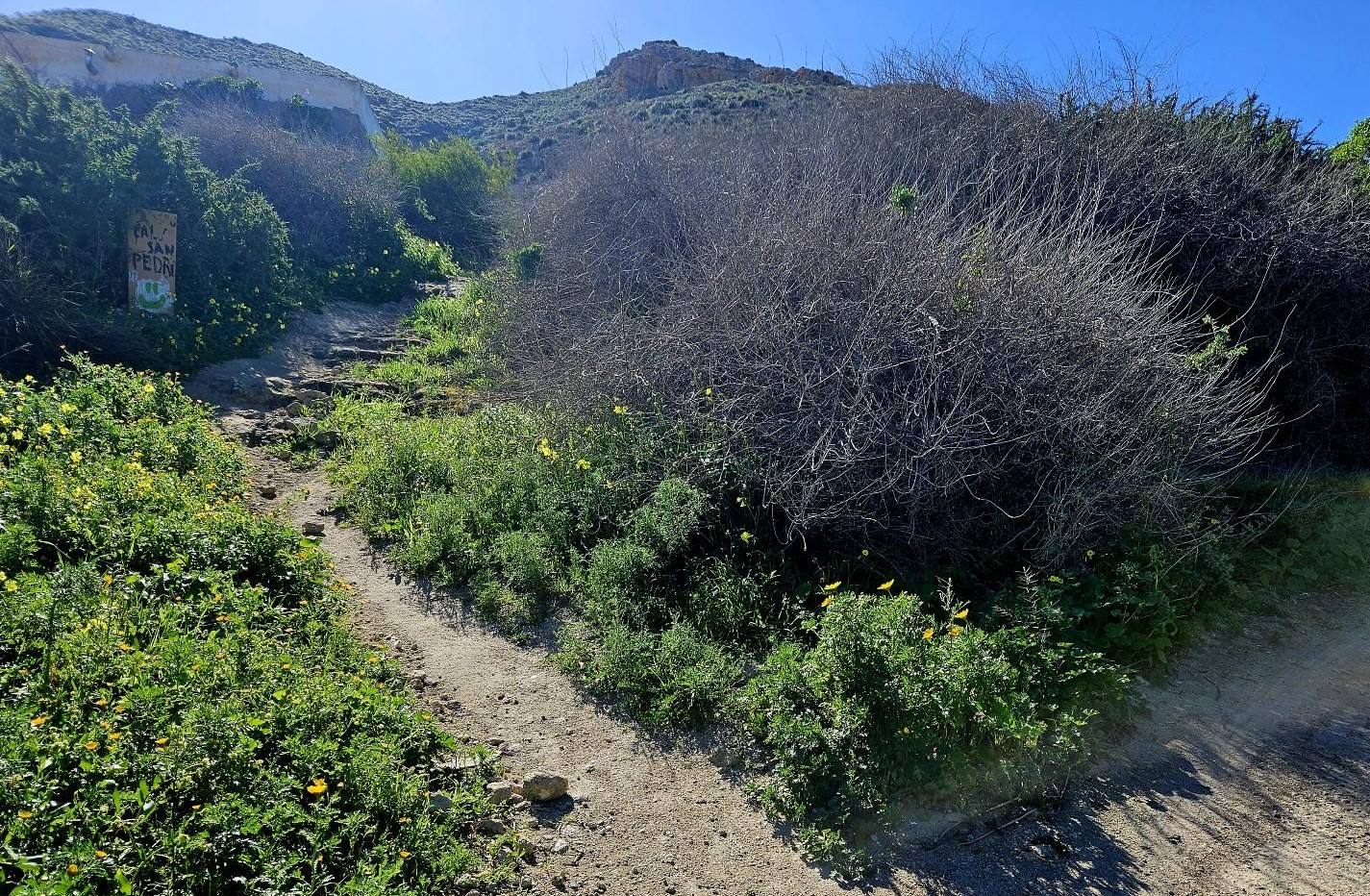
To get on the hill path to Cala de San Pedro we head back out of Cala del Plomo on the same route and turn left along the track, following the white/blue waymarks.
After around 10 metres, turn left again onto the path, seeing the San Pedro sign after a couple of metres.
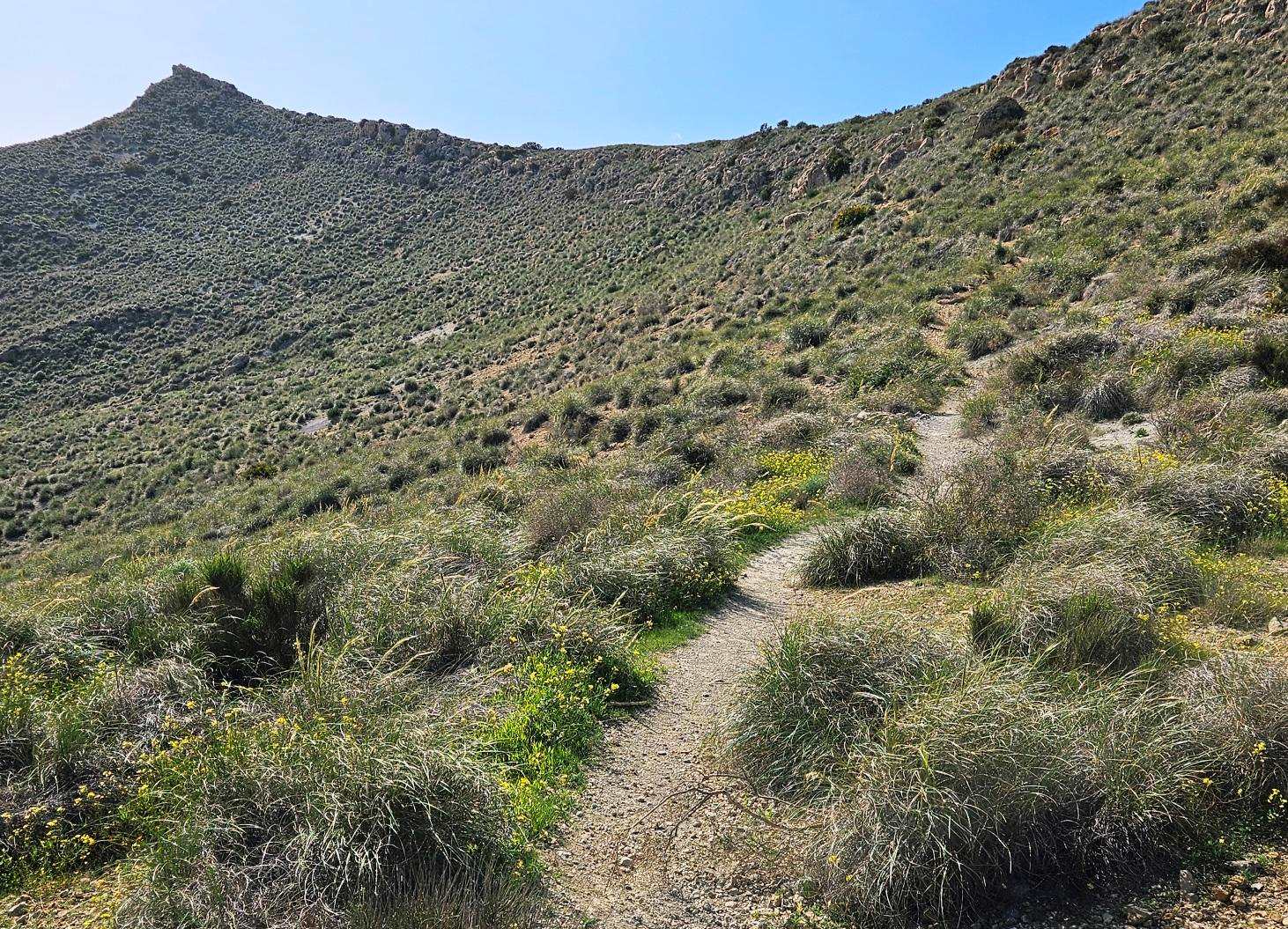
This is the start of the ascent of the hillside. It’s a climb which goes from sea level to eventually reach a height of 251 metres.
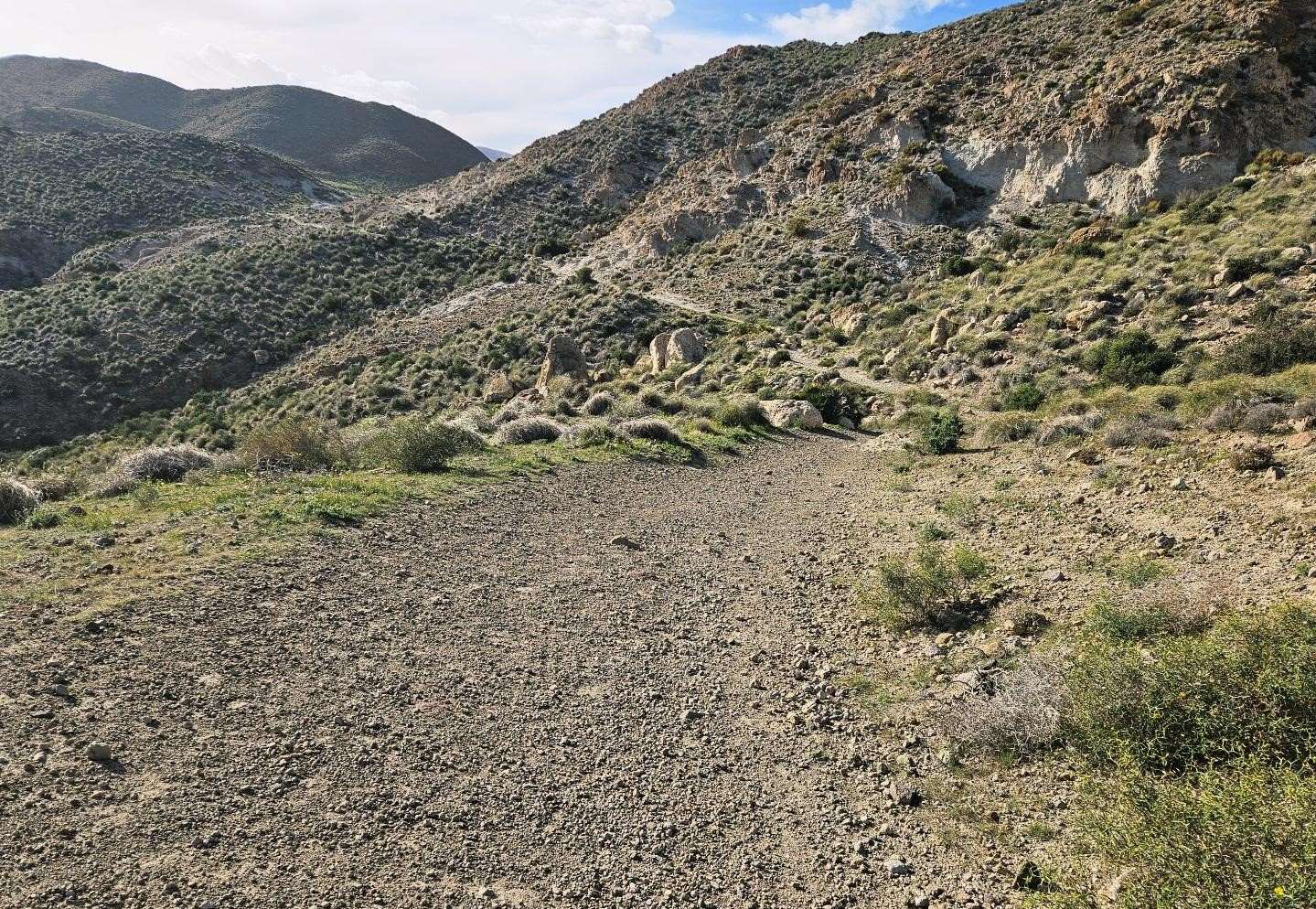
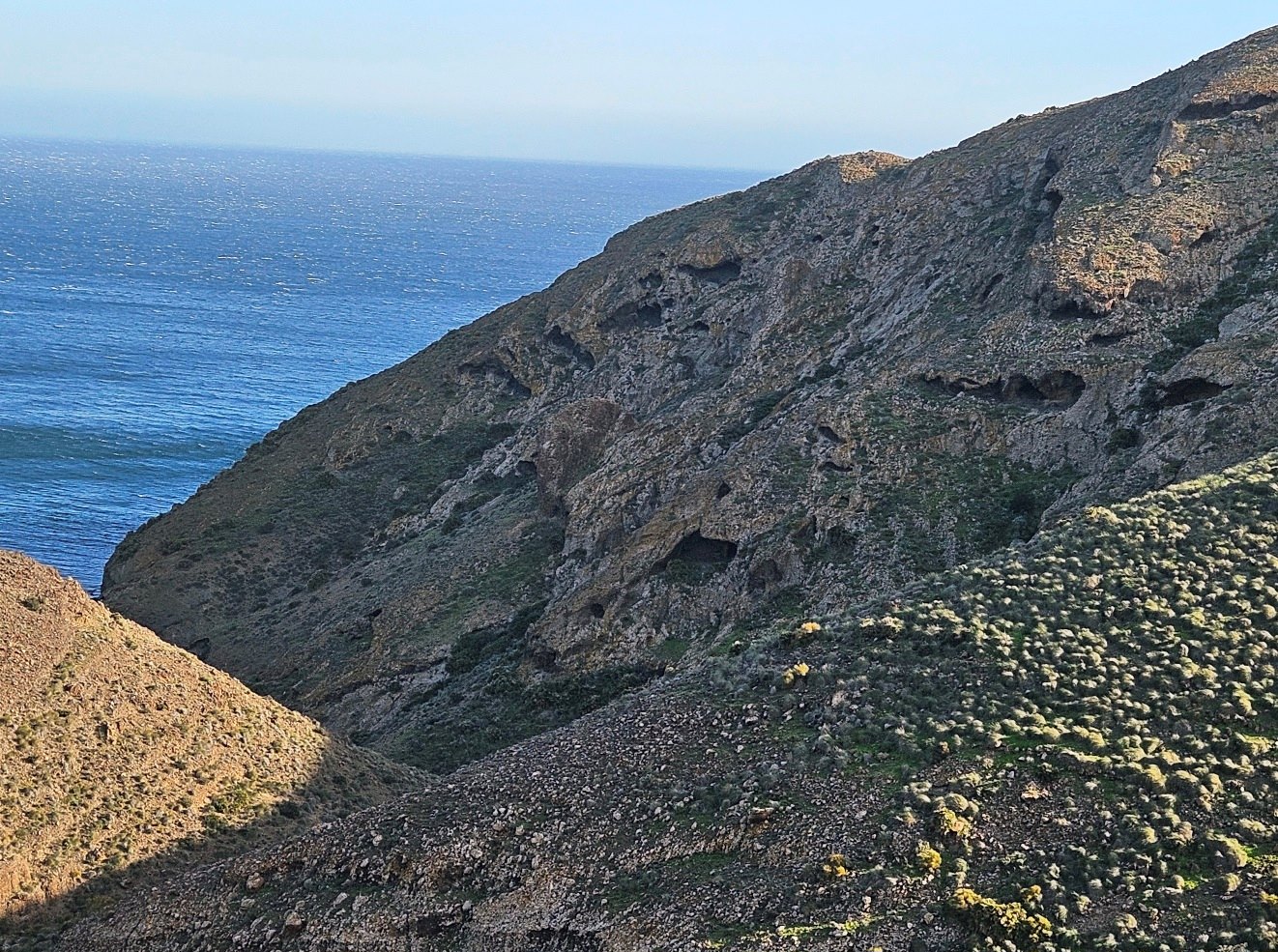
Our path goes up and bears round to the right; then passes under a pitted rock outcrop that houses a cave which is a good shelter during inclement weather.
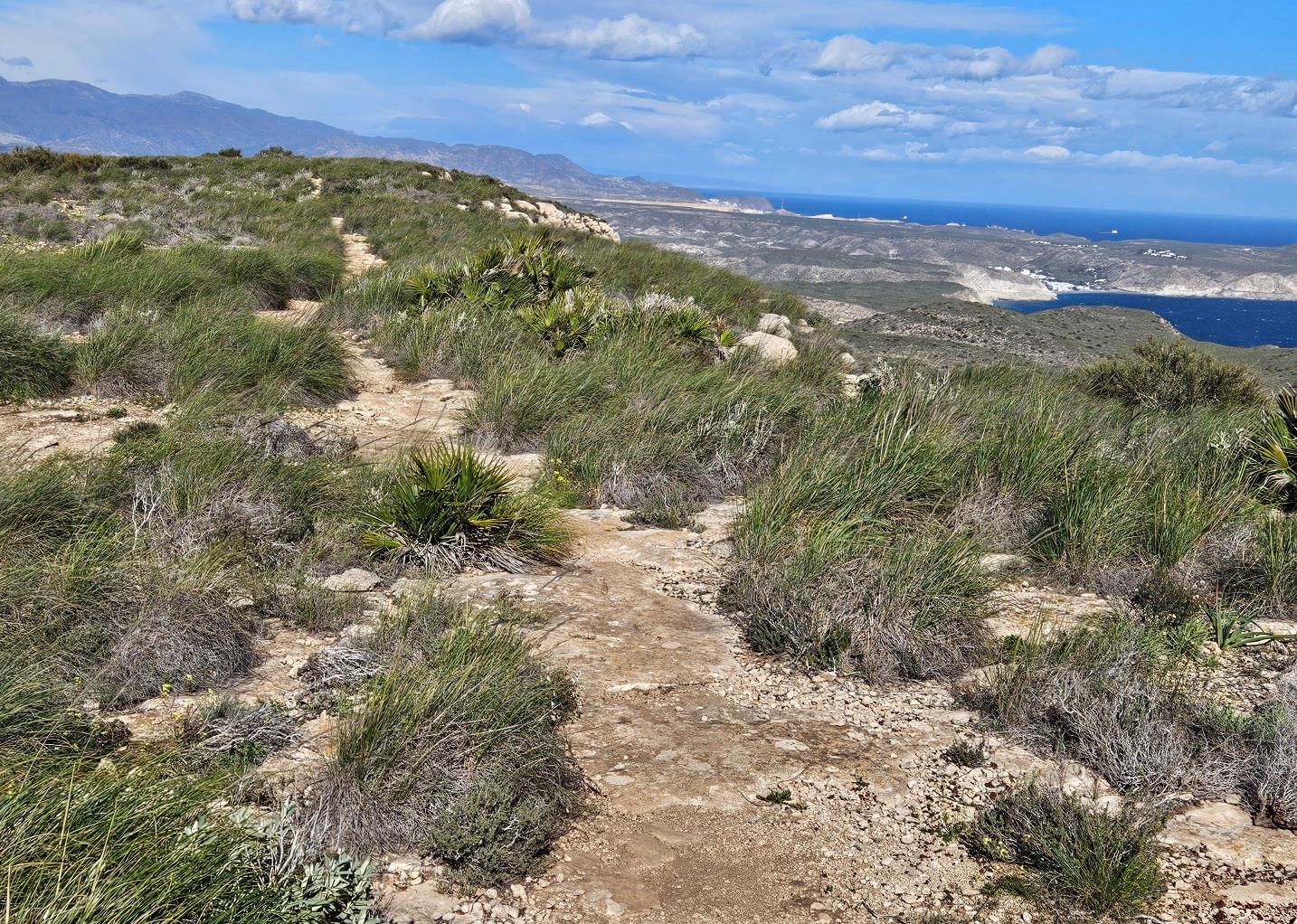
Passing over the rise, the path starts a more gentle ascent towards a ridgeline. Once over that we are onto an undulating mountain plateau, which our route traverses.
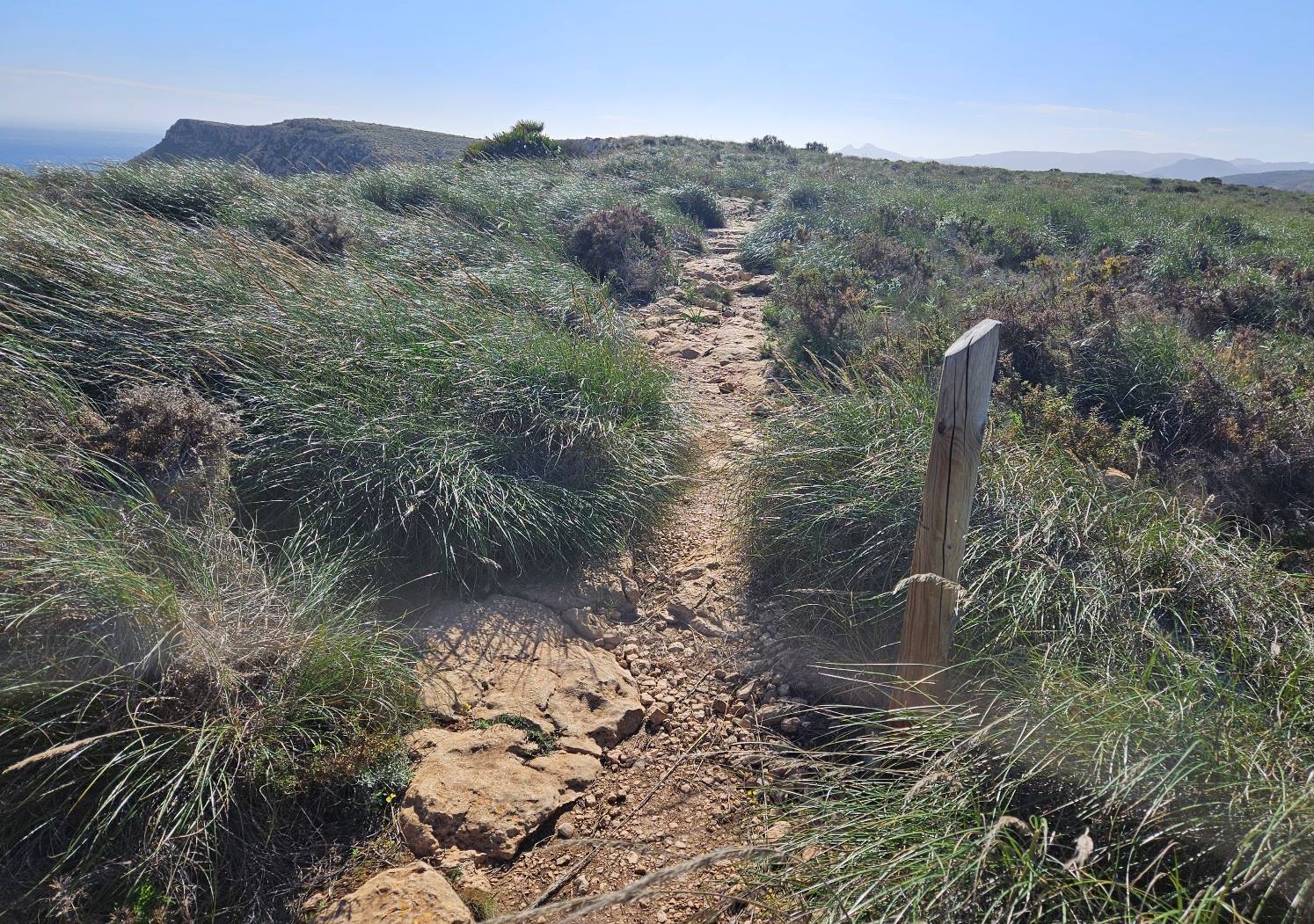
There are very few waymarks on this section but the path is clear.
Then it’s a short climb to the Rellana de San Pedro; a large horseshoe of high ground which surrounds the ‘abandoned’ valley of San Pedro and cuts it off from the rest of the world.
The path emerges onto the eastern part of the horseshoe and runs along the edge of it. There are sharp drops off the side, but fortunately we do not have to walk next to the precipice.
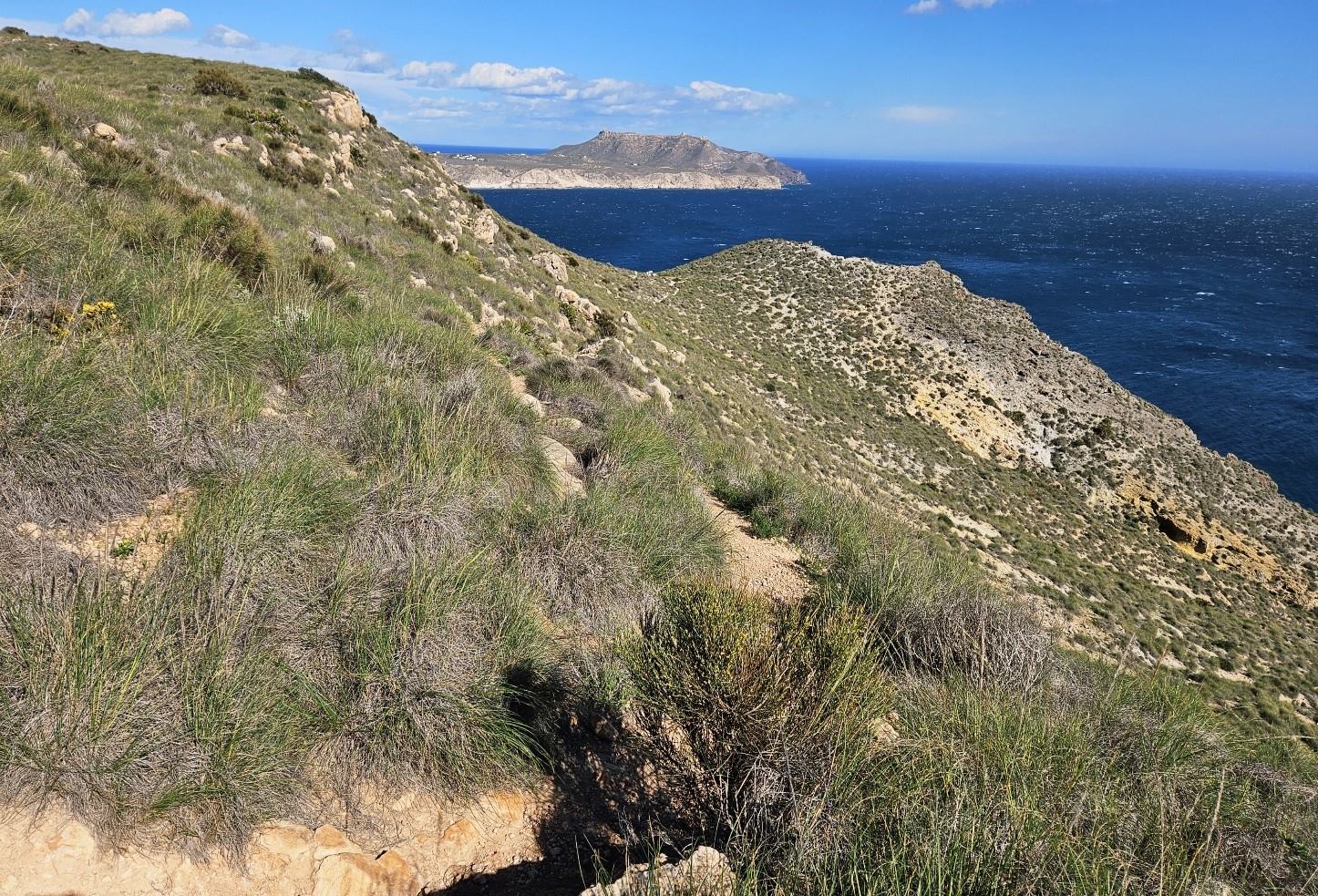
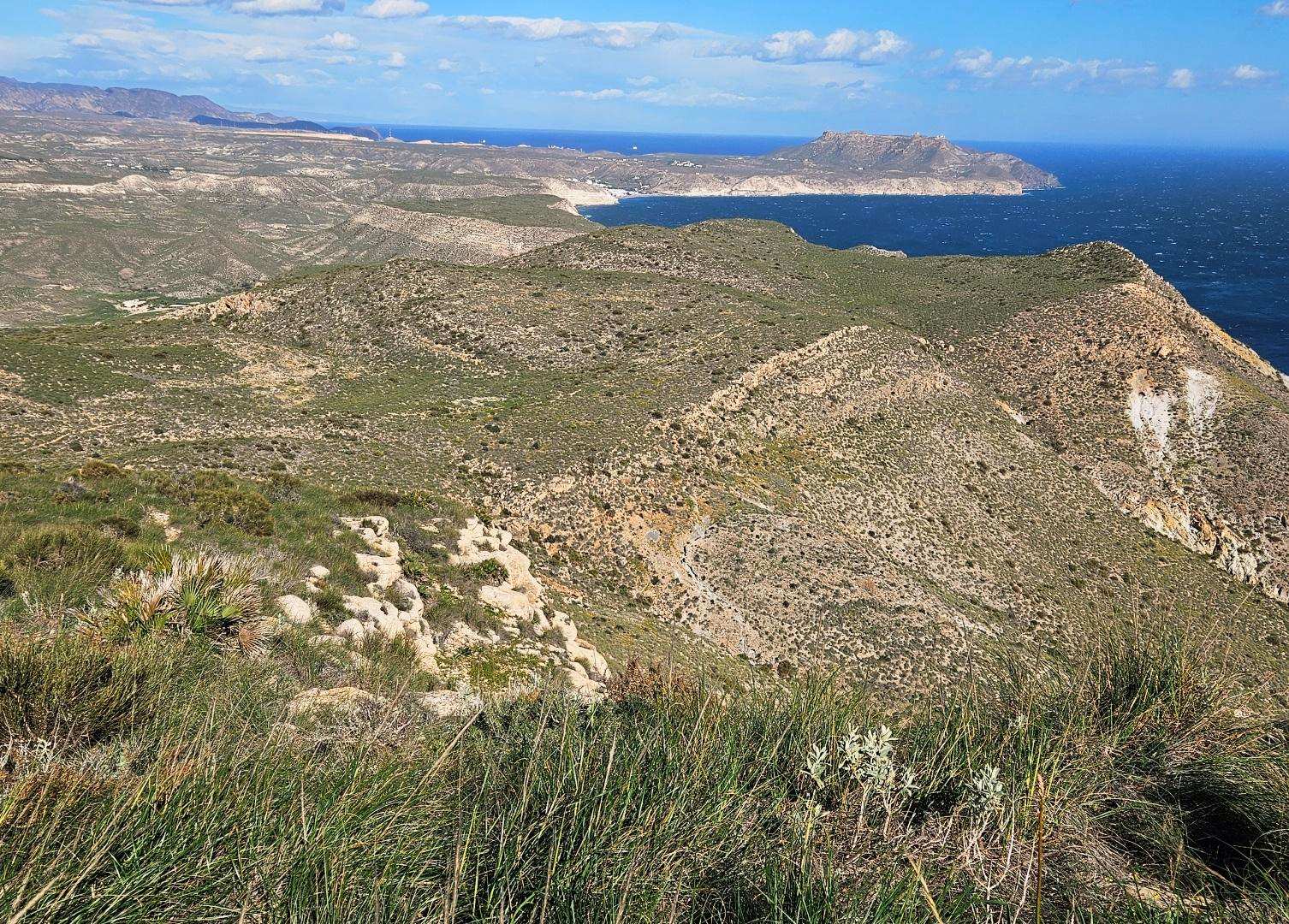
There are great views from this lofty position as the path follows this long, raised area.
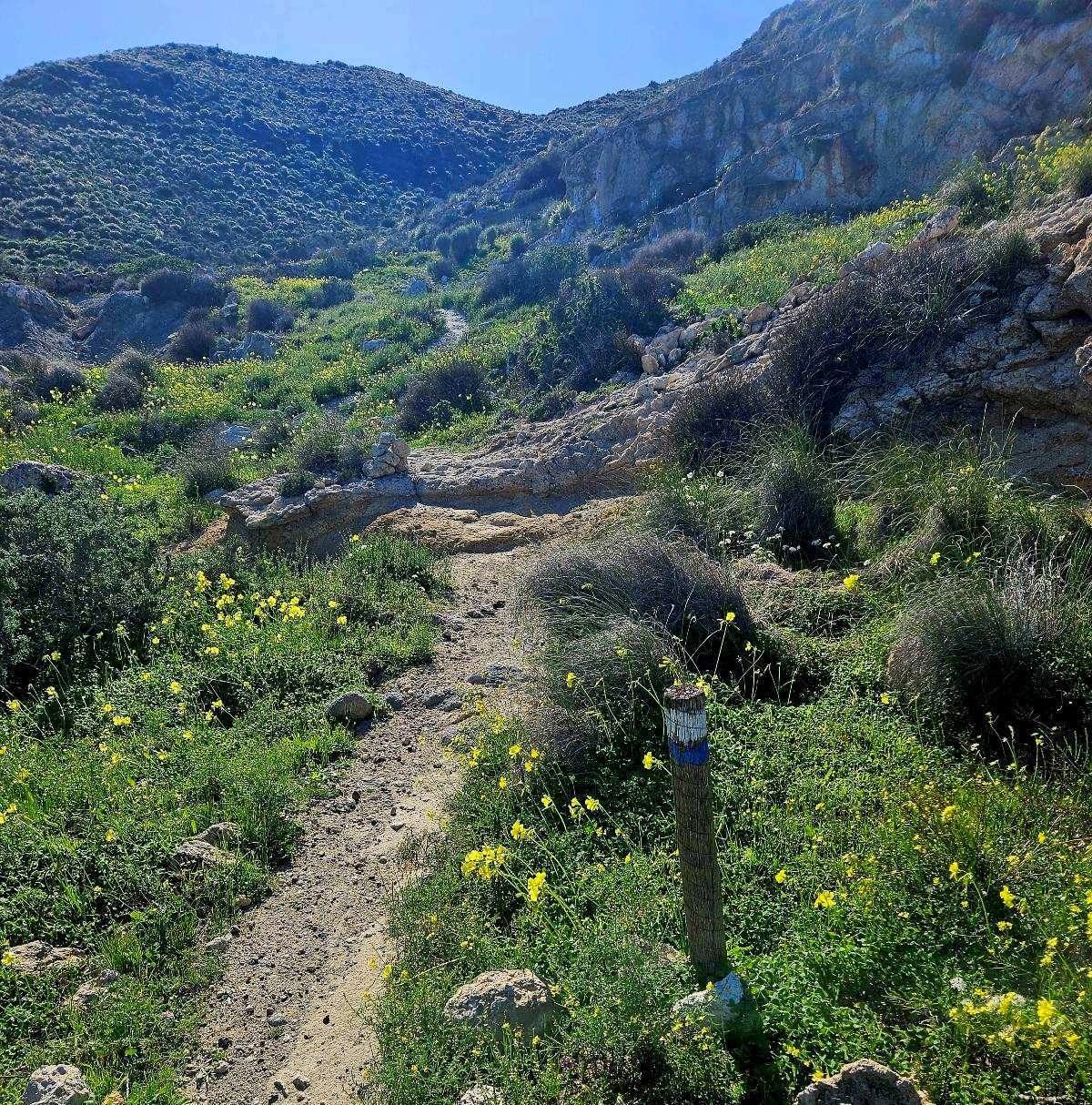
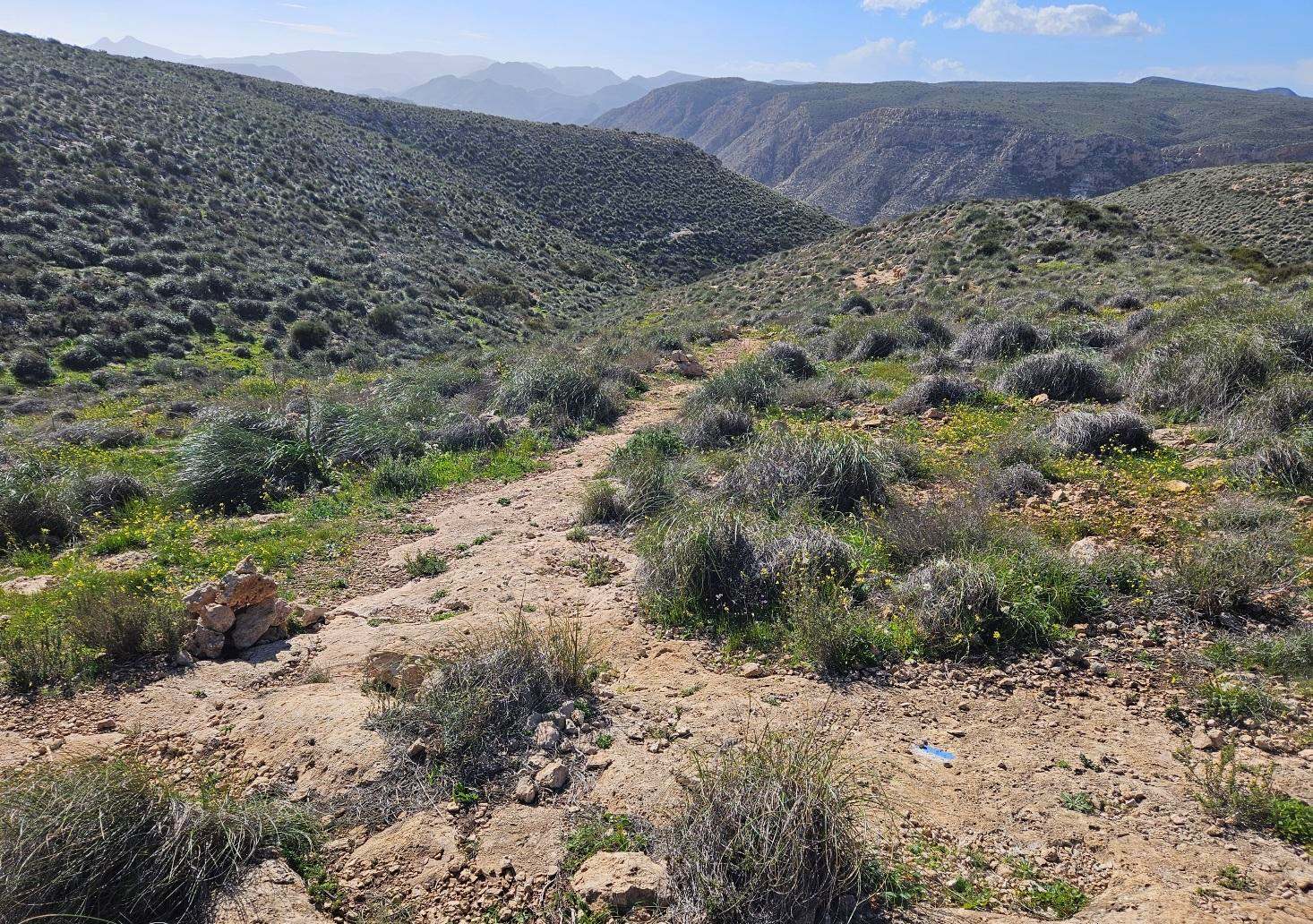
Towards the end of it, the path turns right at a small cairn and waymark, now heading down a shallow ravine to a marker post. Cross over the centre of the ravine and continue along the other side.
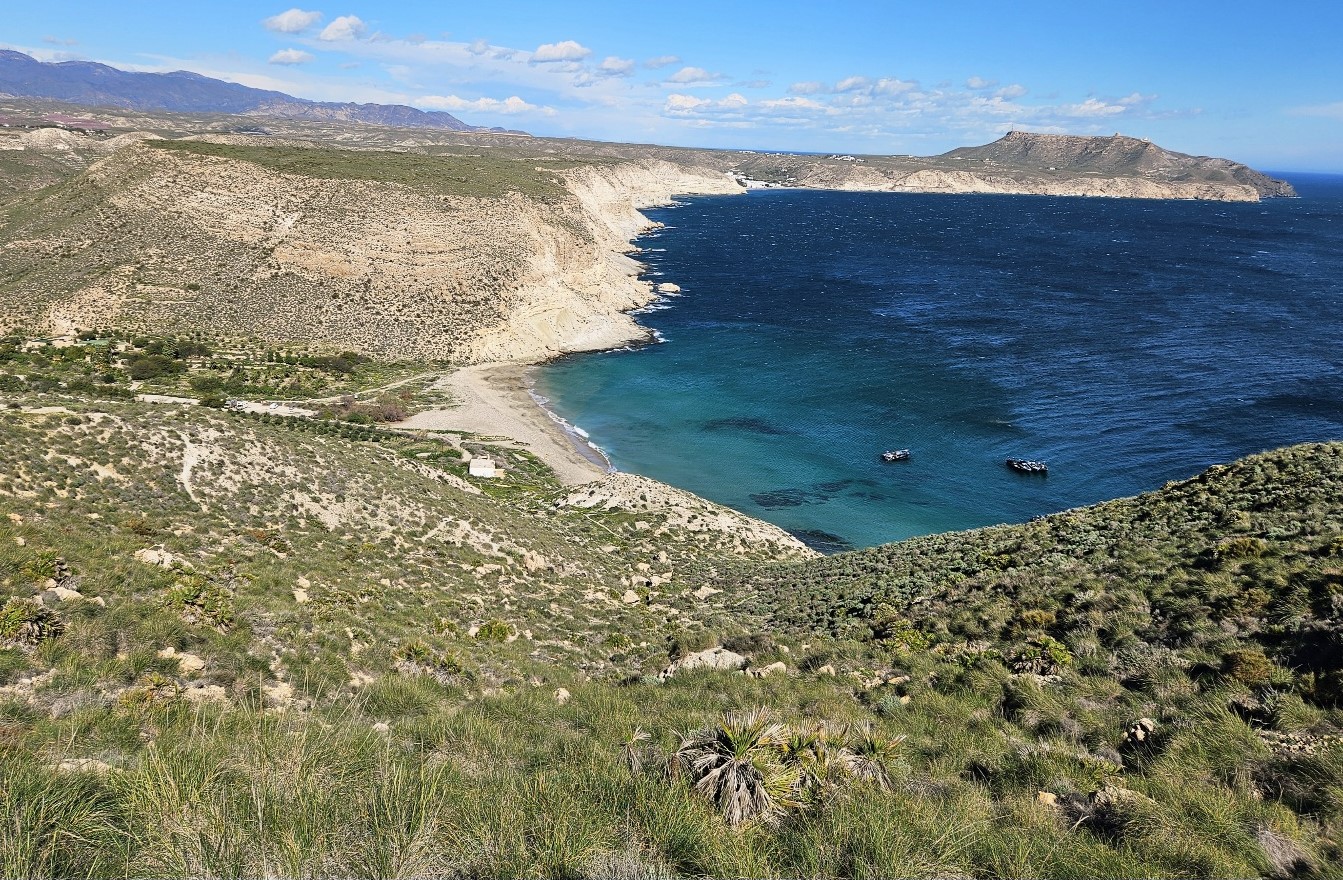
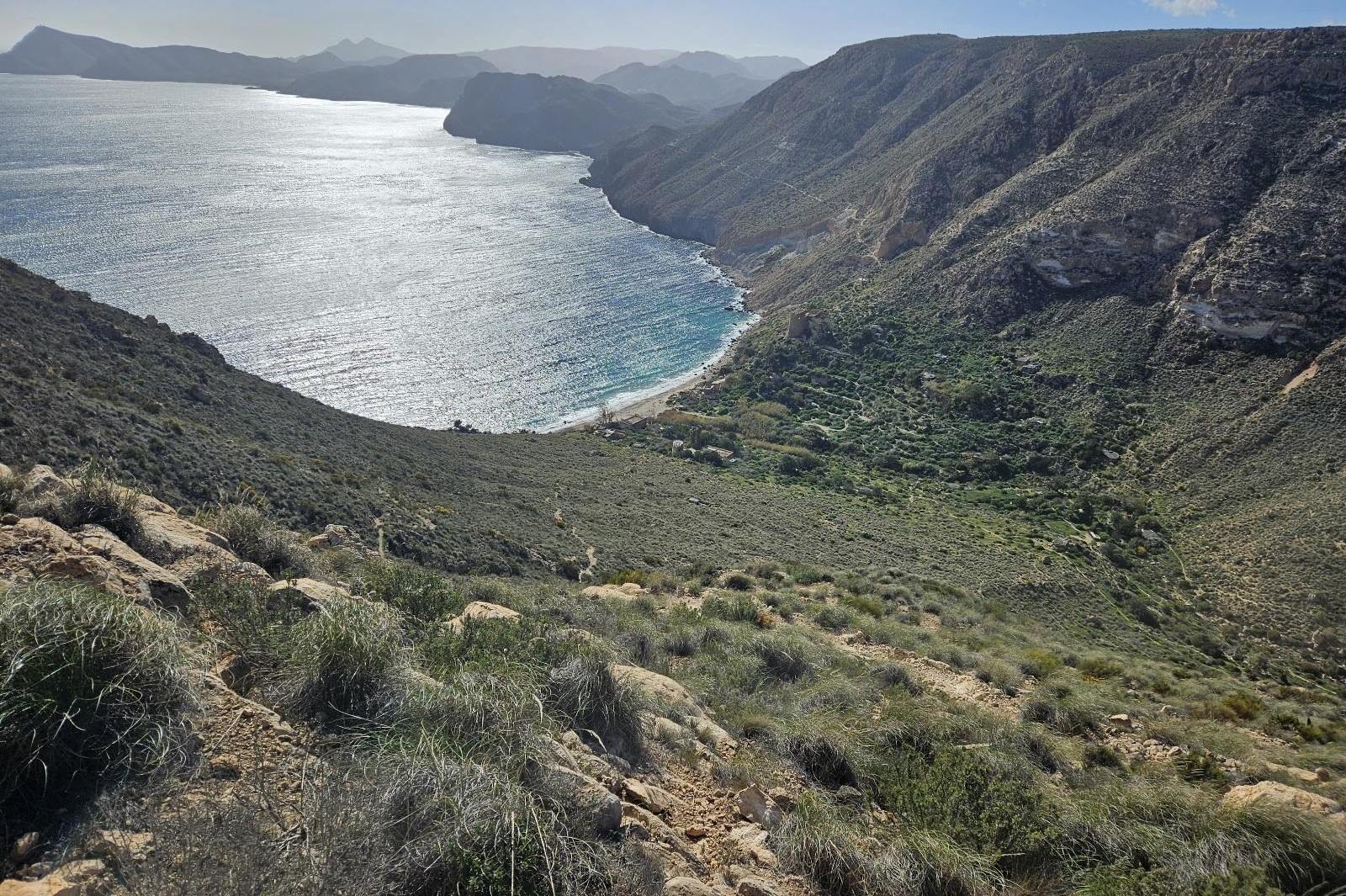
The route swings round to the left and soon a dramatic view appears, over the San Pedro valley and along the coast.
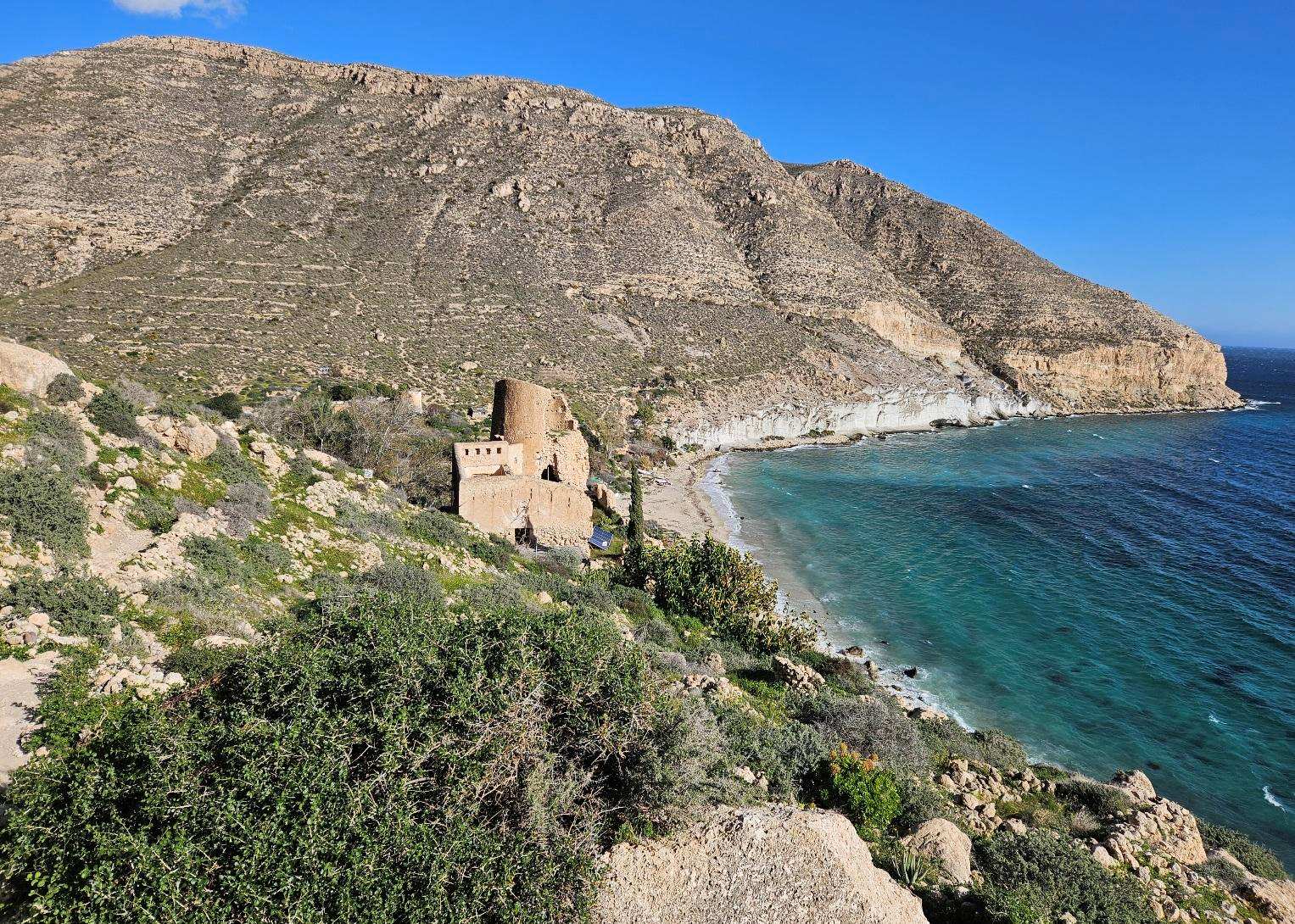
Soon we can see that the valley is the middle of the horseshoe and it is hemmed in on three sides by the high ground; the mouth of the horseshoe is the opening to the sea.
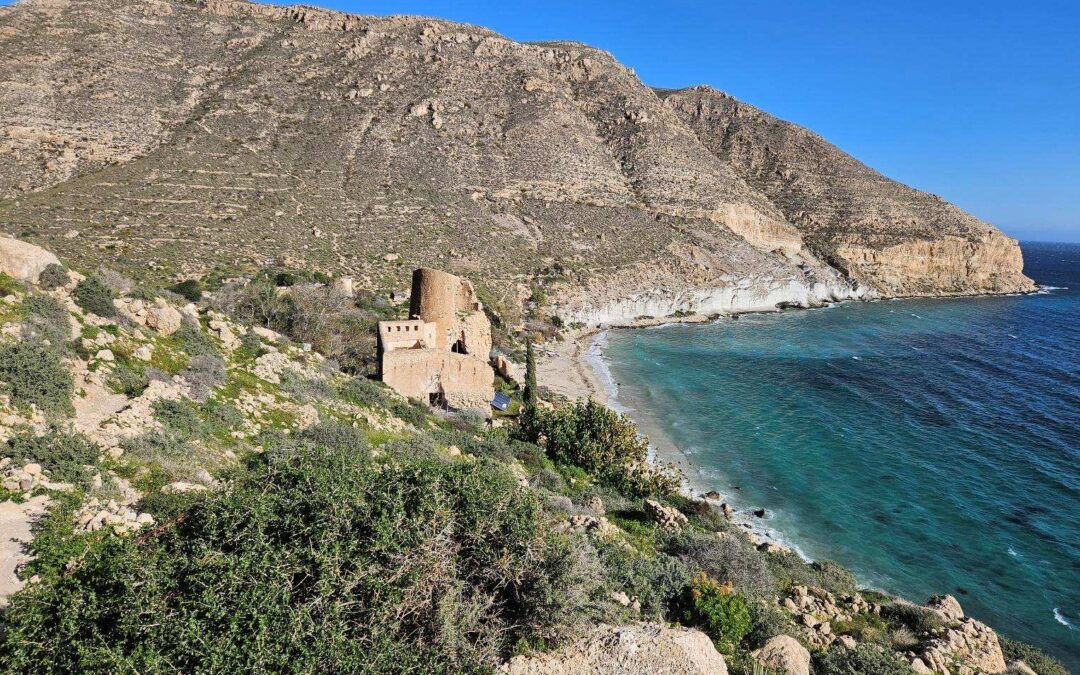
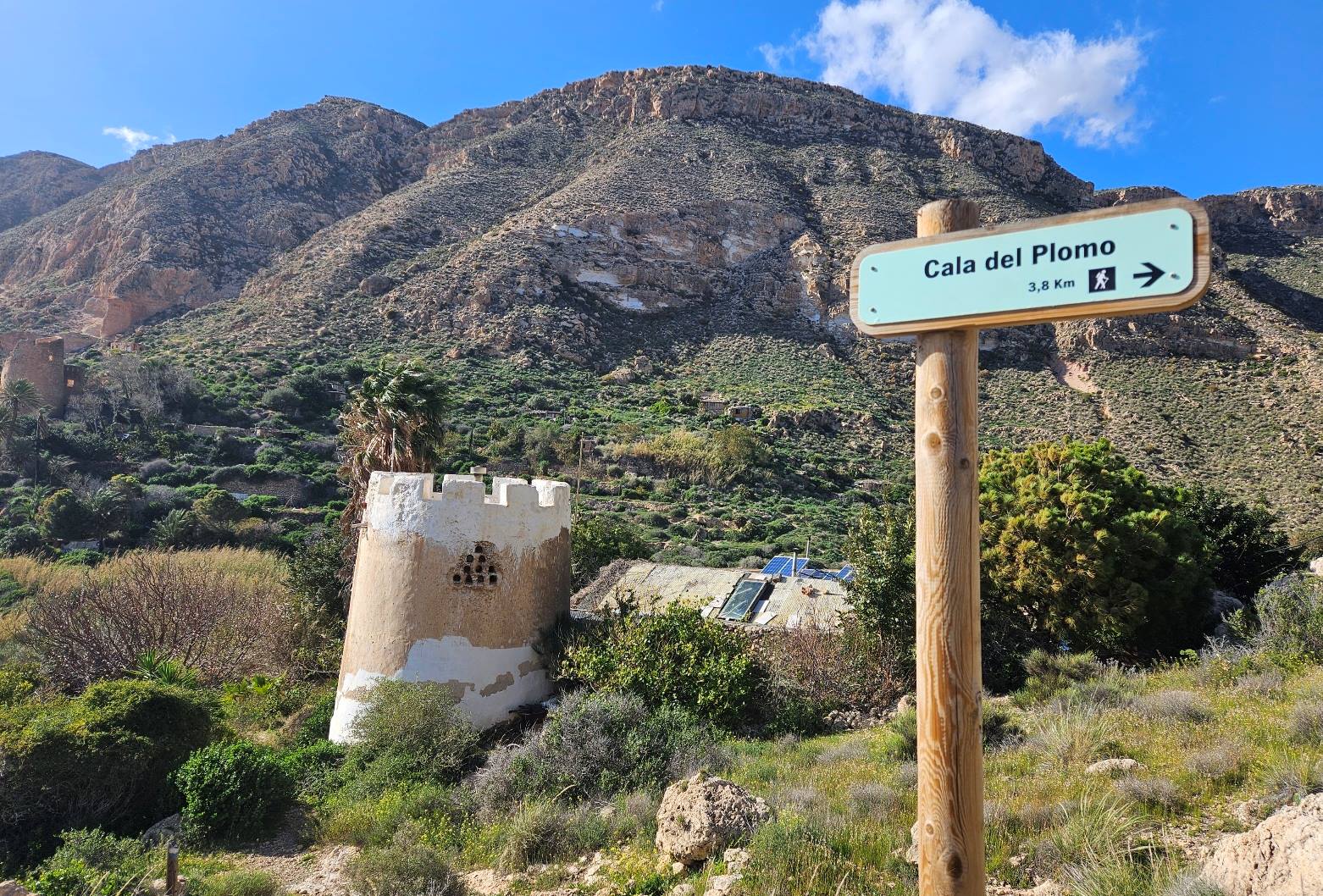
After enjoying the view, there is just over 200m of height to lose on the path down to San Pedro. It’s a winding descent which comes out at a small tower-like structure. Here, a sign points back to Cala del Plomo (3.8km distant).
Cala de San Pedro is unique on the Mediterranean coast and it has a long history.
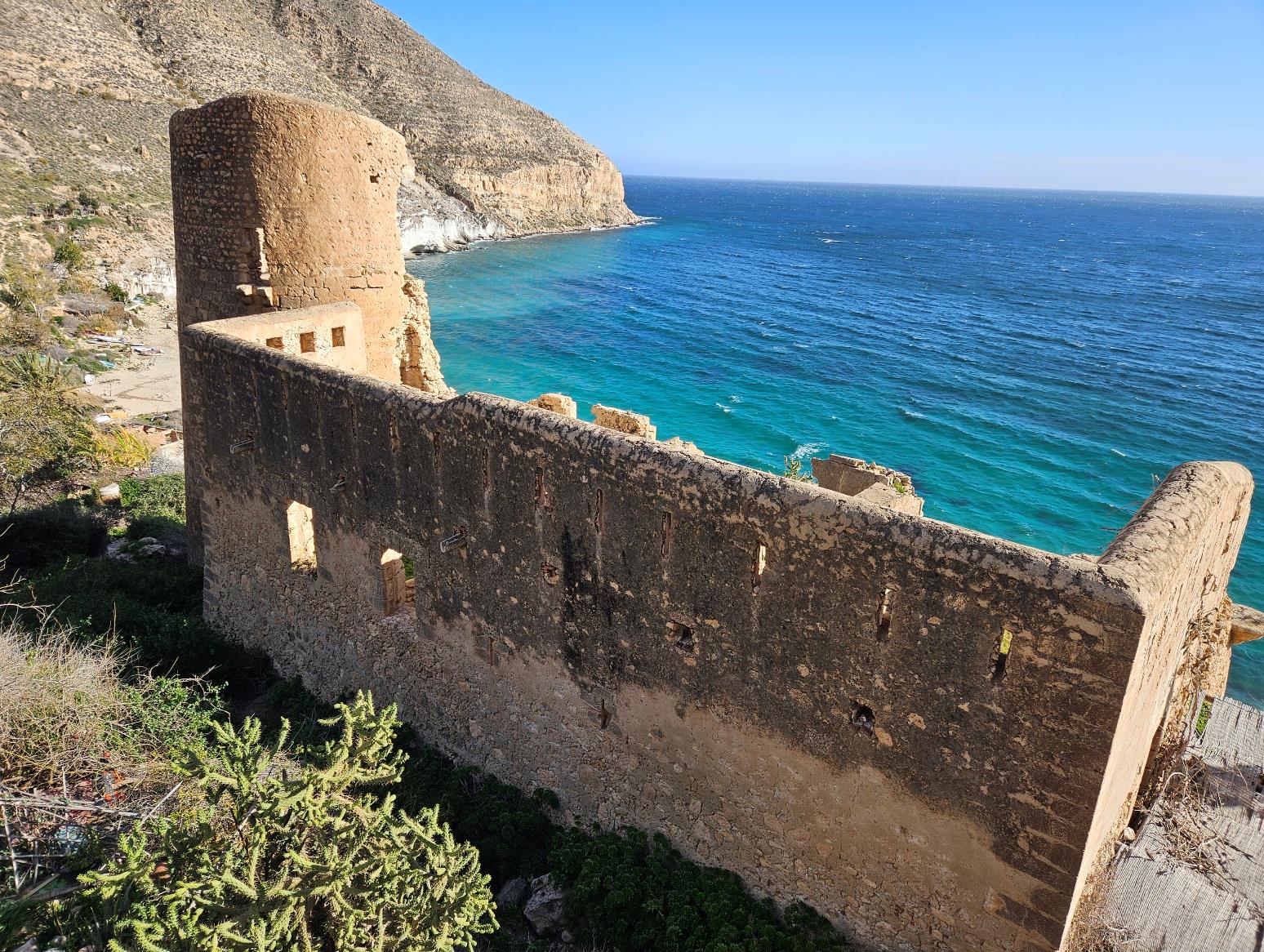
Its defence tower/castle was built in 1583 to defend the isolated cove from frequent incursions from pirates.
Later it was populated by families who eked out a living from fishing, tending goats and carob trees, and growing vegetables.
The residents abandoned the coastal hamlet during the mid 1900s as life proved too hard for its dwindling inhabitants.
There are no roads to the cove, which can only be reached on foot.
During the 1960s it was discovered by hippies.
San Pedro later became known as the ‘hippy pueblo’ as travellers moved in to occupy the abandoned village.
It remains isolated, tranquil and beautiful. Not much has changed since I first walked through here in 2002. And the transient population of hippies is still there.
However, the signs have been updated. Back then people were instructed to bury their poo; now they are told ‘we have built toilets for you, please use them!’
People come and go, or stay longer; when I walked through in February, 2026 I saw a few people doing just that.
Some walking in for the weekend. Others returning with shopping from Las Negras.
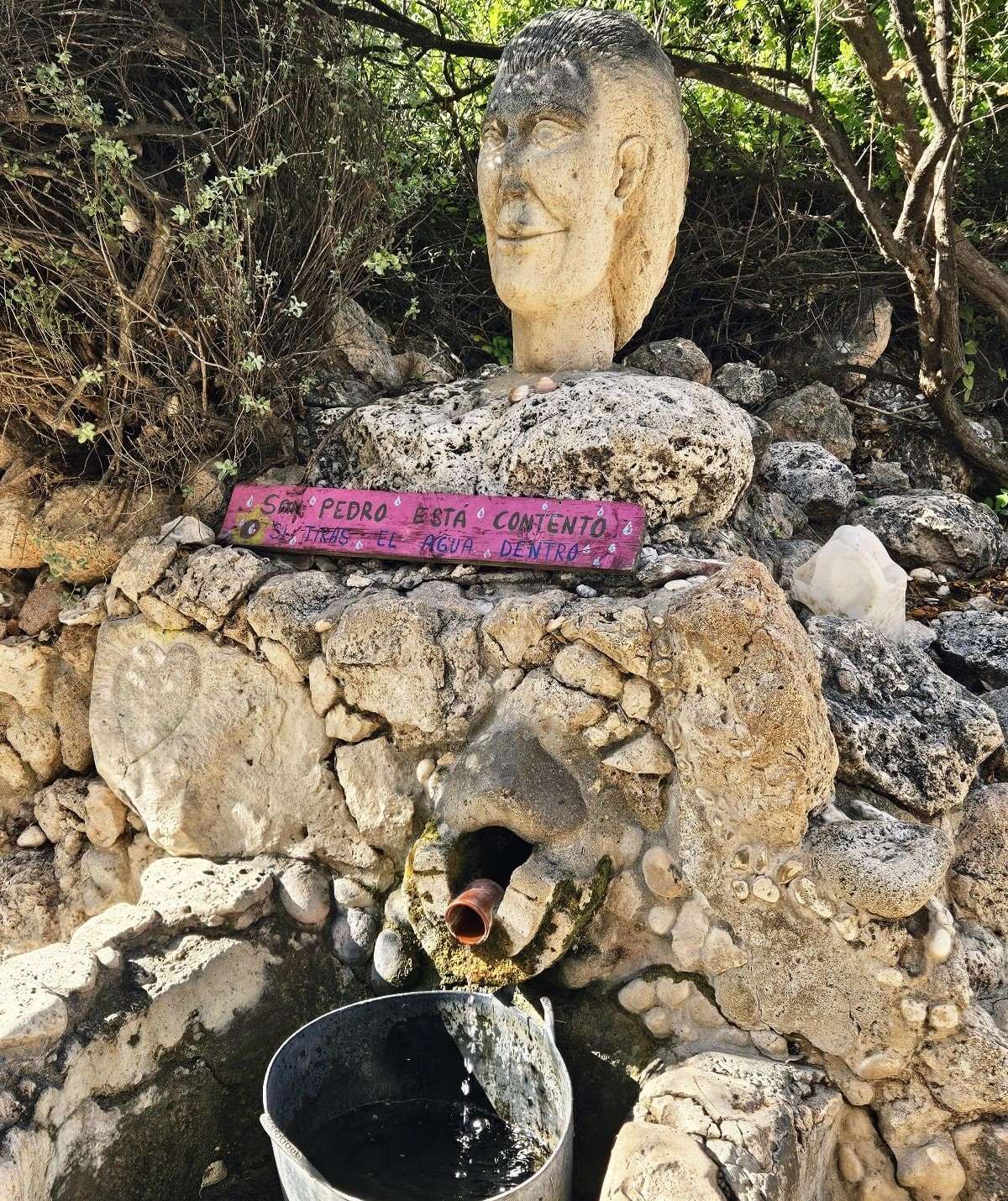
The footpath passes the natural spring and continues uphill to pass to the right of the castle.
The path then runs above the sea, following the line of the coast. It is eroded in places and handrails have been installed at one point where part of the path has been washed away.
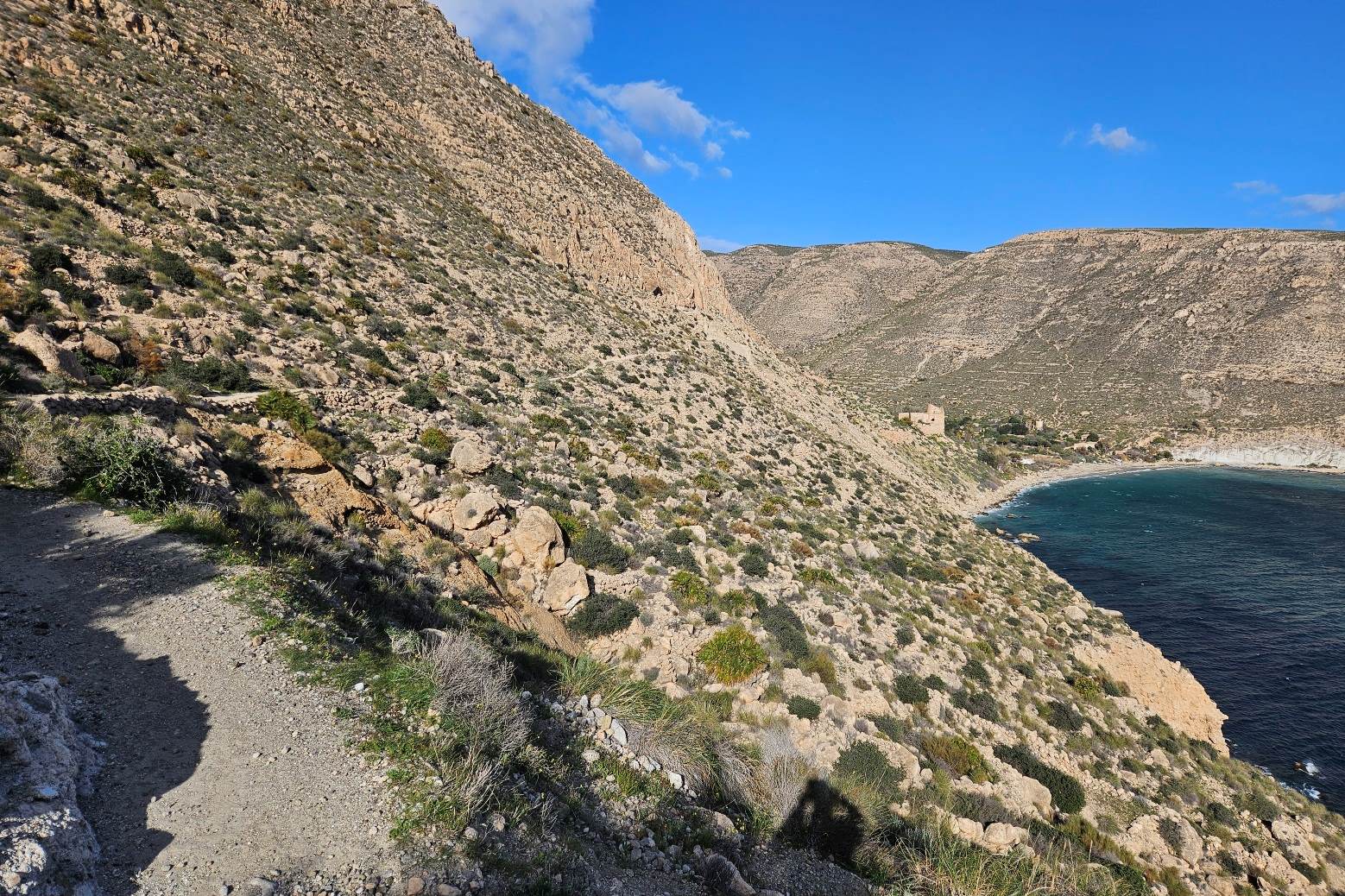
Looking back, there is a very good view of the route down the hillside that you have just descended to reach San Pedro.
Our path follows the coast and then moves inland when the route is blocked by enormous lumps of volcanic rock rising out of the sea.
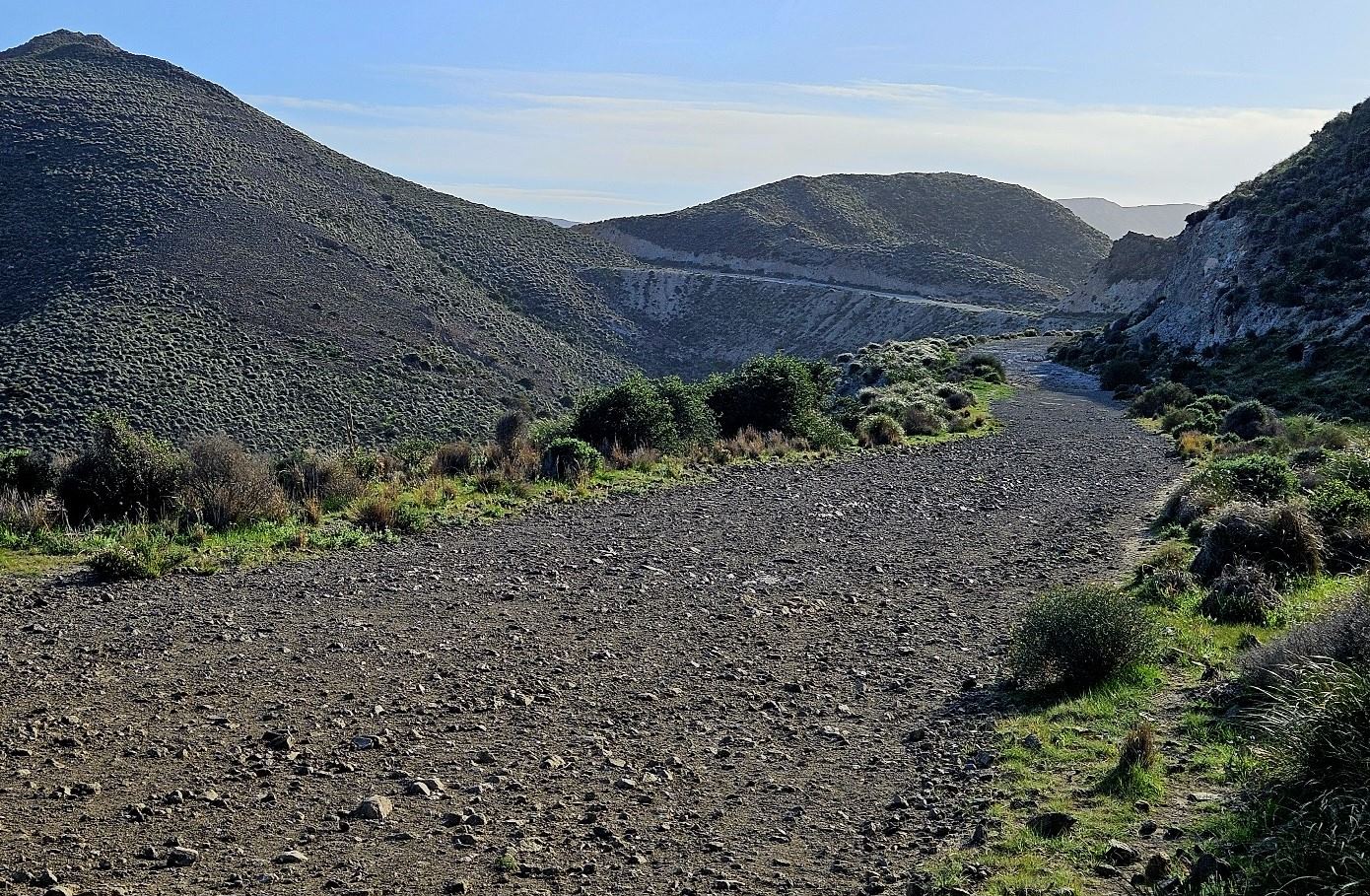
It is now a wide track which goes to Las Negras. En route you can admire the volcanic rock formations to the left.
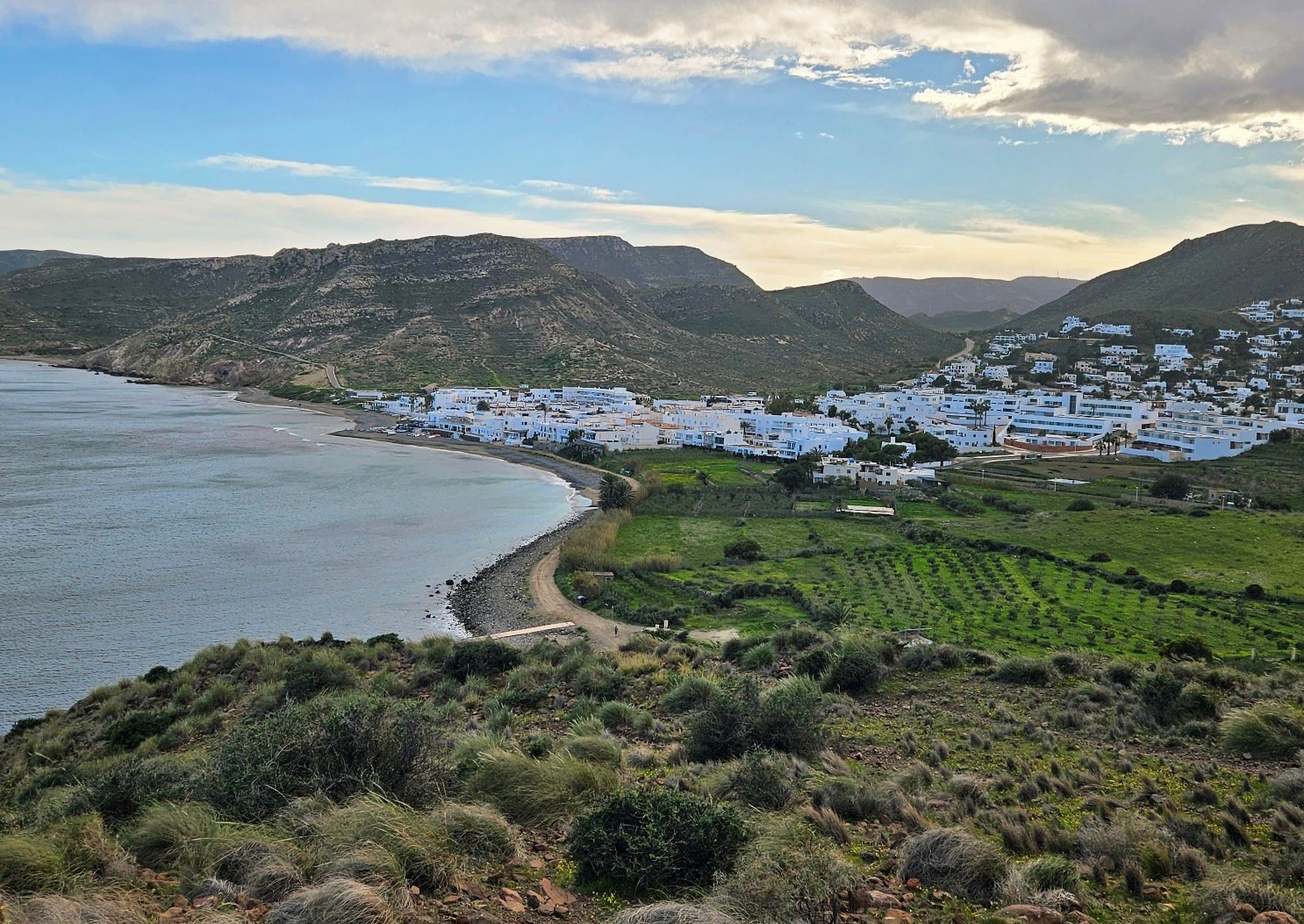
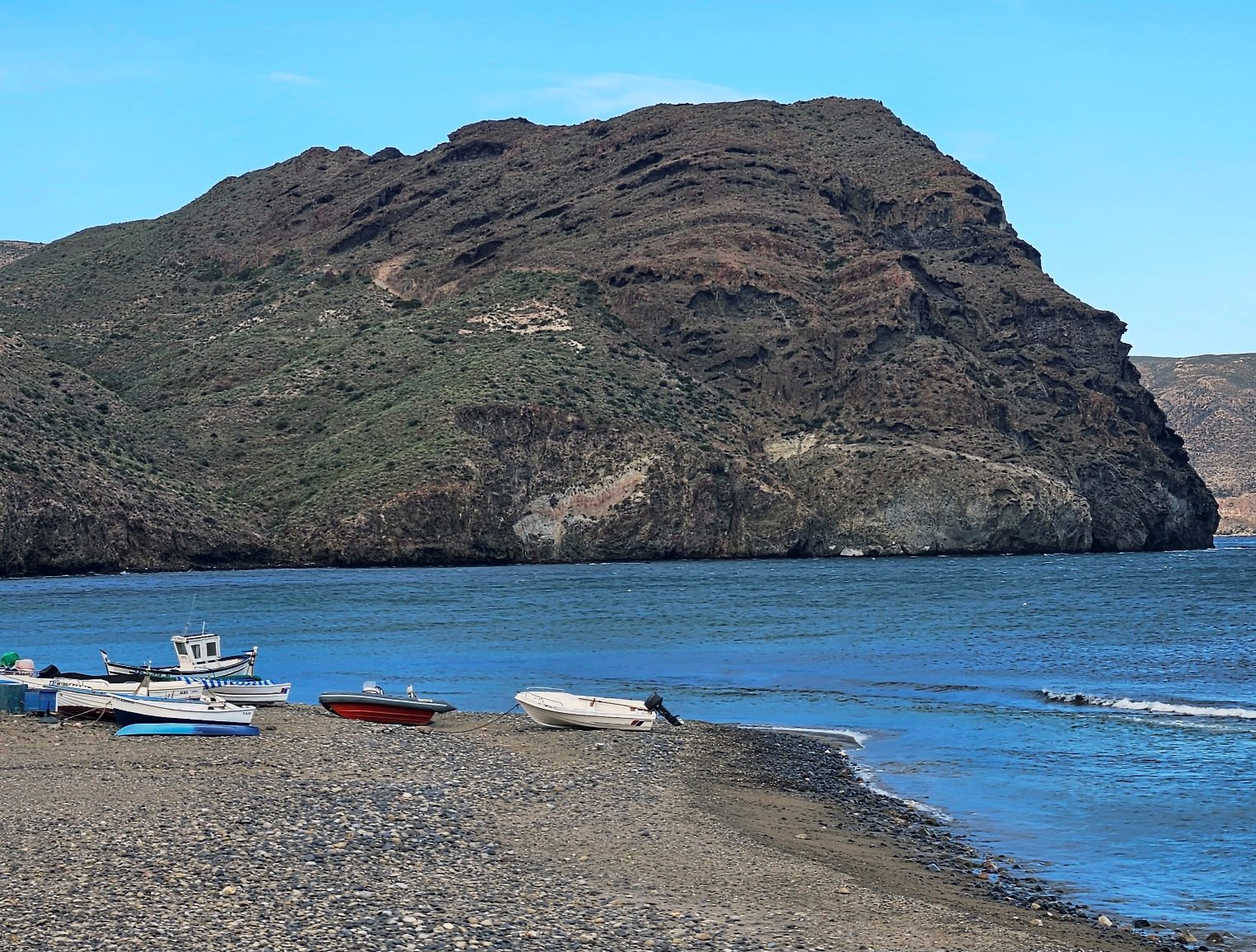
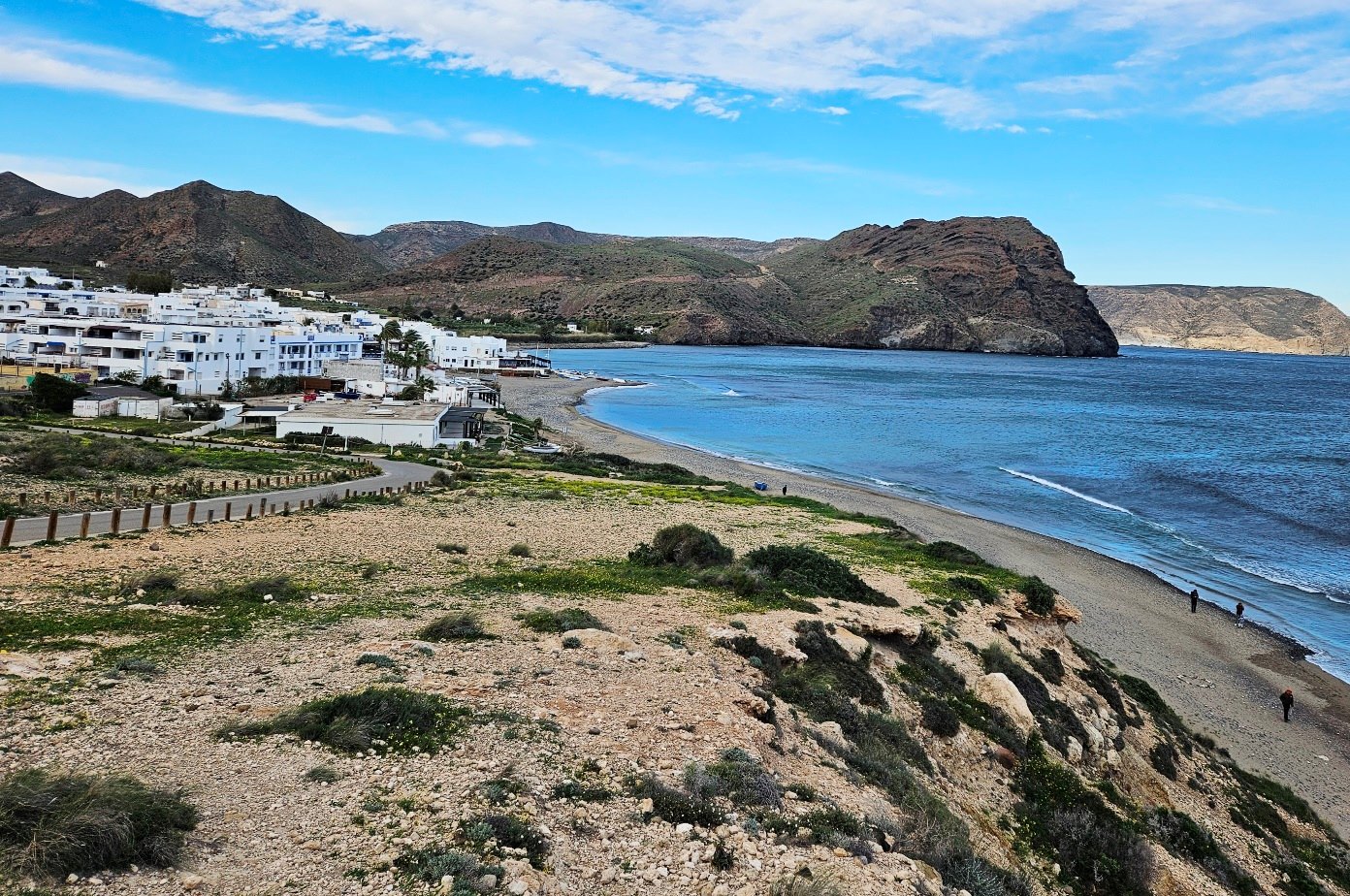
The volcanic rock comes to an abrupt end with the magnificent Cerro Negro, a 172-metre-high outcrop which probably gave the name to the fishing village which lies next to it.
Our route passes to the right of the Cerro Negro and enters the top of Las Negras, passing a plinth which explains about pirate raids and the fortification of Cala de San Pedro to protect the coast.
There are a lot of accommodation options in Las Negras which can be viewed via booking.com
I stayed at the campsite to the south of the village. Winds had been gusting at around 80km/h that day and the short passage that follows (written at the time) relates my exprience.
Glamping options can be viewed at www.wecamp.net
A right glamper
The campsite at Las Negras doesn’t accept tents.
I had booked a pitch, but failed to read the full briefing. Campervans only.
When I arrived at 6pm with my tent, wind-battered and tired, I didn’t react very well to the news.
I had brief visions of sleeping on the beach before the receptionist revealed that they still had some ‘glamping’ options available.
So, after receiving a discount for the money I’d already paid, I’m €50 down. But I’m actually rather relieved at the way things have turned out.
The wind is still gusting at around 70 km/h. I don’t think I’d have managed to get my tent up in these conditions.
The ‘glamp’ is actually a very comfortable option. It’s even got a coffee machine, as well as toilet, shower and fridge. And it’s standing up to the gusts.
So tonight I’m a proper glamper.
Recent Comments