
The alternative headline for this report is ‘showing the way to San José’.
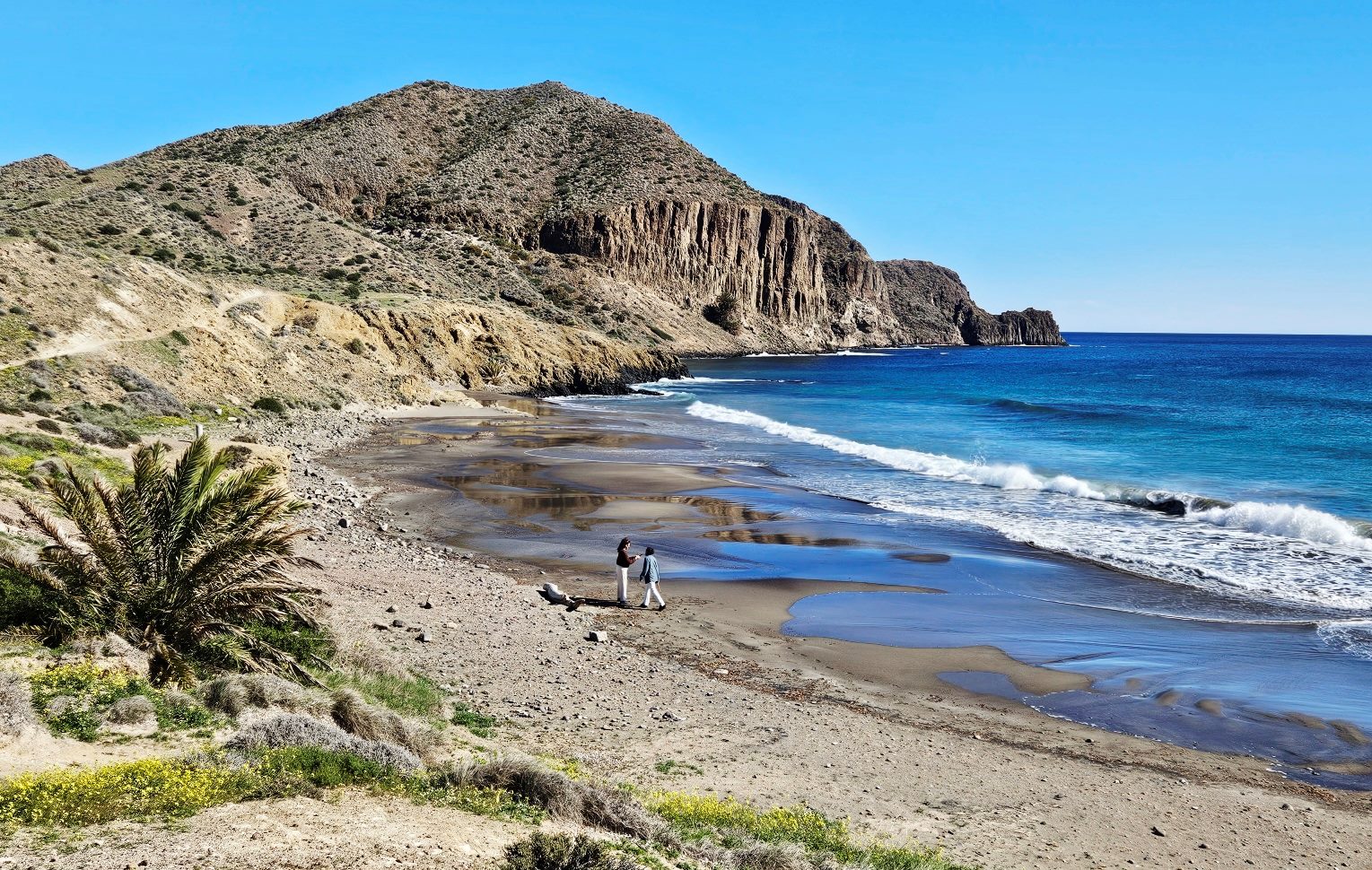
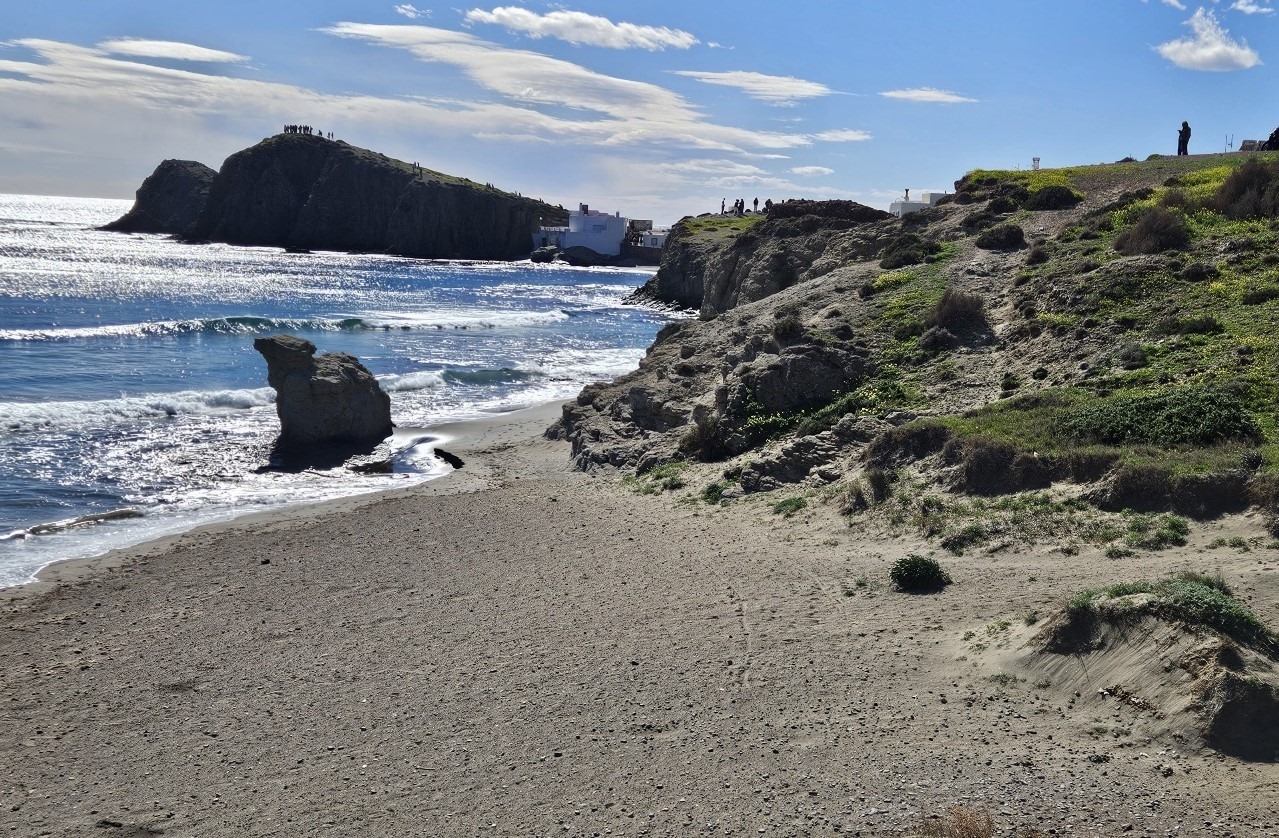
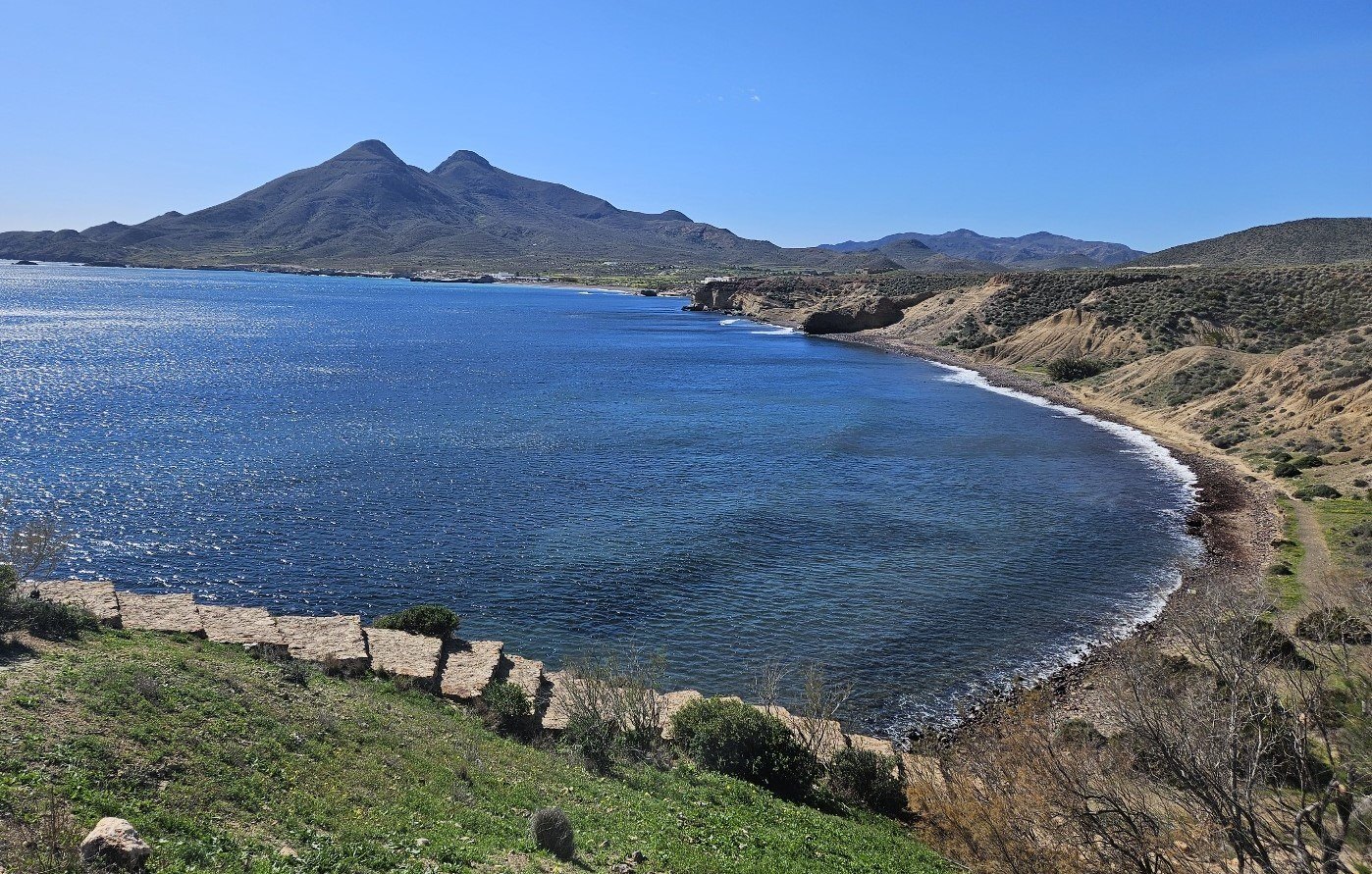
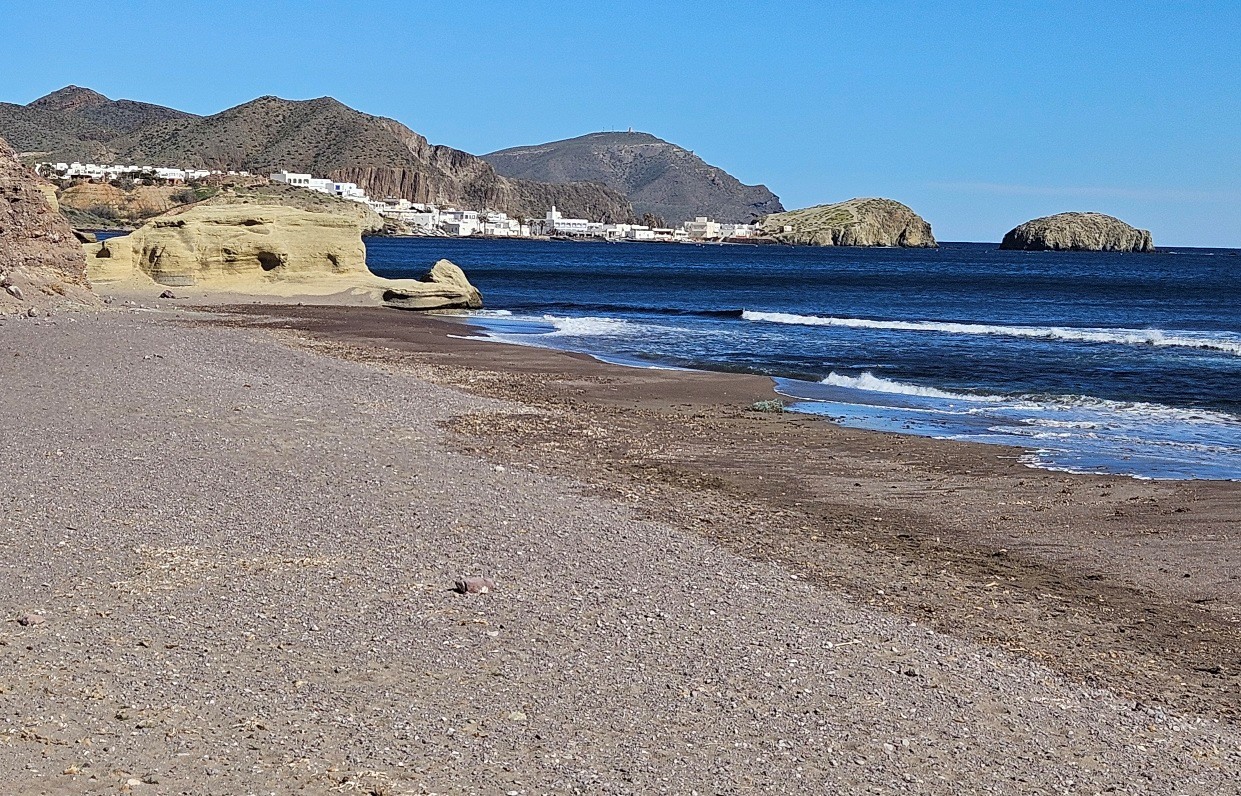
The path emerges on the northern side of La Isleta del Moro, at the Playa del Peñon Blanco, which is a lovely beach.
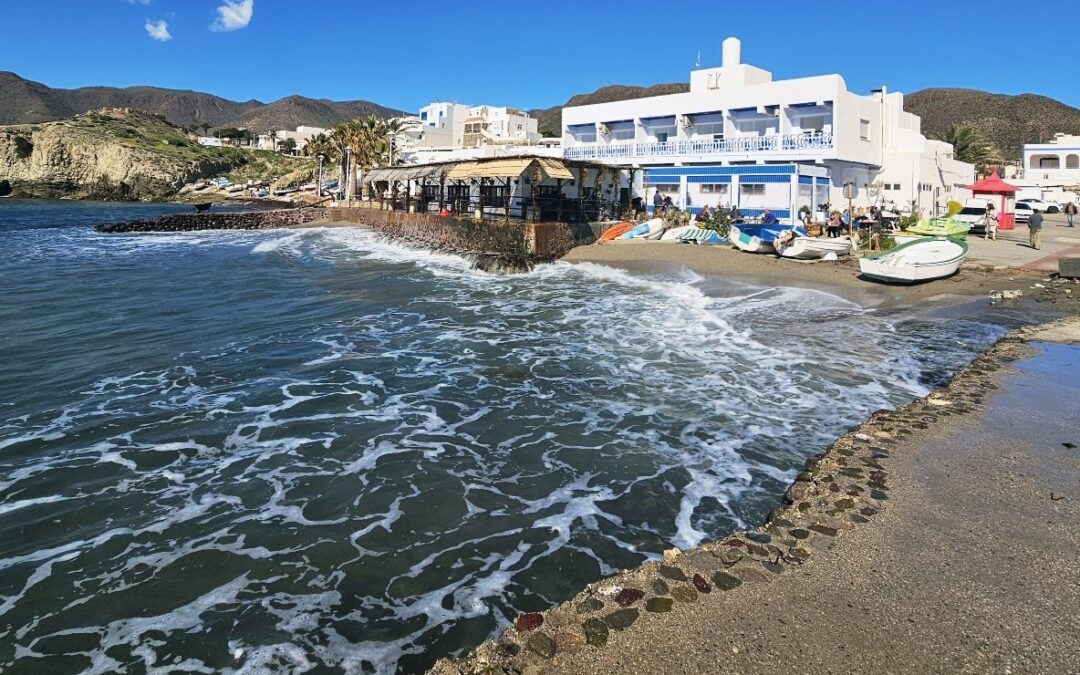
It’s worth going ‘off piste’ to have a look at the dock in this whitewashed fishing village.
To get there, head up the bank and into the streets; turn left to go down to the sea, passing the bus stop.
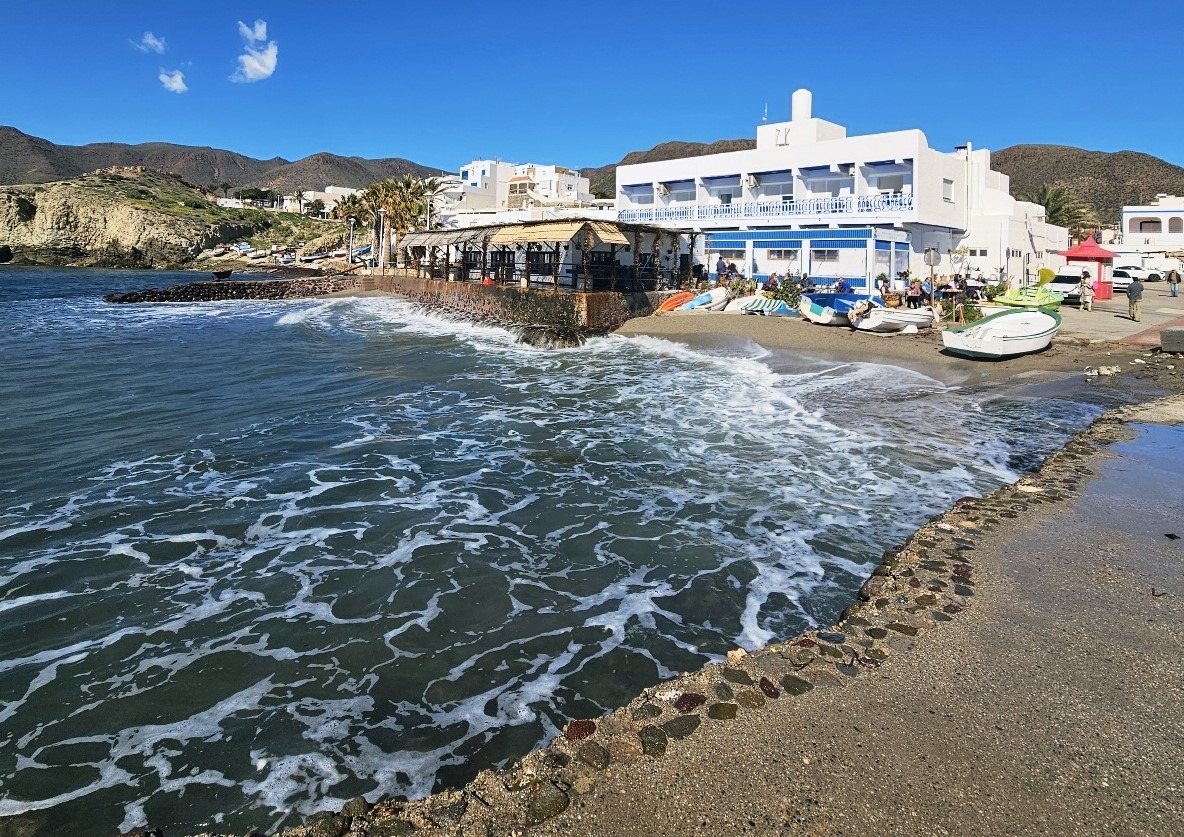
On the shore, we can see the essence of La Isleta – the seafront ‘hostal’ and restaurant, the beach and boats, and the dock.
You may want a fish lunch at this idyllic spot, listening to the sound of waves. That might depend on the day, as weekends can be very busy.
Like me, you may arrive on a Saturday and find the place a hive of activity.
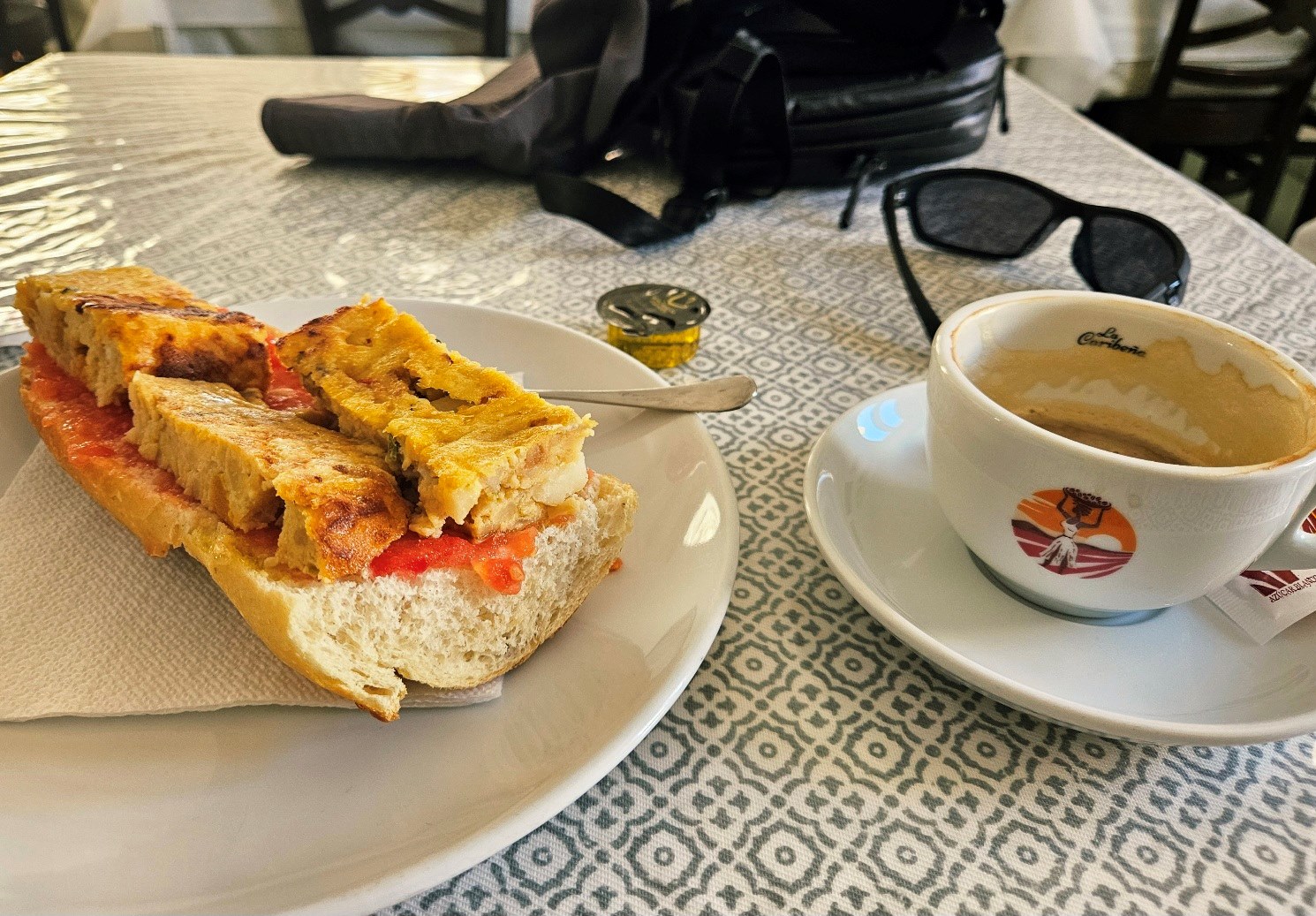
I was too early for lunch, so went round the back of the ‘hostal’ and sat inside a family-run eatery for coffee and delicious tortilla on tomato toast which only cost me €3.50.
It gave me a boost, both mentally and physically.
Back on the walk, head south along the coastal streets of the village, passing on the right of the ‘mirador’ vantage point, to reach the walk board that shows details of the path from La Isleta to Los Escullos.
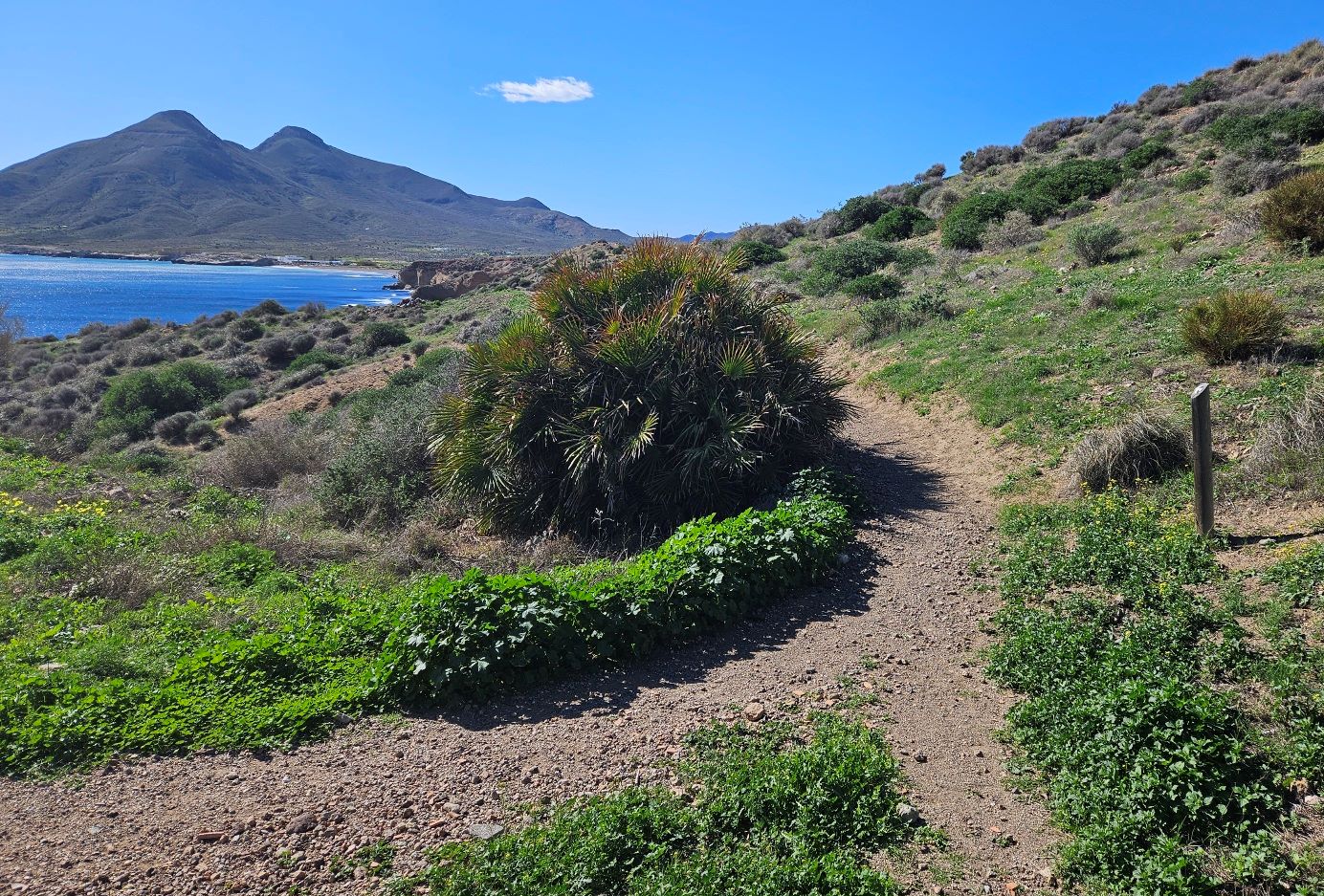
The waymarked path sets off along the coast but only for around 50m; it turns inland to avoid an eroded section of shoreline.
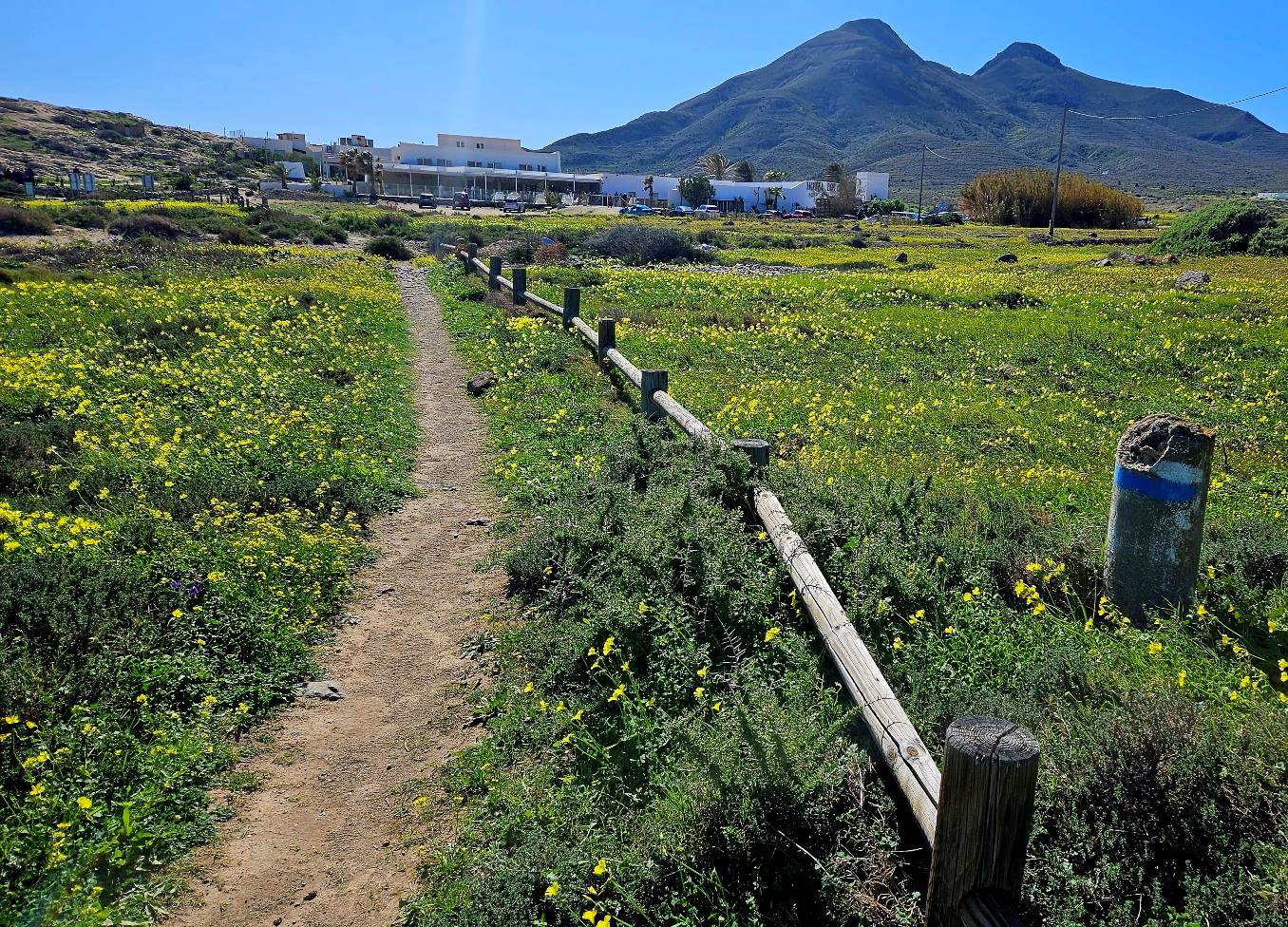
Before reaching the road the path turns left (south) to start the return to the sea, arriving at Playa del Arco. We walk along the back of the beach before getting on the grassy path that runs to Los Escullos.
The pilgrim route goes through the tiny settlement, passing on the sea side of the restaurant – and then the squat coastal fortress of San Felipe.
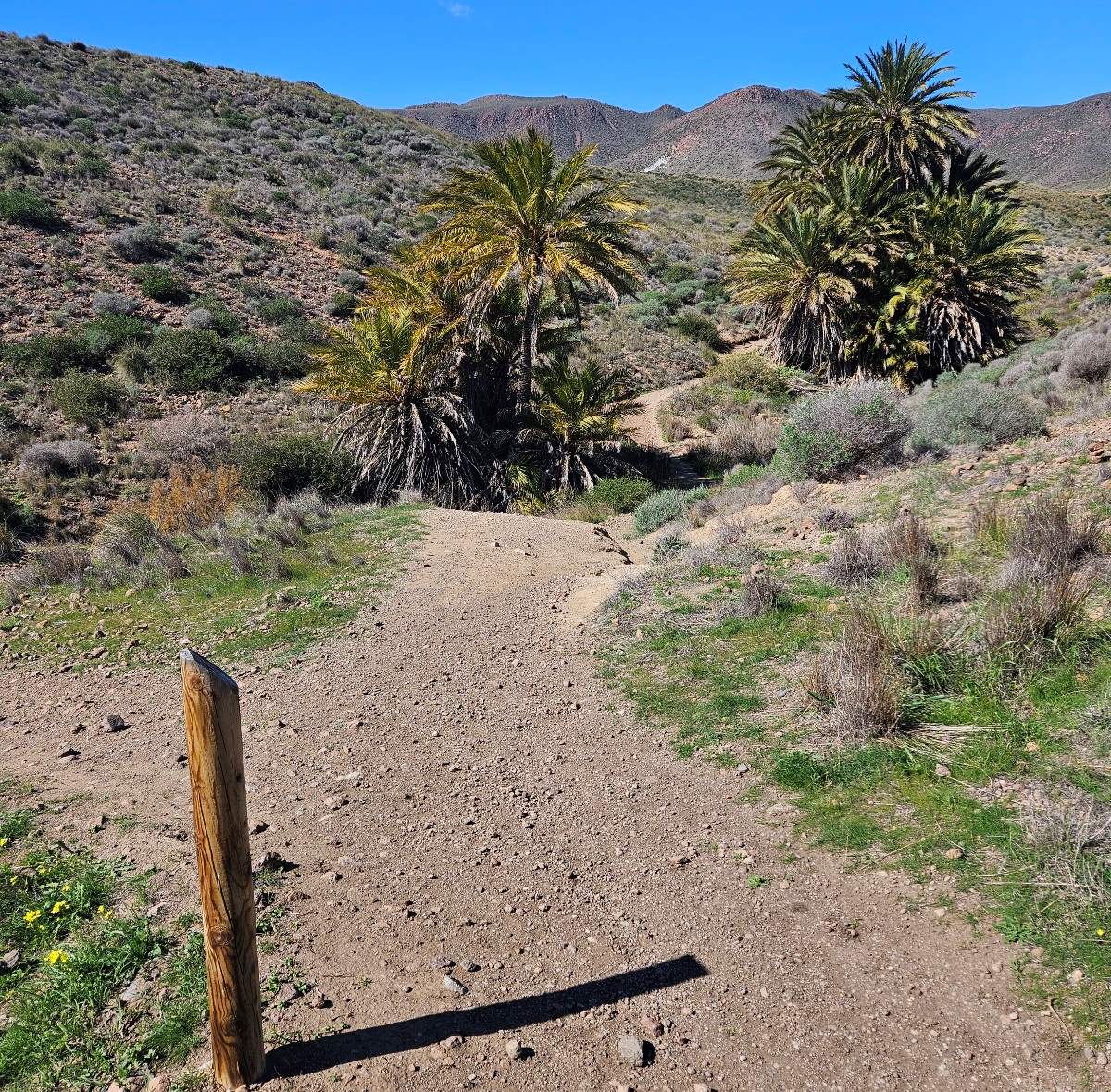
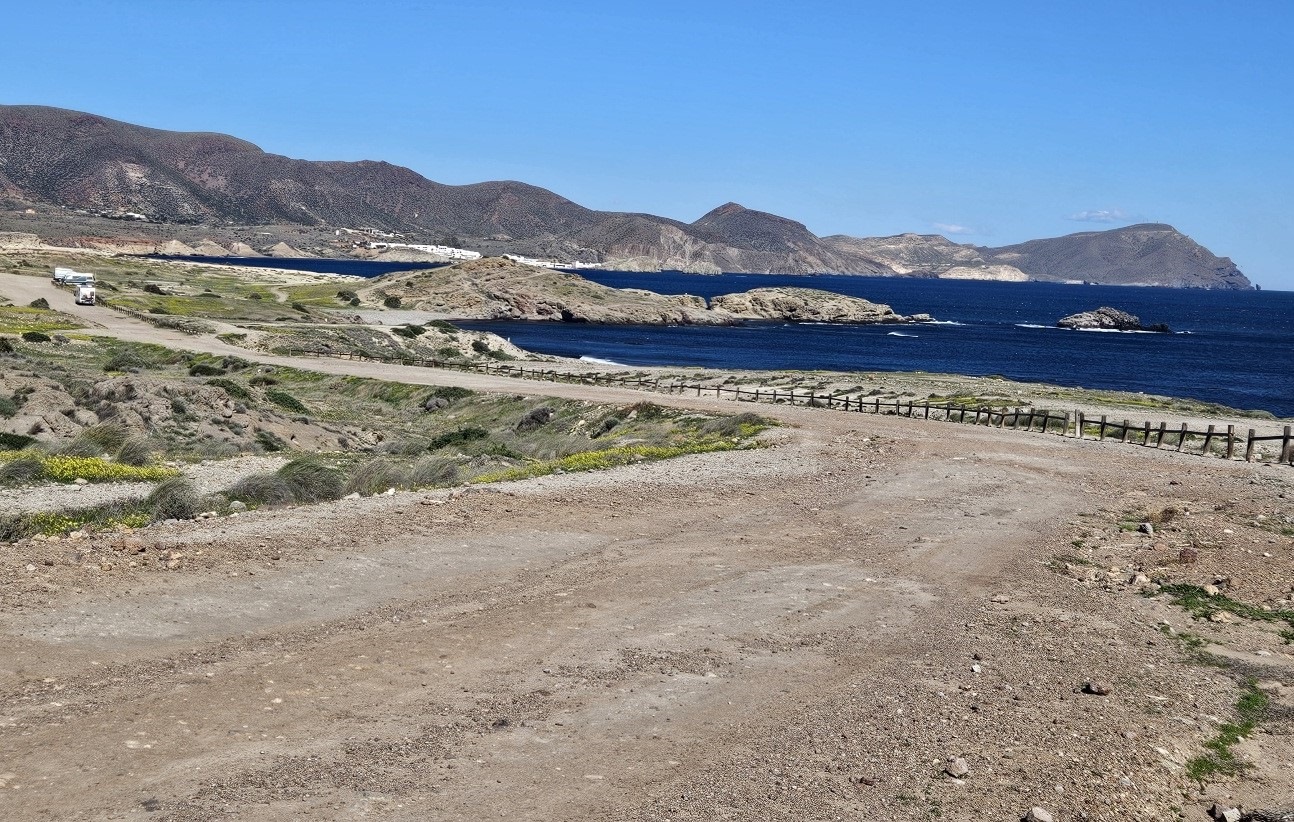
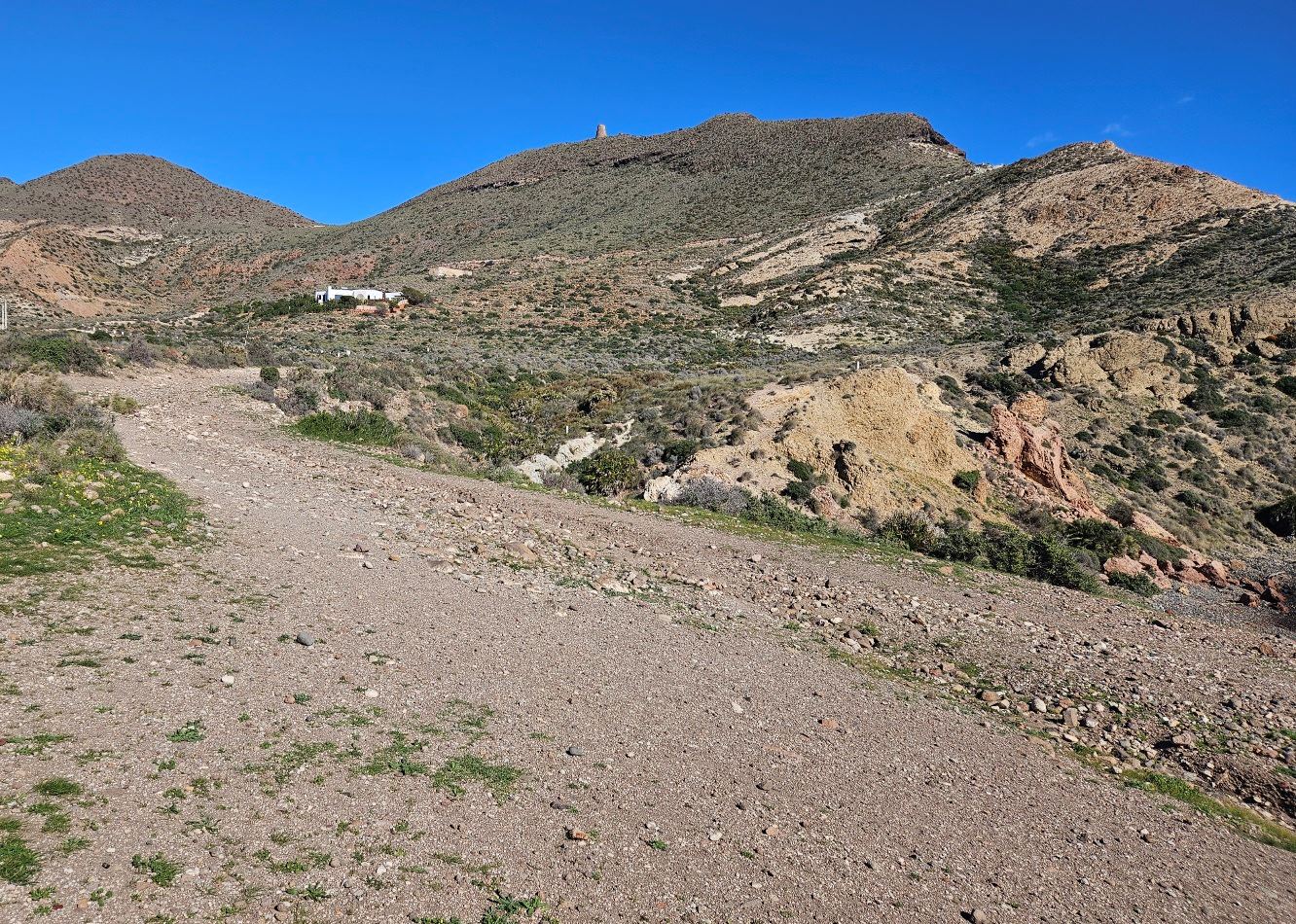
The route follows the coast, running alongside the very wide ascending track. Then we get onto the track, which goes around the sea side of Los Frailes volcano, taking us most of the way to San José.
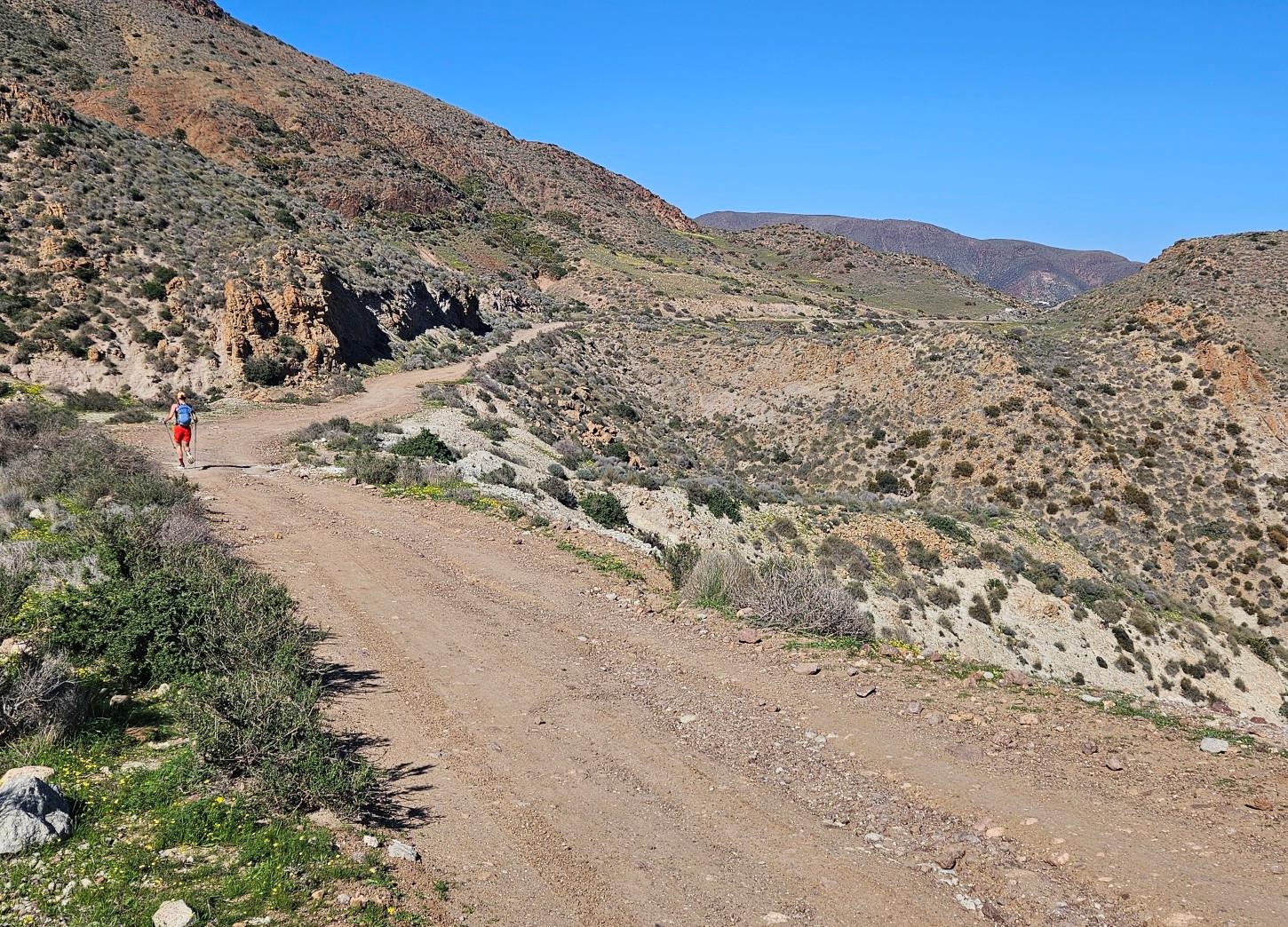
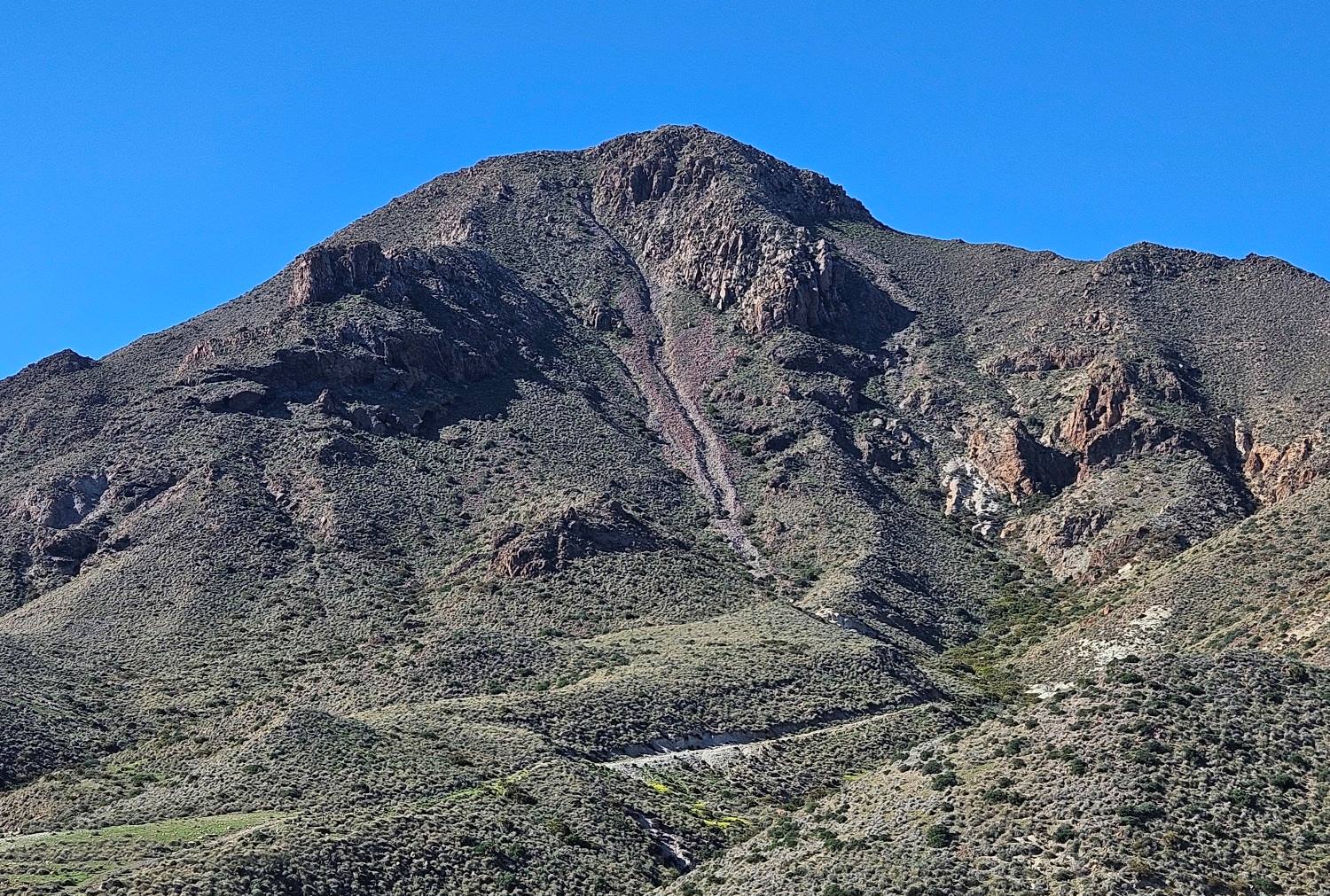
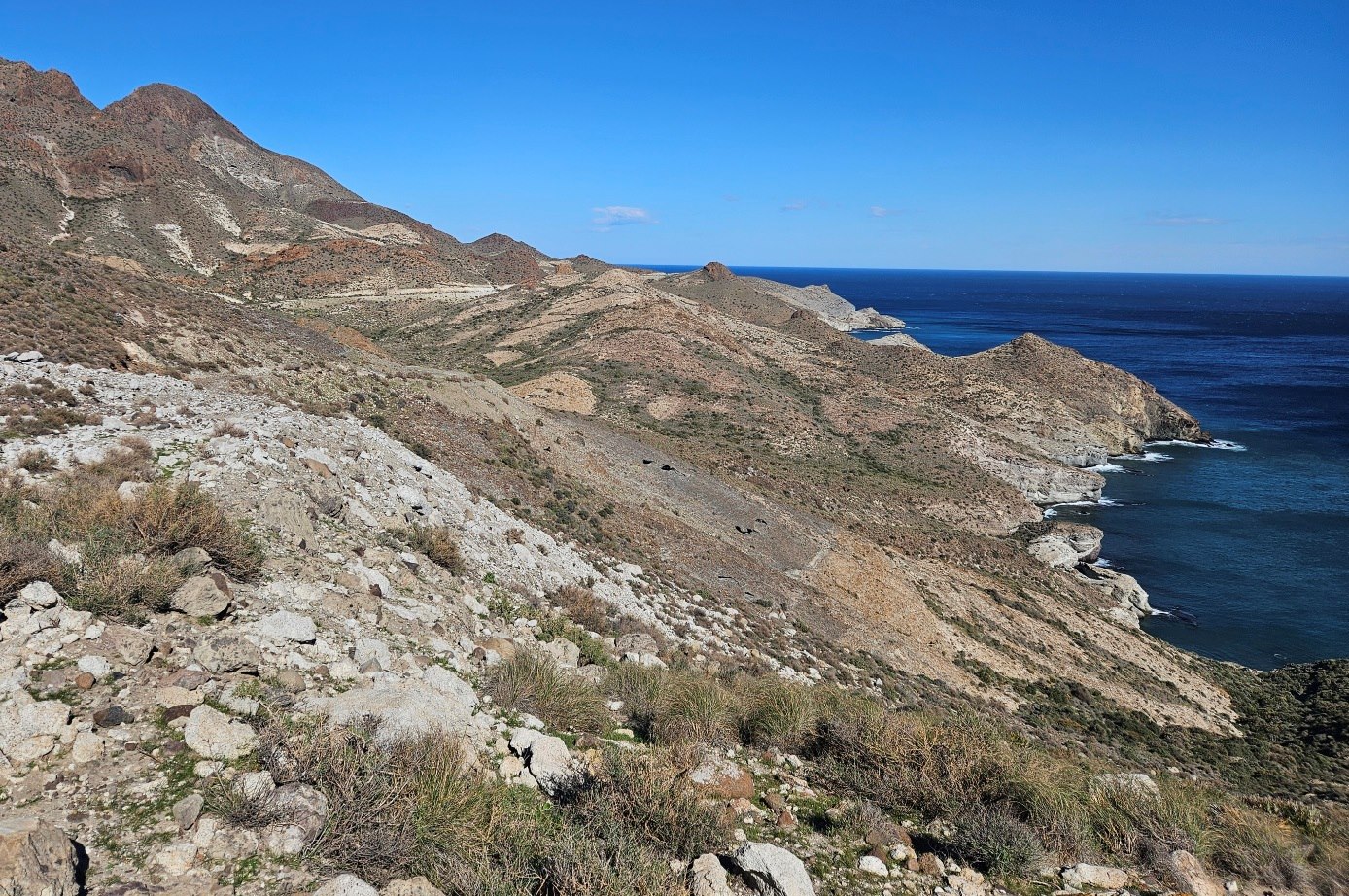
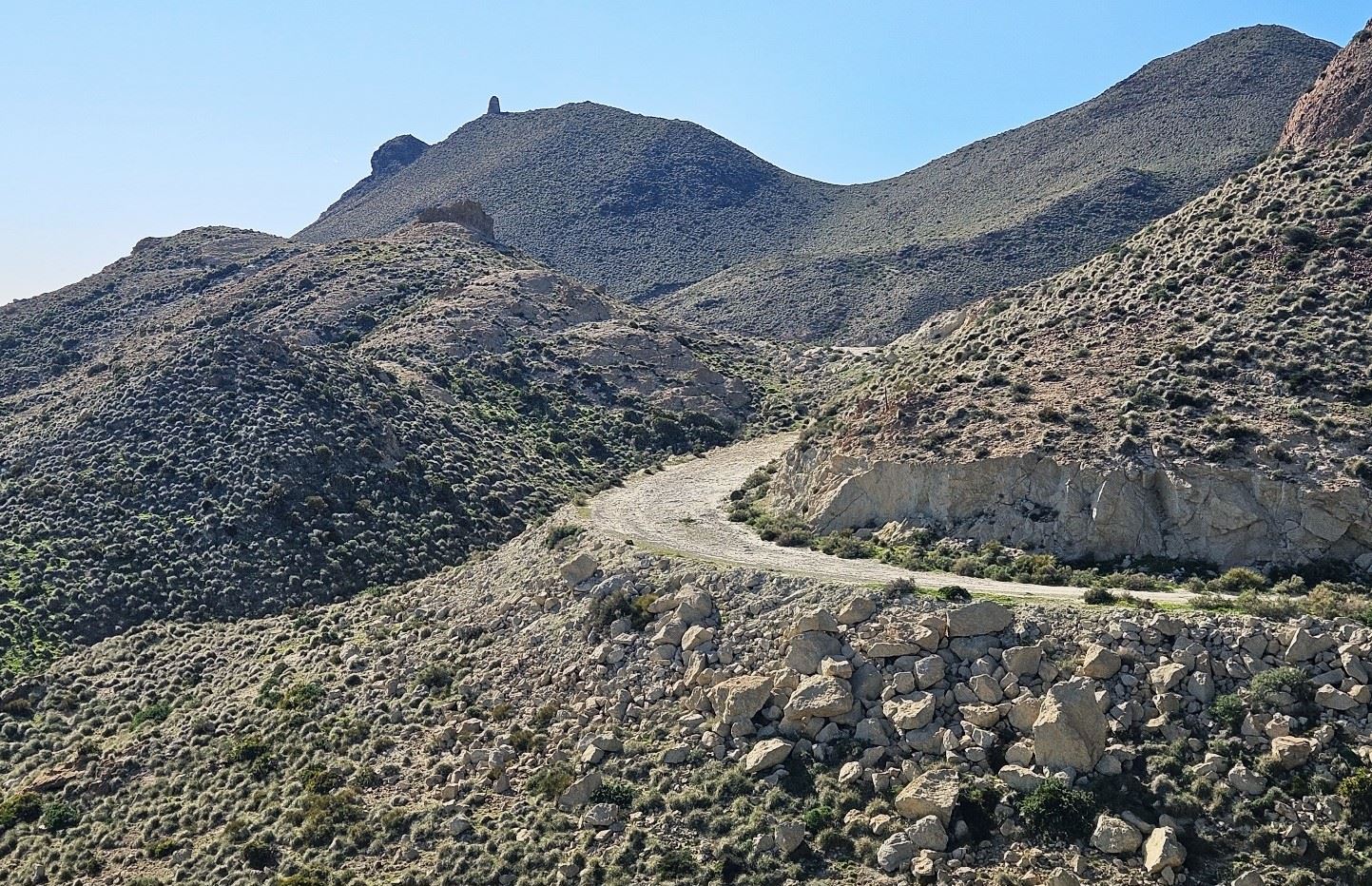
There are now at least 3km on this wide track, which passes through an area of enormous geological value; with volcanic outcrops rising out of the sea on the left and the extinct volcano massif on the right.
It’s a lunar landscape on a switchback track which seems to make slow progress as it ascends in a gentle fashion.
If you love rocks, this part of the route will be a dream; all sorts of volcanic fragments litter the track. Those who are not quite as keen on geology may not be able to summon up as much enthusiasm for this section.
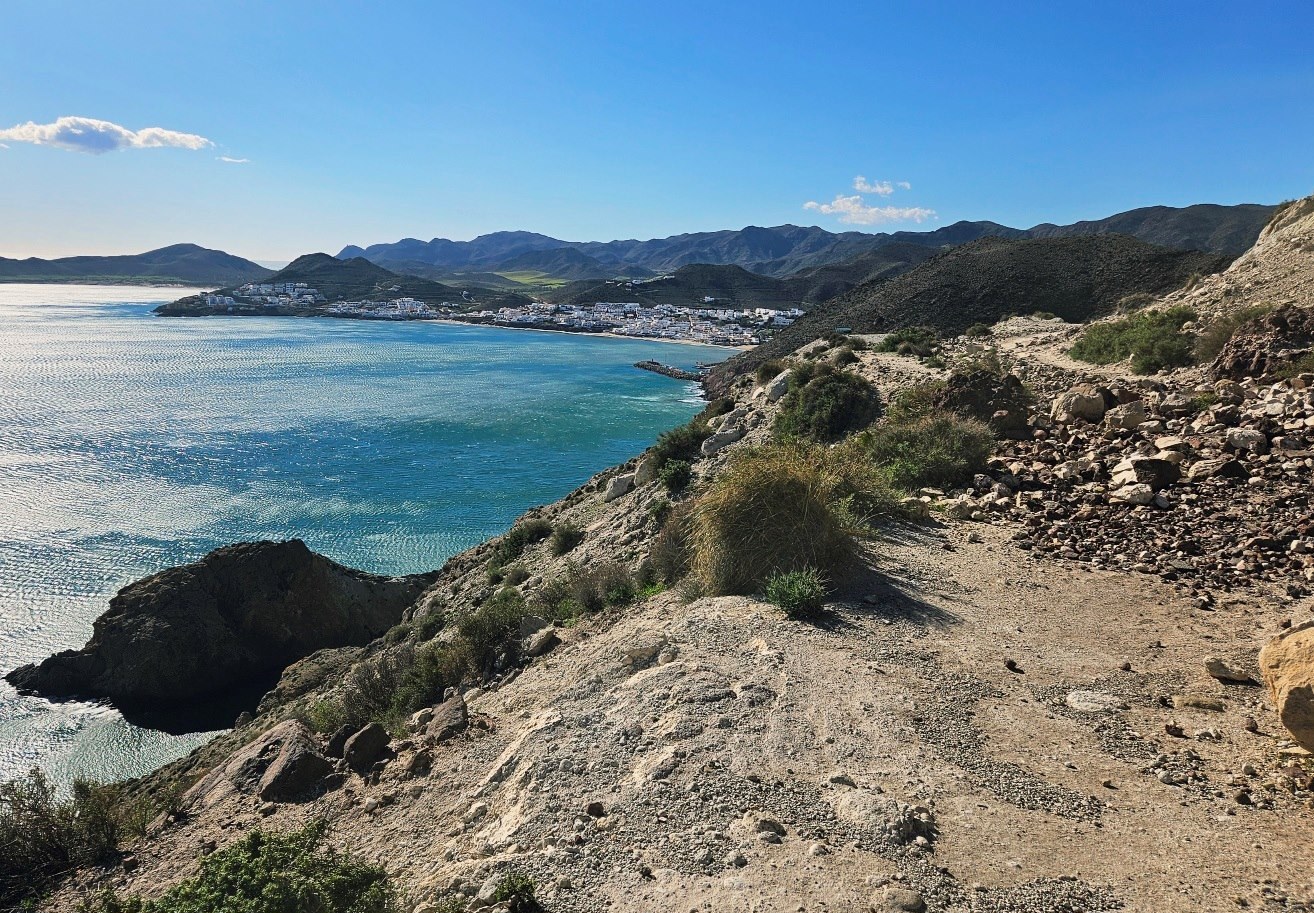
Towards the end, care has to be taken as the track narrows down; there are sharp drops away to the left, but you do not have to walk anywhere near the edge.
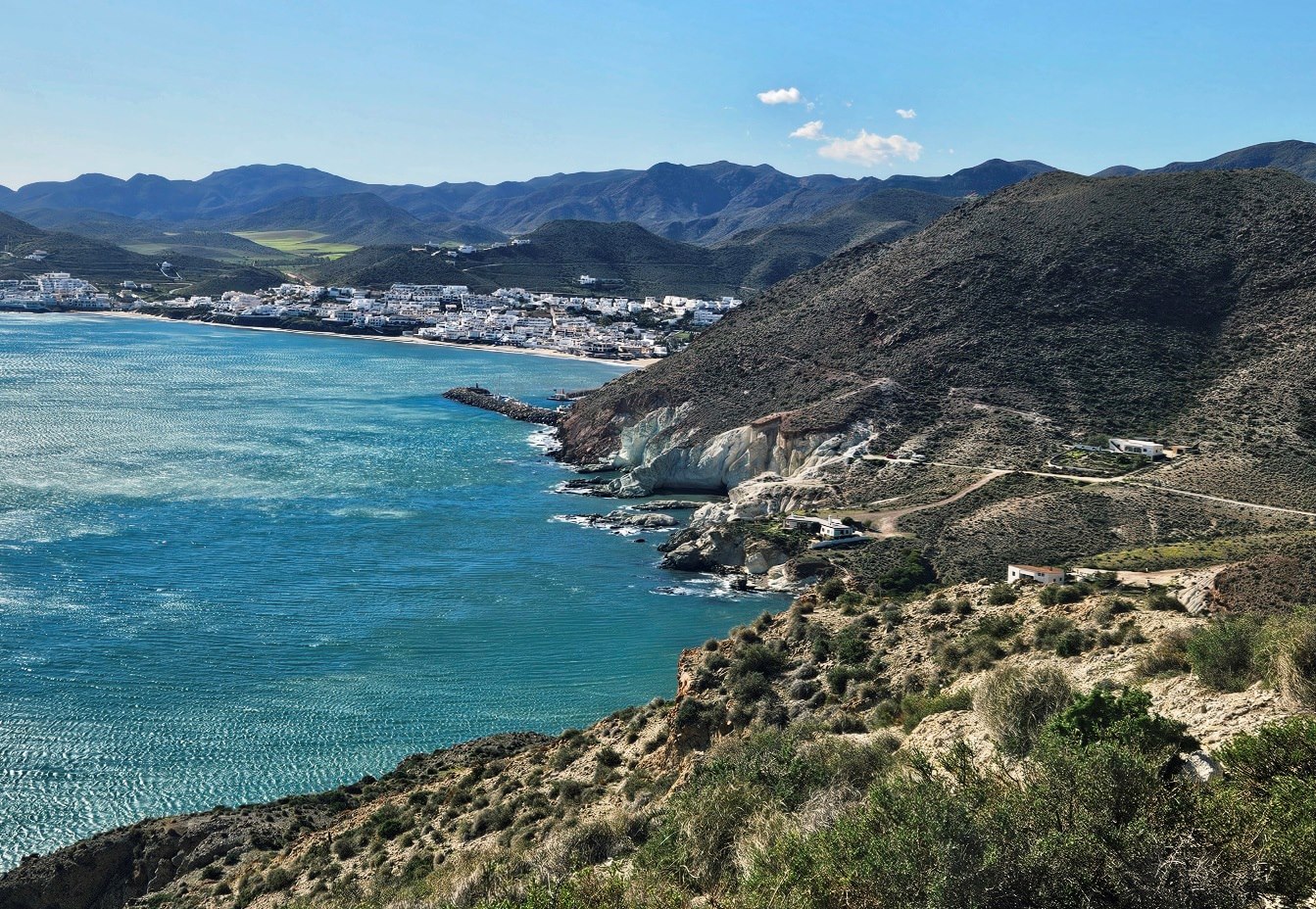
After your first views of San José in the distance, our route goes round the corner. Notice the turn off left to start the descent.
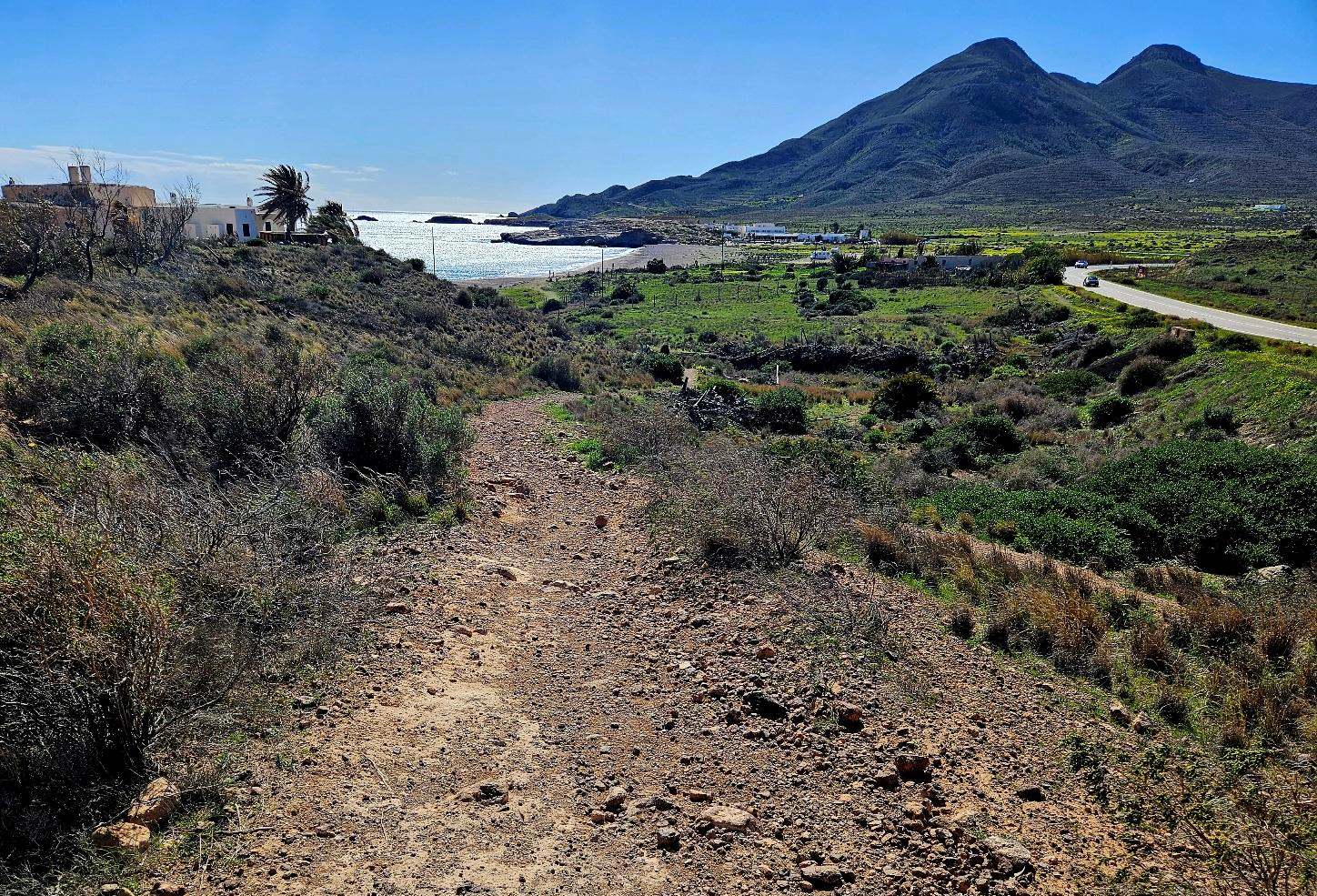
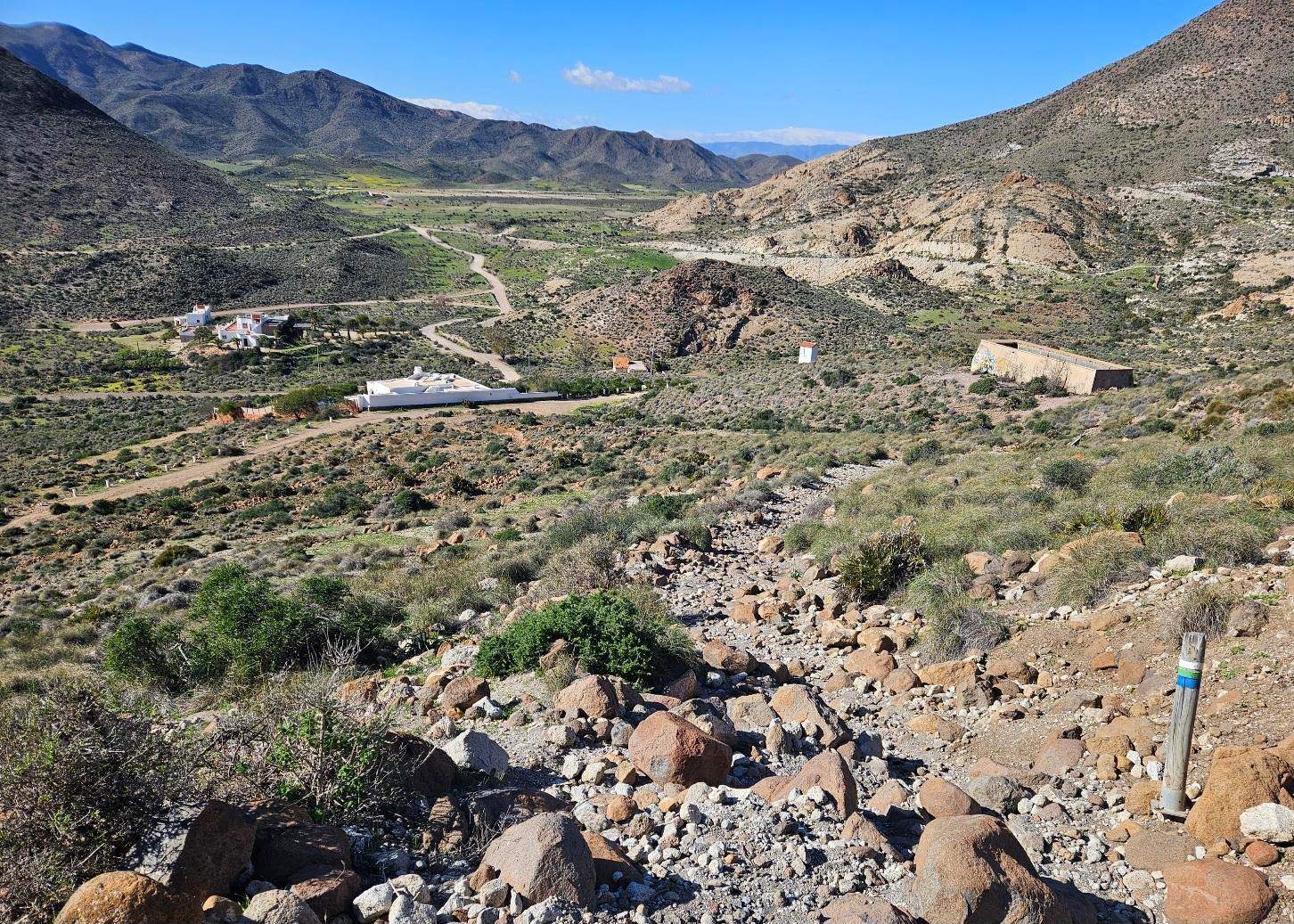
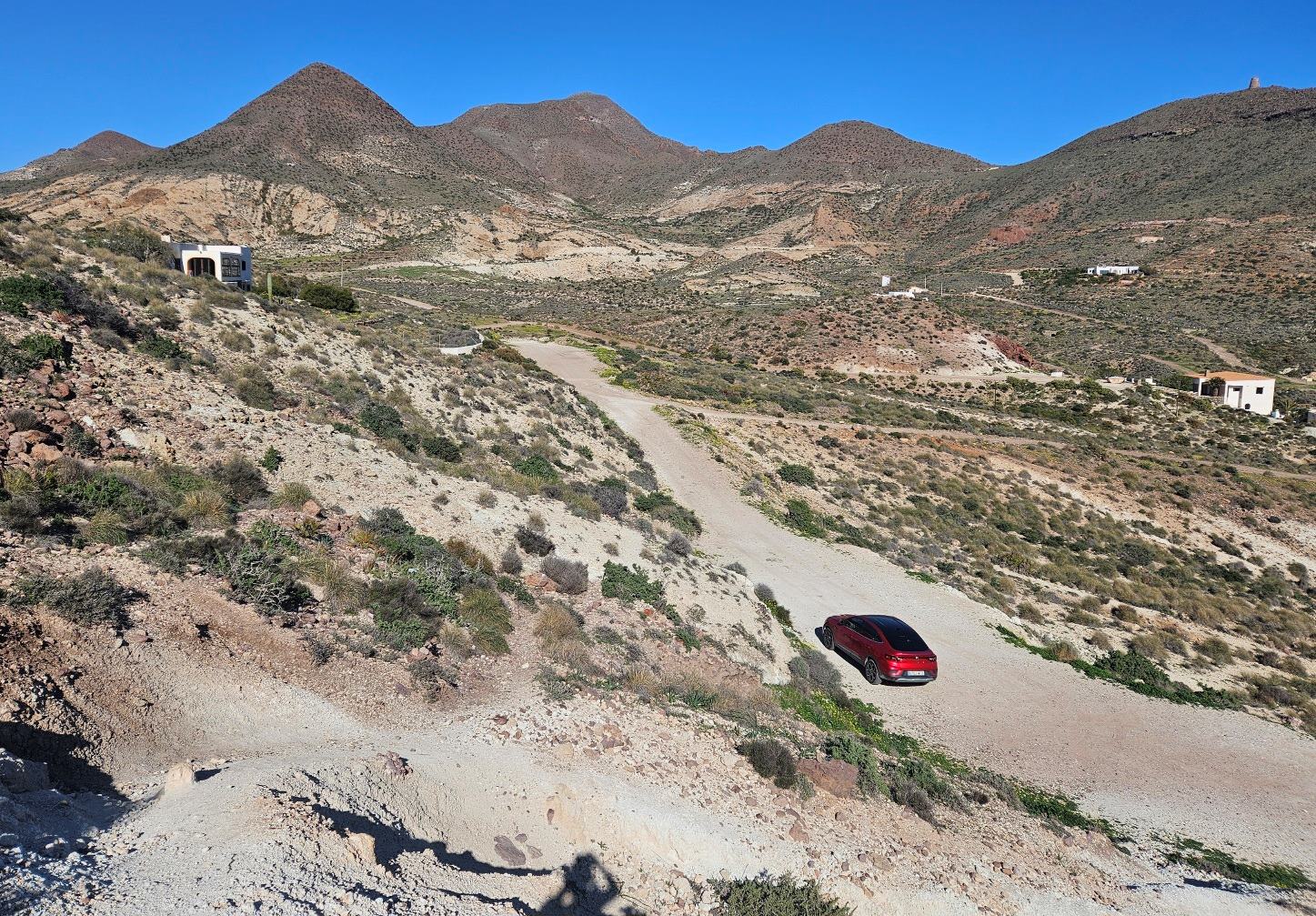
Reaching the bottom of the hill, emerge at the white wall of a villa. At this point it’s decision time.
Facing the wall, the pilgrim route goes left following the waymarks and posts. This is the route I took, but it involves crossing an eroded area which, in my opinion, is dangerous.
I don’t think there is any value in taking the pilgrim route on this final 1.5km section to San José.
My advice would be to turn right at the white property and follow the wide track towards the road at the northern end of San José and turn left to walk into the town.
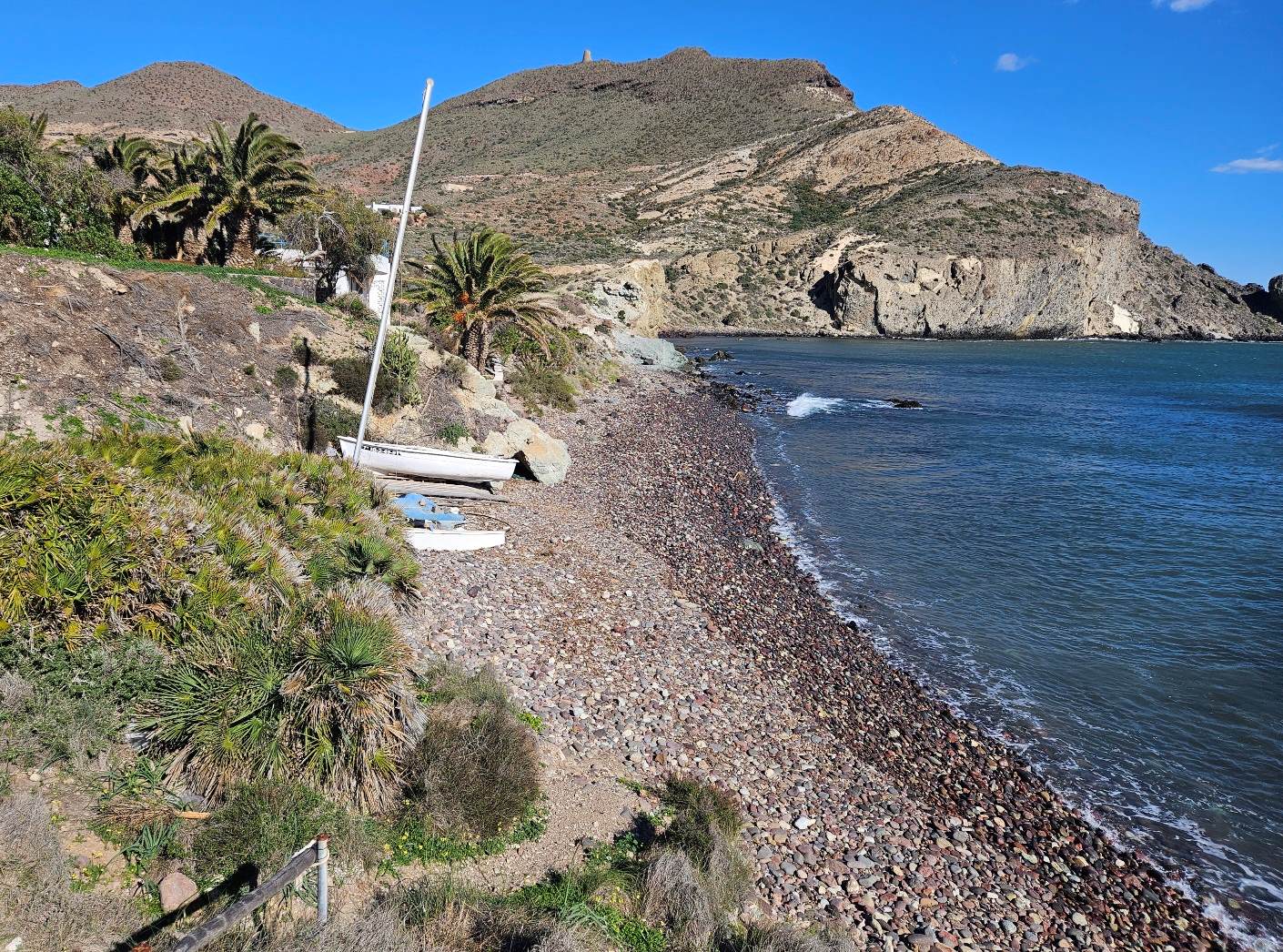
The waymarked route goes down to Cala Higuera. It crosses the stony beach and climbs the steps on the far side and heads along the path.
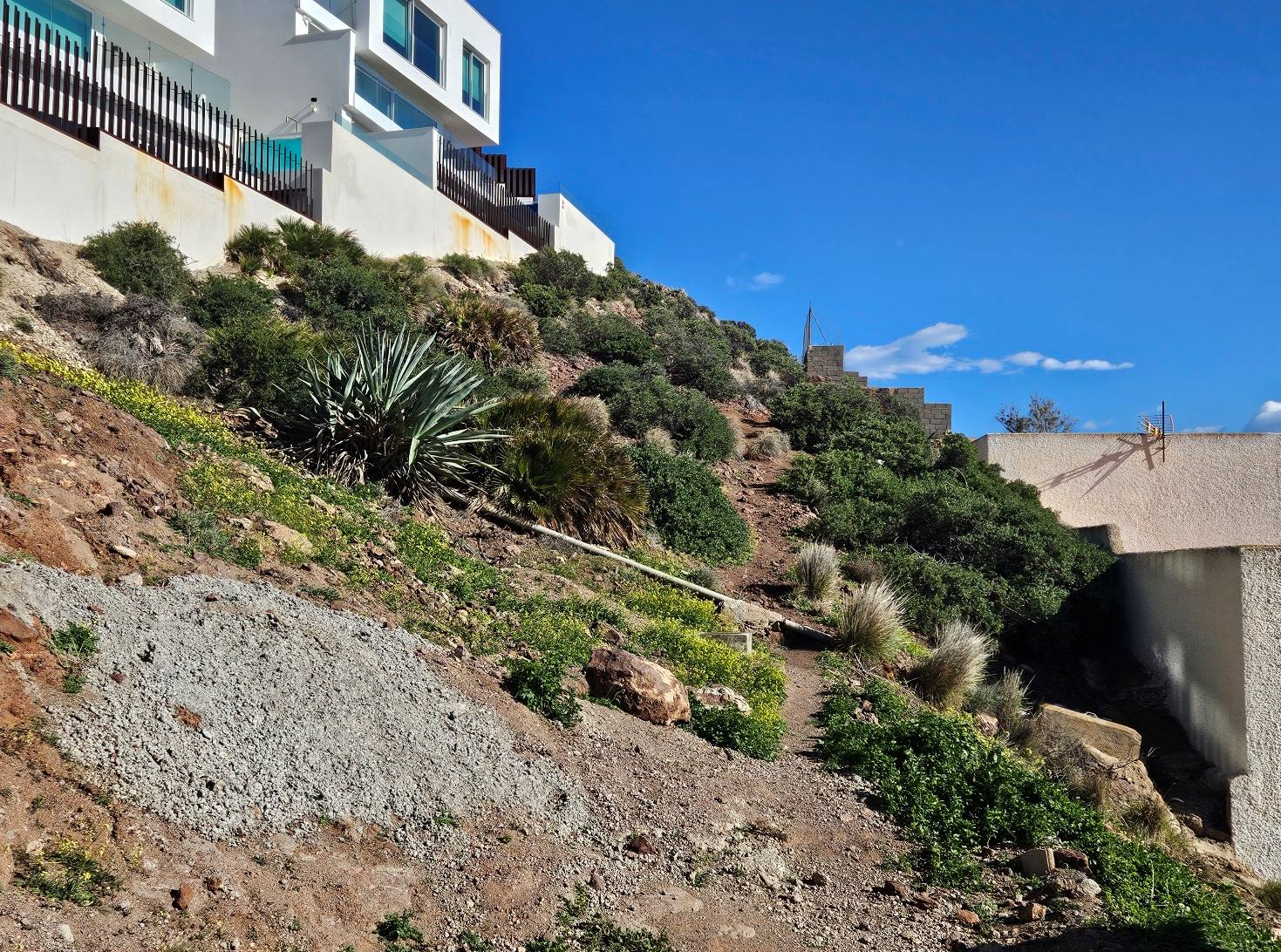
The route bears right at the house and ascends on the track. Then bears left heading back towards the coast; it’s around 15m along the track to reach a path which turns off right to start an ascent of the hillside.
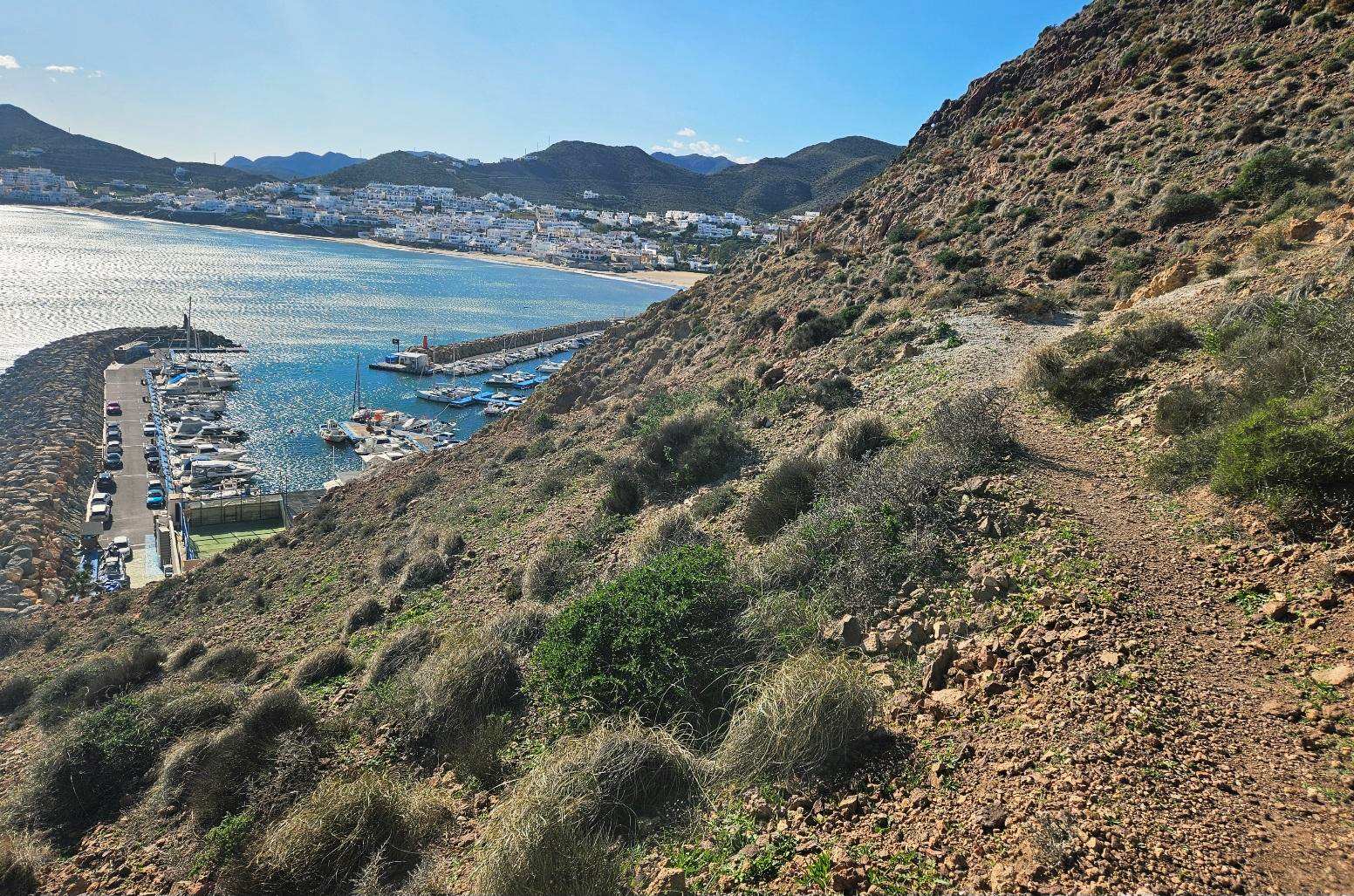
There are sharp drops off to the left. The path is narrow. Enormous care has to be taken as there has been subsidence and erosion.
You have to slowly plot your way along the path, which reaches a fenced area above the port. Then passes over to descend to the streets of San José.
It’s not a pleasant experience, particularly on tired legs.
Once in San José you will probably need Google Maps to help you find your hotel.
There are are many options in the holiday town which can be viewed via booking.com (make sure it’s San José, Almería and not Costa Rica!).
The Hostal Costa Rica is a good budget option and I have stayed here many times; it’s right in the centre on Calle Correo.
In February, 2006 I stayed in Hostal El Dorado which has expansive views over the town and sea; it’s around 5mins walk from the central area.
Recent Comments