
It had been raining for 36 hours when I woke at the start of Day 2 and I was worried about flooding on the paths.
With the forecast predicting the precipitation would continue all day, I knew my best option would be to stick to minor roads for as much of the route as possible.
The dilemma I had was that although the conditions advised otherwise, I really wanted to be on the historic Geira trail, one which was forged by the Romans. After all it was one of the main reasons I was doing this walk.
However, my initial assessment proved to be right, and I encountered real obstacles when I ventured onto the pilgrim trail.
It’s around 27km from Caldelas to Campo do Gerês, with approximately 900 metres of ascent.
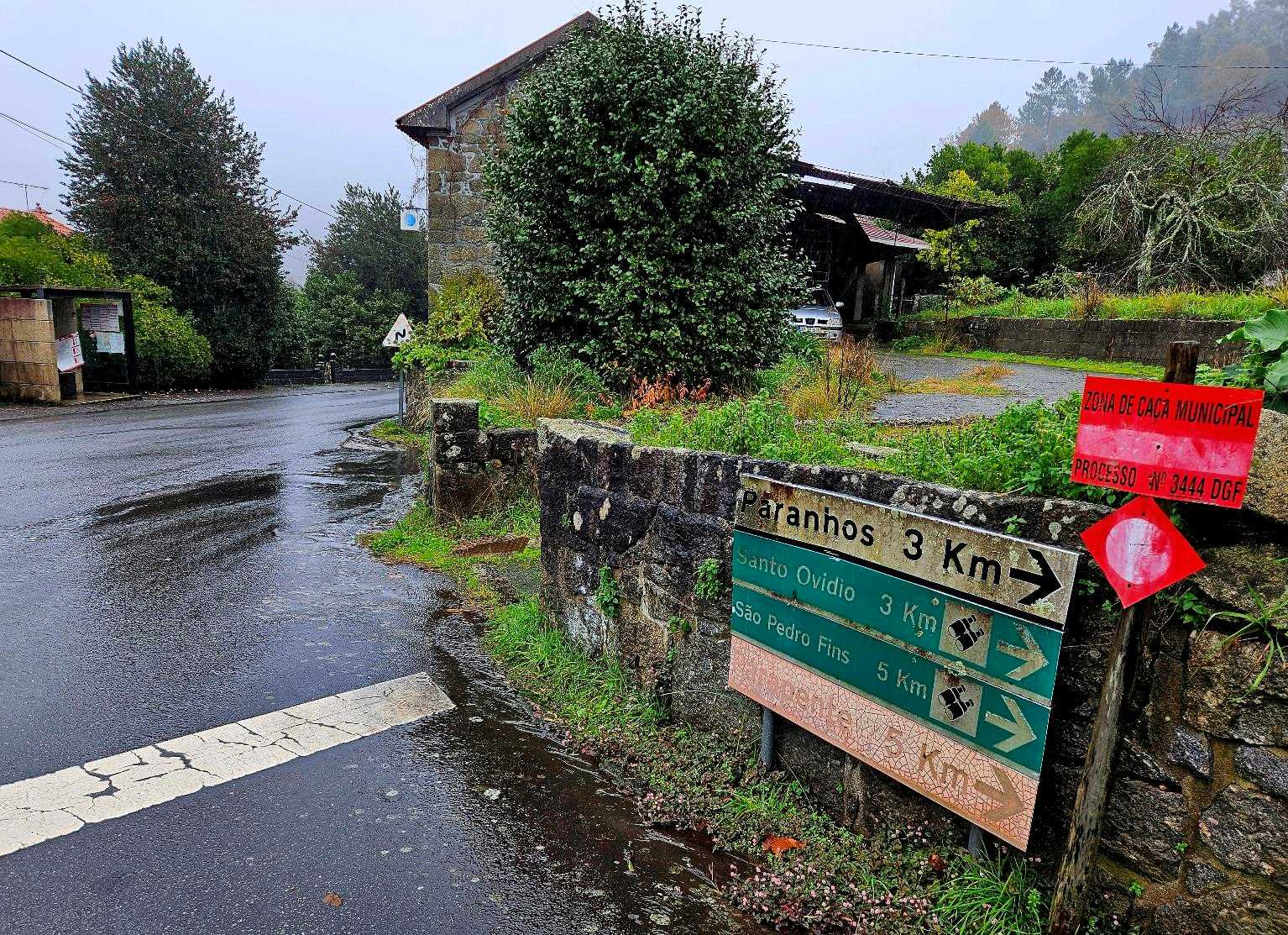
I left my hotel at around 9am and got on the M-535-3 road to Paranhos, which is not the official pilgrim route. There was very little traffic on the ascending lane.
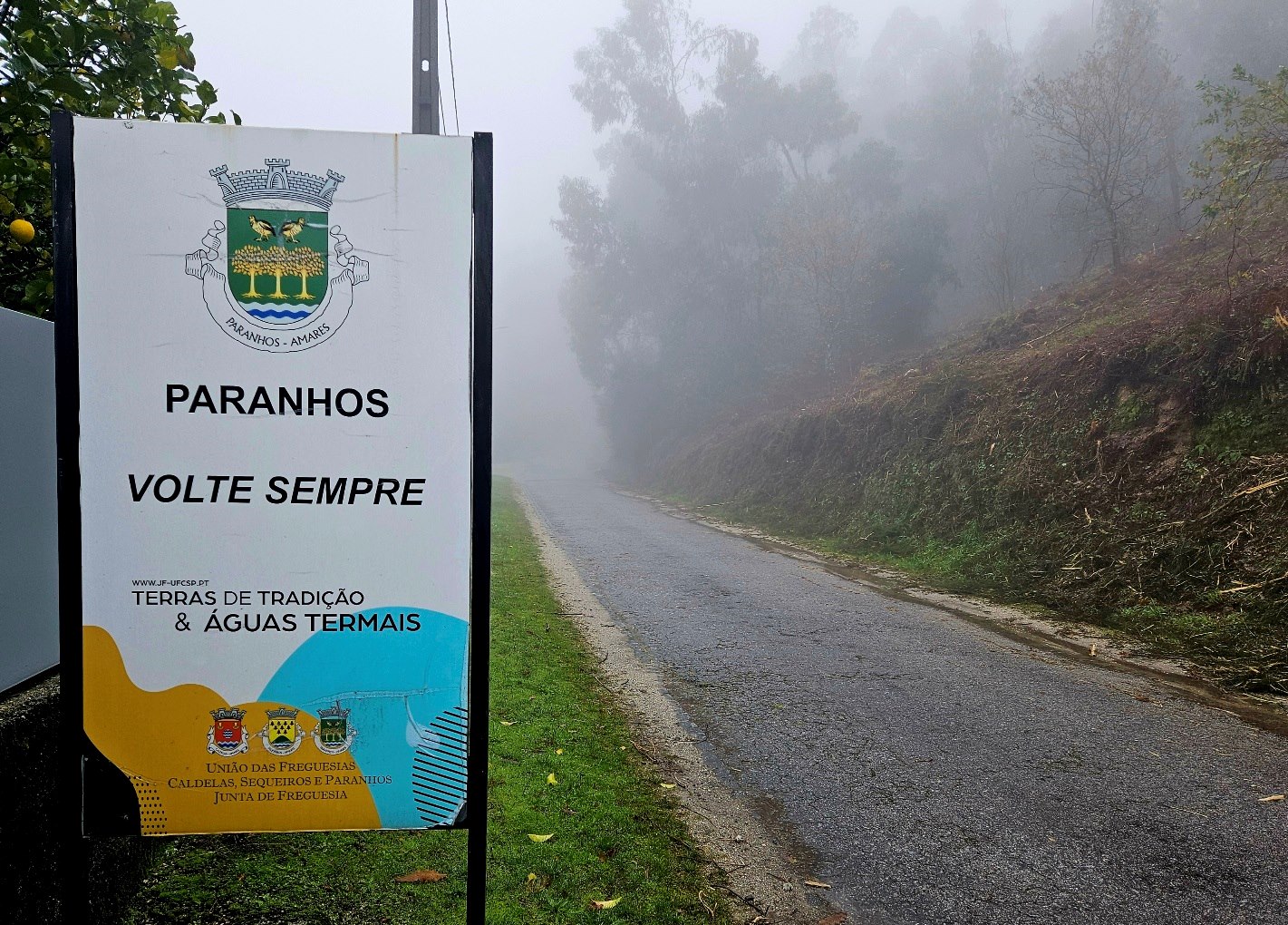
It’s 3km to Paranhos, where I rejoined the ‘camino’ which follows the M-535-3 for around 1.8km to the hamlet of Santa Cruz.
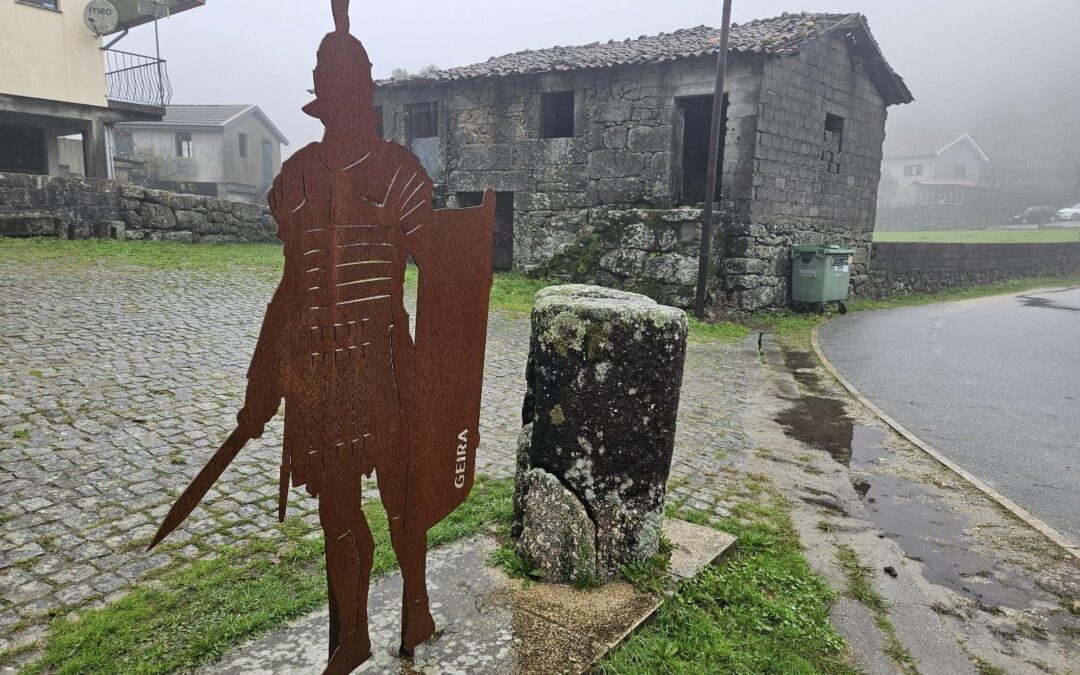
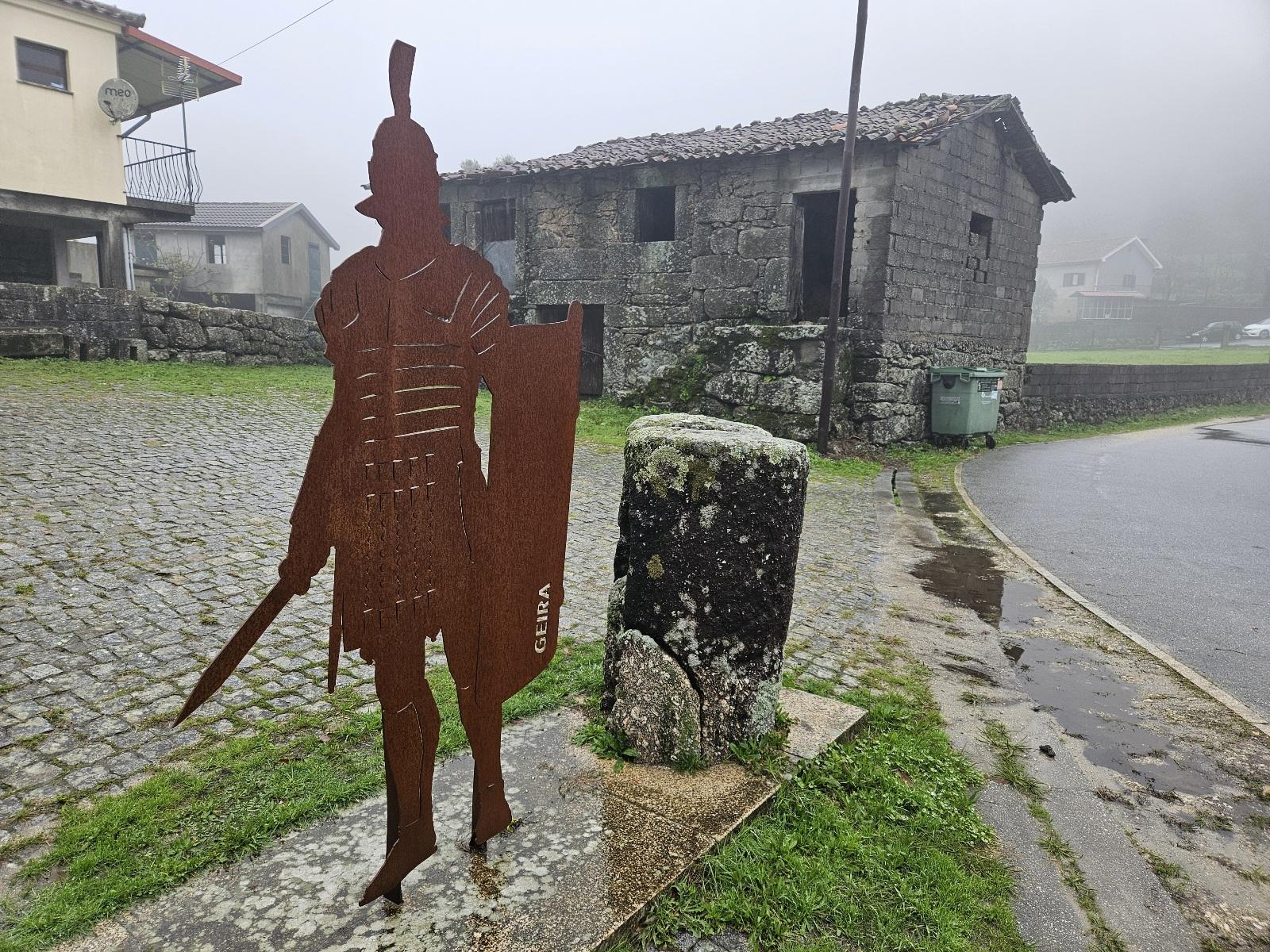
Here you will see an ironwork of a soldier, with sword and shield, standing next to the first miliarium; these Roman milestones measure a thousand paces (mille passus), which is around 1,480 metres.
The first stone is Mile XIV. A few metres further on the road forks. The camino bears to the left on a wide unsurfaced track.
I had planned to continue along the road but couldn’t resist taking the Roman route.
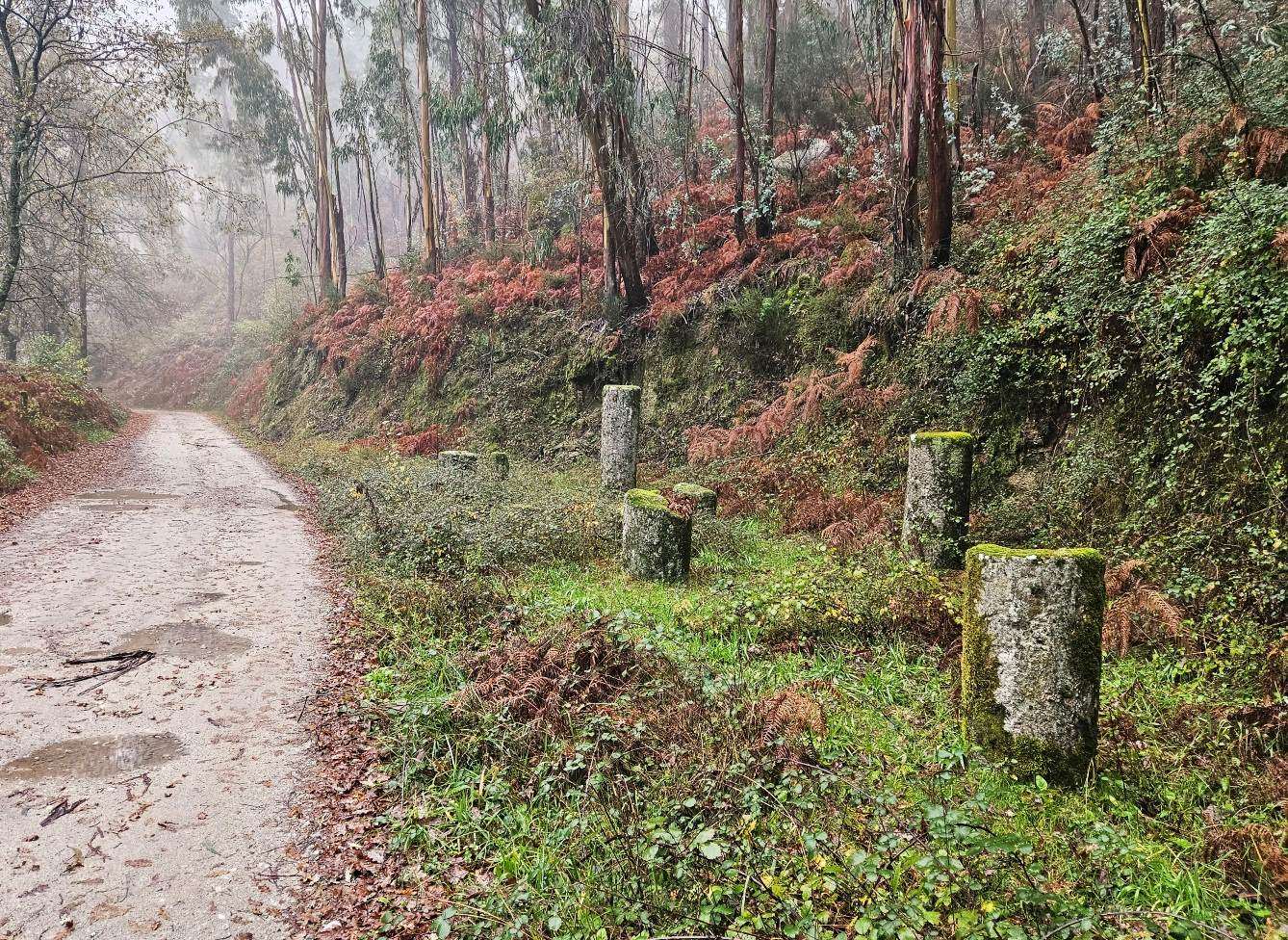
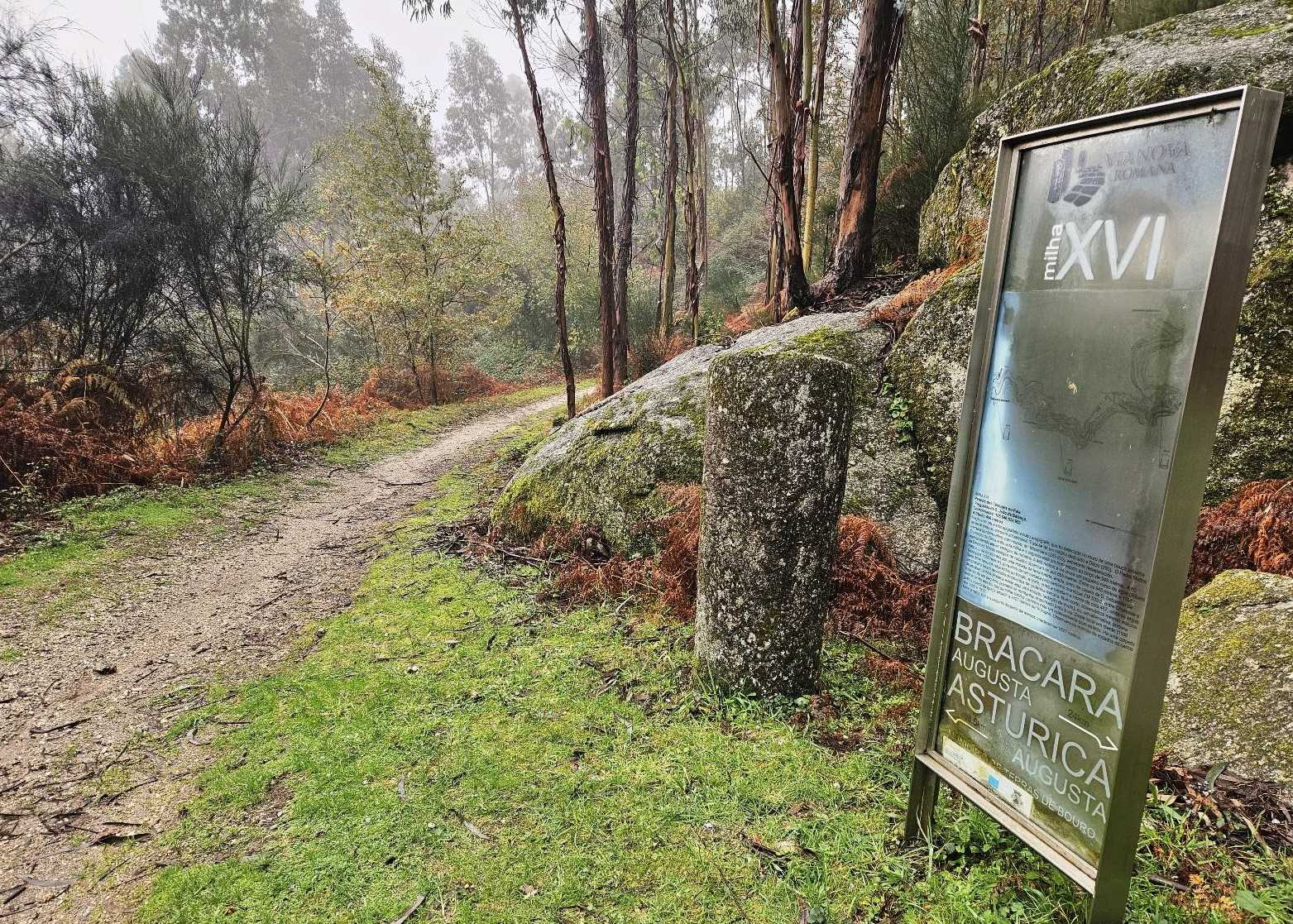
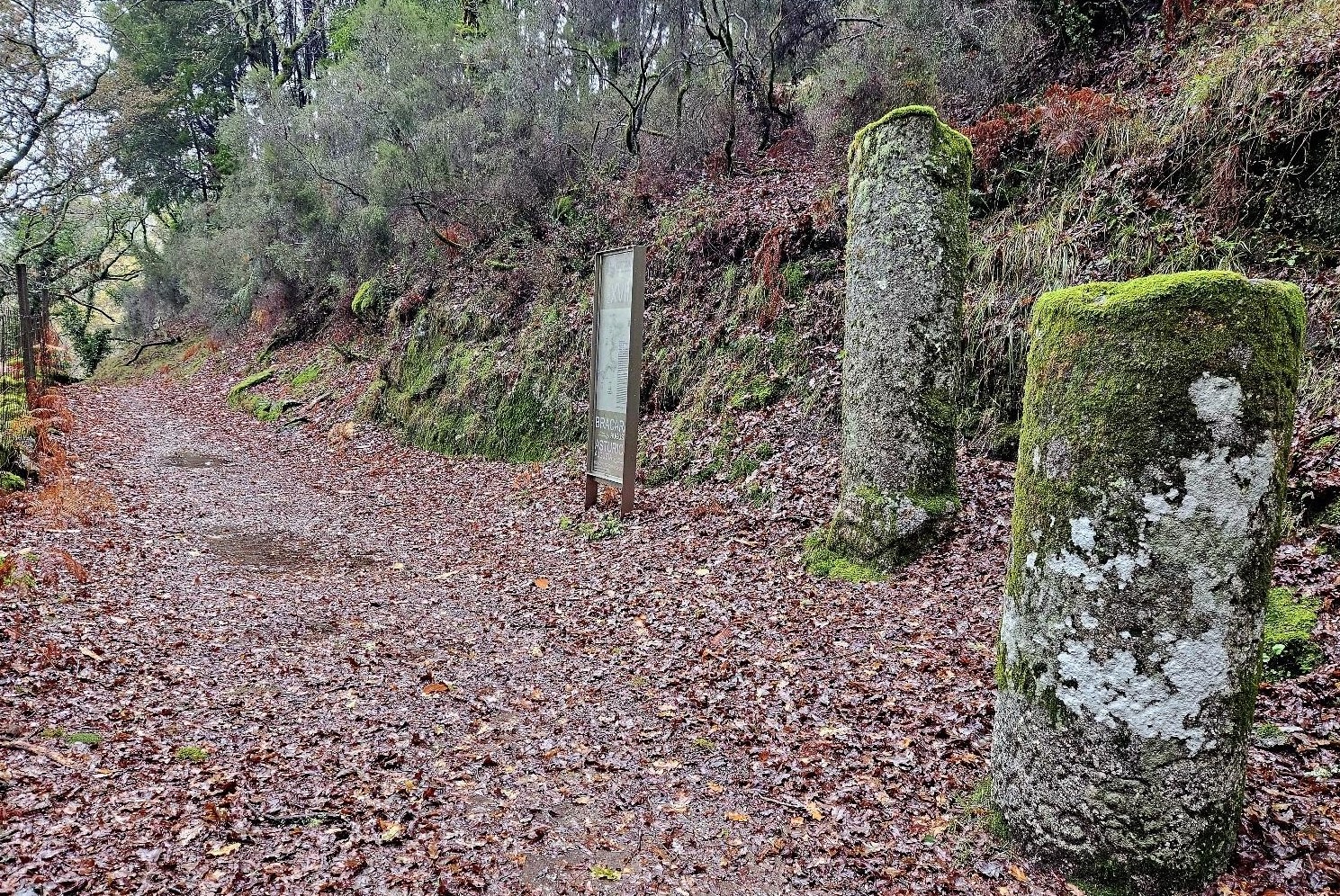
Soon, a collection of miliaria appears on the right of the track, apparently not measuring anything.
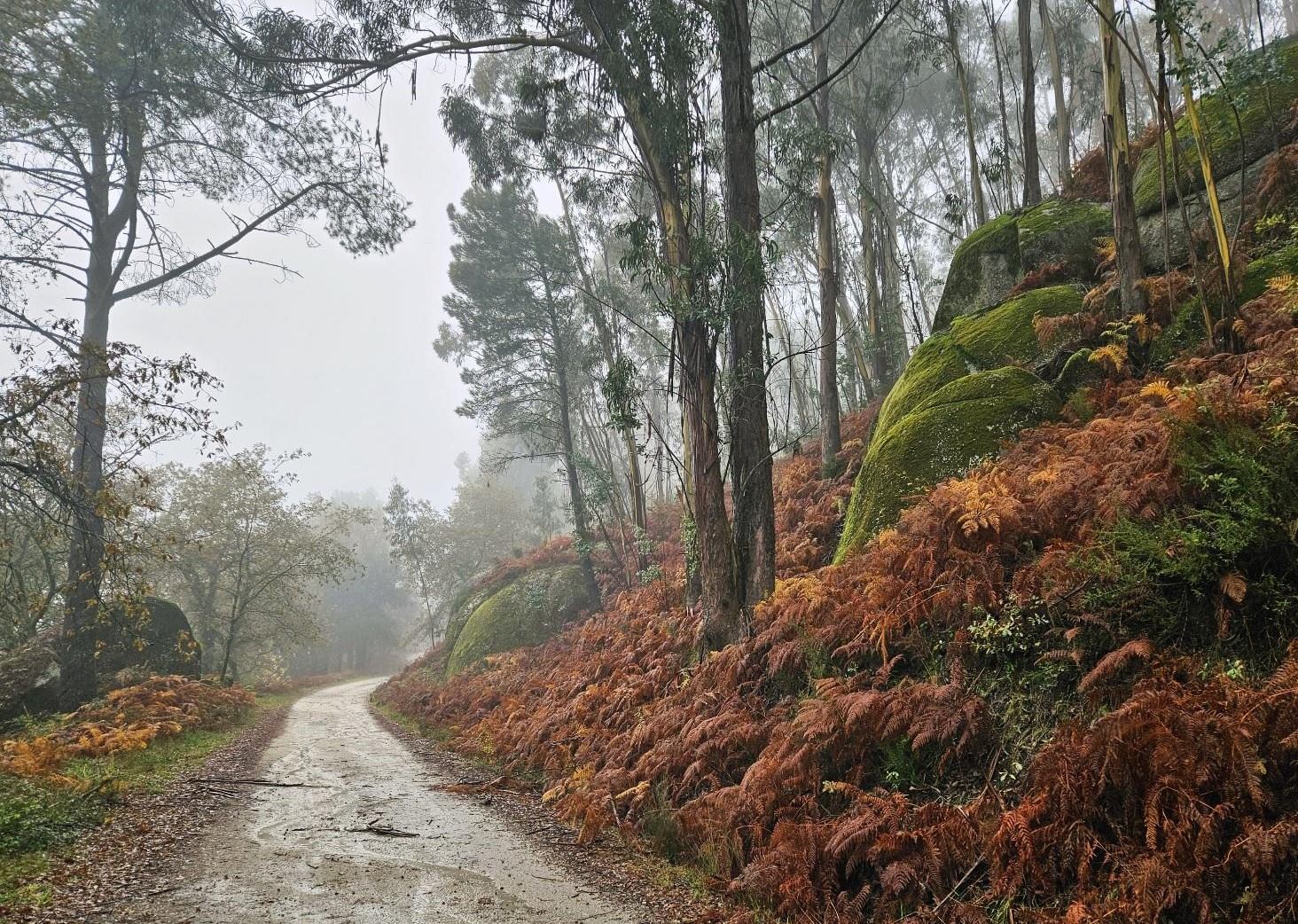
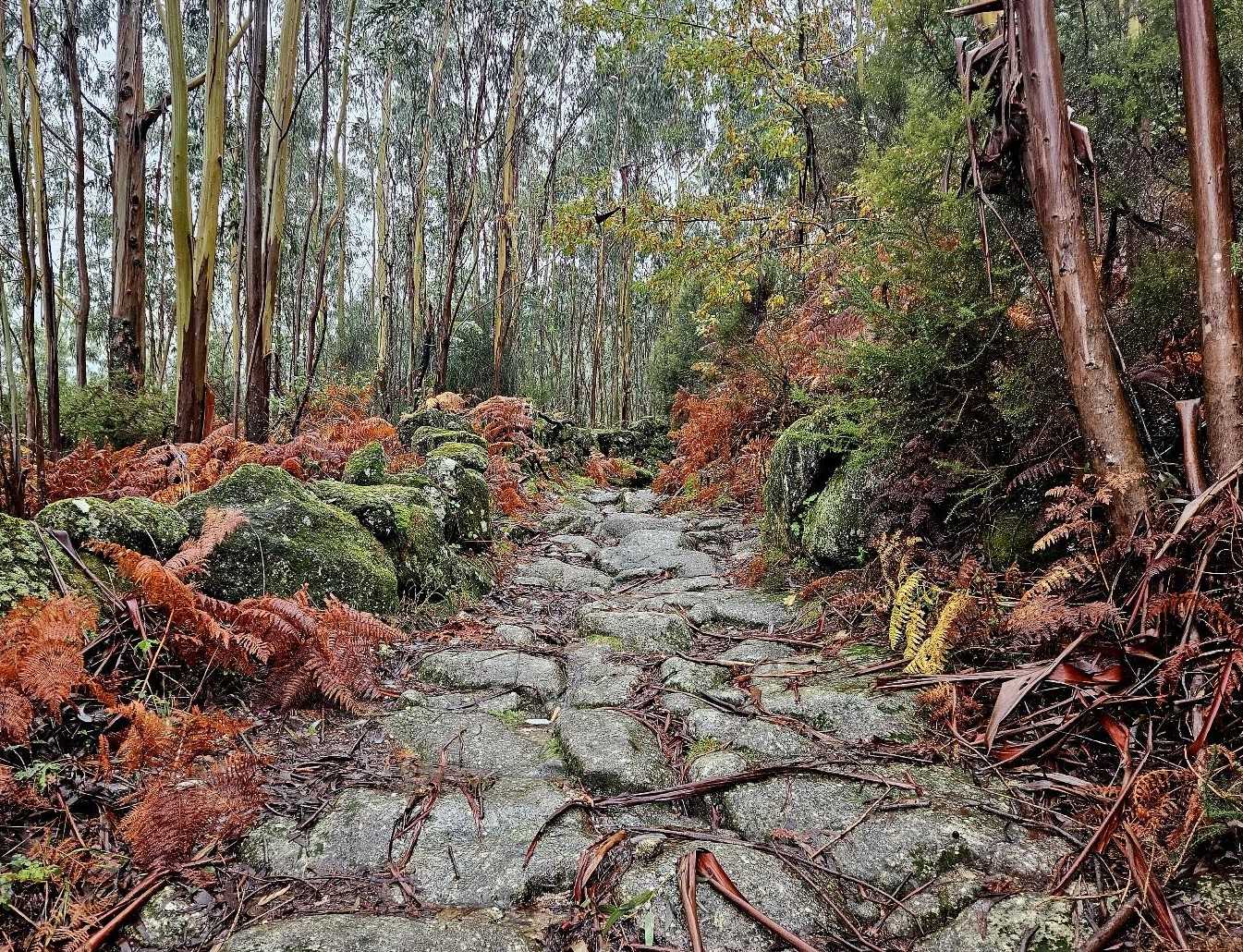
At first it’s a good, wide track which ascends gently for the most part, through ancient forest.
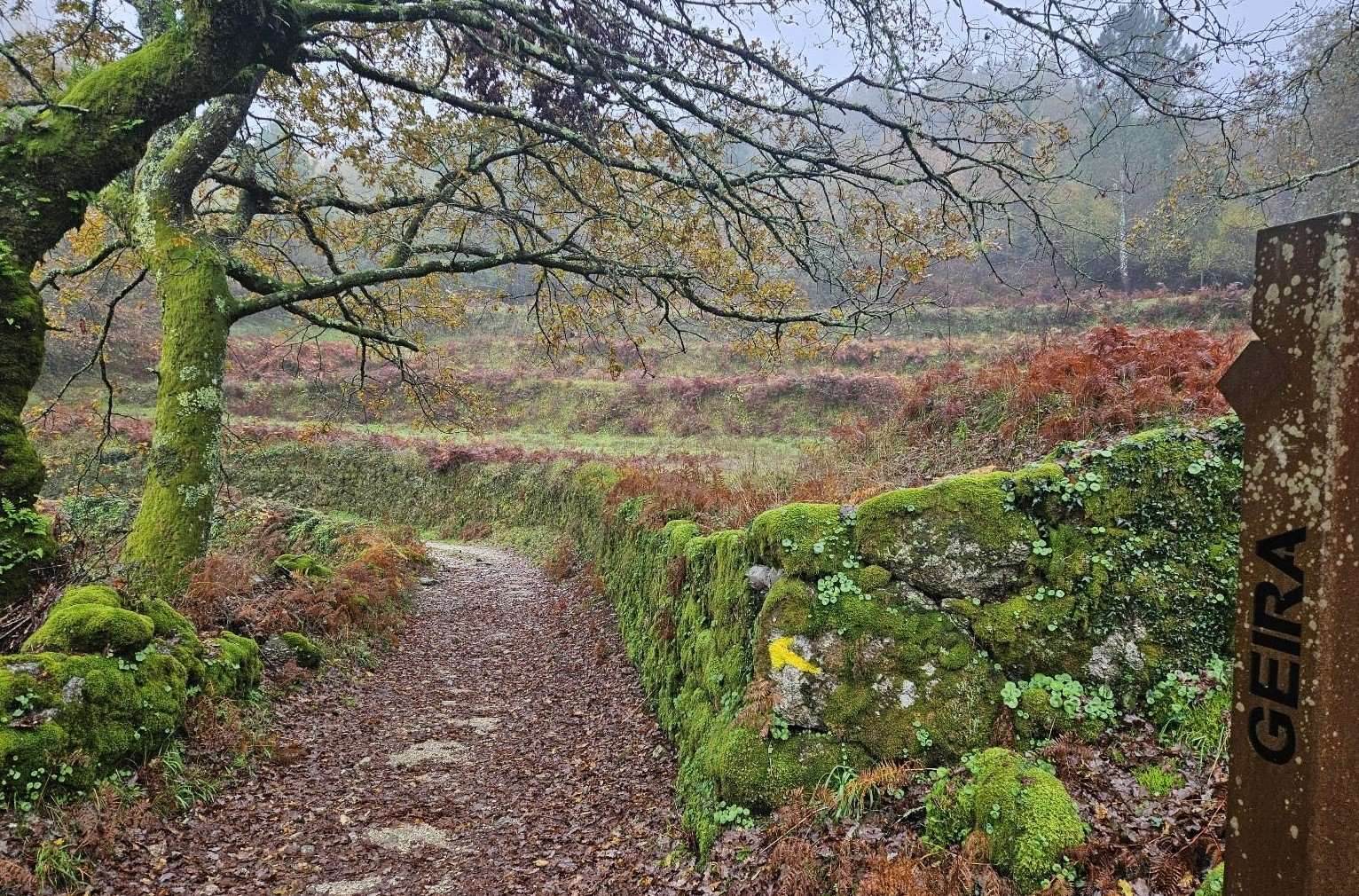
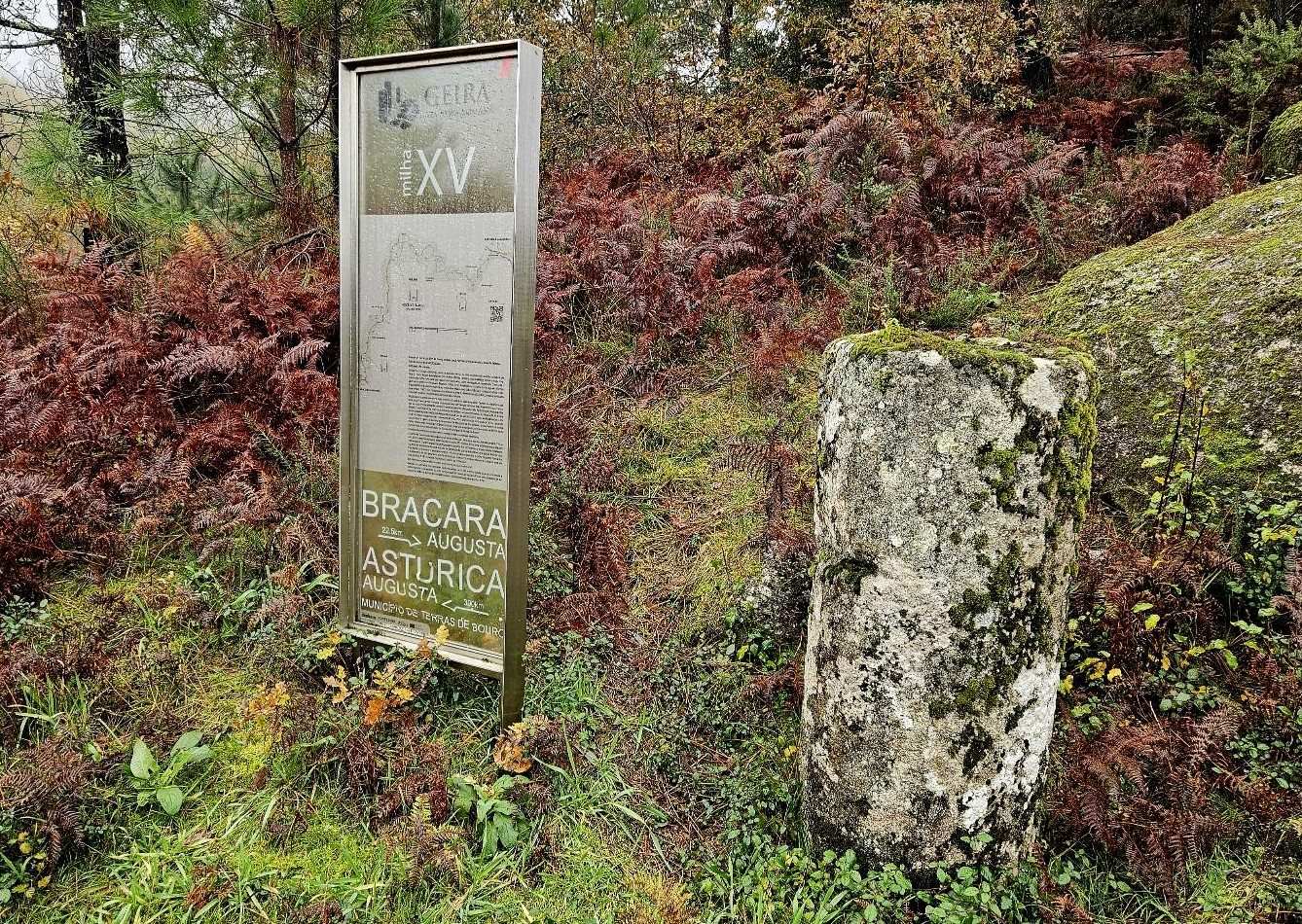
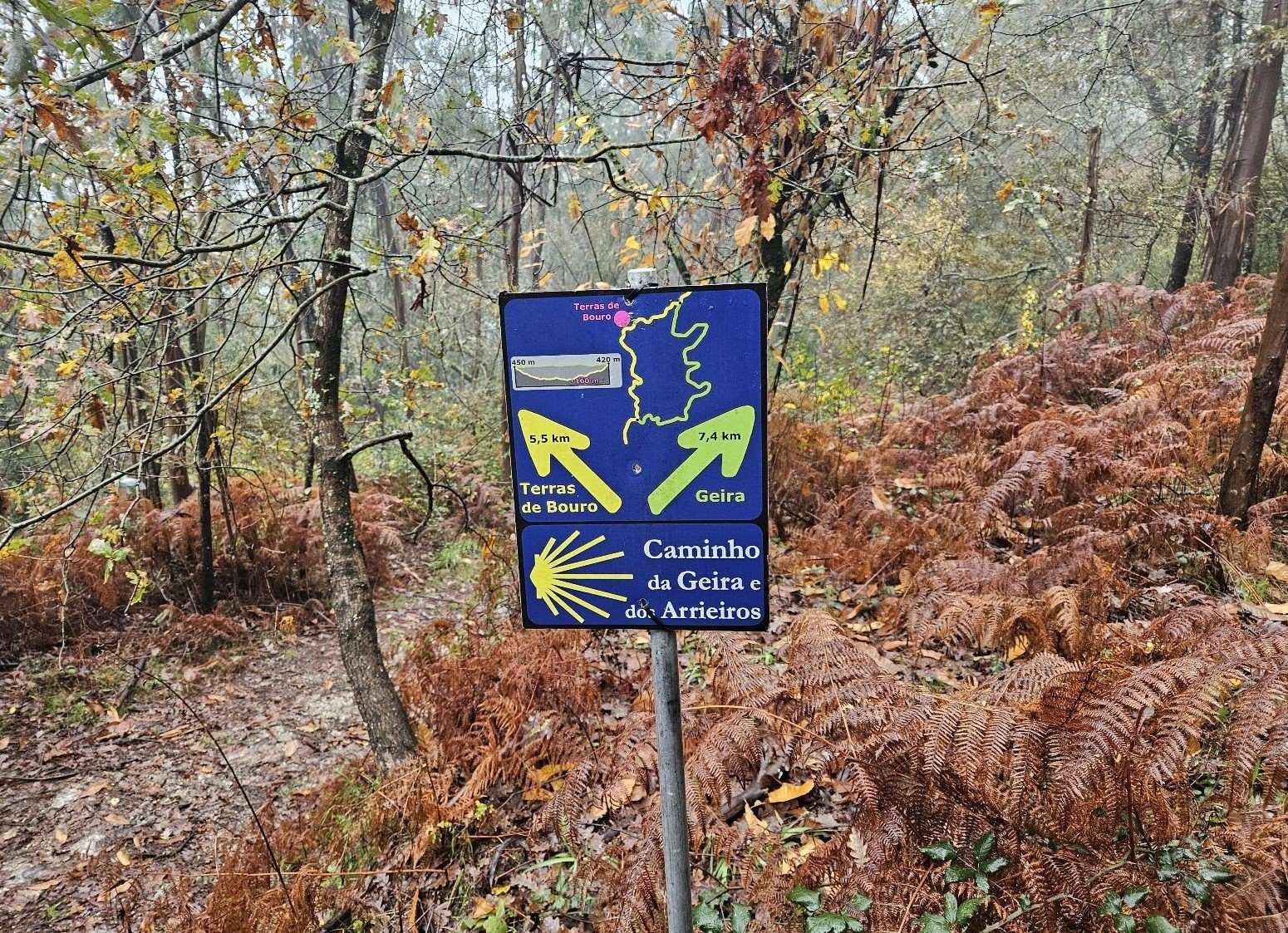
Next up is another miliarium, number XV. Then the walker has a choice at a junction of paths; the high road or the low road (see photo).
The low road is 2km shorter and involves a lot of descent to the village of Terras de Bouro, where food and beds are available; then a climb.
The high road is the Geira. It’s the Roman route following the milestones. For me it was the only option. But it was going to be difficult in the conditions.
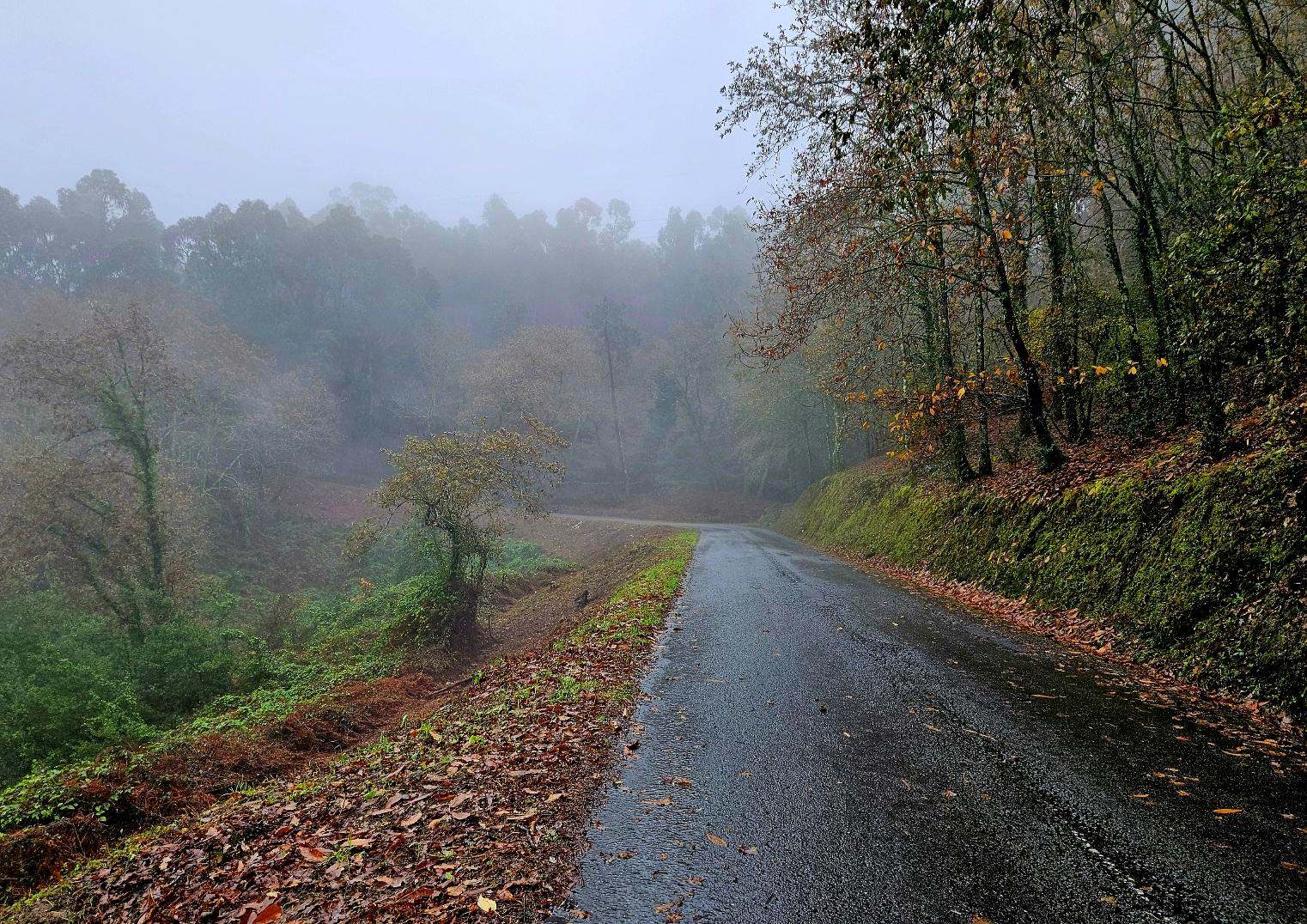
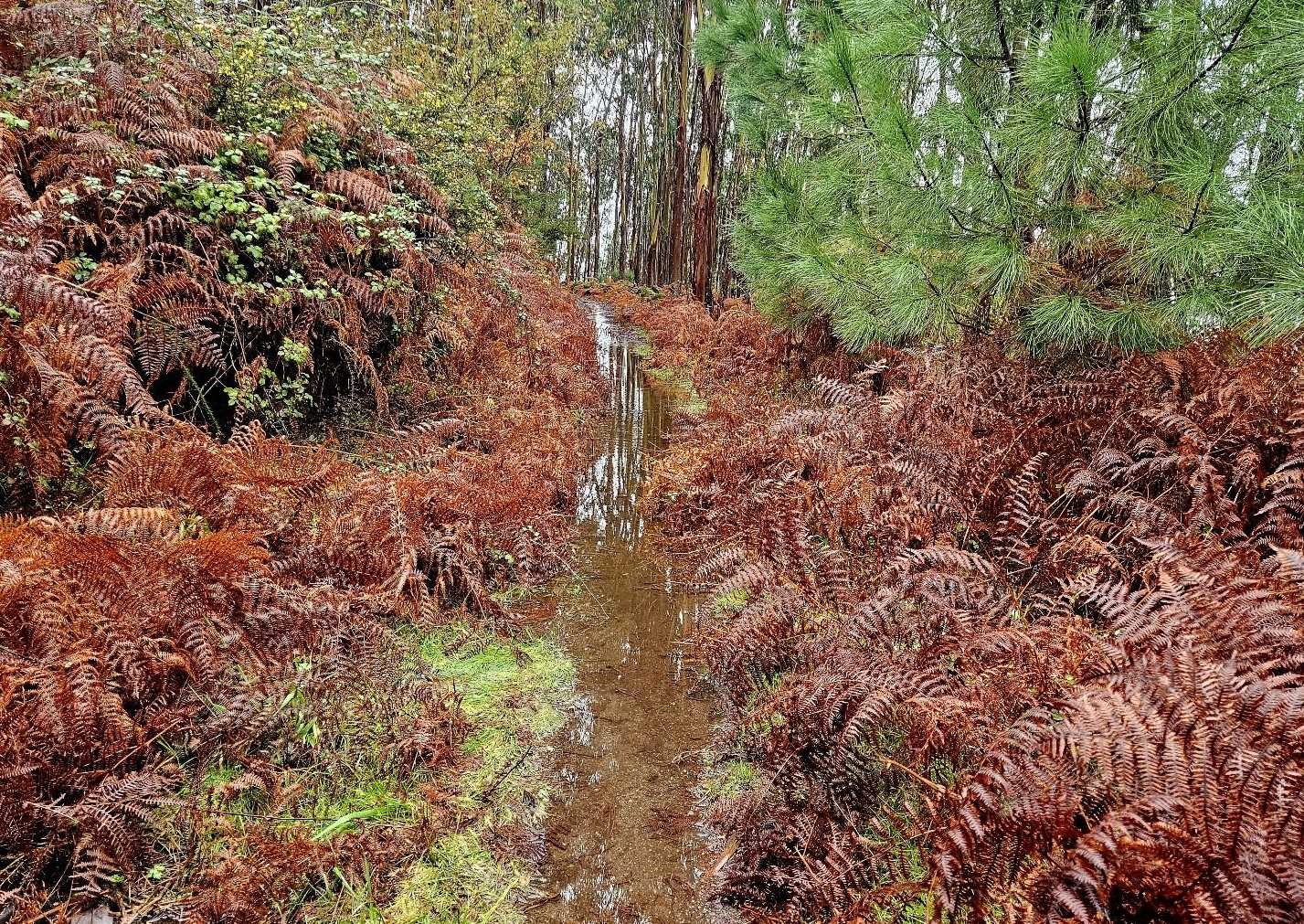
The paths started to become flooded, turning into watercourses in many parts. But the route through the ancient forest was incredibly beautiful, with amazing primal colours; rust, deep green and grey stone.
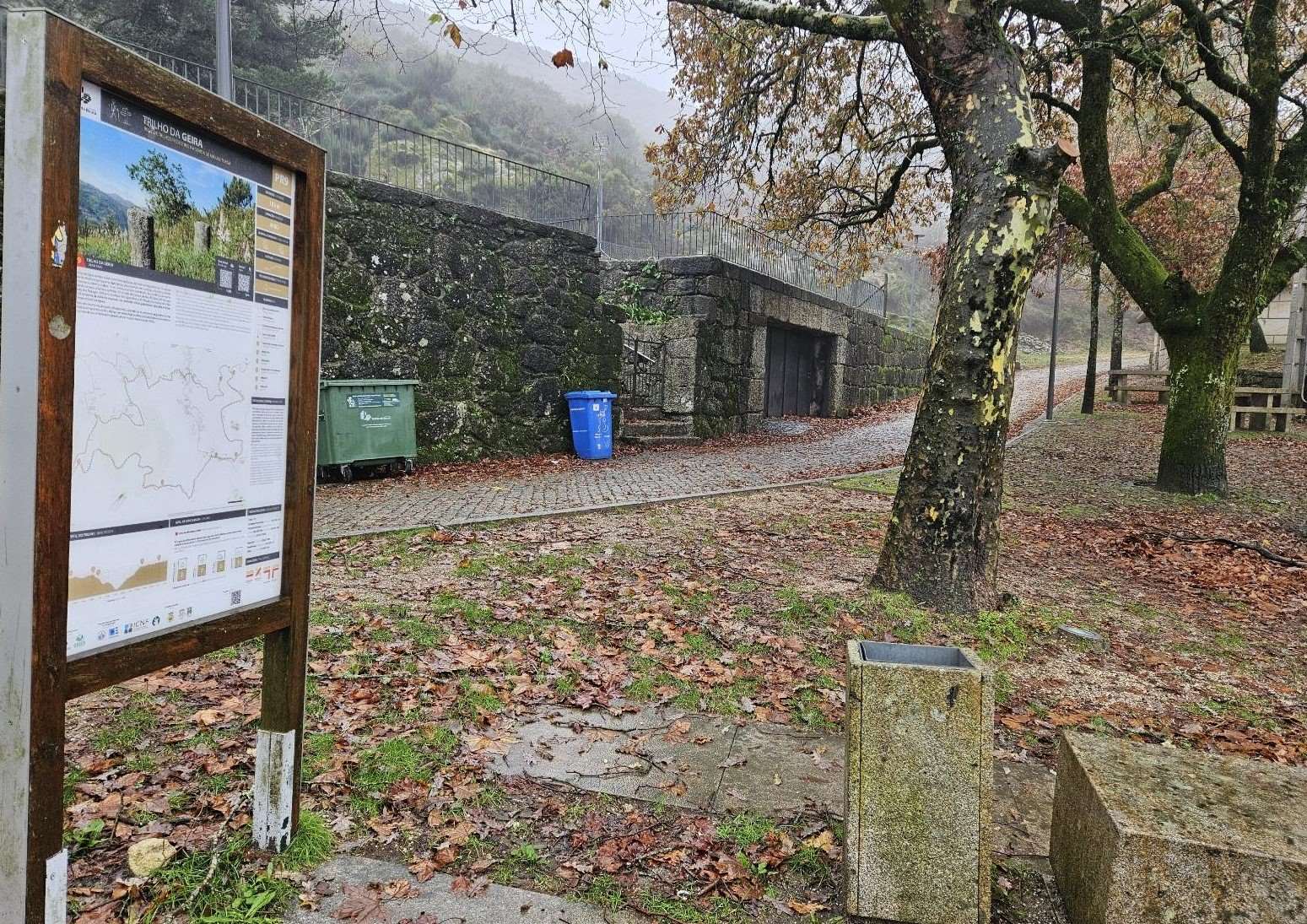
After passing miliarium XVI, the route reaches a picnic area with information boards and signs. Then it’s back onto the track.
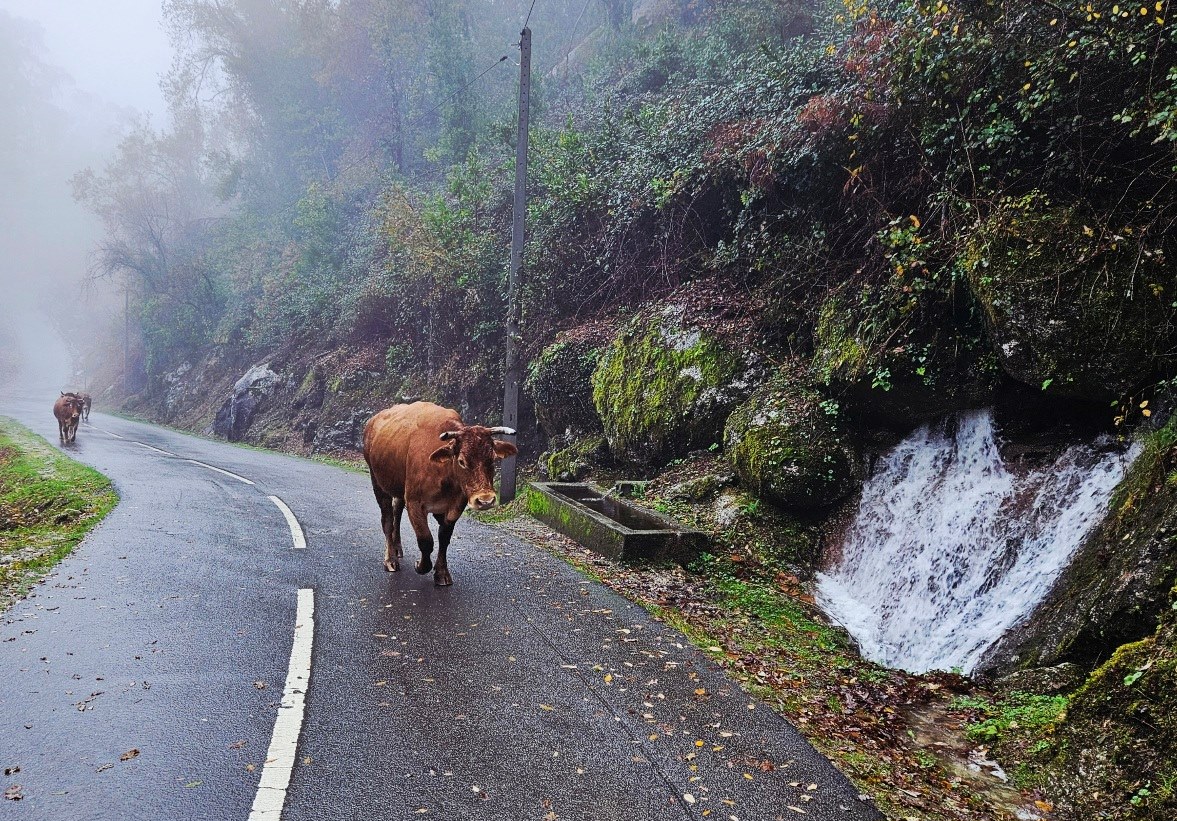
Up on high, the mist and rain meant the views were obscured. The route keeps on the same level, more or less, crossing ravines which carry streams down the hillside.
In the conditions, I felt certain that it was going to go wrong at some point; the streams had turned into torrents and were becoming increasingly difficult to cross on the stepping stones.
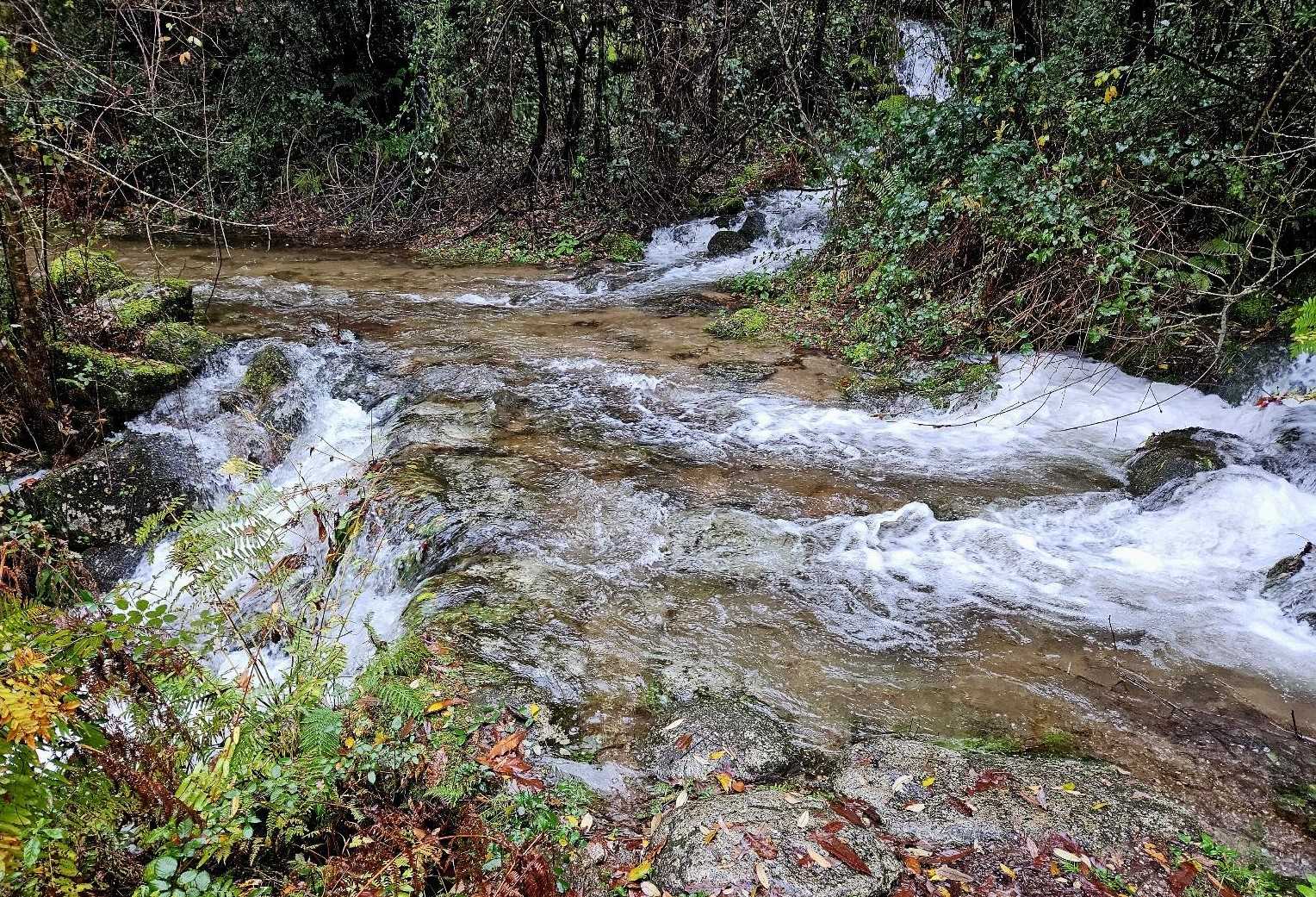
I passed miliarium XVII. But didn’t make it to 18. I was only around 500 metres short of the road when the inevitable happened. I came to a point where I couldn’t get over the fast flowing stream (see photo). It was a torrent which was sweeping over the path.
This led to a hour of cross country trekking, trying to find the road in a dense, wet forest.
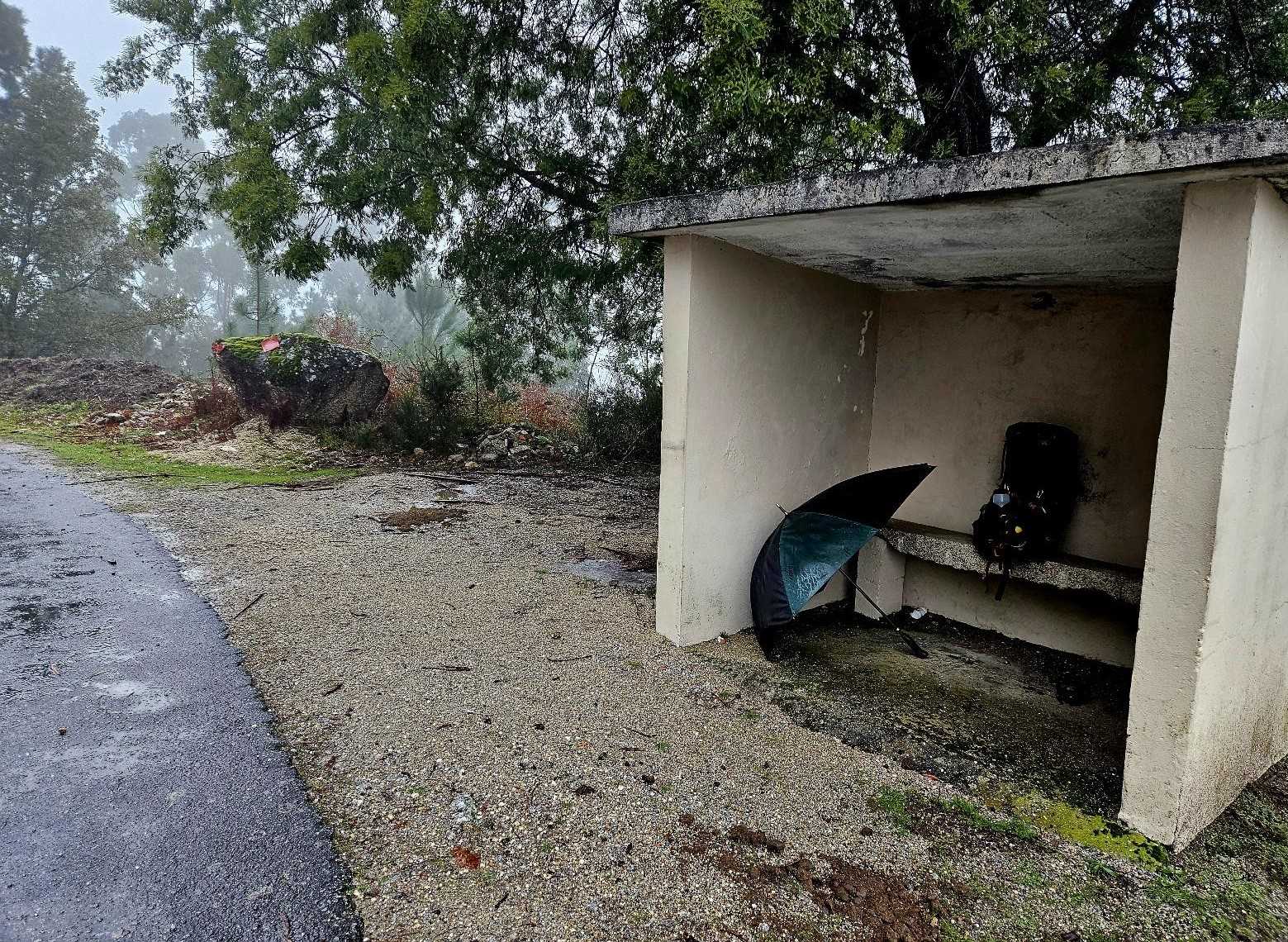
I eventually reached the M535 and took a break in a handily placed bus stop to wait for a very heavy burst of rain to pass.
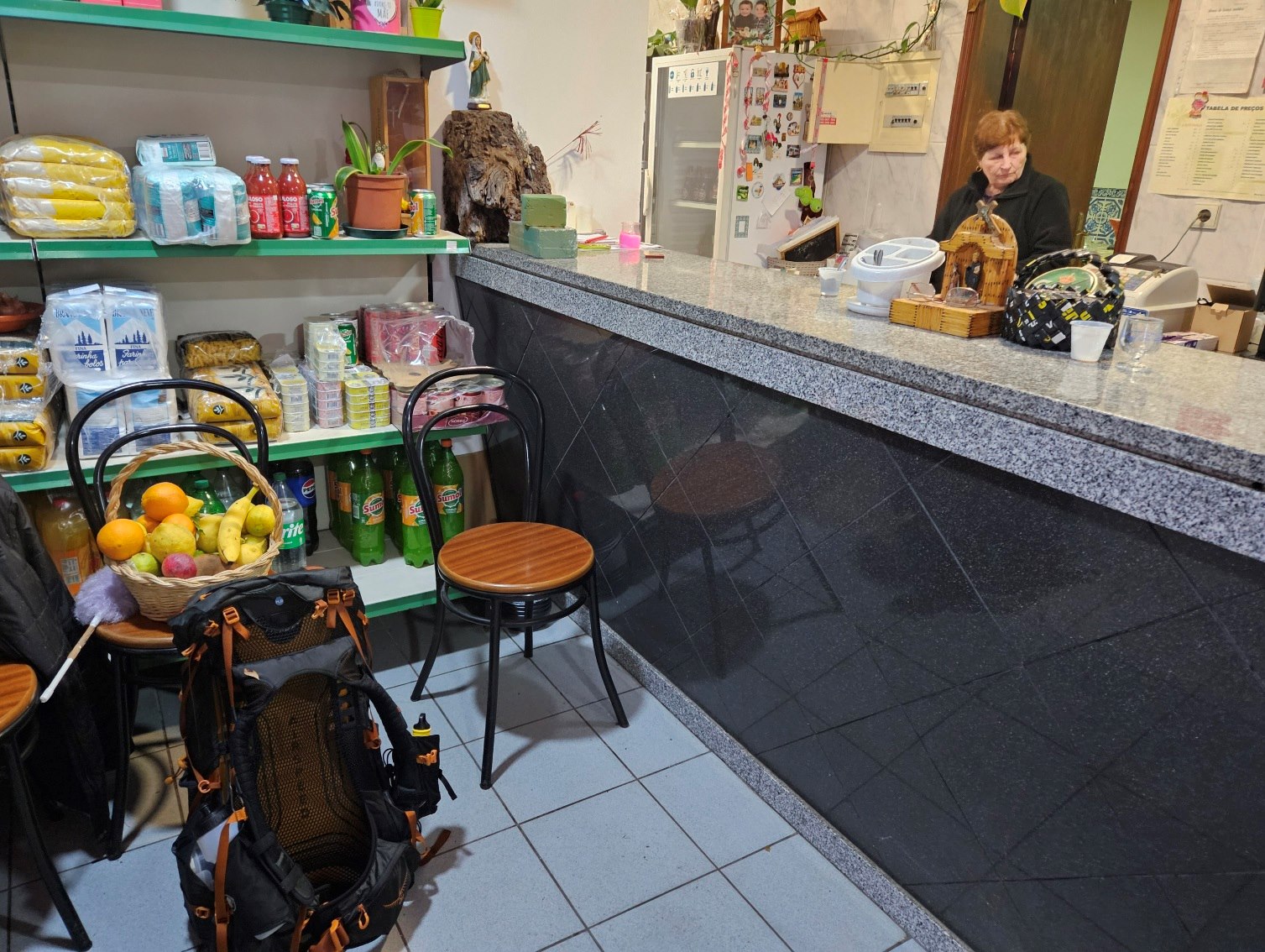
I then followed the road to the hamlet of Travassos, where I received coffee and kindness. The local cafe is also the village shop, which happens to be in the front room of a resident’s home.
As the owner was making my coffee, an elderly couple came in and they wanted to know about my journey.
I could just about understand their Portuguese and they seemed to get my Spanish. They hadn’t heard of Alicante but they knew about the pilgrim route.
When it was time to go, the man wouldn’t let me pay for my drink, despite my protests; I was a guest in the area. They wished me well on my walk and hoped I would find a dry place to sleep.
I continued on the very quiet M535, turning off right to pass through the village of Padrós, before dropping down to the N307 road.
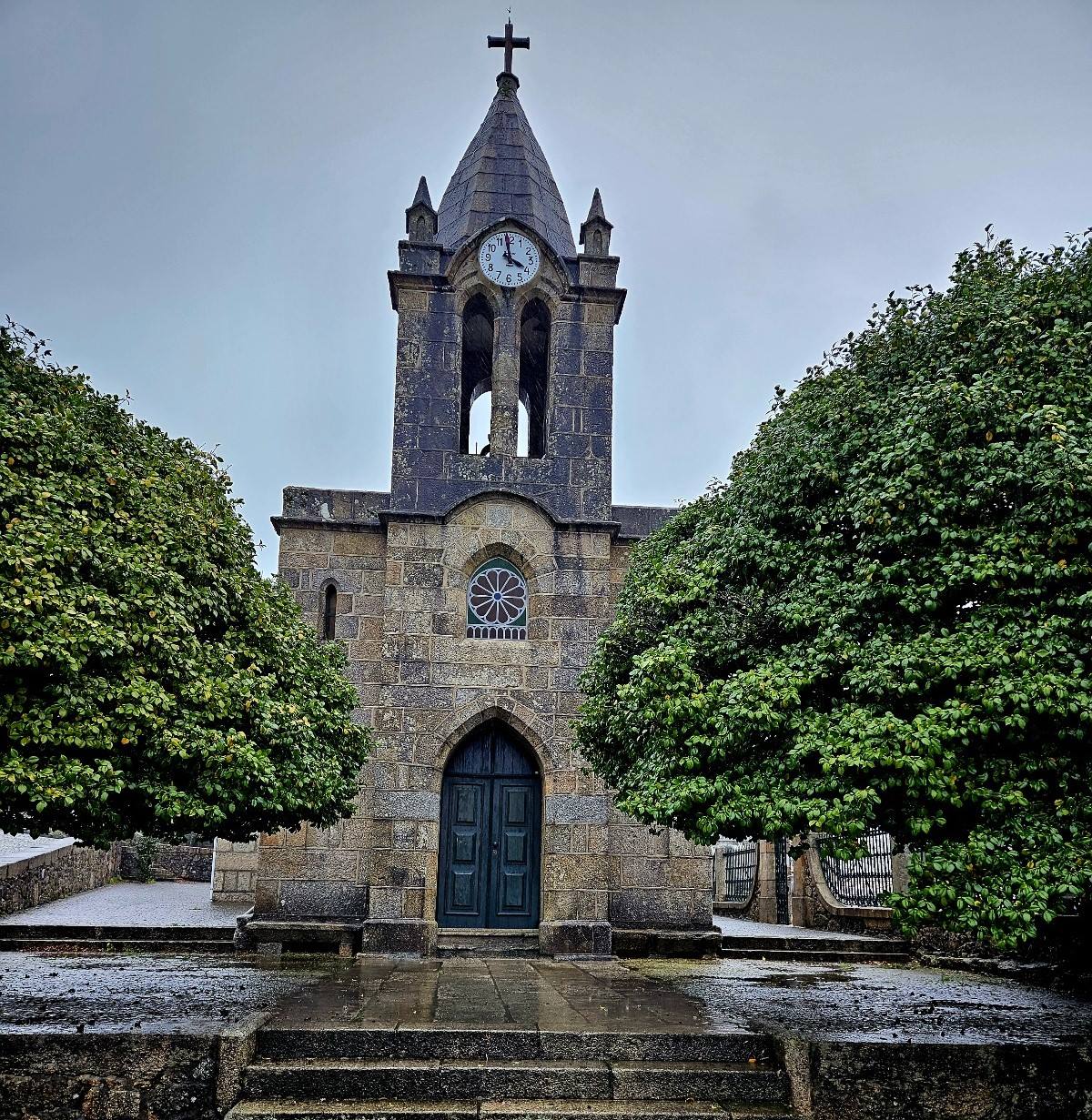
It was just over 1km along the main road to reach the village of Covide, which is on the pilgrim trail. It’s a left turn at Café Eiras to follow the narrow streets up through the village.
After passing the church it’s back onto the N307 to follow the ascending main road to Campo do Gerês.
I had reserved a place at the youth hostel in the small town but I was soaked; with very wet feet and gear.
I decided to try my luck at Albergaria Stop, which I knew did meals too. Luckily they had a room and I was able to use their facilities to dry my stuff.
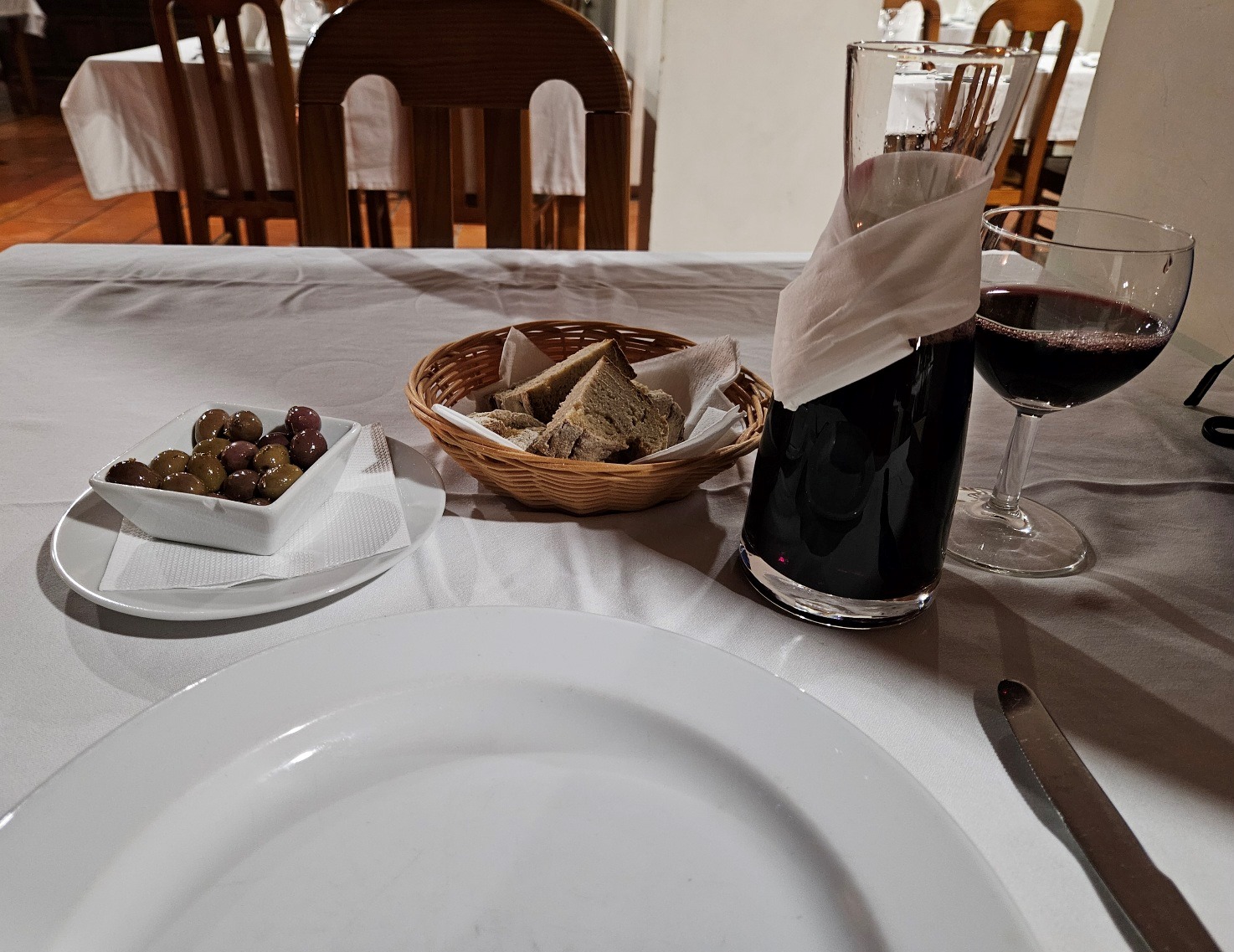
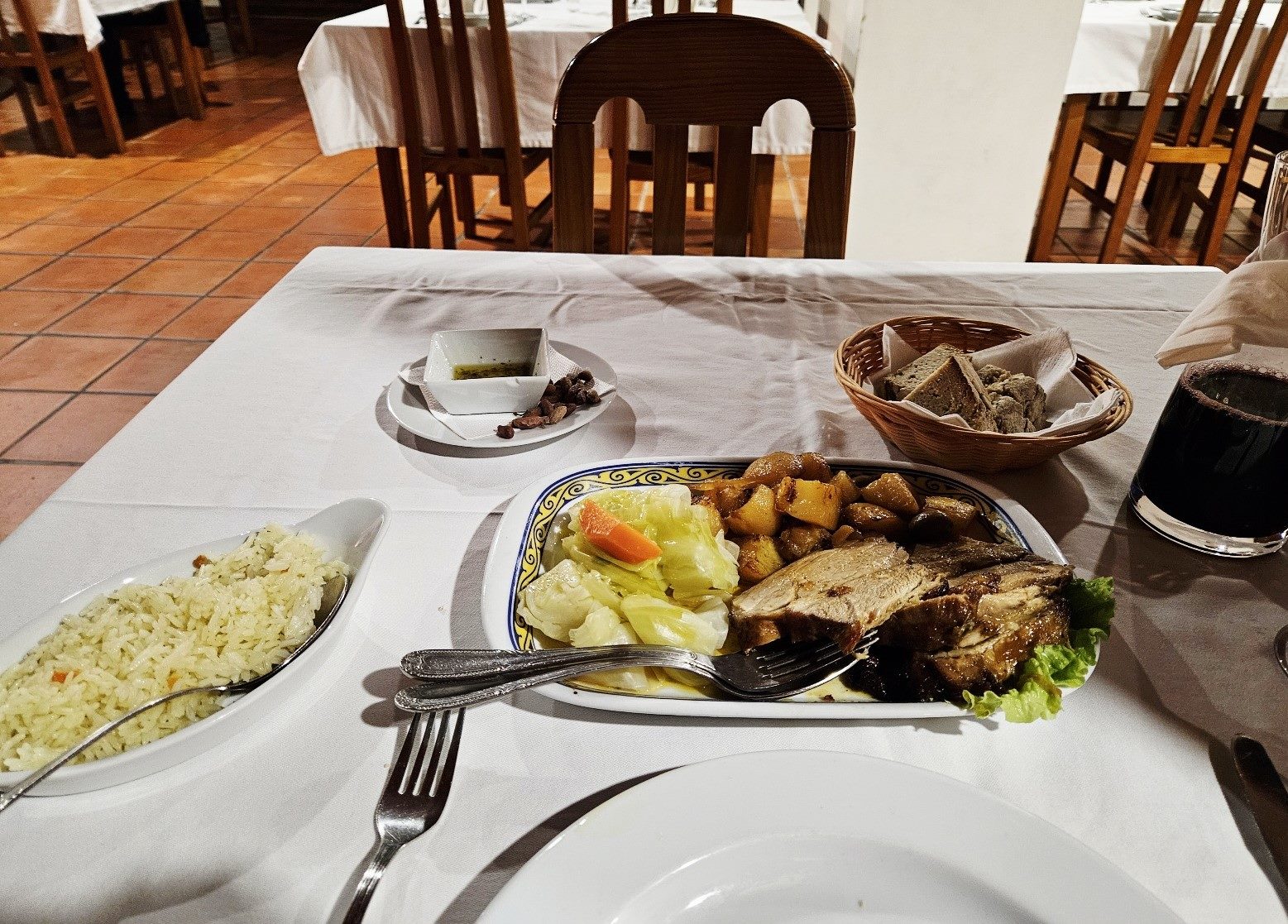
I had an excellent, wholesome dinner in their restaurant which went a good way to restoring my faith in the wisdom of doing this walk in December.
Both options are available via booking.com as are several others. The youth hostel is HI Geres – Pousada de Juventude do Gerês.
Albergaria Stop has its own website www.albergariastop.com
Recent Comments