

When I was getting ready to start stage 5 of the Camino da Geira e dos Arrieiros – which runs from Castro Laboreiro to Cortegada, covering around 29km with 550 metres of ascent – it had been raining very heavily for more than 18 hours. And this was on top of the previous week’s continual precipitation.
Suffice-it-to-say, it was going to be extremely wet underfoot. The only chink of light was that the rain was due to ease off around 1pm and stop altogether during the afternoon.
It would be dark by 18.30, but I wanted to leave my warm, dry hotel room as late as possible.
I settled on 11.30, with many places in Iberia having a check-out time of 12 noon. I would need to walk at a good pace for most of the day, avoiding wrong turns and flooded areas. Inevitably, this would mean sticking to the lanes when the ‘camino’ went in search of nature.
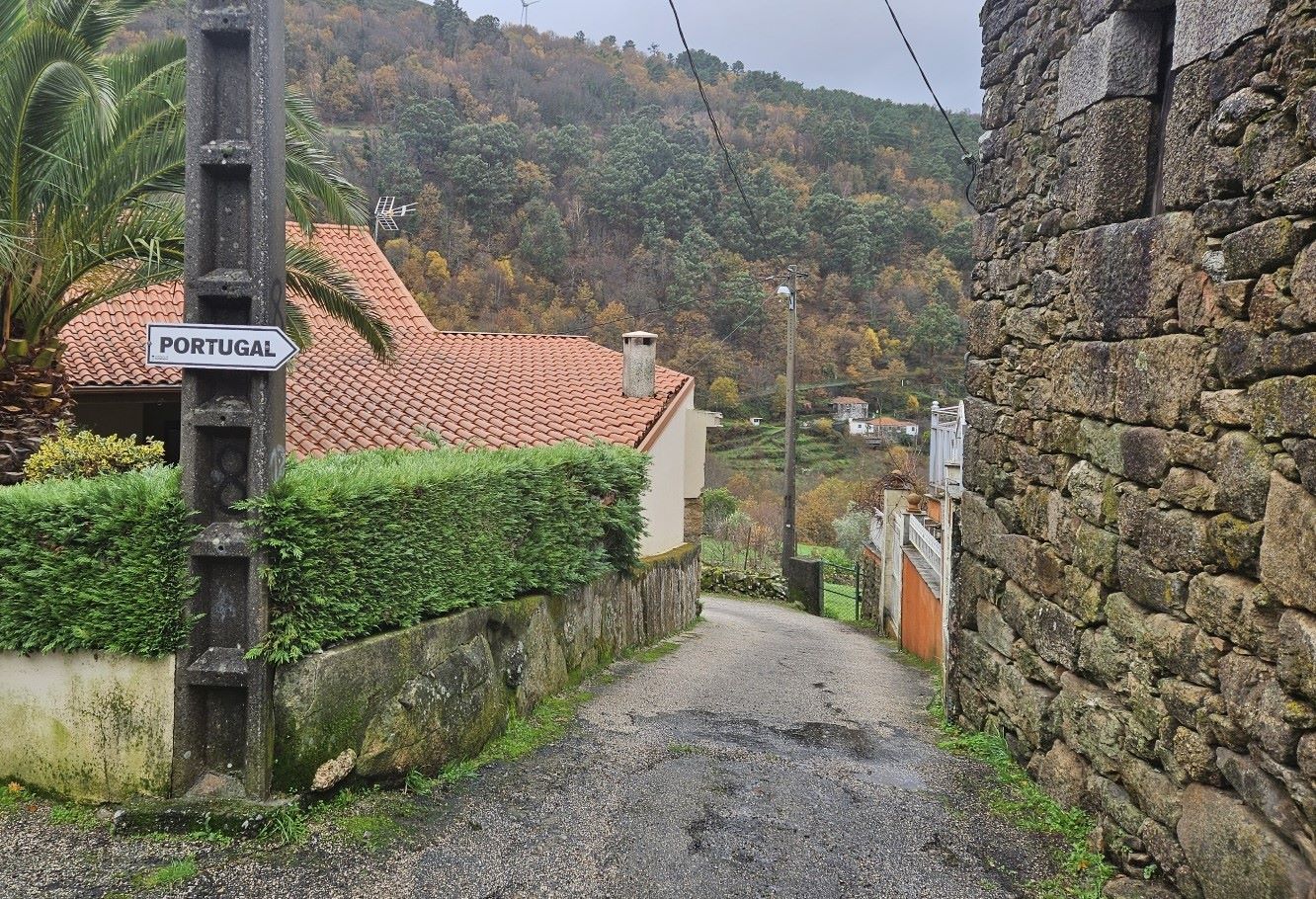
This stage includes the final border crossing of the route; another low key affair, but one of simple beauty, slipping back into Spain from Portugal for the last time.
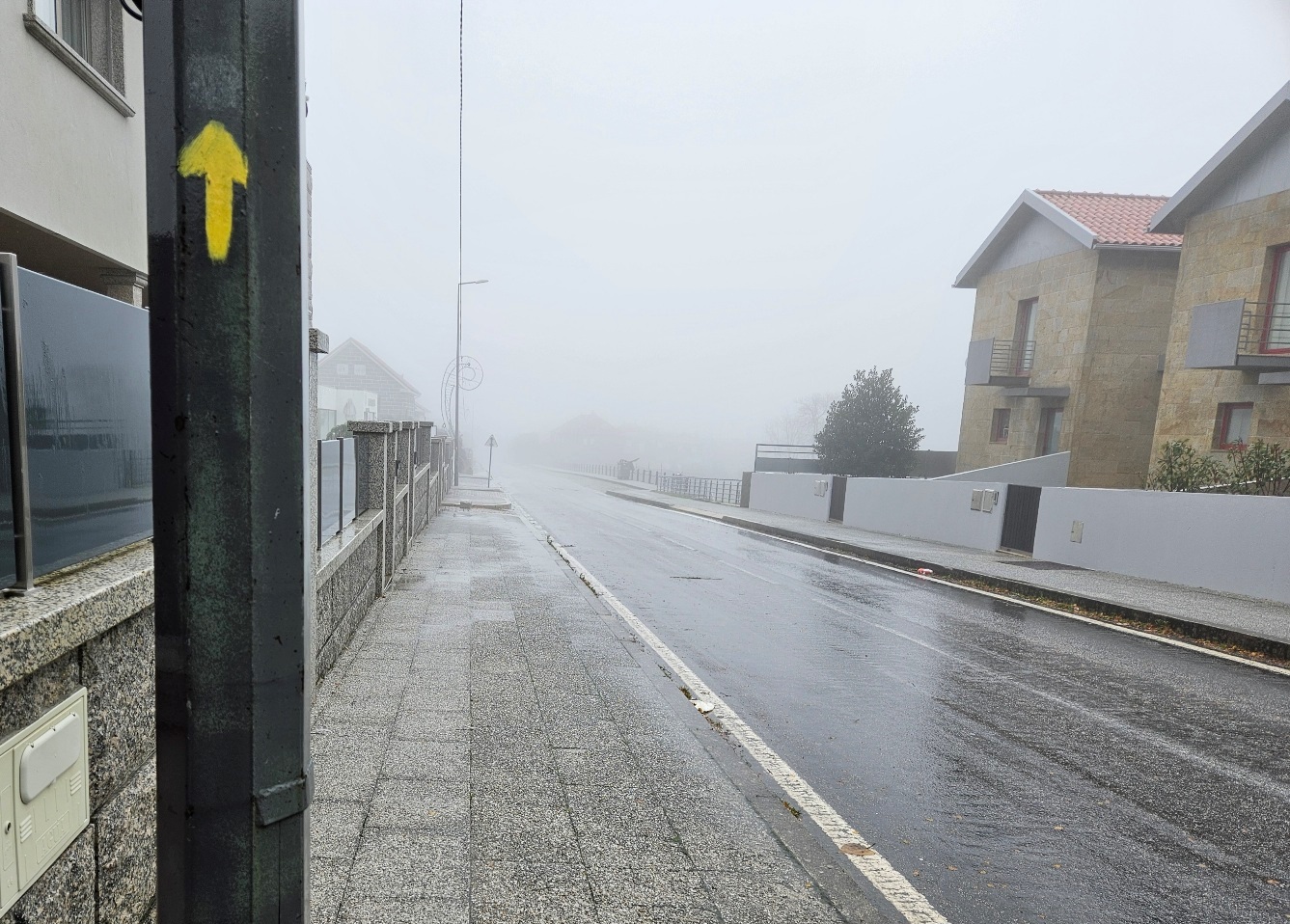
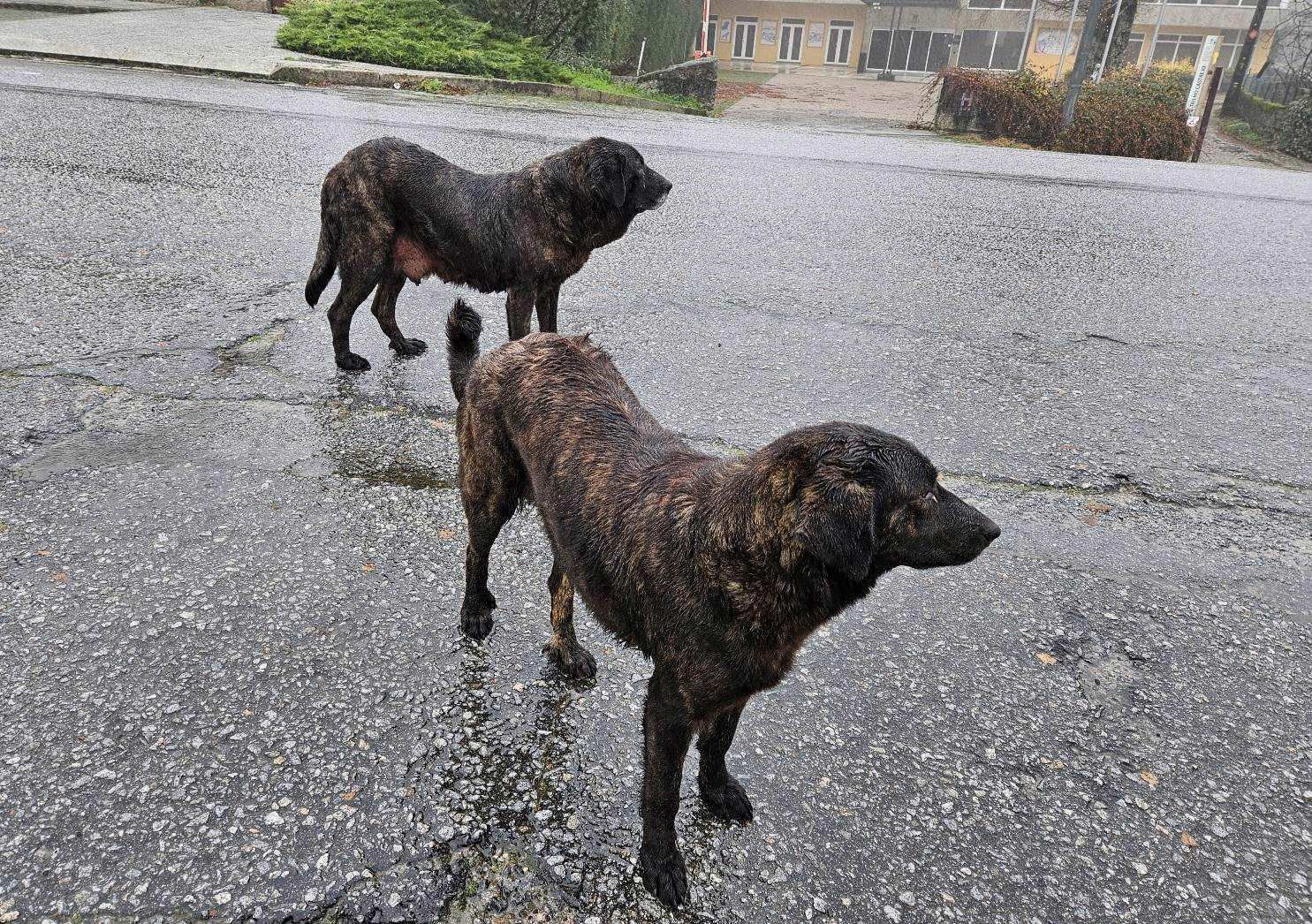
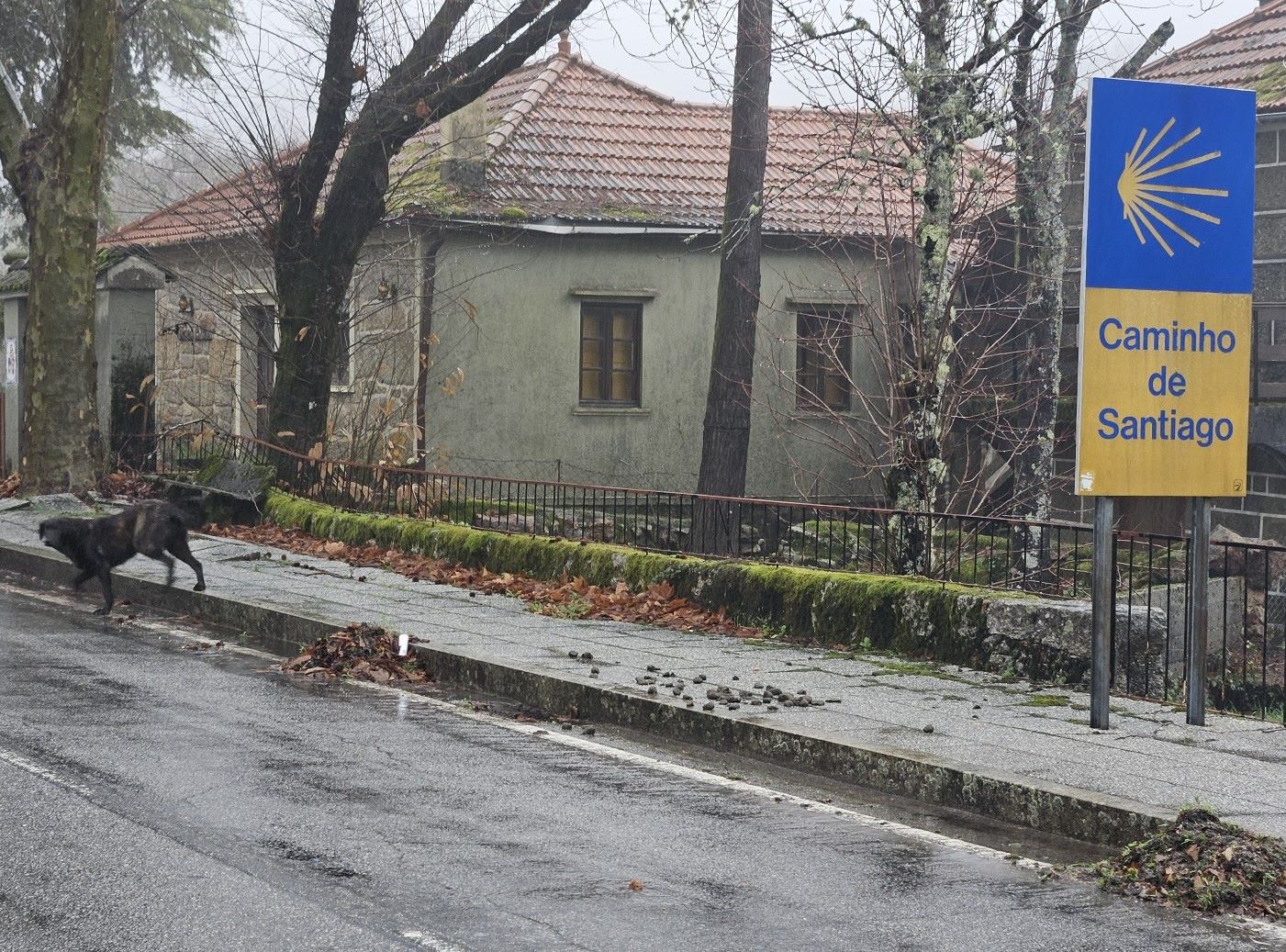
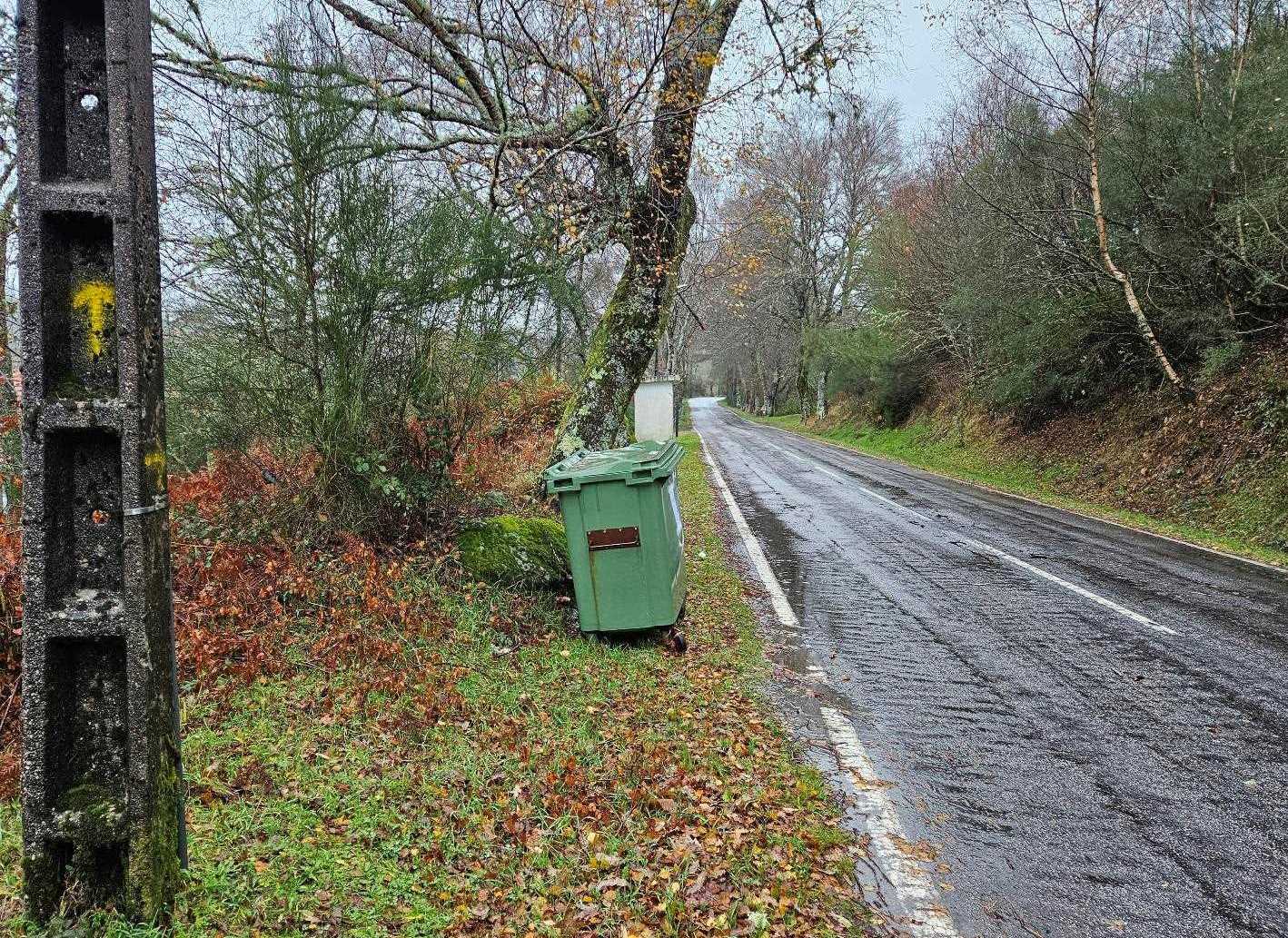
The rain was still very heavy when I set out along the N-202-3 road out of Castro Laboreiro, with a yellow arrow pointing the way. I was soon joined by a pair of friendly dogs who followed me along the street.
When it became obvious that they were in for the long haul, I tried to send them home. But to no avail.
The pavement ran out and the route was on the main road but the dogs remained. I was worried they would be hit by fast moving cars; visibility was poor in the rain.
One the dogs appeared to have already suffered a collision at some time in the past.
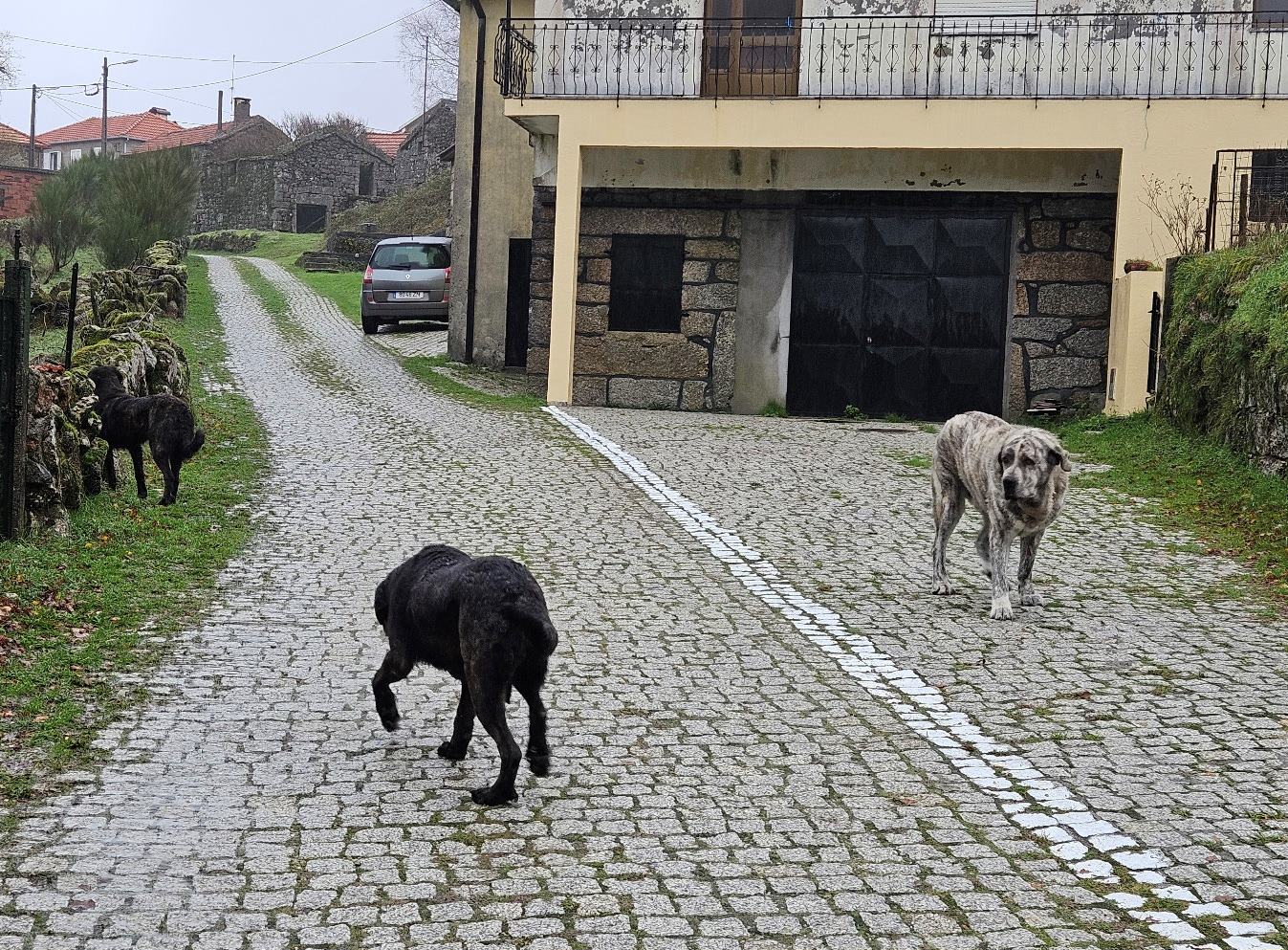
After around 1.5km there is a turn off on the right to go through the village of Várzea Travessa. Here, we ran into a large mastiff. He was also very docile.
The mastiff distracted my two friends and I put on a spurt along the village street. In the end, it was a small party of workmen digging a trench which discouraged them from following me any further.
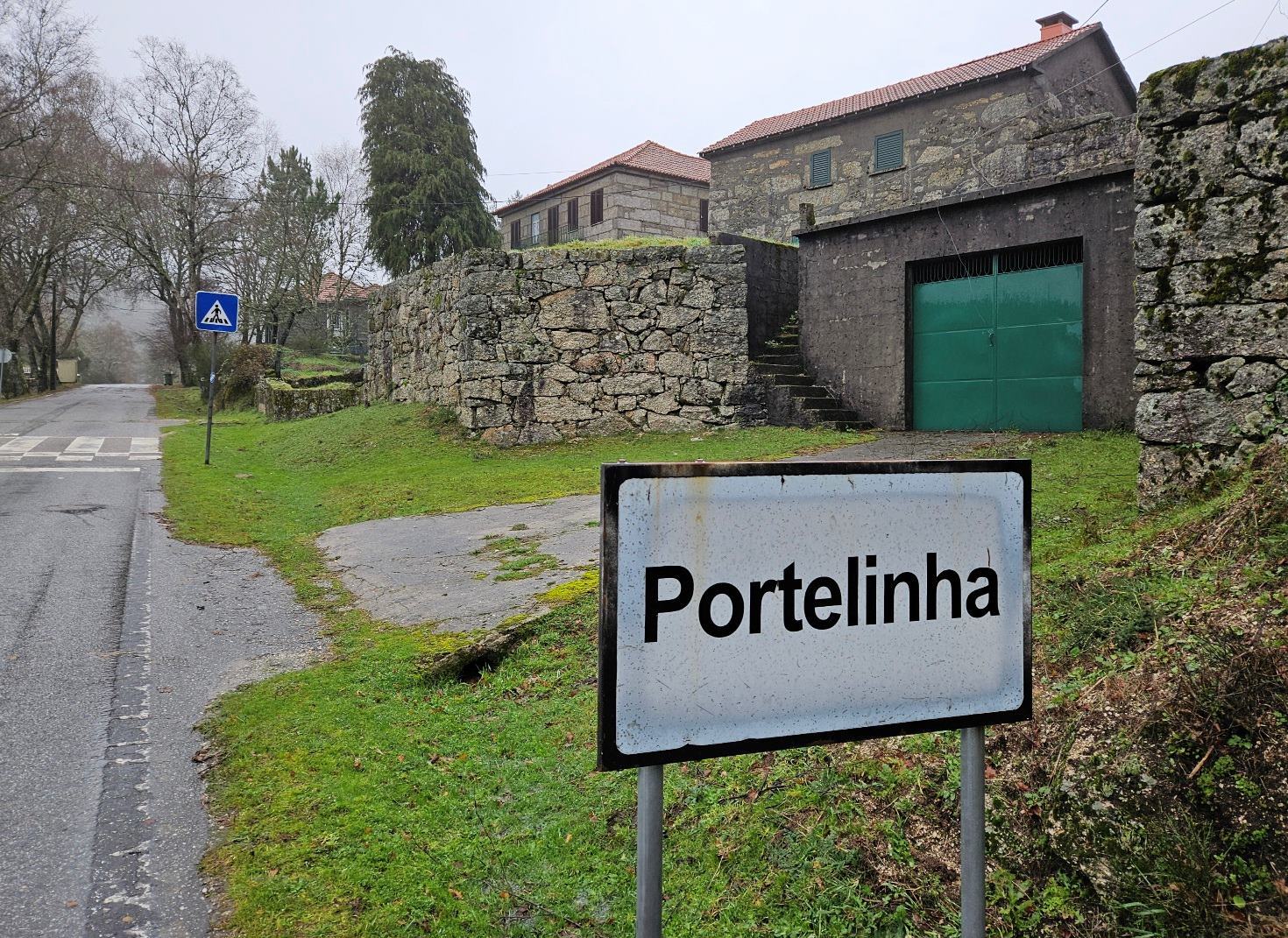
A lane leads back onto the N-202-3 and it’s just over 1km to reach Portelinha, which is the highest point of the ‘camino’ at an altitude of just over 1,000 metres.
The heavy rain continued and I decided it would be wise to stick to road for the next section and not take the ‘camino’ for the descent of the valley into Spain.
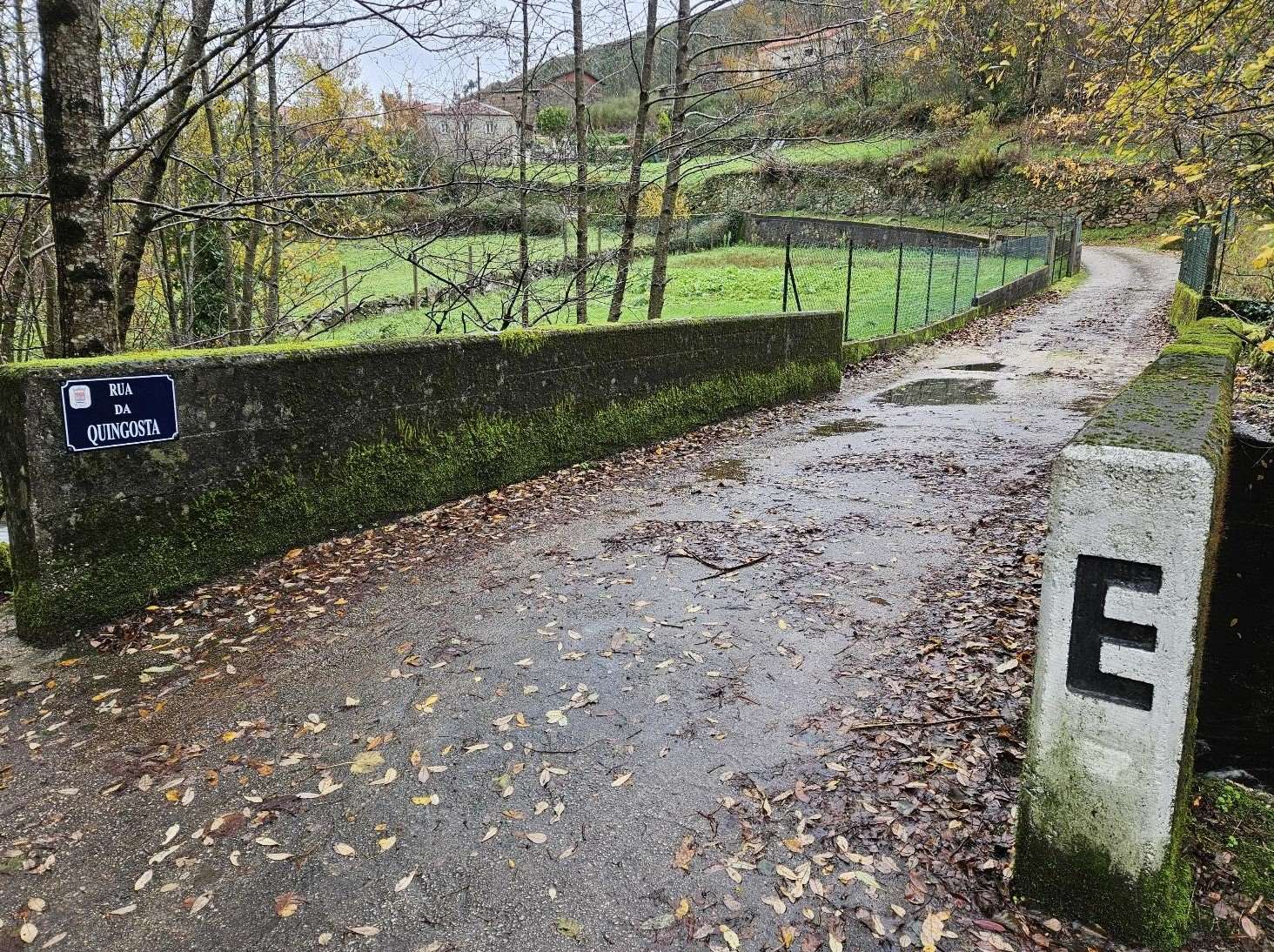
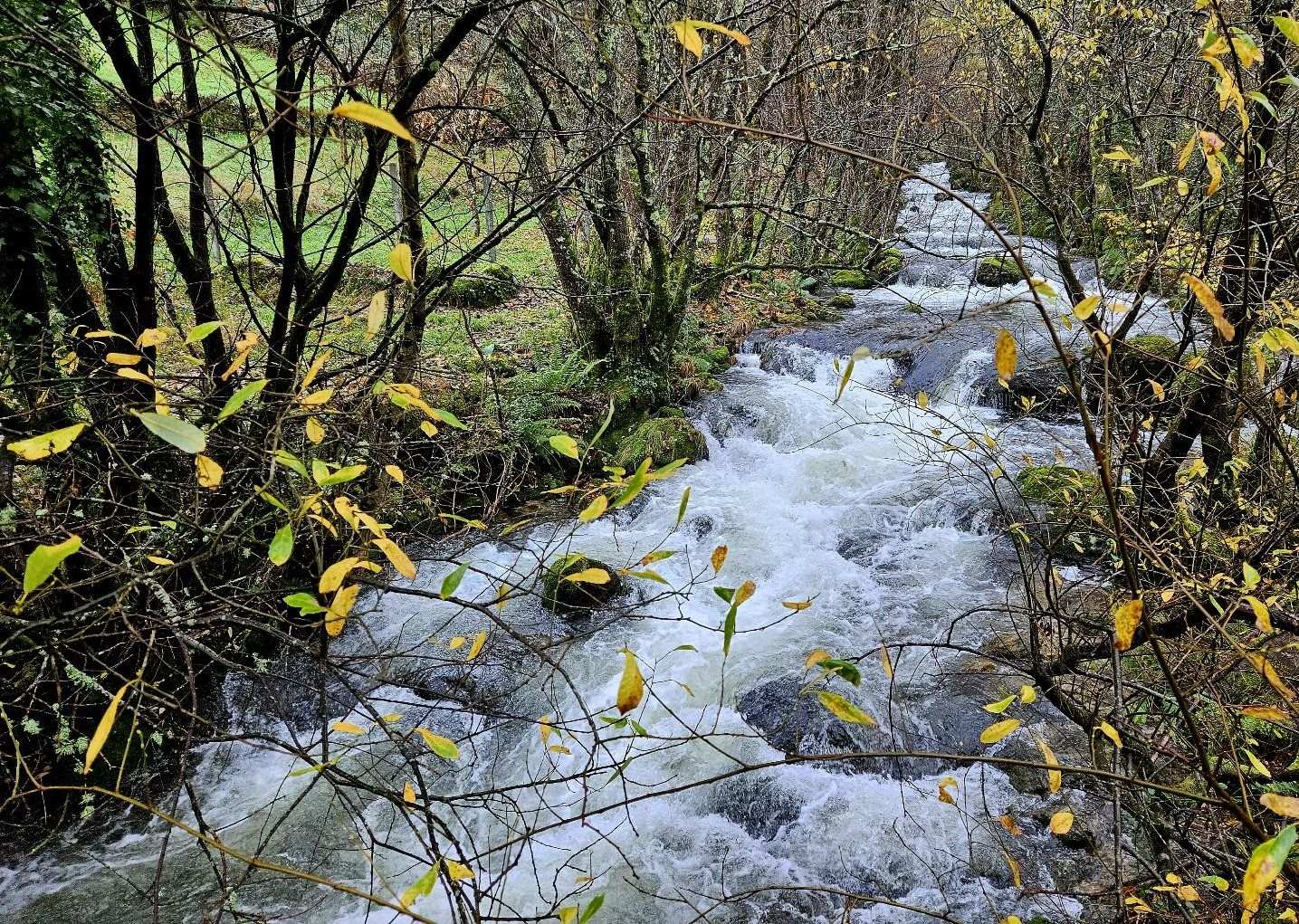
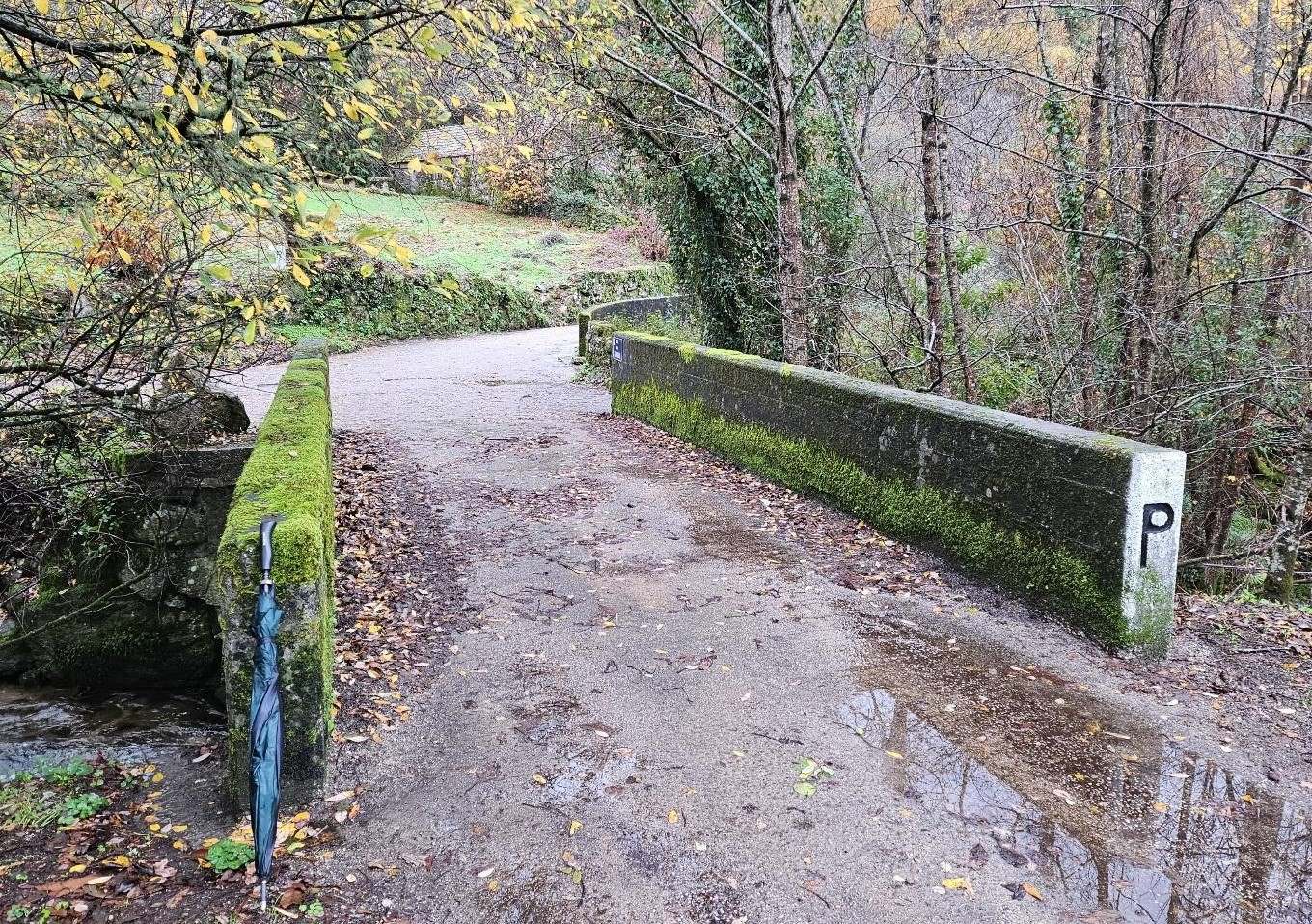
It was just under 2km on the N-202-3 before reaching a turn-off to the right; it’s a quiet lane, the M1138, that descends to Alcobaça and then on to A-Da-Velha, where I turned off right to walk the short distance down to a small border bridge over the narrow River Troncoso (see photos).
Then it was up to the houses and a left turn to descend the valley on a lane above the right bank of the river.
Finally the rain stopped. In Padrenda I turned right to follow the lane which passes close to the quarry and on to O Mato, before carrying on to San Amaro.
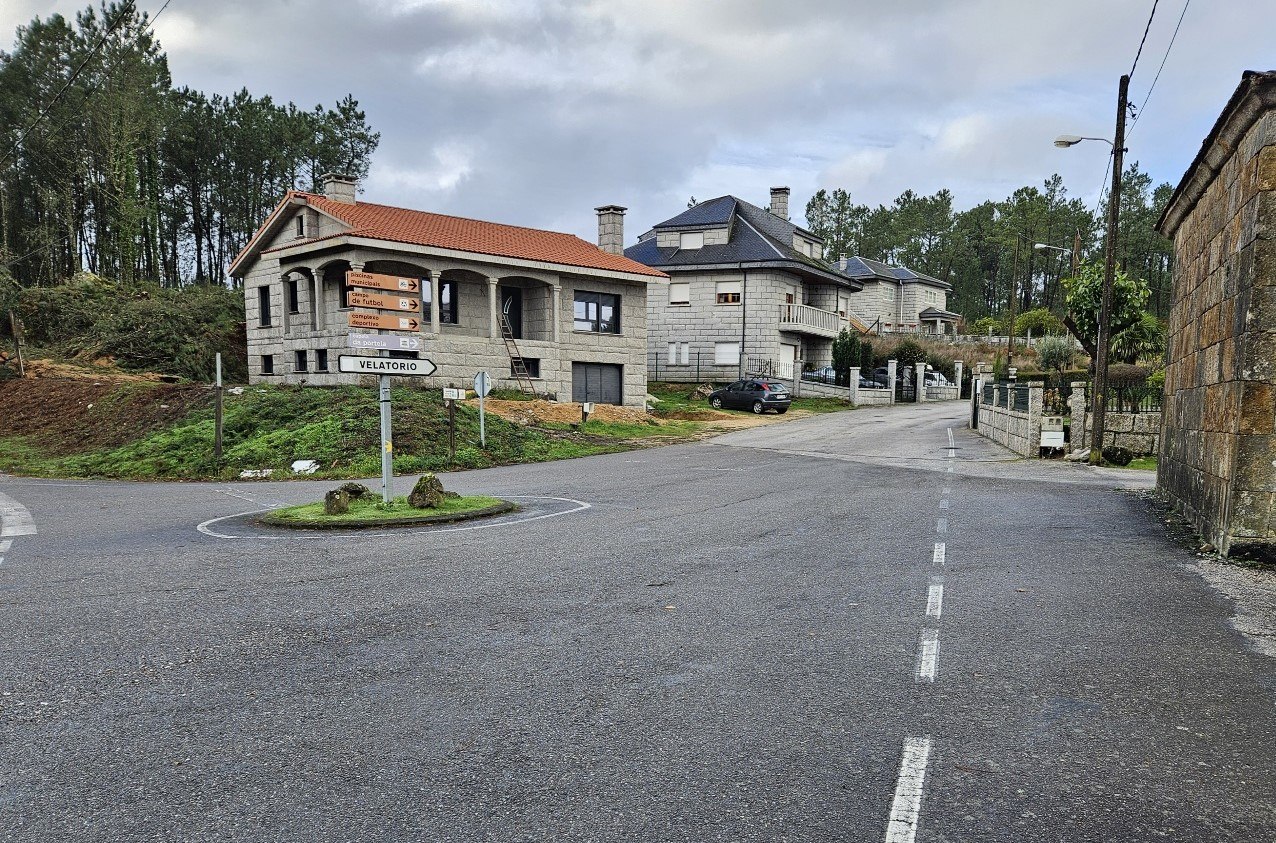
I arrived at the OU-414 road in San Amaro, which is back on the ‘camino’ route, bearing left along the road for around 50m to reach a small roundabout; here, it’s a right to follow the signs for the ‘velatorio’ and ‘campo de fútbol’.
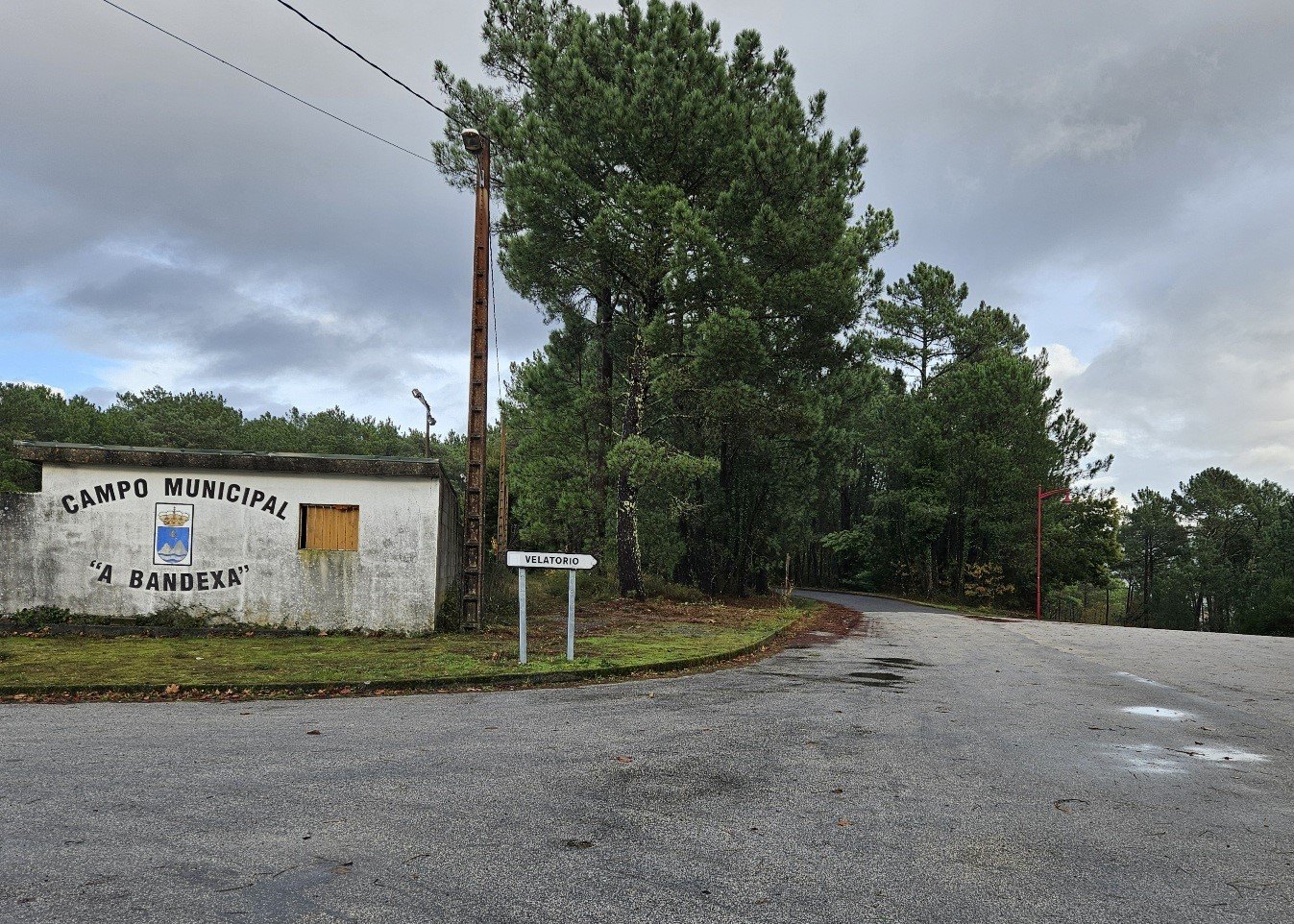
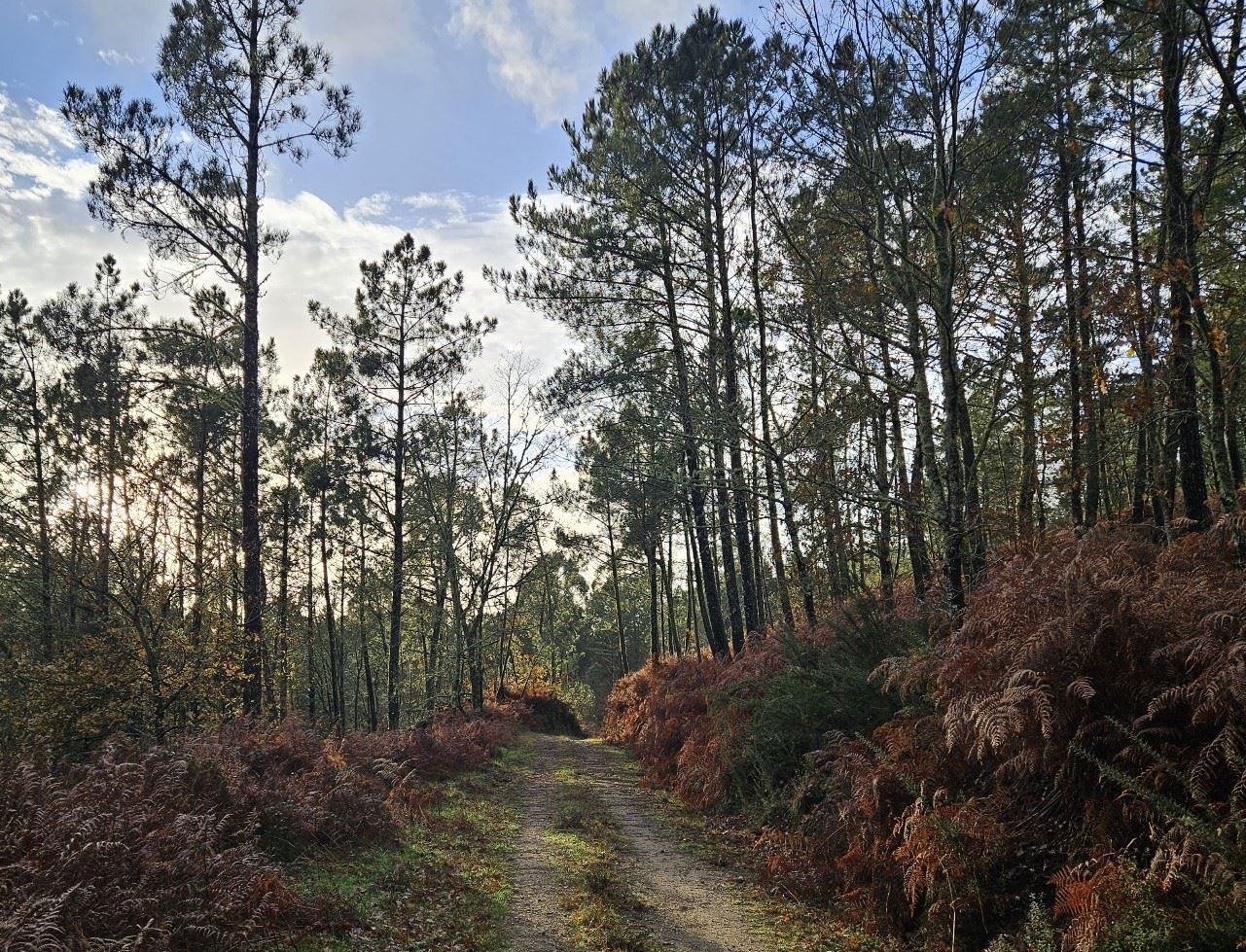
Pass the entrance to the municipal football pitch. The lane forks here, keep to the left heading into the pines.
Continue along the lane, passing a pig farm. Around 200 metres after the farm there’s a left turn into the trees which is easy to miss (see photo below); the yellow arrow on the road may be covered with leaves.
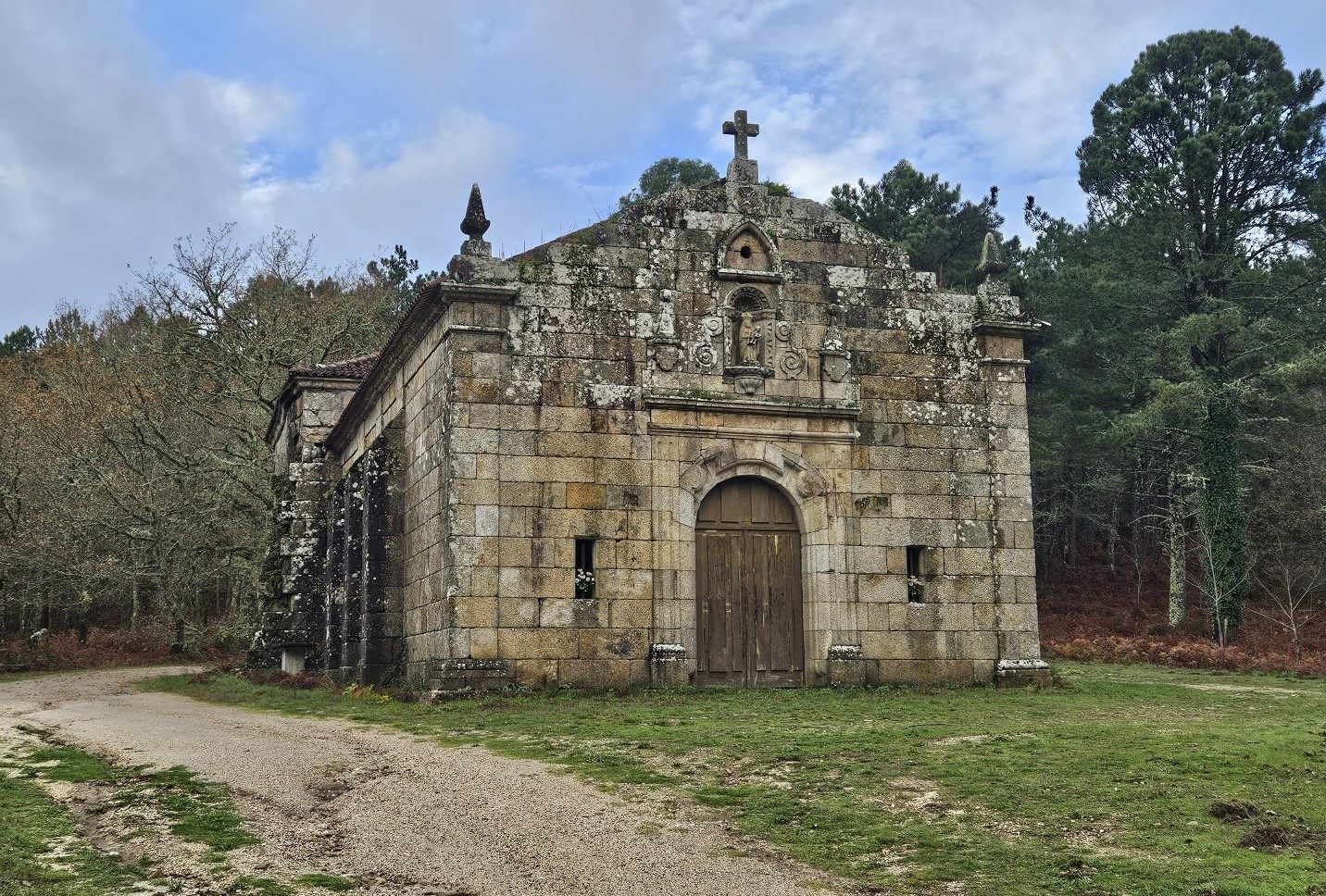
Follow the track down to the Portela hermitage.
It was at the hermitage that I made a mistake which meant that I ended the day walking in the dark.
I failed to follow my own advice about not being in a rush at crucial crossroads, and making sure by all means possible that you are on the right track.
In short, I misread the guidebook, which says ‘leave the church on your left’. With a bit more thought I would have realised that this actually means turn right at the Portela hermitage.
So, just to re-iterate; you turn right at the old church, heading along the OU-411 road and turn off it on the left after around 200m to follow the track which descends to Santa Justo (Xusto) hermitage and on to Trado.
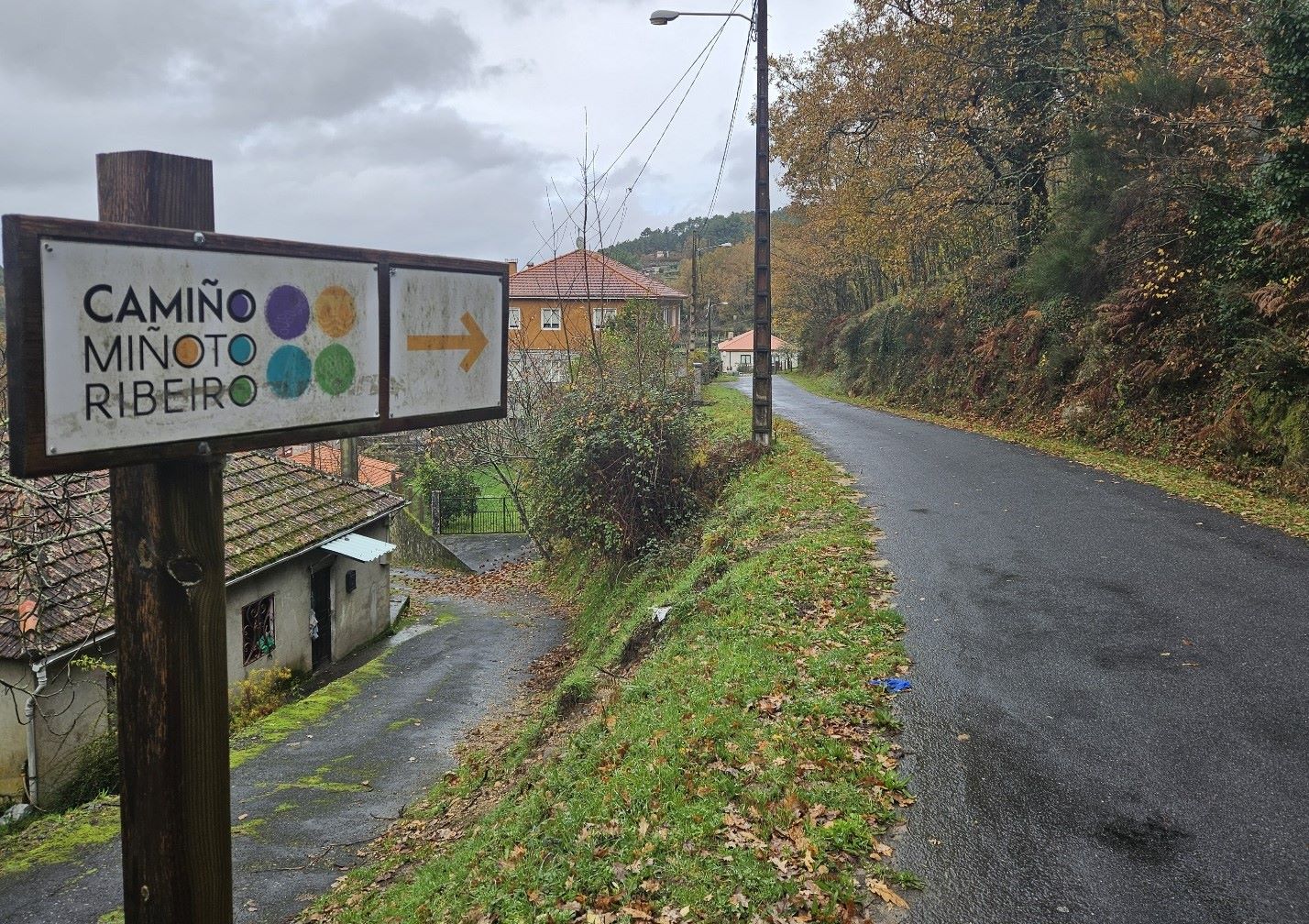
However, I turned left and headed into the woods, following the Miñoto signs. On my descent I even found a yellow arrow on a lane, which further convinced me I was on track.
It wasn’t until I reached the main road at A Agra and saw with horror that I still had more than 12km to go to Cortegada that I realised I had gone horribly wrong.
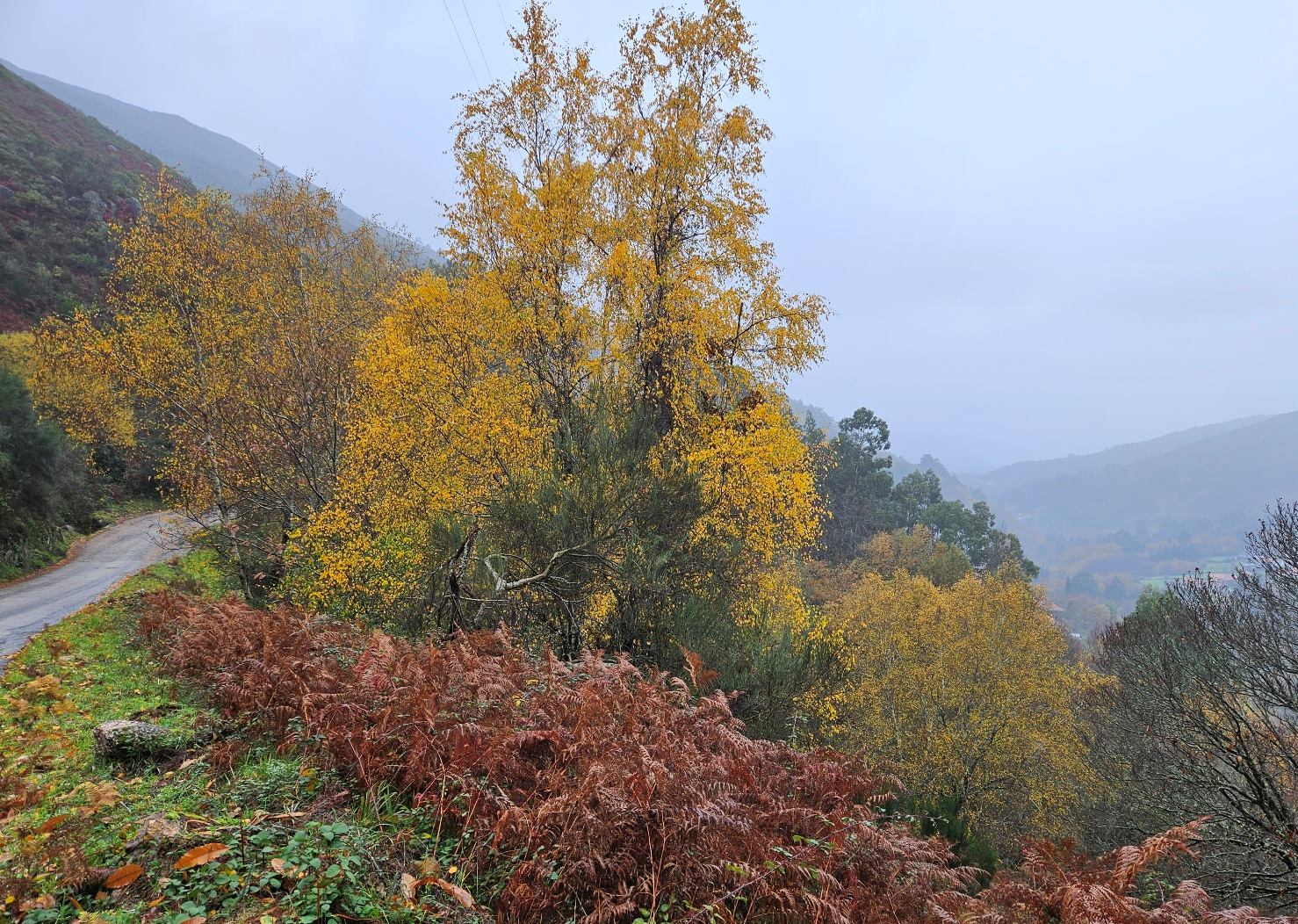
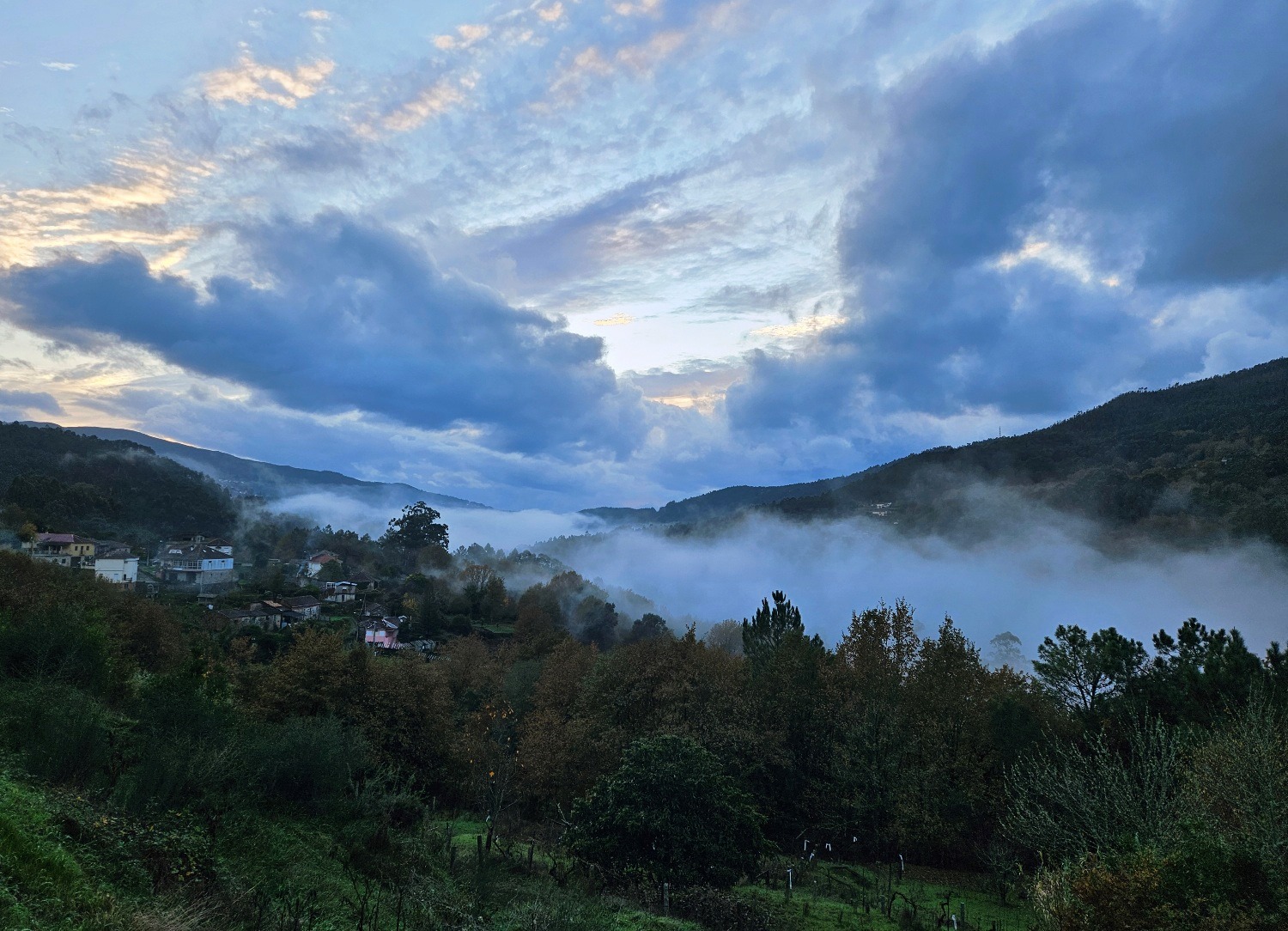
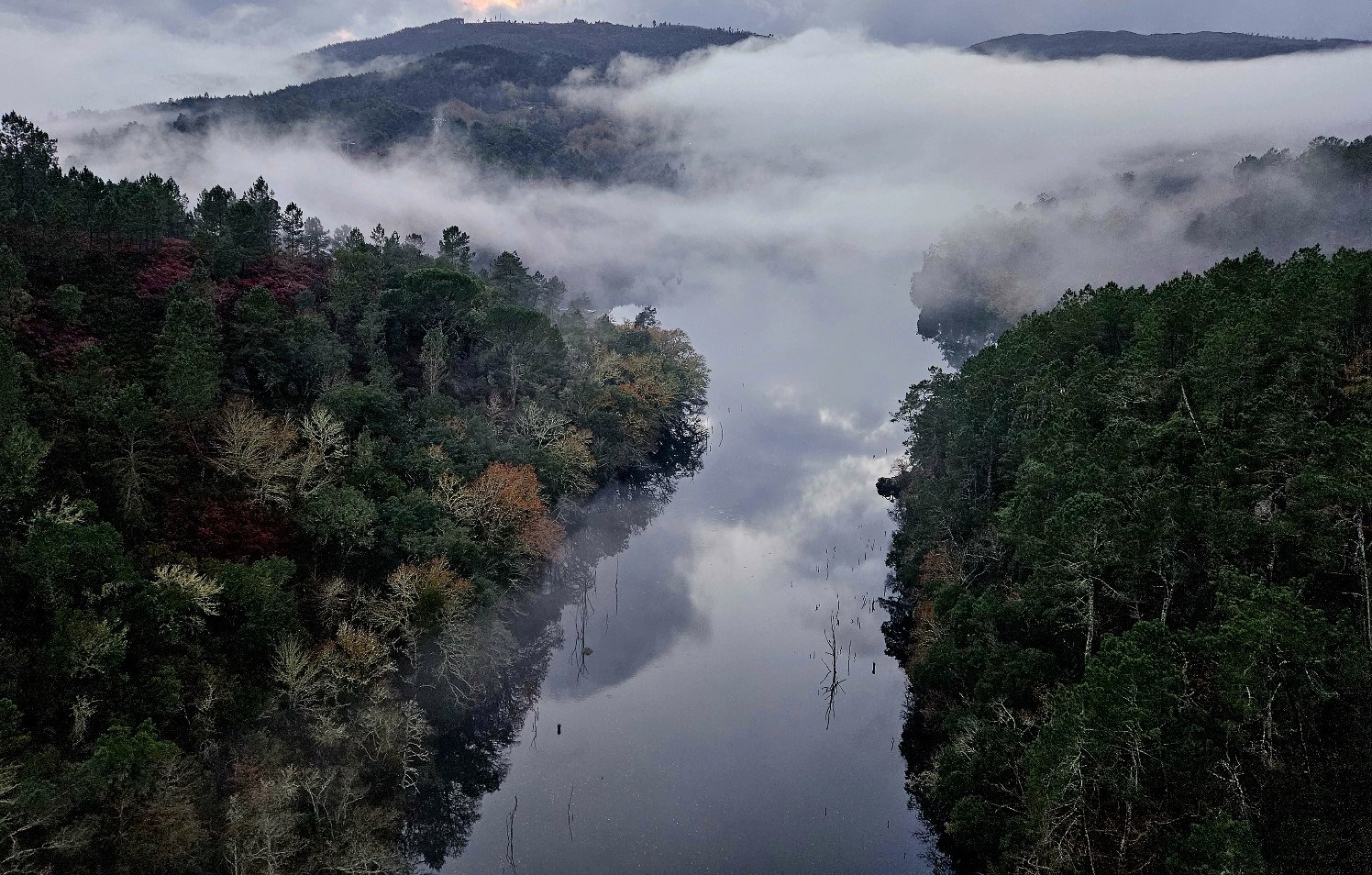
This put around 5km on my day and meant a long spell walking along the main road. At least it had stopped raining. And I did have some enticing views of the mist in the Miño river valley.
I got back on track at the road bridge which crosses the River Deva, just before it flows into the Miño.
Soon after crossing the river, the ‘camino’ bears left along a track to pass through Vilanova da Barca and follow the banks of the Miño to Cortegada.
However, it was getting dark and I could see that the track was extremely wet and muddy. With my morale at a low ebb, I decided not to risk it.
I spent the next hour trudging up the main road in the dark to Cortegada.
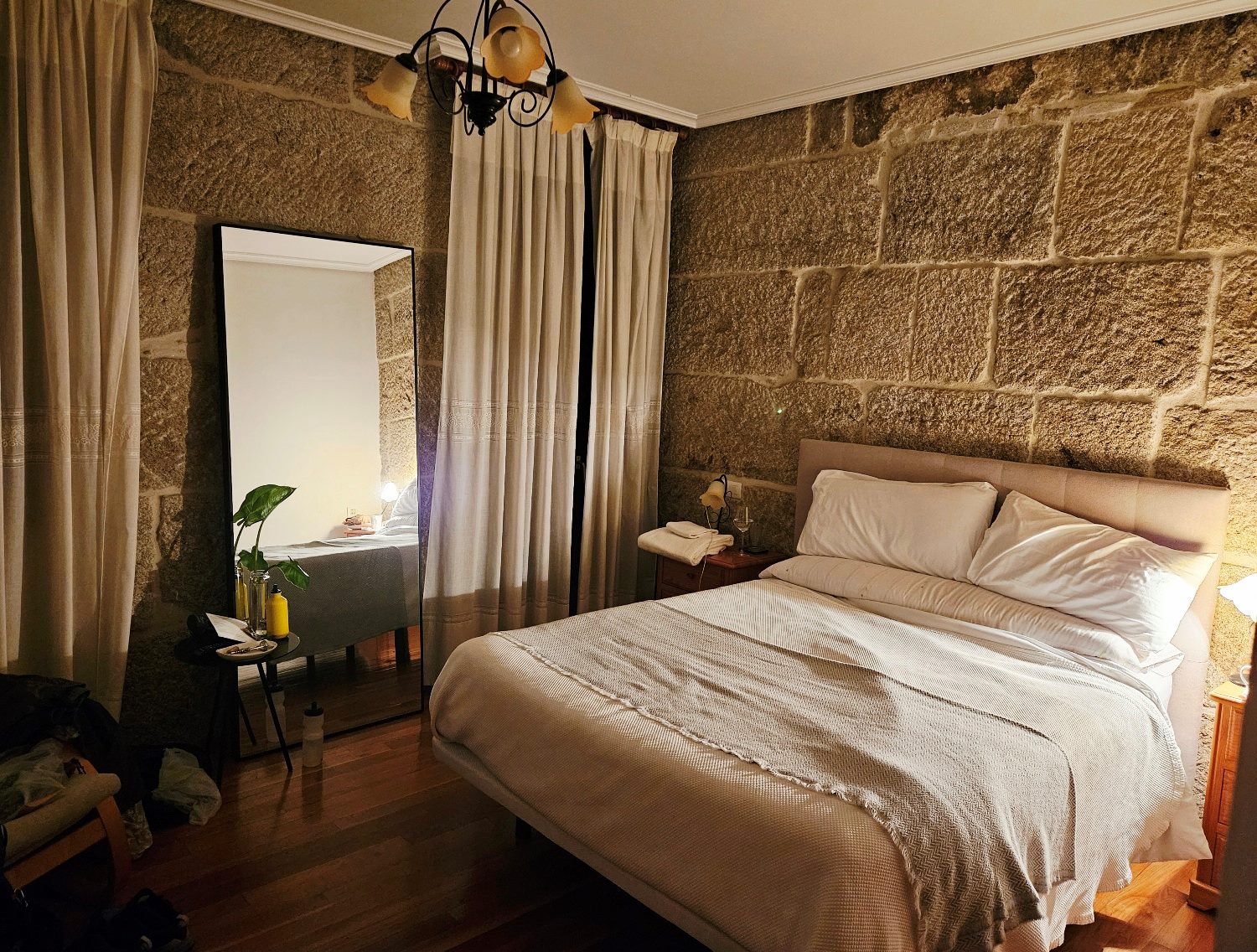
As luck would have it, my accommodation in the town at the Casa do Conde was brilliant. It was a lovely room in a historic building which has been lovingly converted/restored.
The owners were away and I let myself in with the codes they sent via WhatsApp.
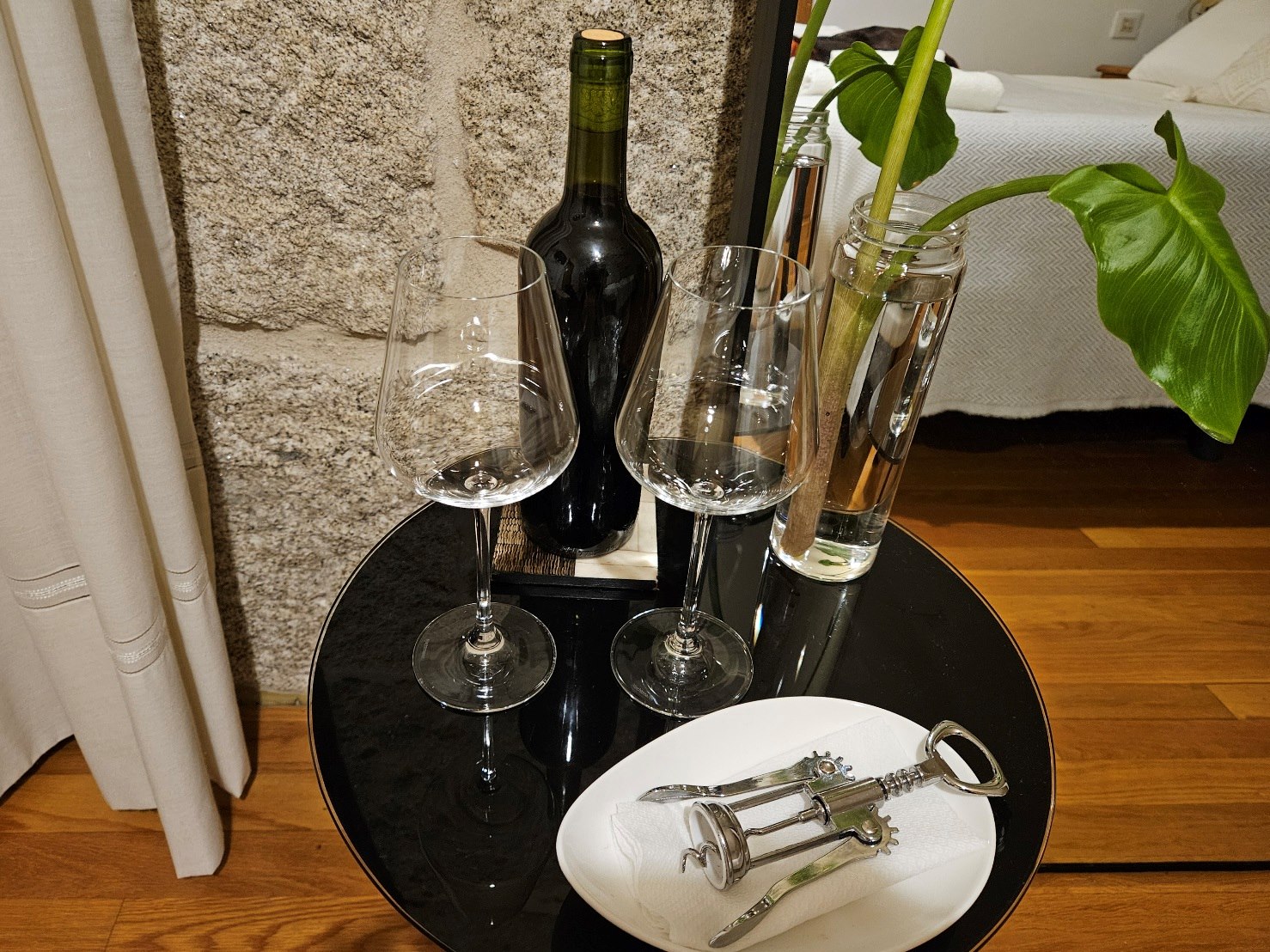
On arriving in the room I found a bottle of wine which was from their vineyard along with corkscrew and glass.
This did a lot to restore my faith in the day. As did the very hot shower and warm radiator in the room.
I had the run of their kitchen and went to the supermarket next door and cooked myself a delicious, healthy meal, with some left over for breakfast.
They do a special price for pilgrims, which was €35. I didn’t see the owners but left them the cash on the bedside table in my room.
It was a great experience, which meant that I felt ‘restored’ and ready to enjoy the walking once again when I set out the following morning.
The Casa do Conde can be reached via their website www.ribeirorural.es or via WhatsApp on 687 298 890

Recent Comments