
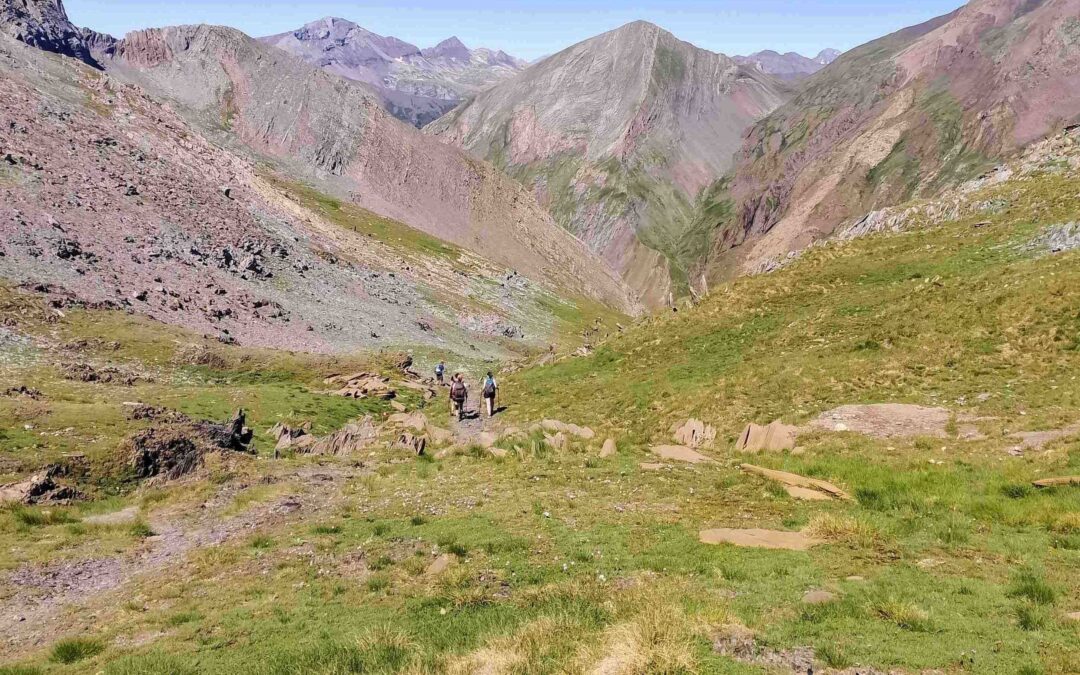
The Chistau pass (Puerto de Chistau) at 2,577 metres is a point of some significance in the Pyrenees.
It is the bridge between two important valleys; the Valle de Benasque to the east and Valle de Chistau to the west.
In times gone by, local people would have used the pass to get from one inhabited zone to the other, saving an extremely long journey via lower altitudes.
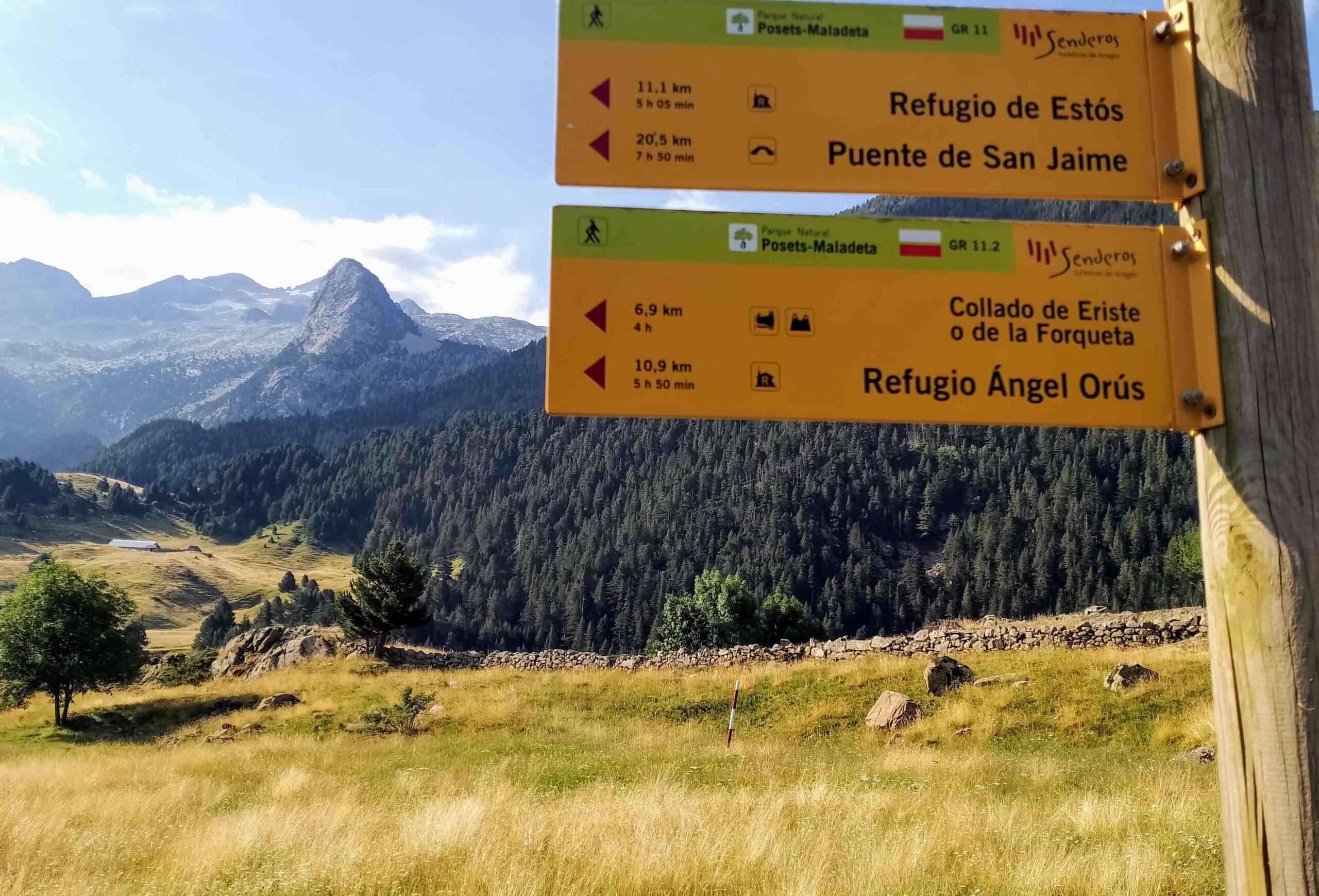
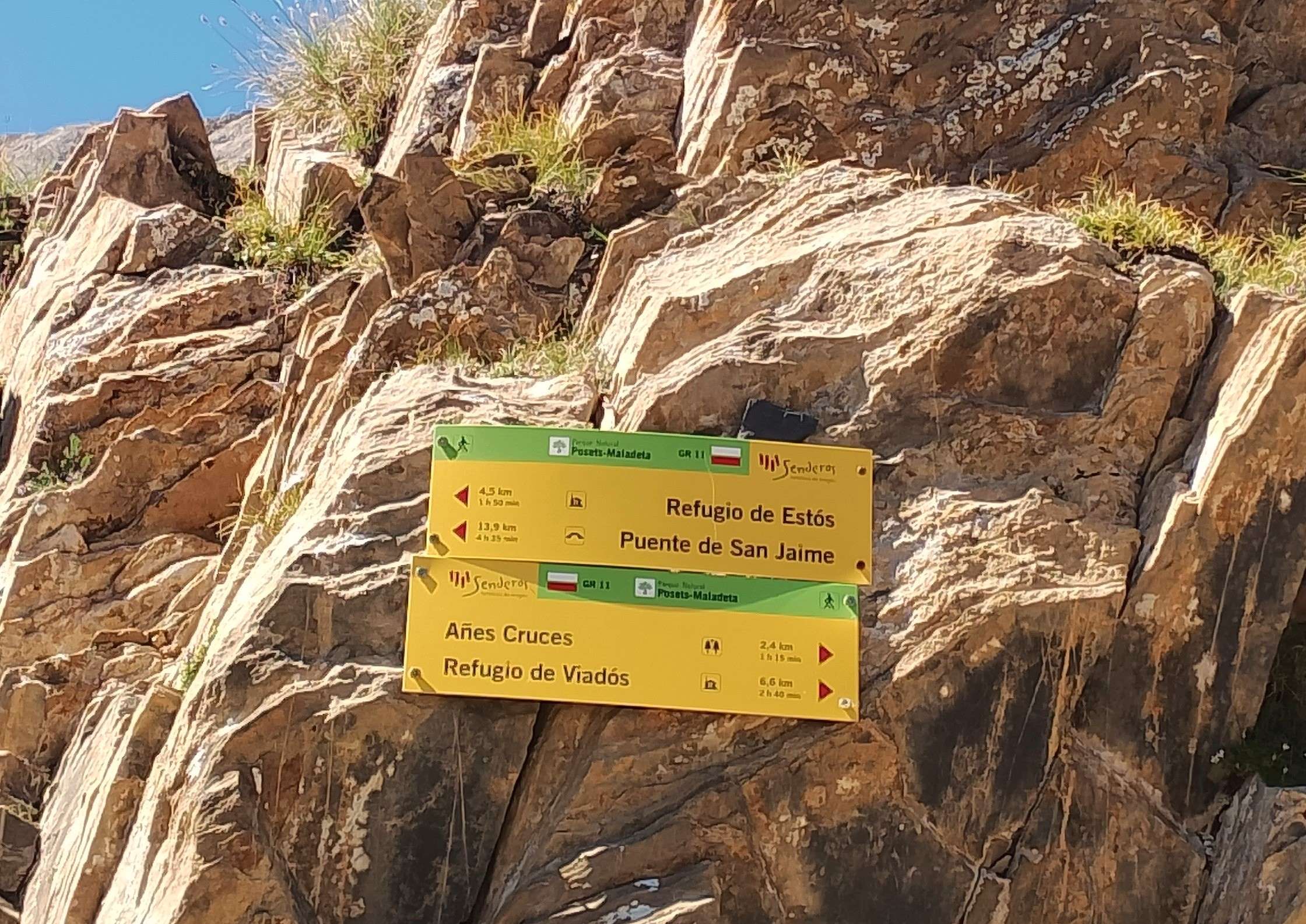
Nowadays, it’s the GR-11 trans-Pyrenean footpath which signs the route up, with muleteers and their saddlebags making way for hikers and rucksacks.
Once up at the pass, the world is your oyster; it’s a wide area which begs to be explored.
Standing below the peaks of the Posets massif, mountaineers will depart from here to launch an assault on nearby Pico de los Veteranos at 3,134m and Pico de los Gemelos at 3,176m.
Others will content themselves with a walk around this fascinating high-mountain zone, enjoying the spectacular views.
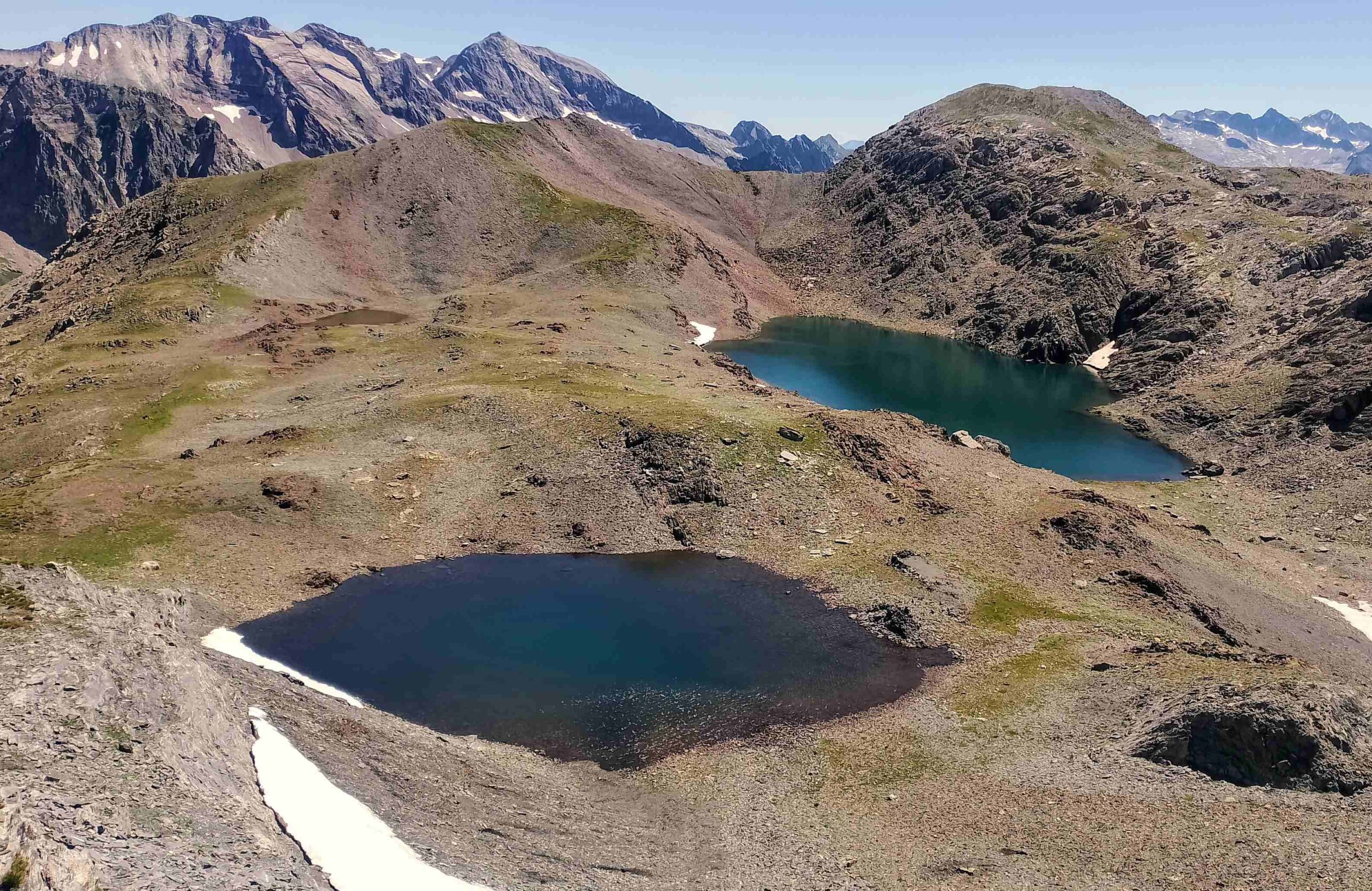
One option to gain more height is the cairned path to the Collada Negra (black pass) at 2,878, part of the route to the summits, for some truly awesome sights over the surrounding area and the Royo de Posets glacial lake and its smaller neighbour which doesn’t have a name.
The return walk from El Forcallo campsite to the Chistau pass is around 15km, with approximately 1,200m of ascent.
The map needed for this route is the Editorial Alpina 1:30,000 Valle de Benasque sheet.
The GR-11 stage map can be viewed at the Aragón government tourism website via the link https://senderosturisticos.turismodearagon.com/ruta/ficha/3062
The walk
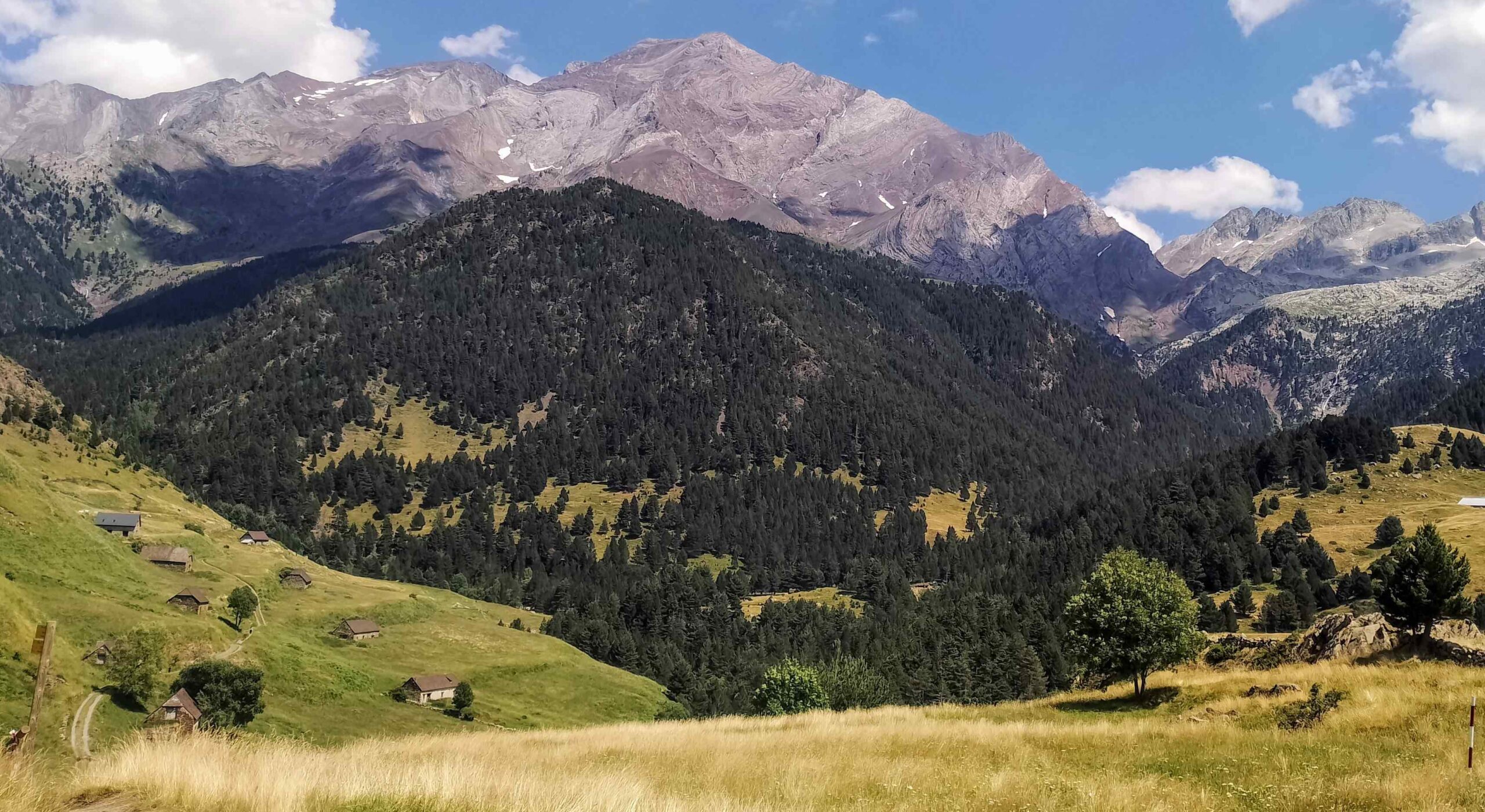
Our route starts in the Chistau valley, setting out from El Forcallo campsite at 1,580m and ascending the short distance to the Viadós mountain refuge (1,760m) on the GR-11.
From Viadós, the path runs for 0.7km across the pastureland to a fork, where the GR-11 bears left to run along the lefthand side of the Añes Cruces ravine, with the Zinqueta de Añes Cruces river down below.
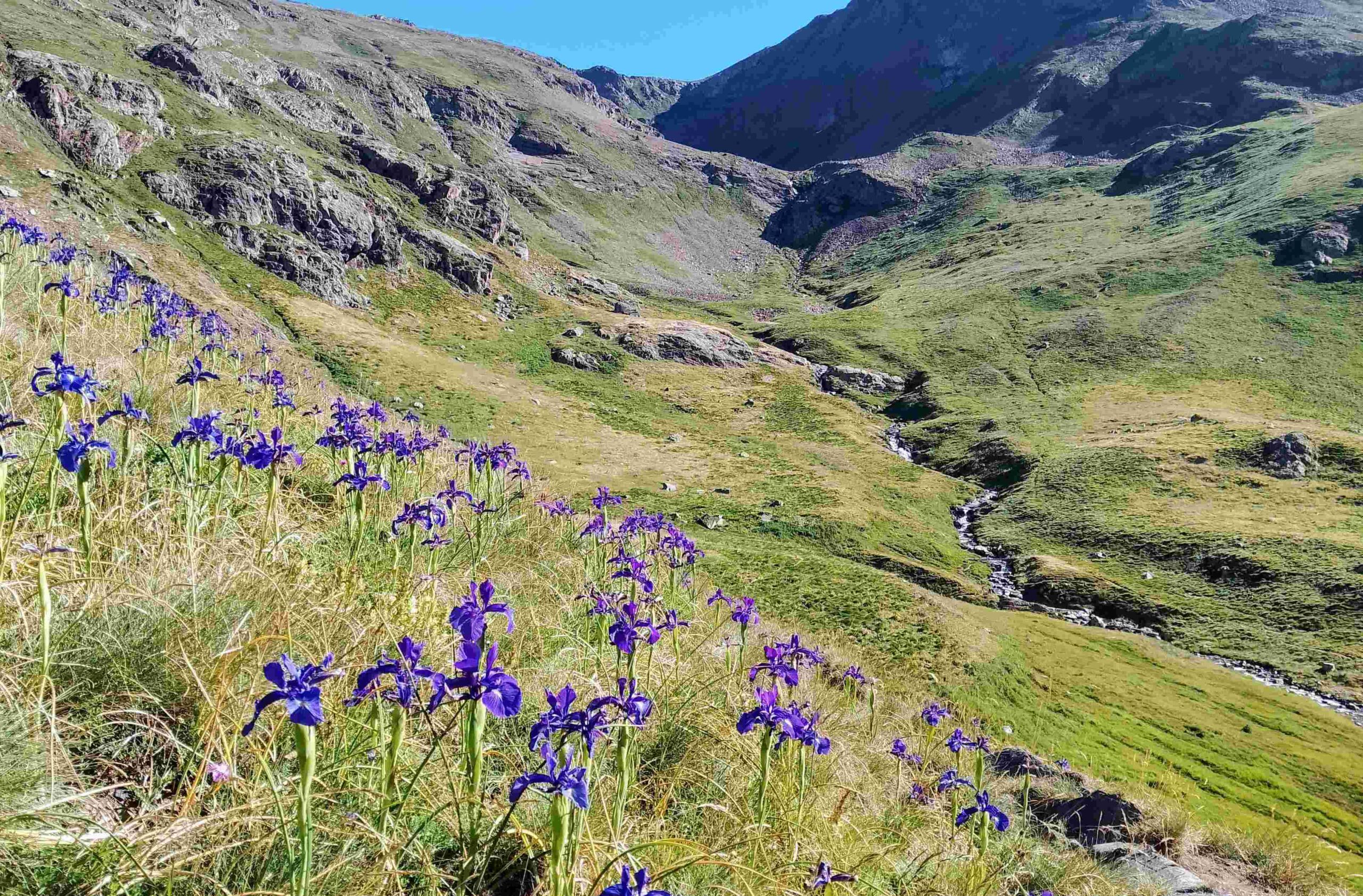
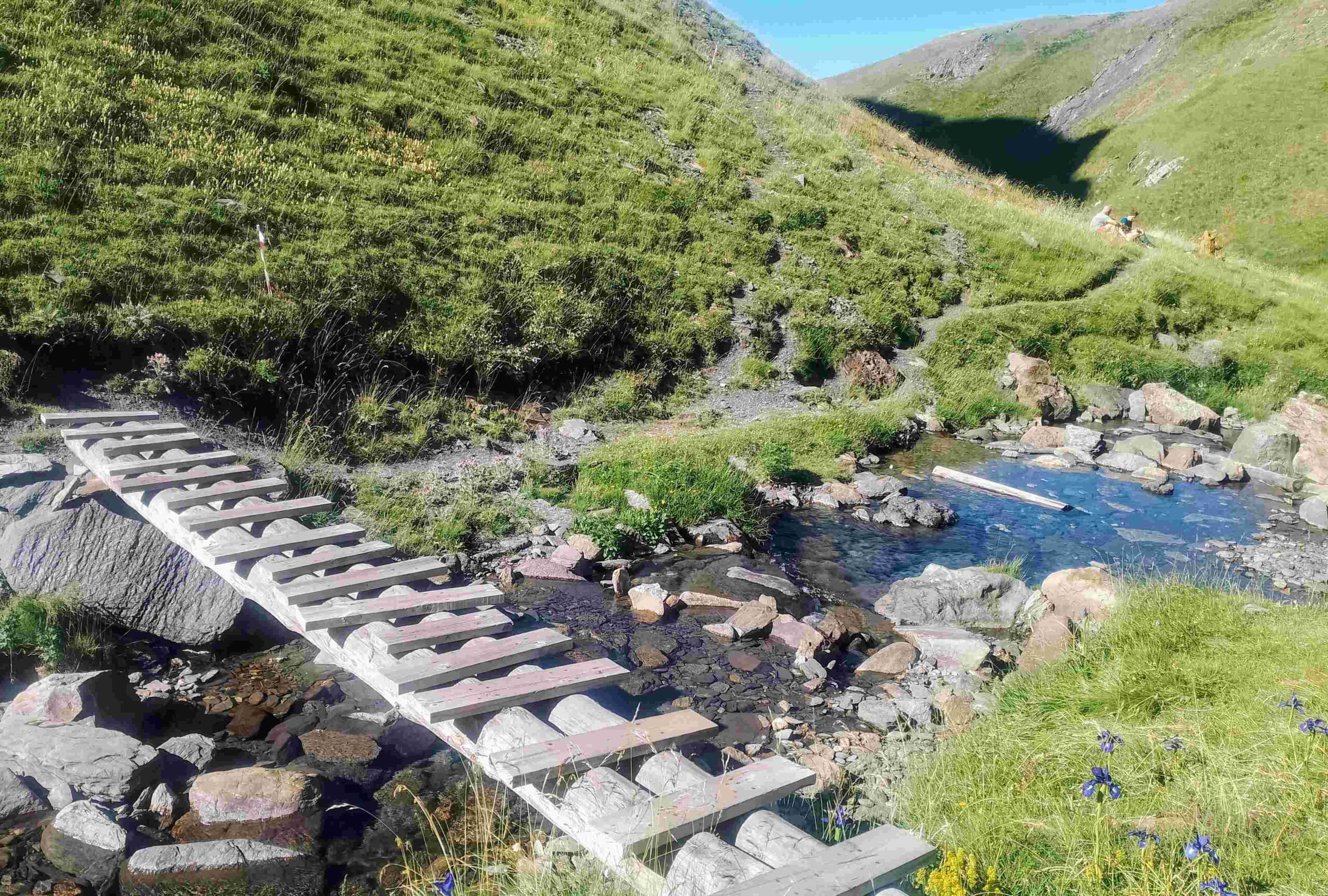
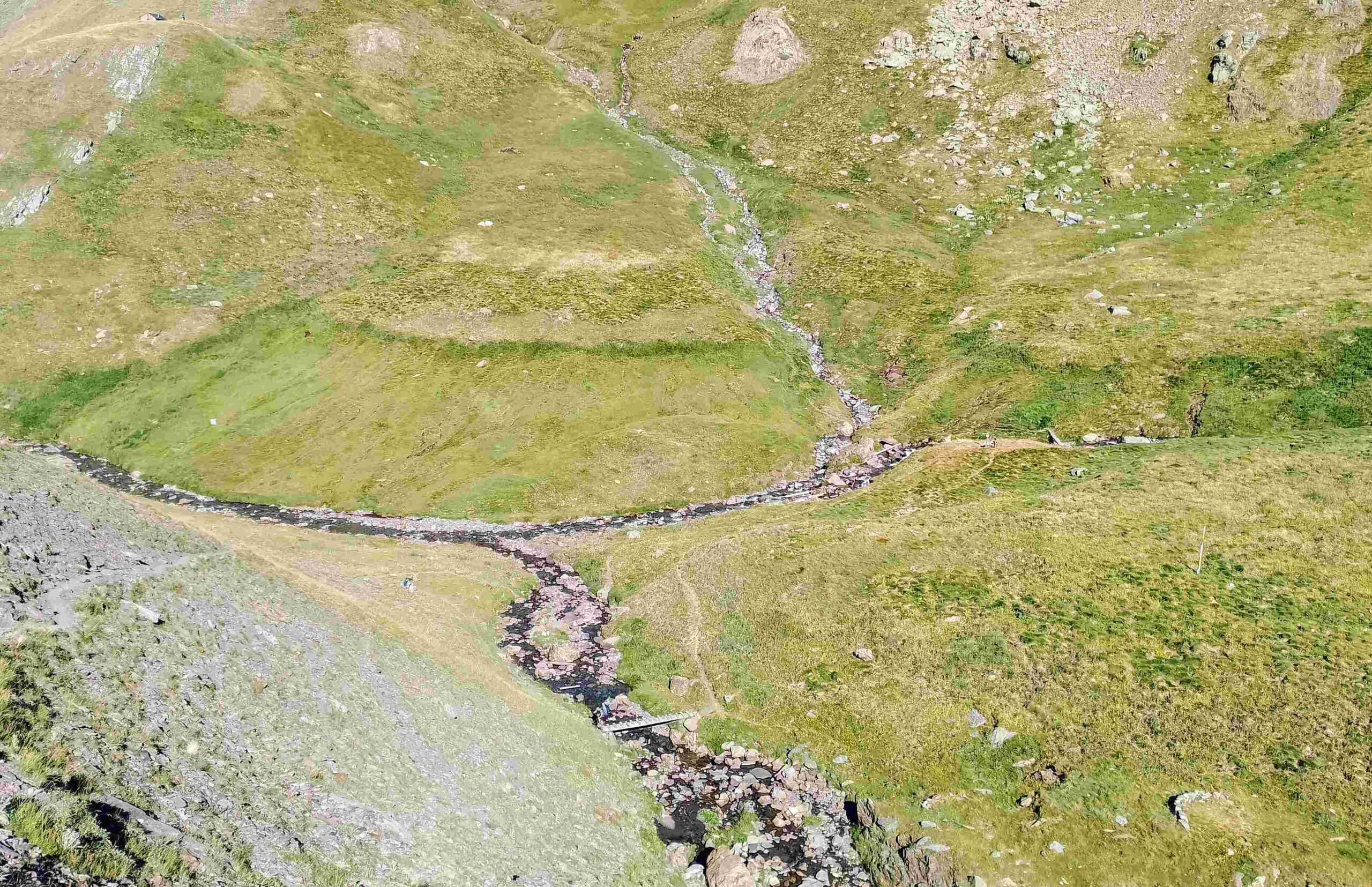
It is pleasant walking; mostly the height is gained gradually as the path ascends to the Pleta de Añes Cruces at 2,080m, a wonderful spot, where three streams meet (it’s just over 3km from the sign and left turn to get to the Pleta).
A footbridge crosses the Zinqueta de Añes Cruces and the minor streams are traversed via stepping stones and rocks.
Take note here of possible areas for a dip on the way back; the streams provide welcome relief on hot days.
The GR-11 swings right, then straight up to start the final leg of the ascent to the pass, which is 2.4km away.
Unlike some climbs to high passes, much of steep ascent comes early on.
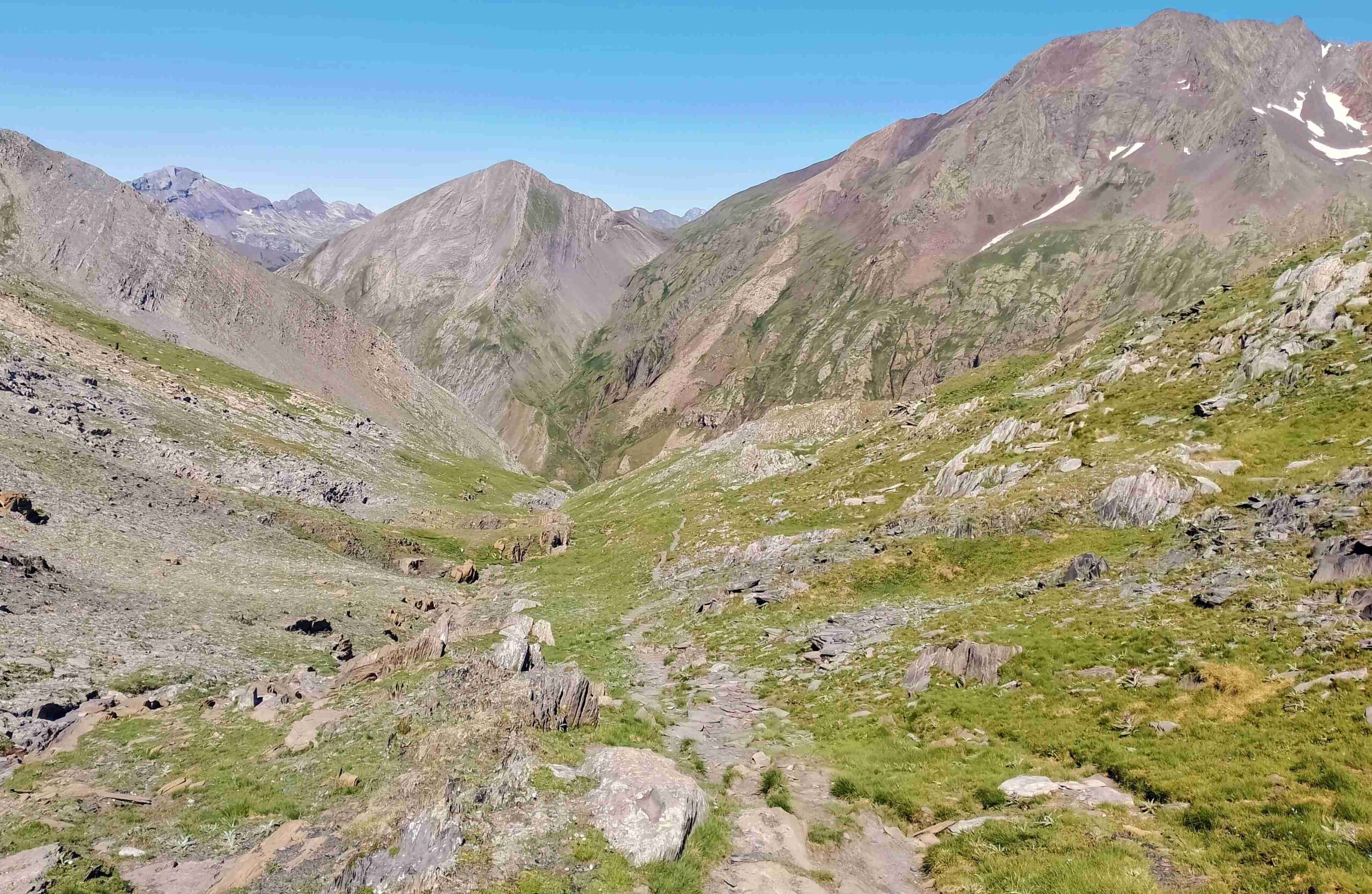
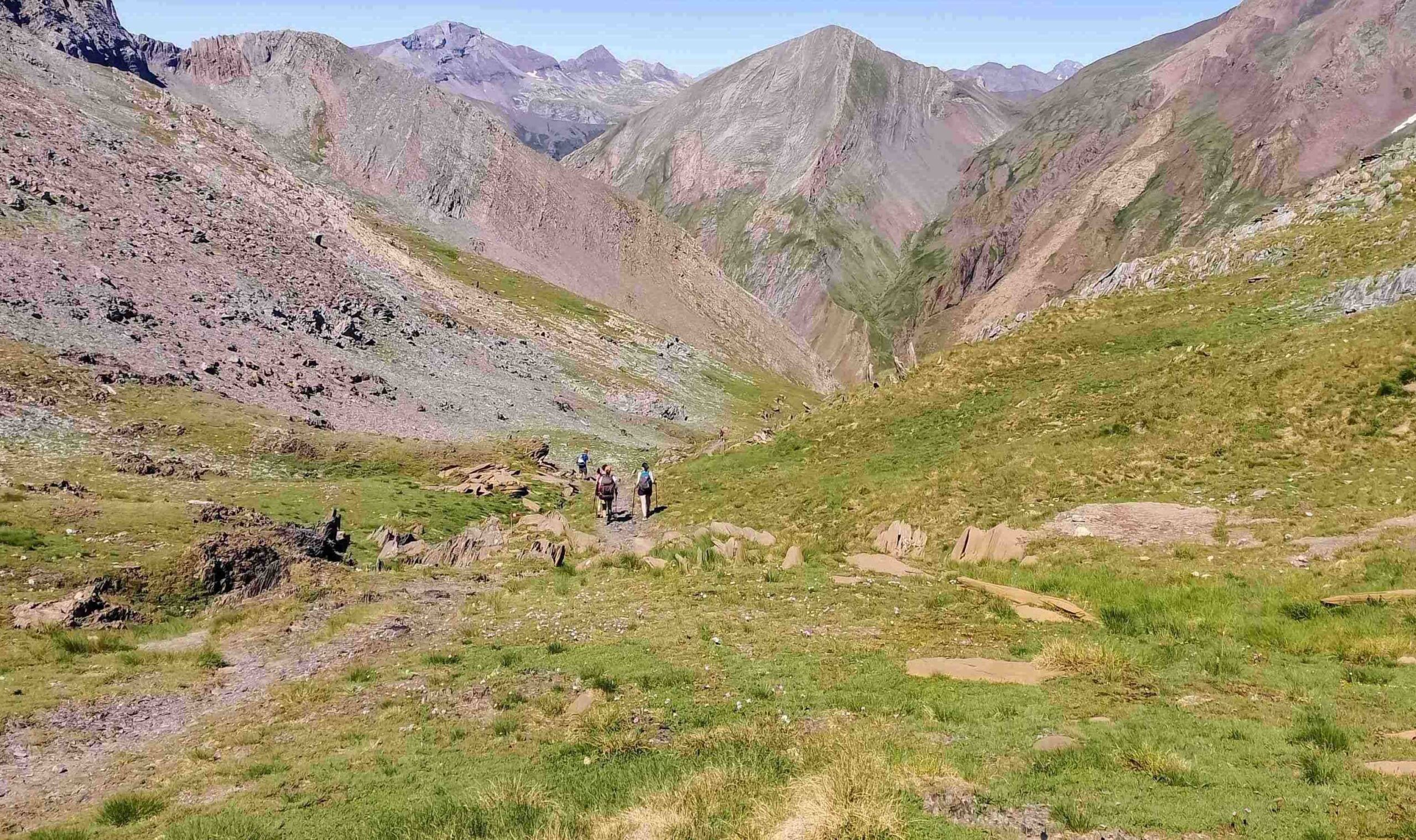
The climb from the confluence of streams is quite hard work; gradually becoming less onerous and then a very pleasurable walk again on pastureland.
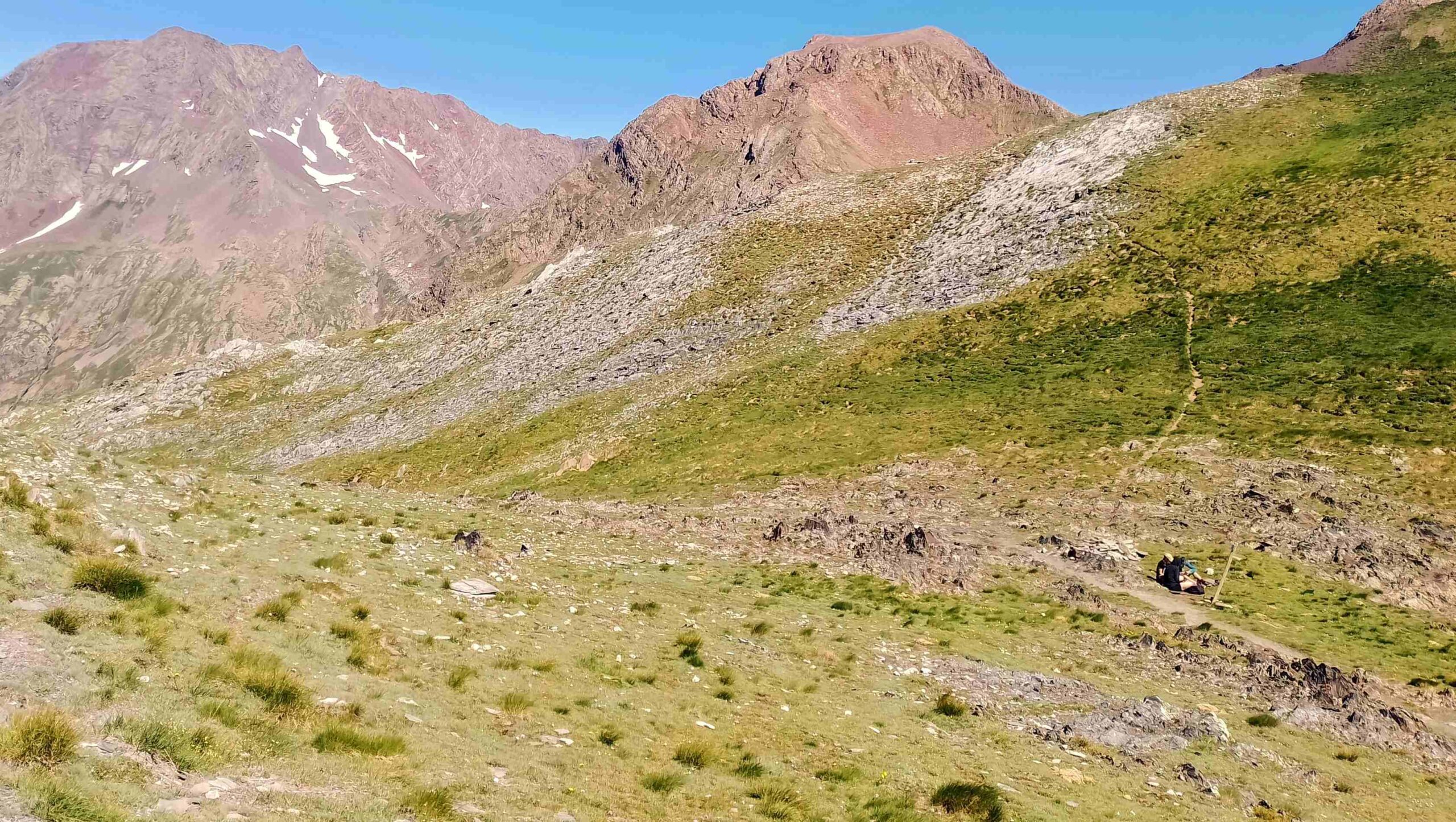
There is no scrambling to be done over scree or rock at the end; it’s a serene passage over greenery, with no gasping or gulping required.
Of course, the views from the pass are terrific and those who are not too tired will want to explore.
There is a footpath on the left which may lead up to the nearby Chistau peak, but I have not attempted that route.
The GR-11 bears round to right after crossing the pass.
Follow the GR for a couple of hundred metres to get round to the back of the pass; there’s a wide area which can be partially submerged after heavy rain, or with melting snow.
It’s a verdant grassy area in early summer.
The cairned ascent to the Collado Negra can be found off the GR-11 near the opening to this wide area.
It’s a bit of lung-buster and should only be undertaken by people who have experience of very high mountain areas.
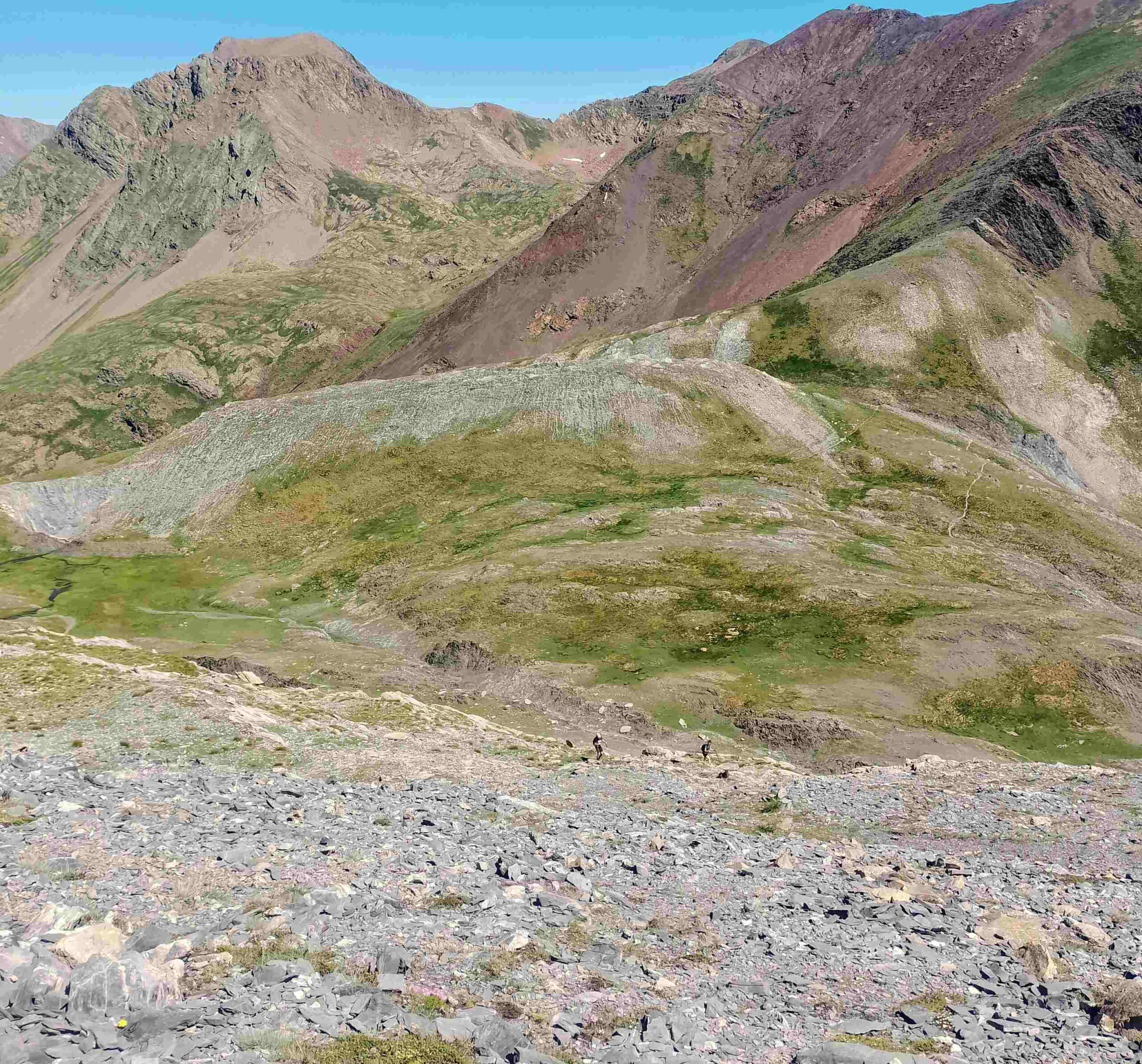
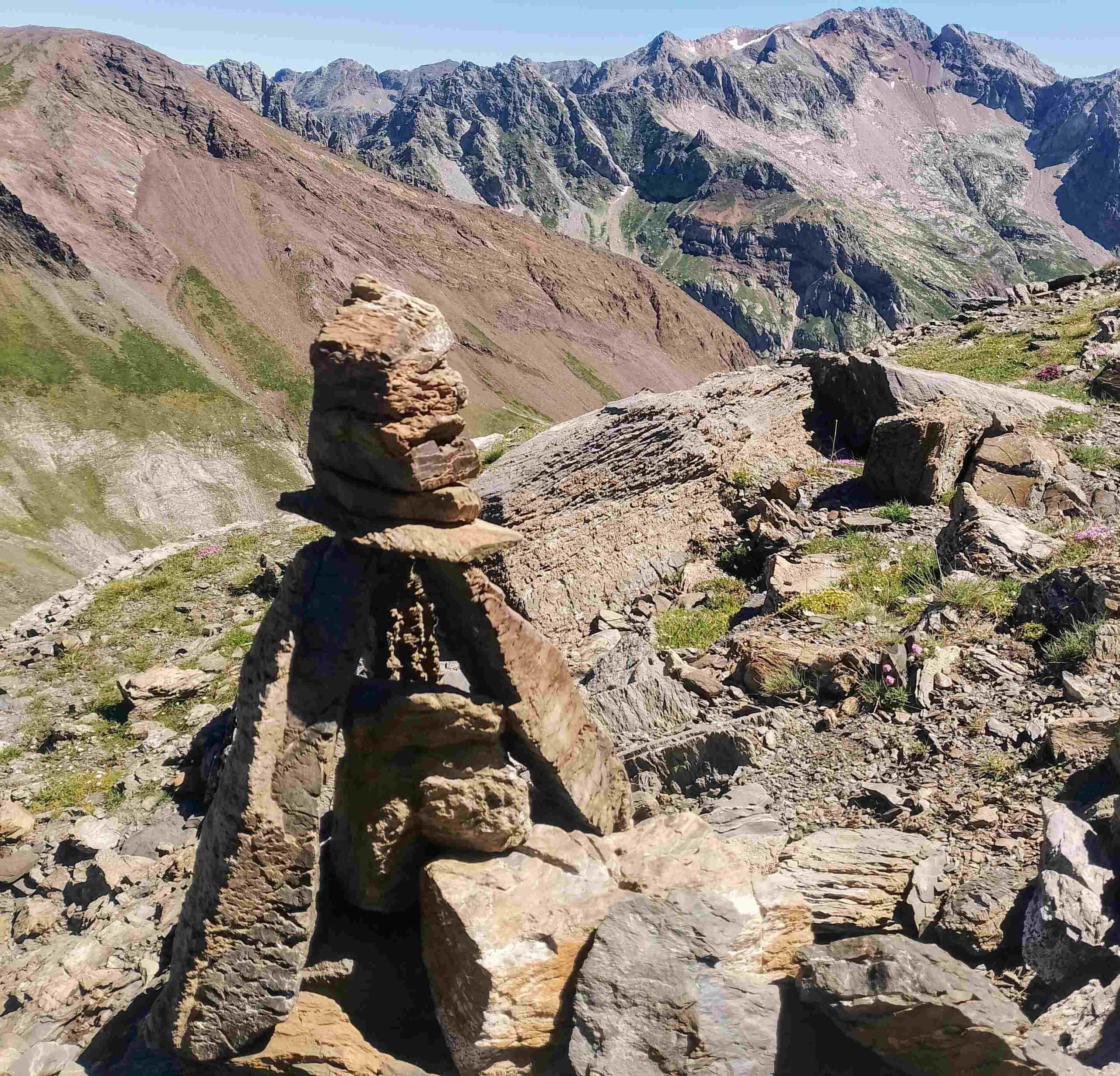
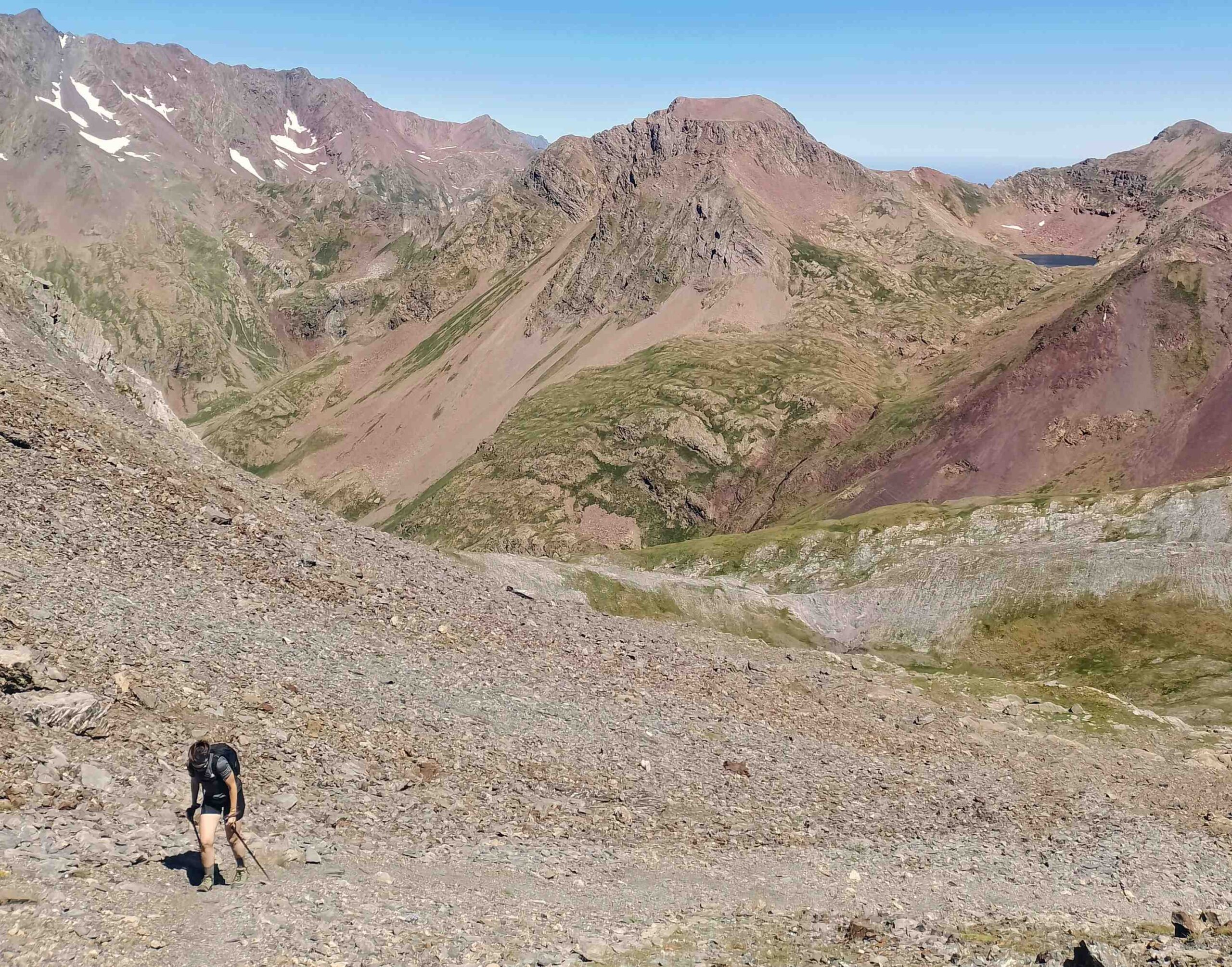
The cairns show the walker up a switchback path, which is rocky and covered with loose stones.
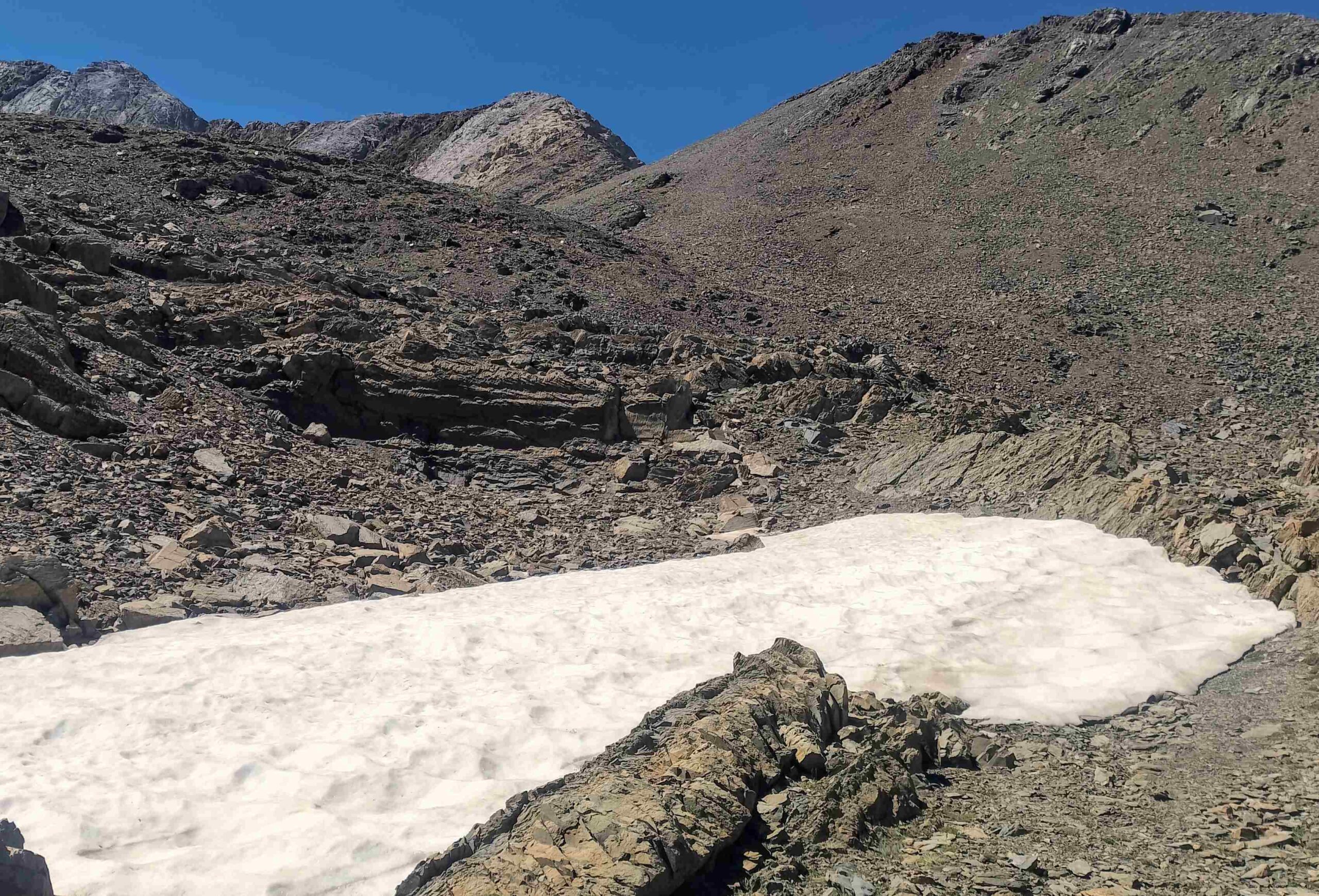
As the path climbs above 2,700 metres the landscape becomes lunar and some snow remained on the ground in mid July.
I called it a day at around 2,800m, at a spot which offered a wonderful view over the Royo de Posets glacial lake and its smaller neighbour; and also incredible vistas over the surrounding summits.
The final ascent to the black pass is very steep; and coming back down that route would be challenging.
It is possible to walk down to the lakes and then skirt back round to the cairned path; or go back exactly the same way to the pass and return to Viadós on the GR-11.
Recent Comments